


What is a robot lawn mower, and who should buy one?
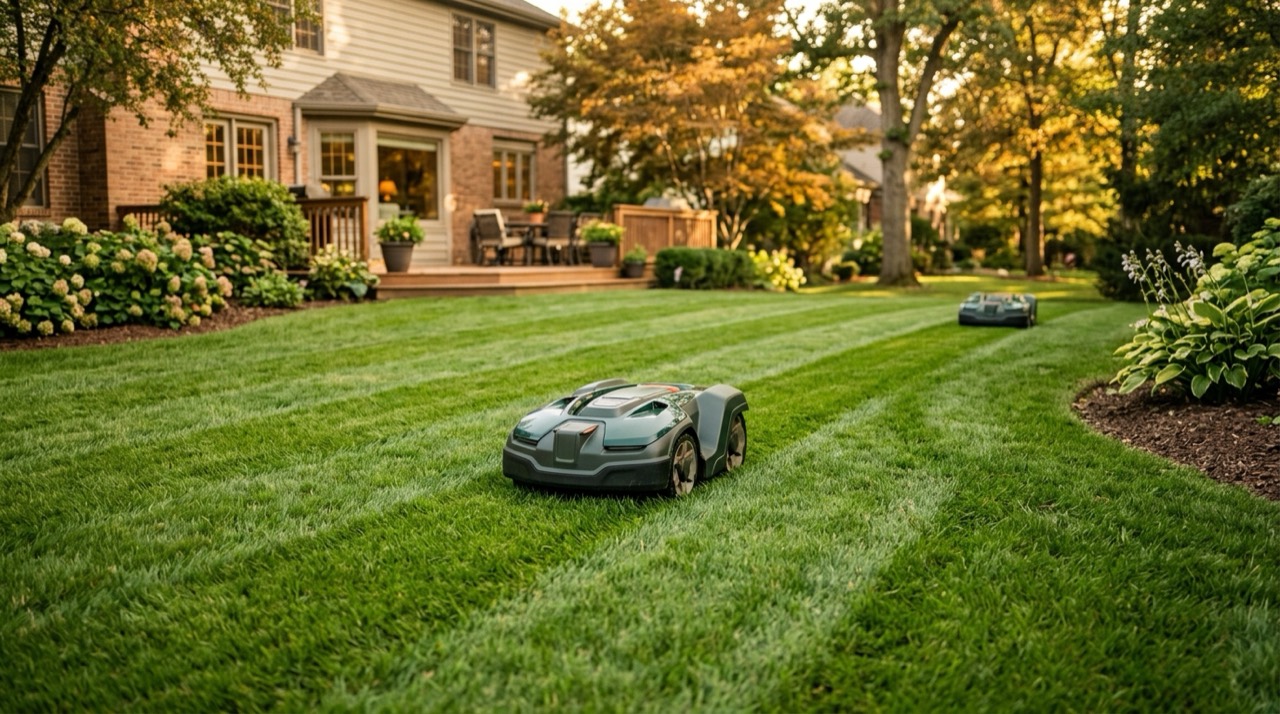
A robot lawn mower is a self-driving, battery-powered mower that cuts your grass on a schedule, returns to a charging base on its own, and mulches clippings back into the lawn. It suits owners of small to mid-size yards who want a tidy lawn without pushing a mower each week.Robot mowers work best on lawns that are reasonably flat, mostly enclosed, and free of large obstacles the machine cannot learn. They cut little and often, shaving a few millimetres each pass, which keeps grass dense and green rather than scalping it once a fortnight. If your yard is large, steeply sloped, or split across the front and back with no clear path between, you will need a higher-capacity model or a different mowing method entirely. This guide sits inside our wider lawn mowers hub, where you can weigh a robot against every other cutting option.
Boundary wire or wire-free: how does a robot mower stay on the lawn?
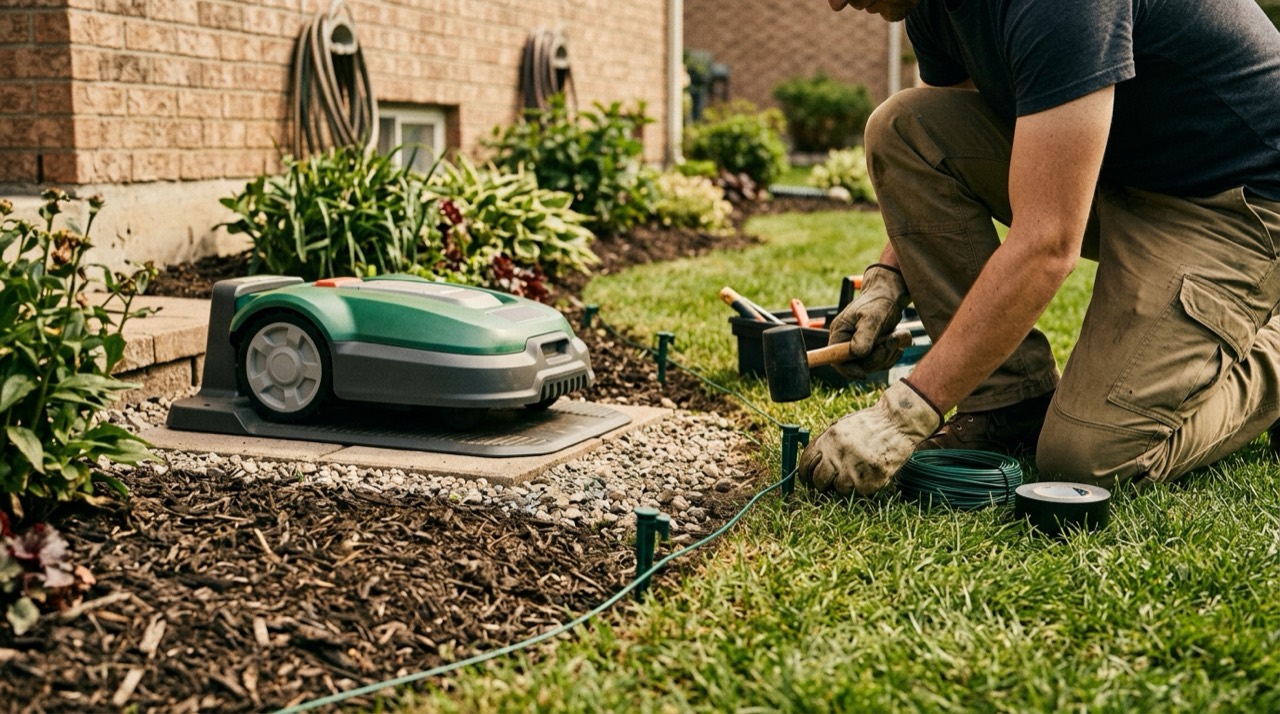
Navigation is the single biggest choice, because it decides how the mower knows where the lawn ends. There are three systems: a buried boundary wire, satellite GPS-RTK positioning, and camera or LiDAR vision. Each keeps the machine on the grass in a different way, and each changes how you install it.Boundary-wire mowers, such as most of the Husqvarna Automower range, follow a low-voltage wire you peg or bury around the lawn edge. Setup takes an afternoon, but once laid the wire is reliable in poor light and under tree cover. Wire-free RTK mowers like the Segway Navimow and Mammotion Luba use satellite positioning plus a base antenna, so you draw the boundary by walking the perimeter in an app with no digging. Vision mowers such as the WORX Landroid Vision and LiDAR-guided EGO Power+ Robotic Mower read the lawn with cameras or laser sensors and need neither wire nor antenna. We break the three systems down in detail in our guide to how robot mowers navigate the lawn, and our best robot lawn mowers round-up pairs each pick to a navigation type.
What lawn size and slope can a robot mower handle?
Coverage area and slope grade set the ceiling on which model will cope. Small-yard robots are rated for around 500 square metres, mid-range models for a quarter to half an acre, and large-lawn machines for one to two and a half acres. Most mow slopes up to about 25 to 45 percent, with all-wheel-drive models climbing steeper.Rated area assumes a single, mostly open lawn; complex shapes, narrow passages, and many garden beds all cut the effective figure, so choose a model with headroom above your measured area. Slope is quoted as a percentage grade, not degrees, and a mower that stalls or slips on a wet bank will leave uncut stripes. If you garden a big or hilly block, start with our best robotic lawn mower for large lawns picks, which focus on high-capacity and AWD machines.
How does a robot mower cut, and does it collect clippings?
Robot mowers cut with small pivoting razor blades on a spinning disc, not the heavy fixed blade of a push mower, and they mulch rather than collect. The fine clippings drop back into the turf, break down quickly, and feed the lawn, so there is no grass box to empty.Mulching only works because the mower cuts so frequently that clippings stay tiny, which is why robots run several times a week rather than once. The trade-off is that they leave a small uncut strip at the very edge and around obstacles, so most owners finish the borders with a string trimmer or a lawn edger. Blade discs are cheap and swap out in minutes, and dull blades are the most common cause of a ragged, browning cut.
Are robot lawn mowers safe around children and pets?
Robot mowers are built with several safety layers, but they still carry spinning blades and must be respected. Lift and tilt sensors stop the blades within fractions of a second if the machine is picked up or flipped, and bump and obstacle sensors make it reverse away from objects it strikes.The blades sit recessed under the deck and behind the wheels, which keeps them away from feet at the edge, yet small children and pets should never play near a running mower. Schedule cutting for times when the yard is empty, keep the lawn clear of toys, hoses, and pet waste, and store the base where a toddler cannot reach the docked machine. Treat a robot mower as you would any powered garden tool: convenient, but not a babysitter. We cover child, pet, and theft precautions in our guide to living with a robotic lawn mower.
What maintenance does a robotic mower need?
Robot mowers need light but regular upkeep: fresh blades, a clean deck, and a charged, connected base. Swap the pivoting blades every one to two months of the cutting season, brush grass off the underside and wheels, and keep the charging contacts clean so the machine docks reliably.Because these mowers are electric, there is no oil, fuel, spark plug, or air filter to service, which makes them far simpler than a petrol mower. Over winter, most owners clean the machine, charge the battery, and store it and its base indoors, then re-peg any lifted boundary wire in spring. Our general lawn mower maintenance guide covers seasonal storage that applies to robots too.
How often does a robot mower run, and how long does each cut take?
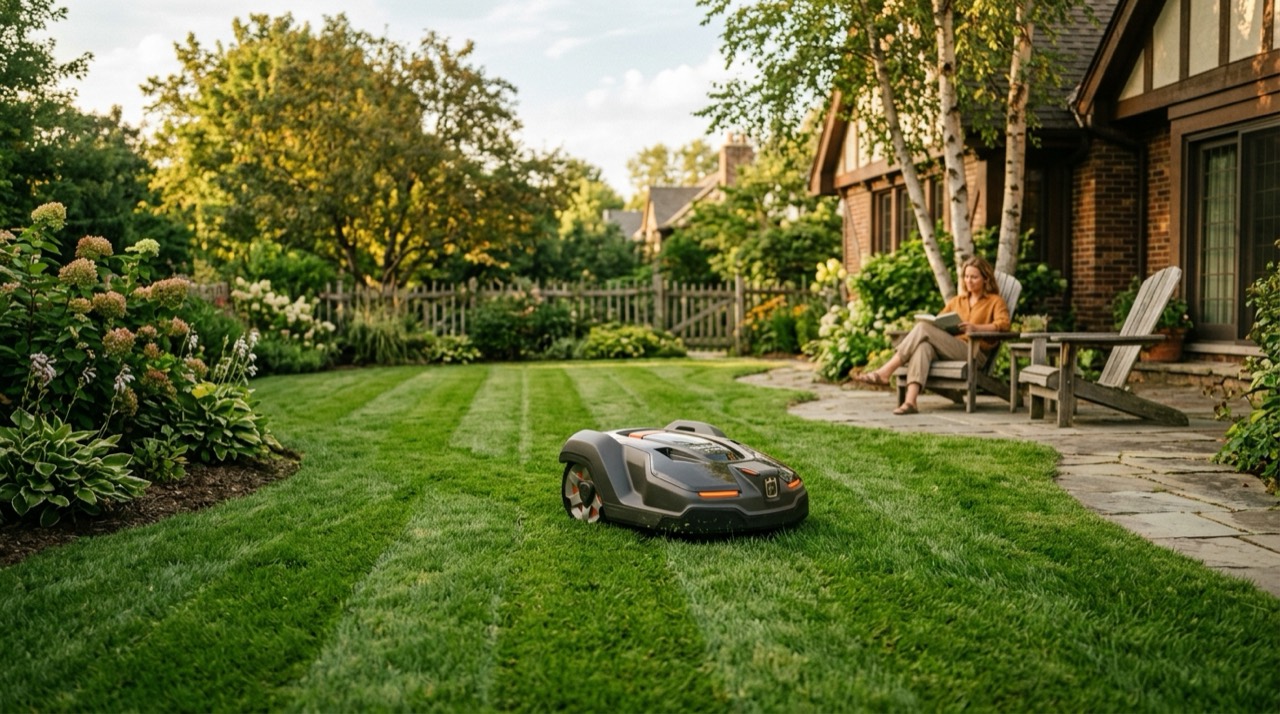
A robot mower runs several short sessions a week rather than one long cut, and each session lasts from under an hour to a few hours before the machine docks to recharge. You set the schedule in the app to match how quickly your grass grows.Cutting little and often is the whole principle, because shaving a few millimetres each visit keeps the clippings tiny enough to mulch and the lawn dense enough to crowd out weeds. In spring, when growth is fast, you might let the mower work most days; in high summer or a dry spell you can dial the schedule back so it does not stress the turf. Many models add a weather timer that pauses cutting in rain and lets the grass dry, and most run quietly enough to mow overnight without troubling neighbours. What keeps a lawn tidy is total weekly runtime, not how fast the machine crosses the grass, so a slower robot that runs more sessions still finishes the job.
What does it cost to run a robot lawn mower?
Running a robot lawn mower costs only a few dollars of electricity a year plus modest consumables, because charging a small battery draws very little power. The larger ongoing costs are replacement blades every one to two months of the season and a battery every three to five years.Against a petrol mower there is no fuel to buy, no oil to change, and no spark plug, air filter, or annual service, which removes most of the running cost of a conventional machine. The pivoting razor blades are inexpensive and swap out in minutes, and a worn battery is the only significant part you will replace over the mower's life. Weighed against the hour or more you would otherwise spend mowing each week, most owners of a suitable lawn find the running cost easy to justify. Our general lawn mower maintenance guide covers the seasonal upkeep that keeps those costs low.
What goes wrong with a robot mower, and how do you fix it?
The most common robot-mower problems are a machine that will not dock, patches of longer grass, a unit stuck on an obstacle, and boundary or signal errors. Most have a simple cause and a quick fix once you know where to look.The faults owners meet most often, and how to clear them, are listed below.
- Won't return to the dock: clean the charging contacts and clear anything blocking the straight approach to the base.
- Patchy or longer stripes: sharpen or replace the blades and raise the schedule so the mower covers the lawn more often.
- Stuck on an obstacle: remove toys, hoses, and fallen branches, and set no-go zones around beds and low objects.
- Boundary or signal error: check a wire model for a break or lifted peg, or give a wire-free model's antenna a clearer view of the sky.
- Short runtime: an ageing battery that no longer holds charge is the usual cause and is a straightforward replacement.
Do robot mowers suit every grass type and climate?
Robot mowers handle most common lawn grasses well but struggle with very long, wet, or coarse growth, because their small blades shave only a little each pass. They suit temperate lawns mowed regularly far better than fast-growing tropical turf left to grow tall between cuts.If grass gets away from you, cut it first with a battery lawn mower or gas lawn mower and then let the robot maintain it, since a robot is a maintainer rather than a rescuer of overgrown lawns. Persistent wet climates slow cutting and can clog the deck, so a weather timer and regular underside cleaning matter more there. Thick, wiry couch or kikuyu will need more frequent sessions than fine fescue, and heavy moss or thatch is better tackled with a rake or scarifier before the robot takes over.
Robot mower or push and ride-on: which mowing method fits?
Choose a robot mower for a hands-off, tidy lawn on a small to mid-size block, and a push or ride-on mower when you want control, capacity, or the ability to bag clippings. Robots excel at consistency; conventional mowers excel at power and one-pass speed.A battery lawn mower or electric lawn mower gives you a quick, quiet manual cut with a collection box, while a gas lawn mower still leads on raw power for long, thick grass. For big acreage a riding mower or zero-turn mower will finish faster than any robot. Many owners run a robot for weekly upkeep and keep a push mower for edges, leaves, and the occasional heavy cut.