

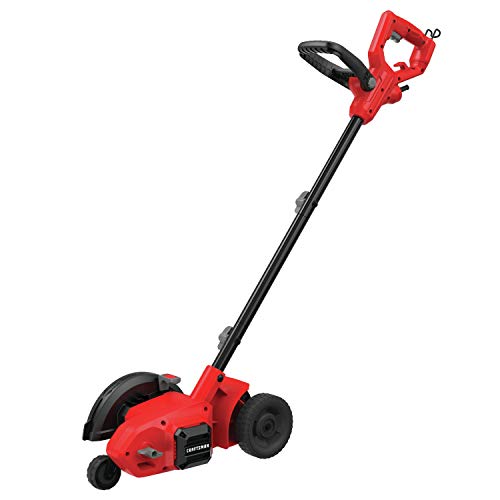

What is a lawn edger and what does it do?
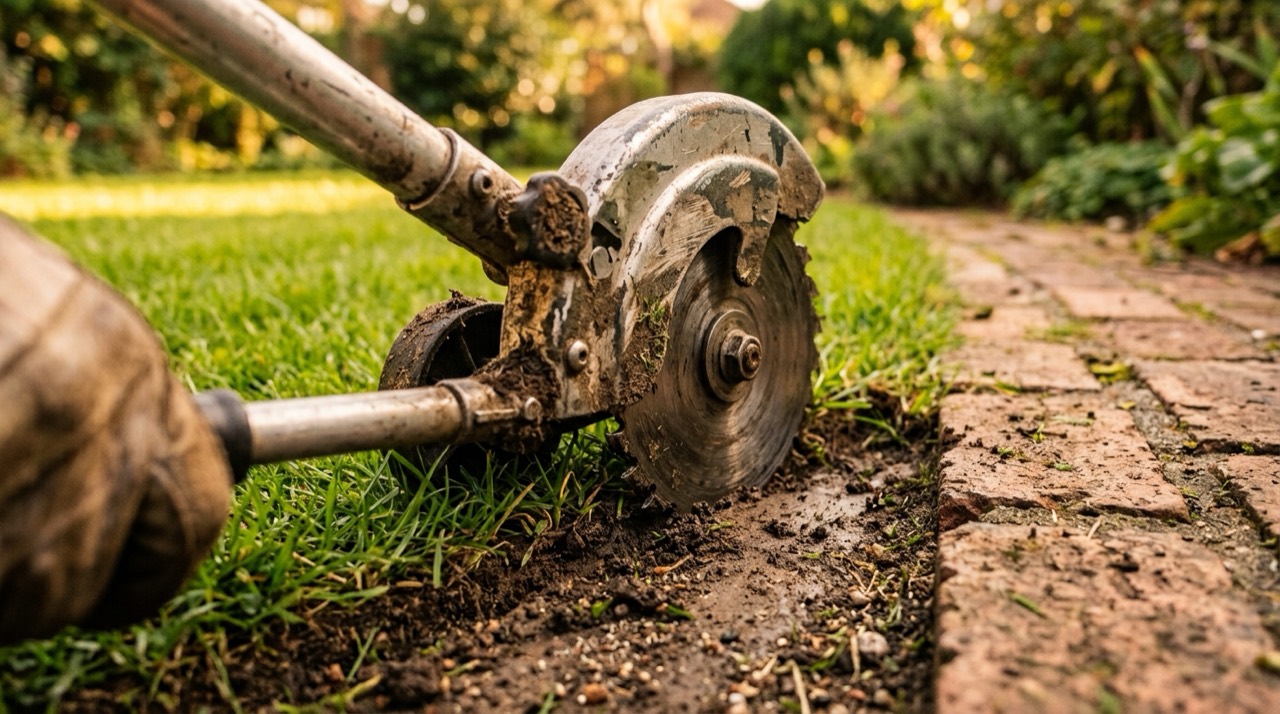
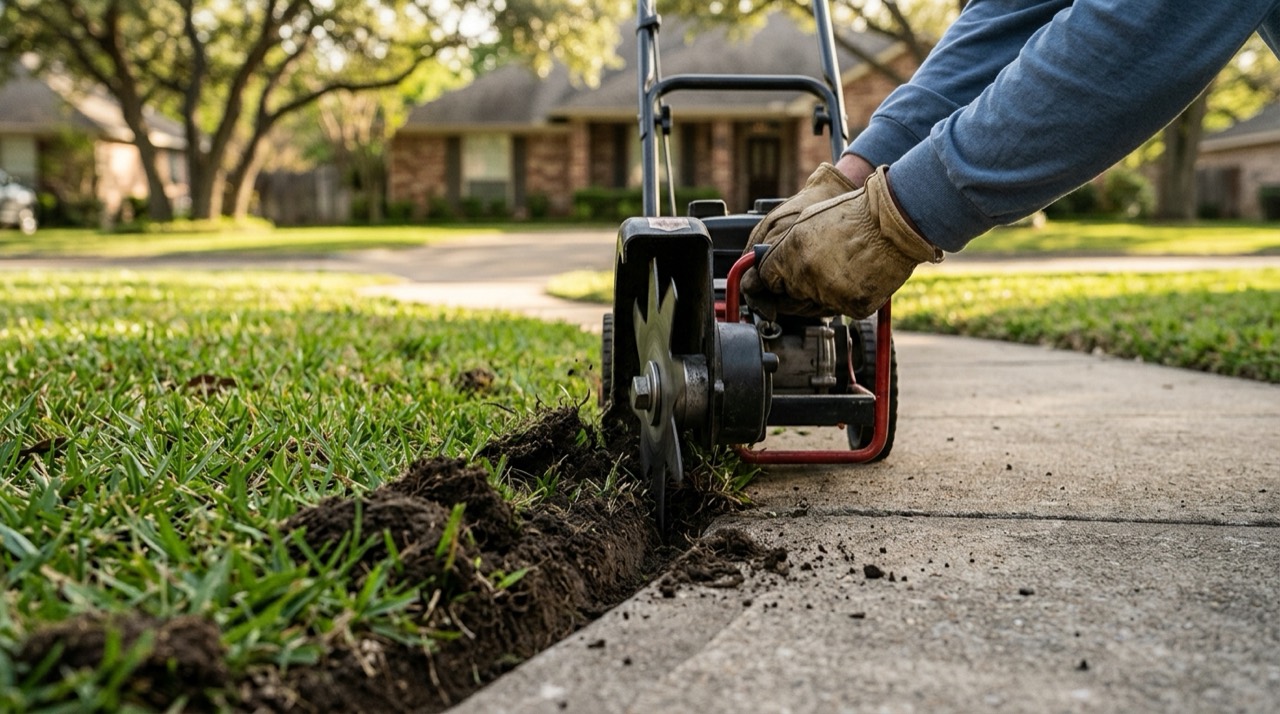
A lawn edger cuts a clean, vertical trench between your turf and a hard surface, so grass stops creeping over driveways, sidewalks, and flower beds. Its spinning steel blade slices straight down, carving the crisp border a string trimmer can only fake.That vertical cut is the whole point. A blade edger slices down into the soil at a right angle, defining a sharp line and a shallow gully that keeps grass roots on their side of the pavement. A string trimmer, tipped on its side, only shears the grass blades at the surface — it tidies, but it never carves a true edge. Once you have edged a lawn properly, weekly upkeep with a trimmer is enough; the defined groove is already there.
Which type of lawn edger should you buy?
Four main types of lawn edger — stick edgers, walk-behind edgers, multi-tool edger attachments, and manual edgers — differ mainly in power, cutting depth, and how much lawn you maintain. Average suburban yards suit a stick edger; large properties and long curb runs call for a walk-behind.The four families break down like this:
| Edger type | How it works | Best for | Typical power |
|---|---|---|---|
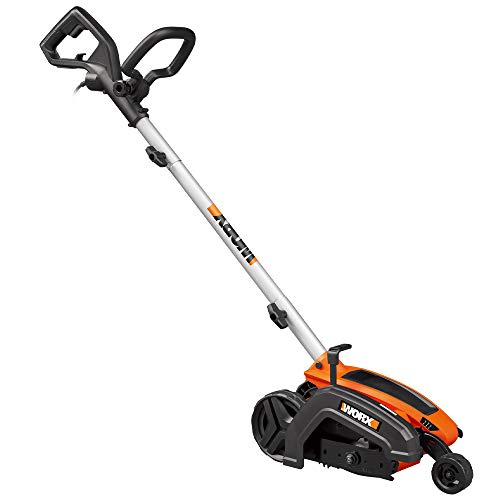
| Stick edger | Handheld shaft with a vertical blade wheel | Average yards, regular upkeep | Corded, battery, or gas |
| Walk-behind edger | Wheeled chassis you push, engine-driven blade | Big lots, long curbs, pros | Gas (occasionally battery) |
| Edger attachment | Blade head that clips onto a multi-tool power head | Owners of an existing power head | Battery or gas |
| Manual edger | Half-moon spade or a rotary edging wheel | Small beds, occasional touch-ups | Muscle |
Stick edgers are what most homeowners picture and buy: light, affordable, and easy to store. Walk-behind edgers cost and weigh far more, but their wheels carry the engine so long, straight passes take little effort. Attachments make sense if you already run an expandable multi-tool system for trimming and blowing. Manual edgers are cheap and quiet but slow, and they wear you out on anything longer than a flower bed.
Gas, battery, or corded: which power source fits your yard?
Power source is the biggest cost-and-convenience decision. Corded electric edgers give steady, unlimited runtime for the lowest price; battery models trade a little power for cordless freedom; gas delivers the most torque and reach but demands fuel and upkeep.Corded electric is the value champion for city and suburban lots — plug in, edge, and never charge or mix fuel — but you are tethered to an extension cord and an outlet. Battery (cordless) edgers have closed most of the power gap and shine for quick jobs and quiet neighborhoods; runtime depends on the amp-hours you own, and they are best when they share a battery platform with your other tools. Gas edgers, whether stick or walk-behind, still lead on raw torque, deep cuts, and going anywhere without a cord — at the cost of pull-starts, two-stroke fuel mixing on many models, and more maintenance. If cordless appeals to you, our cordless grass edger guidance walks through the battery trade-offs in detail.
How much does a lawn edger cost?
A lawn edger costs roughly $60 to $130 for a corded stick model, $120 to $250 for a cordless edger or a multi-tool edger attachment (often before the battery), $150 to $350 for a gas stick edger, and $400 to well over $1,000 for a gas walk-behind. Where you land depends on power source and build quality.The price ladder tracks the power-source decision closely, as the ranges below show.
| Edger class | Typical price band | What the money buys |
|---|---|---|
| Corded electric stick | $60–$130 | Lowest cost, steady power, no batteries |
| Cordless stick (bare tool) | $100–$200 | Cord-free freedom; add $80–$200 for a battery and charger |
| Multi-tool edger attachment | $60–$120 | Clips to a power head you already own |
| Gas stick edger | $150–$350 | Cord-free torque, dealer-grade durability on pro models |
| Gas walk-behind | $400–$1,200+ | Deep cuts and long-run speed for big properties |
Two costs are easy to overlook. Cordless tools are frequently sold as a bare tool, so a tempting sticker price may not include the battery and charger that make it work — check whether you already own a compatible pack before you compare prices. Replacement blades are the ongoing cost on every powered edger; they are inexpensive, but budgeting for one or two a season keeps the tool cutting cleanly instead of bogging down. Spread across years of use, even a mid-priced corded edger works out cheaper per season than paying a lawn service to keep the borders crisp.
Which lawn edger suits your specific yard?
The right edger depends less on brand than on how much edge you cut and how often, so matching the tool to your particular yard prevents both under-buying and over-buying. The scenarios below map common property types to a sensible choice.| Your yard | Sensible edger | Why it fits |
|---|---|---|
| Townhouse or small courtyard | Cordless stick or trimmer/edger | Short edges, grab-and-go, easy storage |
| Quarter-acre suburban lot | Corded 12-amp stick edger | Best value, plenty of power near an outlet |
| Large corner lot, long sidewalks | Battery or gas stick edger | Cord-free reach along extended runs |
| Acreage with hundreds of feet of curb | Gas walk-behind | Wheel-supported blade makes long passes effortless |
| Mulched beds and borders only | Manual half-moon edger | Cheap, quiet, and precise for short bed lines |
A townhouse strip of grass never justifies a heavy walk-behind; a cordless stick edger, or even a convertible string trimmer that tilts to edge, handles it in minutes. Move up to a quarter-acre lot with a driveway and front path, and a corded 12-amp stick edger is the classic sweet spot — cheap to buy, cheap to run, and powerful enough for any routine home edge. Only when your borders stretch into the hundreds of feet, or your soil is genuinely hard, does the size and cost of a walk-behind start to pay for itself. Buying more machine than your yard needs mostly buys you storage headaches and a heavier tool to wrestle.
How deep should a lawn edger cut?
A lawn edger should cut about 1.5 to 2 inches deep for routine edge maintenance and up to 3 to 4 inches when you are carving a brand-new edge or trenching for landscape borders. Most powered edgers offer two or three preset depth settings so you can dial it in.Go shallow for weekly upkeep — you only need to re-define a line that already exists, and cutting too deep every time damages grass roots and scalps the edge. Go deep only when you are establishing a fresh edge, cutting through thick runners, or digging a trench for brick or metal edging. On hard, dry, compacted soil, make two passes at increasing depth rather than forcing one deep cut, which strains the motor and throws more debris.
What blade size and features matter?
Blade diameter, depth stops, and a few control features separate an edger that fights you from one that tracks a straight line on its own. The attributes worth checking before you buy are listed below.- Blade diameter — most consumer edger blades run about 7.5 to 9 inches; larger wheels reach a bit deeper.
- Depth settings — two or three preset stops let you switch between maintenance and trenching quickly.
- Cutting-line guide — a visible guide edge or wheel helps you follow the pavement seam accurately.
- Curb-hugging wheel — keeps the blade a consistent distance from the concrete for an even line.
- Adjustable shaft or handle — dials the tool to your height so you are not hunched over.
- Bevel or angle setting — cuts a sloped edge along beds where a vertical wall would crumble.
Blades are wear parts. When cuts get ragged or the tool bogs down, a fresh blade restores performance for far less than a new machine.
How do you edge a lawn safely?
Edging throws soil, rocks, and grass at high speed, so wear wrap-around eye protection, hearing protection on gas models, sturdy work gloves, and closed-toe boots before you start. Keep bystanders and pets well clear of the discharge path.A safe pass follows a simple order:
- Clear the edge line of stones, sticks, and buried wire or sprinkler heads.
- Put on your eye and ear protection and check the blade is tight.
- Set the shallowest useful depth for maintenance edging.
- Walk slowly, letting the blade cut rather than pushing it through.
- Sweep or blow the cut debris off the pavement when you finish.
Full-size safety gear matters even on quiet electric tools — thrown debris is the real hazard, not just noise. Round out your kit with the right eye and ear protection, and treat a spinning steel blade with the same respect you would give any powered cutting tool.
How do you maintain a lawn edger through the season?
Maintaining a lawn edger means keeping the blade sharp and the mechanism clear, plus a short list of power-source-specific tasks. A few minutes of care after each use, and a longer check each season, keeps any edger cutting like new.Every edger benefits from the same basic routine:
- Clear packed grass, soil, and grit from the blade, guard, and guide wheel after each session.
- Check the blade for wear, bending, or cracks, and replace it when cuts turn ragged.
- Confirm the retaining bolt and any depth-adjustment locks are still tight.
- Wipe the tool down and store it dry to keep the steel parts from rusting.
Beyond that, each power source adds its own tasks. Corded electric edgers are the simplest — inspect the cord for nicks and keep the motor vents clear of clippings. Battery edgers ask you to store lithium packs at a partial charge in a cool, dry place and to keep the terminals clean; the platform then serves your leaf blower and trimmer for years. Gas edgers carry the longest list: fresh two-stroke or four-stroke fuel, a clean air filter, a serviceable spark plug, and fuel stabiliser or an empty tank before winter storage so the carburettor does not gum up. A dedicated outdoor tool storage spot keeps the machine and its spare blades protected between jobs.
What are the most common lawn-edging mistakes?
The most common lawn-edging mistakes are cutting too deep on every pass, moving too fast, ignoring the guide wheel, and edging over hidden obstacles. Each one produces a worse edge or a damaged tool, and all are easy to avoid once you know them.The recurring errors to watch for are listed below.
- Cutting deep every pass — scalps the border and stresses grass roots; keep routine cuts shallow.
- Rushing the tool — pushing the blade forward faster than it cuts throws debris and wanders off line.
- Skipping the guide wheel — freehanding an edger produces a snaking line no amount of skill fully fixes.
- Edging over sprinkler heads or wire — clear the line first, since a steel blade shreds buried irrigation and shatters stones.
- Forcing a dull blade — a worn blade fakes the symptoms of hard soil; replace it before you assume the motor is weak.
- Skipping eye protection — thrown grit is the real hazard even on quiet electric tools, so wrap-around glasses are non-negotiable.
Avoiding these comes down to preparation and patience: clear the line, set a shallow depth, keep the wheel against the pavement, and let the blade do the work. Those habits separate a crisp, professional border from a ragged one, and they protect both your lawn and your tool.