

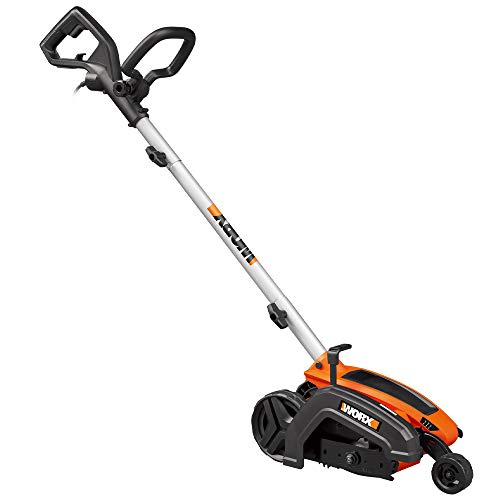
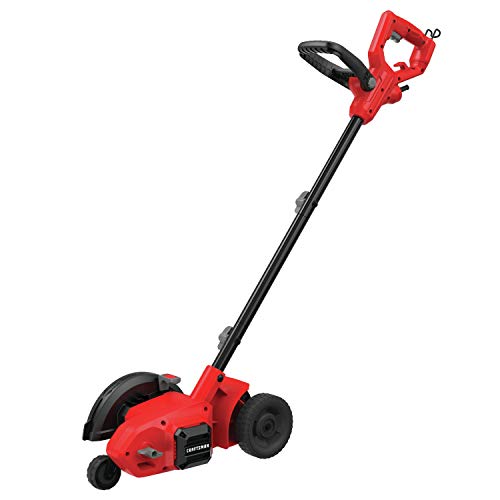

How do I use a lawn edger step by step?
Using a lawn edger correctly is mostly about preparation and a slow, steady pace. Rushing throws more debris and produces a wandering line, so let the blade do the work while you guide it along the pavement.Follow these steps for a clean edge:
- Clear the edge line of stones, sticks, and any buried sprinkler heads or wire.
- Put on wrap-around eye protection, hearing protection on gas models, gloves, and closed-toe boots.
- Check the blade is tight and set the shallowest useful depth for routine edging.
- Position the guide wheel against the driveway, walk, or curb so the blade rides just inside the grass.
- Start the edger and walk slowly, keeping a consistent depth and angle.
- Let the blade cut at its own speed rather than forcing it forward.
- Sweep or blow the loosened soil and clippings off the pavement to finish.
How deep should I set the blade?
Set the blade shallow — about 1.5 to 2 inches — for weekly maintenance, and only drop to 3 to 4 inches when carving a brand-new edge or trenching for a border. Cutting deep on every pass scalps the edge and can harm grass roots, so save the deep setting for establishing a line, then return to a shallow depth.What should I avoid?
Avoid edging over unknown ground with buried utilities, and never cut so fast that the motor bogs down. On hard, dry soil, make two shallow passes instead of forcing one deep cut. Keep people and pets well clear of the discharge path, since the blade throws soil and stones at speed. When the cut turns ragged, replace the blade rather than pushing harder. A quick pass with a string trimmer afterward tidies any grass the edger left behind.How do I keep the edge line straight?
Keep the edge line straight by riding the guide wheel firmly against the hard surface and walking at a slow, even pace rather than steering the blade by hand. The wheel holds the blade a constant distance from the pavement, so the line follows the concrete instead of your wavering grip.Set a comfortable, repeatable posture with the shaft at a height that lets you stand rather than hunch, look a few feet ahead along the seam instead of straight down at the blade, and let the tool track the edge the way you would look ahead while driving. Overlap each pass slightly so there are no gaps, and if the line does start to wander, slow down — speed, not lack of skill, is usually what pulls an edge off true.
How do I edge along curves and around obstacles?
Edge curves by slowing right down and taking short, controlled passes so the guide wheel can trace the bend without the blade cutting a flat chord across it. Tight curves need patience more than any special technique.Around fixed obstacles — mailbox posts, downspouts, sprinkler heads — lift the blade clear, step past, and resume on the far side rather than forcing a cut into something that could damage the blade or the object. Mark or note buried sprinkler heads before you start, because a steel edger blade shreds an irrigation head instantly. Where a bed curves away from a hard surface, a bevel or angle setting cuts a sloped edge that holds its shape better than a vertical wall in loose soil.
A worked example: edging a suburban front yard
Edging a typical suburban front yard — a driveway, a front path, and a mulched bed along the house — follows one unbroken routine that takes most people under half an hour once the line is established.Work it in this order:
- Walk the whole run first, clearing stones and marking the sprinkler heads near the bed.
- Fit your eye and ear protection, and set a shallow maintenance depth of about 1.5 to 2 inches.
- Edge the driveway sides first, riding the guide wheel along the concrete for the longest straight runs.
- Follow the front path, slowing at the corners where it meets the driveway.
- Switch to a bevel or shallow pass along the mulched bed, where the soil is looser.
- Clear the loosened soil and clippings off the pavement — a leaf blower finishes it fastest.
If the border was badly overgrown, make a first deeper pass to reclaim the line, then a shallow clean-up pass — after that, routine shallow passes keep it crisp. A quick vertical touch-up with a string trimmer tidies any grass the edger leaves behind.


