
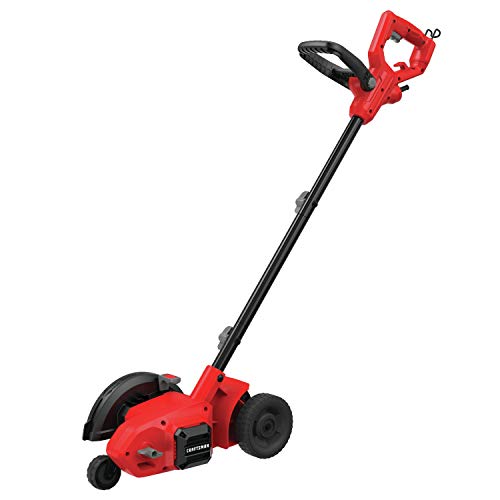


What is the difference between a lawn edger and a string trimmer?
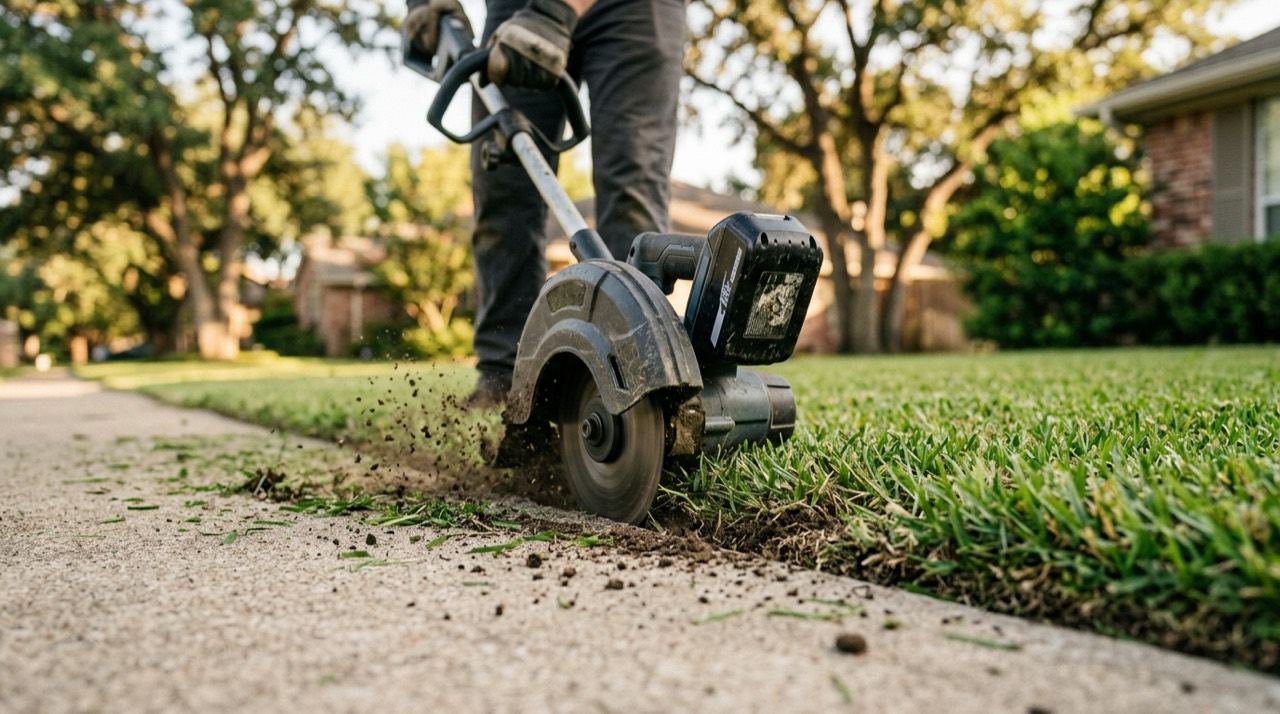
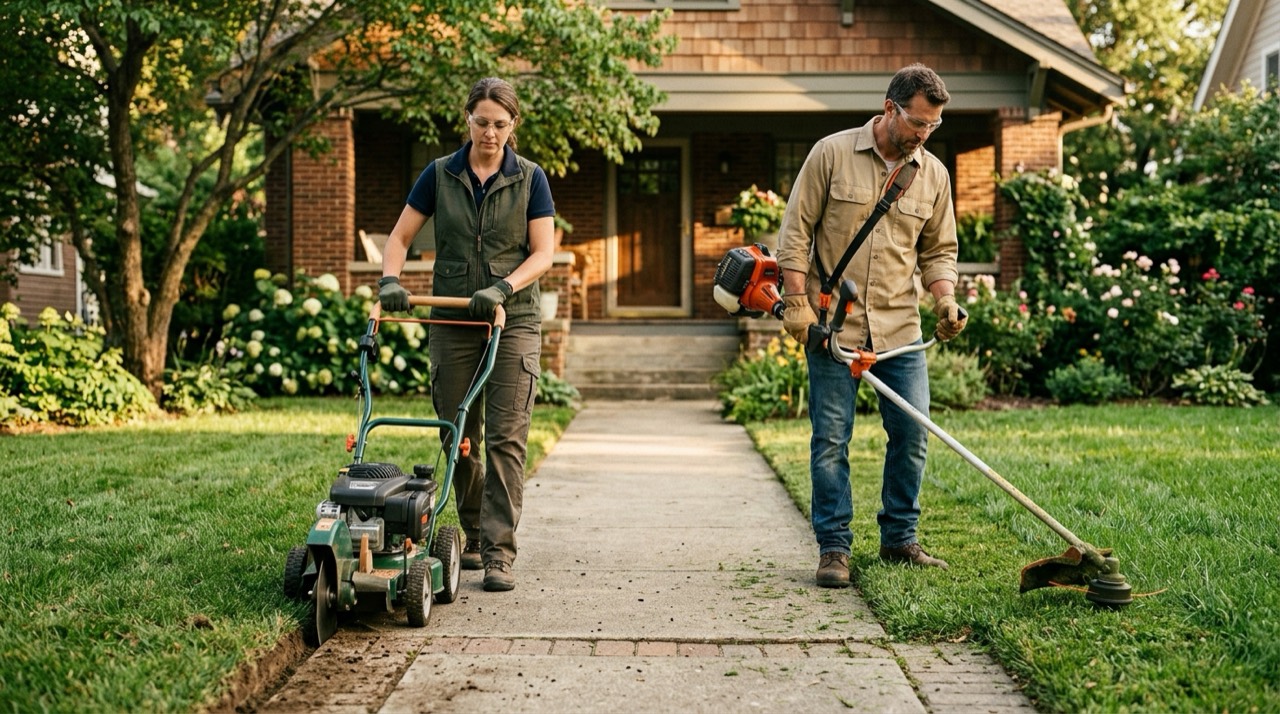
A lawn edger and a string trimmer are different tools for different jobs: the edger carves a clean vertical border between lawn and pavement with a steel blade, while the string trimmer shears grass a mower cannot reach using a spinning nylon line. One defines an edge; the other tidies a surface.The confusion is understandable, because a string trimmer can be tilted on its side to "edge," and many are marketed as 2-in-1 trimmer/edgers. But turning a trimmer sideways only cuts the tops of the grass blades along the line — it never slices down into the soil to create a defined groove. A dedicated edger's blade spins on a vertical plane and cuts straight down, leaving the crisp, sculpted border you see along professionally maintained walkways.
When should you use an edger versus a string trimmer?
Use an edger when you want a sharp, permanent-looking line along a hard surface, and use a string trimmer when you want to knock down grass and weeds where the mower deck cannot fit. The two tools solve opposite halves of the same tidy-lawn problem.Reach for the edger to define the border between turf and a driveway, sidewalk, curb, or mulched bed; to trench a shallow channel for brick or metal edging; or to reclaim an edge that grass has crept over. Reach for the string trimmer to cut grass along fences and walls, around trees, mailboxes, and posts, and on slopes or tight corners the mower misses. A well-kept lawn usually needs both: edge first to set the line, then trim and mow inside it.
Can you use a string trimmer as an edger?
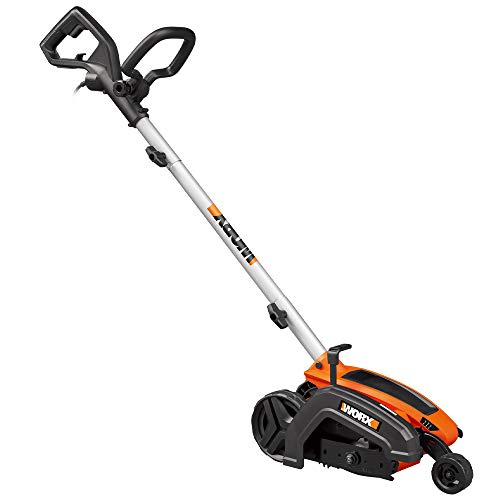
You can use a string trimmer as a light-duty edger, and many models have a 90-degree pivoting head made for exactly that, but the result will be softer than a bladed edger's. The nylon line frays grass at the surface instead of carving a vertical wall, so the line looks less defined and grows back faster.For a homeowner who edges casually a few times a season, a trimmer/edger like the Worx WG163 GT is a reasonable one-tool compromise that saves money and storage. If you want the sharp, magazine-cover edge — and especially if you are cutting a fresh edge or trenching for borders — a dedicated bladed edger is the right tool. Think of the trimmer's edging mode as maintenance between real edging passes, not a full replacement.
How do a blade and a string differ in the cut they make?
A steel blade and a nylon string cut grass in fundamentally different ways, which is why they leave such different edges. The key differences are listed below.- Cutting action — the blade slices; the string whips and tears the grass tips.
- Cut plane — the blade cuts a true vertical wall into the soil; the string only skims the surface line.
- Depth — the blade reaches 1.5 to 4 inches down; the string barely enters the soil.
- Durability — steel blades wear slowly and cut cleanly; nylon line snaps and must be fed often.
- Debris — the blade throws soil and stones; the string flings grass and light clippings.
Those differences add up to the visible result: a blade leaves a defined channel that holds its shape for weeks, while a string leaves a tidy but soft line that blurs as the grass rebounds. The blade also cuts through the horizontal runners that let grass invade pavement, which is why a properly edged border stays clean far longer than a strimmed one.
Do you need both an edger and a trimmer?
Most homeowners who care about a manicured lawn benefit from owning both, because neither tool does the other's job well. A practical setup is a mower for the open turf, a string trimmer for the spots it misses, and an edger for the borders — and if you want to save money and space, a multi-tool power head that accepts both trimmer and edger attachments covers all three cutting tasks on one shaft. After edging and trimming, a quick pass with a leaf blower clears the debris off the pavement to finish the job.Which tool should you buy first, an edger or a string trimmer?
Buy a string trimmer first if you own only one of the two, because it does the more frequent and more essential job of cutting grass a mower cannot reach. An edger is the upgrade you add once the trimming is handled and you want sharper borders.A trimmer earns its place every mow: it clears grass along fences, walls, trees, posts, and slopes the deck misses, so a lawn without one looks unfinished no matter how neat the open turf is. An edger, by contrast, addresses the border between turf and pavement — a real improvement in appearance, but a less frequent need. If budget forces a sequence, a string trimmer comes first and an edger second. The exception is a yard defined almost entirely by hardscape borders, where a crisp edge is the dominant look and an edger may matter more than the trimmer.
How does a multi-tool power head combine both jobs?
A multi-tool power head is a single motor and shaft that accepts interchangeable cutting attachments — a string-trimmer head, a blade edger, a hedge trimmer, a pole saw — so one power unit does the work of several tools. It is the most space- and cost-efficient way to own both an edger and a trimmer.You buy the power head once, then add attachments as you need them, each far cheaper than a standalone tool. A battery or gas multi-tool power head that takes both a trimmer head and a blade edger covers trimming and edging on one shaft, and often a blower or hedge trimmer too. The trade-offs are a slightly heavier, front-shifted balance than a purpose-built tool and the minute it takes to swap heads. For a homeowner who wants a sharp edge and clean trimming without a shed full of separate machines, the attachment route is usually the smartest buy.
What order should you edge, trim, and mow a lawn?
Edge first, then mow, then trim, and finish by blowing the debris clear — the sequence that gives the cleanest result with the least re-work. Edging first defines the border so the mower and trimmer work up to a set line rather than guessing at it.The efficient order runs like this:
- Edge the borders along drives, walks, and beds to set the day's clean line.
- Mow the open turf, running the deck up to the freshly edged border.
- Trim the spots the mower missed — fences, trees, posts, and tight corners.
- Blow the clippings, soil, and edging debris off the pavement to finish.
Doing it in this order means you are never re-tidying an area you already cleaned. A leaf blower at the end lifts the whole job from good to professional-looking, clearing the soil an edger throws and the clippings a trimmer scatters across the walk.
What does it cost to own both an edger and a trimmer?
Owning both as separate tools costs roughly $60 to $250 each depending on power source, while a multi-tool power head with both attachments often lands in a similar total for one motor instead of two. The right path depends on whether you value the lighter feel of dedicated tools or the lower clutter of a combo.Two standalone cordless tools mean two motors to store and, if they are on different platforms, two battery systems — which is why matching brands matters. A convertible trimmer/edger such as the Worx WG163 GT is the cheapest entry of all, trimming and light edging in one body, though its string edge is softer than a steel blade. A power head with dedicated trimmer and edger attachments sits in the middle: one motor, one battery, near-dedicated performance. Weigh the small premium of separate tools against the storage and battery savings of a combined system, and buy for the way you actually maintain your yard rather than the widest feature list.