Best Edger For Grass
Best Edger For Grass, ranked from aggregated owner ratings and reviews, not first-hand testing. Real pros, cons, and who each pick is best for.

Our Top 3 Picks
Quick Comparison
| Product | Best for | Buy | |
|---|---|---|---|
| Worx WG896 12 Amp Electric Lawn Edger | Best Overall | See Amazon | View (paid link) |
| EGO Power+ Multi-Head System (PH1400) with Edger Attachment | Best Premium | See Amazon | View (paid link) |
| Ryobi RYEDG11 11 Amp Corded Electric Edger | Best for Beginners | See Amazon | View (paid link) |
| McLane Gas-Powered Walk-Behind Edger (801 series, Honda engine) | Best Heavy-Duty | See Amazon | View (paid link) |
| Stihl FC 91 Gas Stick Edger | Editor's Pick | See Amazon | View (paid link) |
| Craftsman CMEED400 12 Amp Corded Electric Edger | Best Value | See Amazon | View (paid link) |
How to Choose an Edger for Grass Edges
The best edger for grass is the one that carves a clean, consistent line along your lawn with the least fuss, and for most homeowners that means a corded or cordless stick edger with a steel blade. Grass edging rewards a true vertical cut, not just a shear.Blade edgers versus string trimmers for grass
The first decision is whether you want a real bladed edger or a trimmer that edges on the side. They handle grass differently, as the table shows.| Tool | Edge quality on grass | Effort | Best use |
|---|---|---|---|
| Bladed stick edger | Crisp, defined vertical line | Low once set up | Sharp edges along walks and beds |
| String-trimmer edger | Tidy but softer line | Very low | Light upkeep and combined trimming |
| Walk-behind edger | Deep, dead-straight line | Lowest on long runs | Big lawns and long curbs |
For that magazine-cover grass edge, a bladed edger wins. A string trimmer that tilts to edge is fine for casual upkeep, but the spinning line frays grass rather than slicing a groove.
How much power do grass edges really need?
Grass edging is not especially demanding, so you do not need the most powerful tool on the shelf — you need steady power and depth control. A 12-amp corded motor or a modern 40-volt battery cuts through turf edges easily. Save the biggest gas engines for hard soil, thick runners, and establishing brand-new edges, not routine grass upkeep.The mistake many buyers make is over-buying. A 79cc gas walk-behind will edge your grass, but it is heavy to store, noisy, and more machine than a weekly lawn edge ever asks for. Match the tool to the job: for grass along walks and beds on an average lot, a light stick edger is faster to grab, easier to steer, and cheaper to run.
Cordless, corded, or gas for grass edging
Power source is really a convenience choice for grass. Corded electric costs the least and never runs out mid-job, but a cord can snag on beds and trees. Cordless is the easiest to grab for a quick pass and keeps you untethered, ideal for small lots — especially on a battery platform you already own. Gas is more than most grass edging needs, though it makes sense if your lawn is large or your soil is tough.If you already run cordless tools, look hard at a matching edger before anything else. Sharing a battery and charger across a trimmer, blower, and edger is where cordless quietly saves money, and 40-volt and 56-volt packs give grass edges plenty of cutting speed with runtime to spare on most lawns.
Features that give the cleanest grass edge
A few features do most of the work in keeping your line straight and even. Look for these.- A guide wheel or edge to hold the blade a set distance from the pavement.
- Preset depth stops so you edge shallow for grass and deeper only when needed.
- A comfortable, adjustable handle to reduce fatigue on long borders.
- Easy blade access for quick swaps when cuts start to fray.
Edge grass safely
Even light grass edging throws clippings, soil, and small stones, so put on wrap-around eye protection and gloves, add hearing protection for gas, and wear closed-toe shoes. Clear the line first and keep pets clear of the discharge. For the full range of powered edgers beyond grass-focused picks, see our best lawn edger roundup, and grab proper eye and ear protection before you start.What does a grass edger cost?
A capable grass edger costs about $60 to $130 corded, roughly $120 to $250 cordless once a battery is included, and $150 or more for gas, though grass edging rarely needs the top of any range. Turf edges are a low-torque job, so mid-priced tools cut them cleanly.Because grass along walks and beds does not demand deep cuts through hard ground, spending up for a big gas engine buys endurance you will seldom use on a home lawn. The value sits with a 12-amp corded stick edger such as the Black+Decker EdgeHog or Craftsman (paid link) CMEED400, or a mid-voltage cordless like the Greenworks 40V if a cord is a nuisance. Reserve the gas budget for a genuinely large lawn. As with any powered edger, remember the replacement blade as a small recurring cost, and check whether a cordless bargain actually includes the battery and charger.
How does your grass type change the edger you need?
Your grass type mostly changes how often you edge, not which tool you buy, though fast, dense, warm-season turf rewards a little more power and a guide wheel that holds a line through thick growth. All common grasses edge cleanly with a steel blade.Vigorous warm-season lawns — Bermuda, Zoysia, St. Augustine — spread by horizontal runners that invade pavement quickly, so they need edging more often and benefit from a blade that slices cleanly through those stolons. Cool-season grasses such as fescue and Kentucky bluegrass grow more upright and hold an edge longer between passes. Thick, spreading turf is where a slightly deeper cut and a steady guide wheel matter most; thin or slow lawns are forgiving of almost any edger. In every case the blade, not the grass, does the defining work — which is why a sharp blade beats extra engine size for grass.
How to get a crisp grass edge every time
A crisp grass edge comes from a true vertical cut, a shallow consistent depth, and a slow pace along the guide wheel — technique the tool enables rather than raw power. Set the blade just deep enough to re-define the existing line, usually 1.5 to 2 inches.Walk the edger slowly with the guide wheel tracing the pavement, letting the steel blade slice down rather than shearing across the grass tops the way a spinning string does. Overlap slightly on each pass so the line stays continuous, slow further on curves, and resist dropping the depth deeper than the grass needs — a deep cut every week scalps the border brown. Finish by clearing the clippings and loosened soil off the walk with a leaf blower so the fresh, defined edge shows.
How do you keep a grass edge crisp between cuts?
Keeping a grass edge crisp between full edging passes means light, regular upkeep rather than a deep re-cut each time. Edge to re-define the line every two to three weeks in the growing season, and tidy in between with a string trimmer held vertically.Grass creeps back over a hard edge gradually, so a shallow maintenance pass on a sensible cadence keeps the border sharp without ever letting it overgrow. Between edging passes, a quick vertical sweep with a string trimmer knocks down the few blades that lean over the line — a softer result than a bladed cut, but enough to hold the look. Warm-season lawns in peak summer may want edging closer to weekly; cool-season and dormant lawns need it far less. Let the border tell you: edge when the line begins to blur, not on a rigid calendar.
Grass-edging buying mistakes to avoid
The usual grass-edging mistakes are over-buying a gas walk-behind for a small lawn, treating a string trimmer as a full substitute for a bladed edge, and neglecting depth control. Avoid the pitfalls below to get a clean edge for the right money.- Over-buying power — a heavy gas edger is more than routine grass edging needs and harder to store.
- String-only edging — a trimmer tidies but frays the line; for a defined edge, a steel blade wins.
- No depth presets — without them you will scalp the grass or fail to reach a fresh edge.
- Ignoring the guide wheel — freehanding a grass edge produces a wavering line.
- Skipping eye protection — grass edging still throws grit, so wear eye and ear protection.
Get those four right — the correct tool size, a steel blade, working depth stops, and a guide wheel — and any of the picks above will keep your grass edges sharp.
Full Ranking, Reviewed
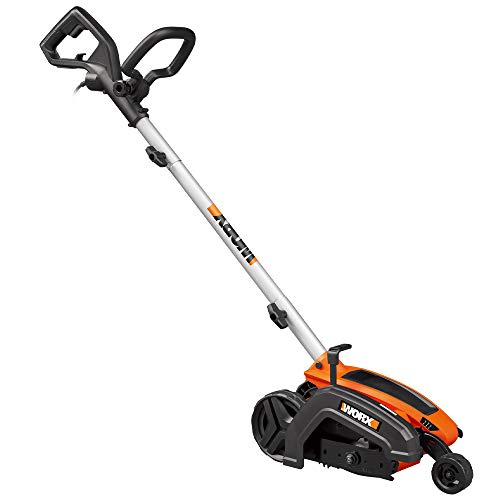
Best for Homeowners who want a dedicated corded edger with real depth control
- 12-amp corded electric motor for consistent, fade-free power
- 7.5-inch double-edged blade with three cutting-depth settings
- Adjustable cutting-line guide and shaft for straighter passes
- Curb-hugging wheel plus a trench-digging mode for bed borders
- Strong, steady power with no fuel or battery limits
- Simple depth adjustment for both edging and trenching
- Light enough for most people to steer one-handed on turns
- Corded range is limited by your extension cord
- Not built for the all-day workload of a landscaping crew
Verdict: For most yards, the Worx WG896 delivers the clean, repeatable edge people buy an edger for, at a price that undercuts gas.

Best for Cordless-tool owners who want gas-like power without the fumes
- Runs on EGO's 56-volt lithium battery platform
- Brushless power head that accepts an 8-inch edger attachment
- Shares batteries with EGO trimmers, blowers, and mowers
- Quiet, no-emission operation for noise-restricted neighborhoods
- Battery power reviewers report rivals small gas edgers
- One battery system serves a whole yard of EGO tools
- Instant start and low vibration versus a pull-start engine
- Power head and attachment are sold separately, raising entry cost
- Runtime depends on the battery amp-hours you own
Verdict: If you are already on EGO's battery platform, the Multi-Head edger attachment is the cleanest way to get near-gas edging power.

Best for First-time edger buyers who want a plug-in tool that just works
- 11-amp corded motor with an easy push-button start
- Roughly 9-inch blade with multiple depth positions
- Depth-adjustment knob and a guide wheel for control
- Lightweight build that is simple to store and maintain
- Very easy to start and learn on
- No fuel mixing, oil changes, or batteries to charge
- Affordable entry point into powered edging
- Tethered to a power outlet and cord
- Lighter-duty than gas on hard, compacted soil
Verdict: The RYEDG11 is a forgiving, low-fuss first edger that teaches good technique before you commit to a gas or battery platform.

Best for Large properties and pros who edge long runs of curb and sidewalk
- Wheeled walk-behind chassis that carries the engine's weight for you
- Honda four-stroke engine with no two-stroke fuel mixing
- Deep, adjustable blade cut for establishing brand-new edges
- Heavy steel construction built for repeated commercial use
- Wheels and frame make long, straight edges almost effortless
- Cuts deeper and through tougher soil than any stick edger
- Four-stroke engine is durable and easy to fuel
- Heavy and bulky to store and transport
- Overkill and pricey for a small suburban lawn
Verdict: For big lots and daily use, a McLane walk-behind turns edging from a chore into a fast, straight-line pass.
Best for Homeowners and pros who want a durable, professional-grade stick edger
- Professional 2-stroke engine tuned for edging torque
- Straight shaft carrying an 8-inch (200 mm) edger blade
- Simplified starting system and anti-vibration handles
- Backed by the Stihl dealer service and parts network
- Pro-level build quality and long service life
- Cordless freedom of gas with strong, steady torque
- Supported by Stihl dealers and readily available parts
- Requires two-stroke fuel mixing and more maintenance
- Sold through dealers, often at a premium price
Verdict: The FC 91 is the stick edger to buy if you value long-term durability and dealer support over the lowest sticker price.
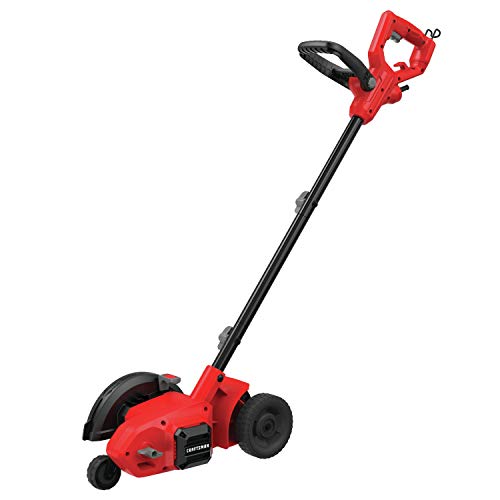
Best for Budget-minded homeowners who still want 12-amp power
- 12-amp corded motor for strong plug-in performance
- 7.5-inch blade with multiple depth adjustments
- Bevel setting for angled cuts along beds
- Cord-retention hook to reduce accidental unplugging
- Strong 12-amp power at a value price
- Adjustable depth and bevel for versatile edging
- Widely available with easy-to-find replacement blades
- Corded operation limits range
- Plastic-heavy build feels less rugged than gas
Verdict: The CMEED400 matches the power of pricier corded edgers for less, making it the value pick for occasional edging.
Frequently Asked Questions
What is the best edger for grass for a homeowner?
For most homeowners, a 12-amp corded stick edger such as the Black+Decker EdgeHog or Worx WG896 is the best all-round grass edger — it carves a crisp, consistent line with little effort or maintenance and costs far less than gas. Choose a cordless model instead if a power cord would be a nuisance on your lot.
Can a string trimmer edge grass as well as an edger?
A string trimmer can edge grass acceptably for light upkeep when you tilt it vertical, but it will not match a bladed edger. The spinning line frays and shears grass at the surface rather than slicing a clean vertical groove, so the edge looks softer and grows back faster. For a sharp, defined line, use a dedicated edger.
How deep should you edge grass?
For routine grass edging, cut only about 1.5 to 2 inches deep — just enough to re-define the existing line. Cutting deeper on every pass scalps the edge and can damage grass roots. Save depths of 3 to 4 inches for establishing a brand-new edge or trenching a border, then drop back to a shallow setting for weekly upkeep.
Is a cordless edger powerful enough for grass?
Yes — a modern cordless edger, especially on a 40-volt or 56-volt platform, has ample power for grass edges. Grass edging is not a high-torque task, so battery tools cut it easily; the only real limit is runtime, which depends on your battery's amp-hours. For small and mid-size lawns, cordless is plenty.