

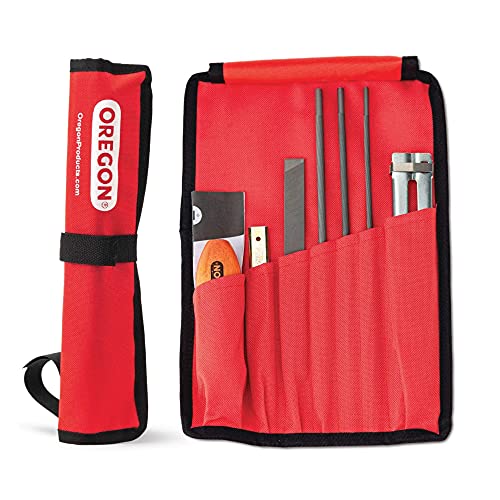

What is a chainsaw file, and which sharpening tools do you need?
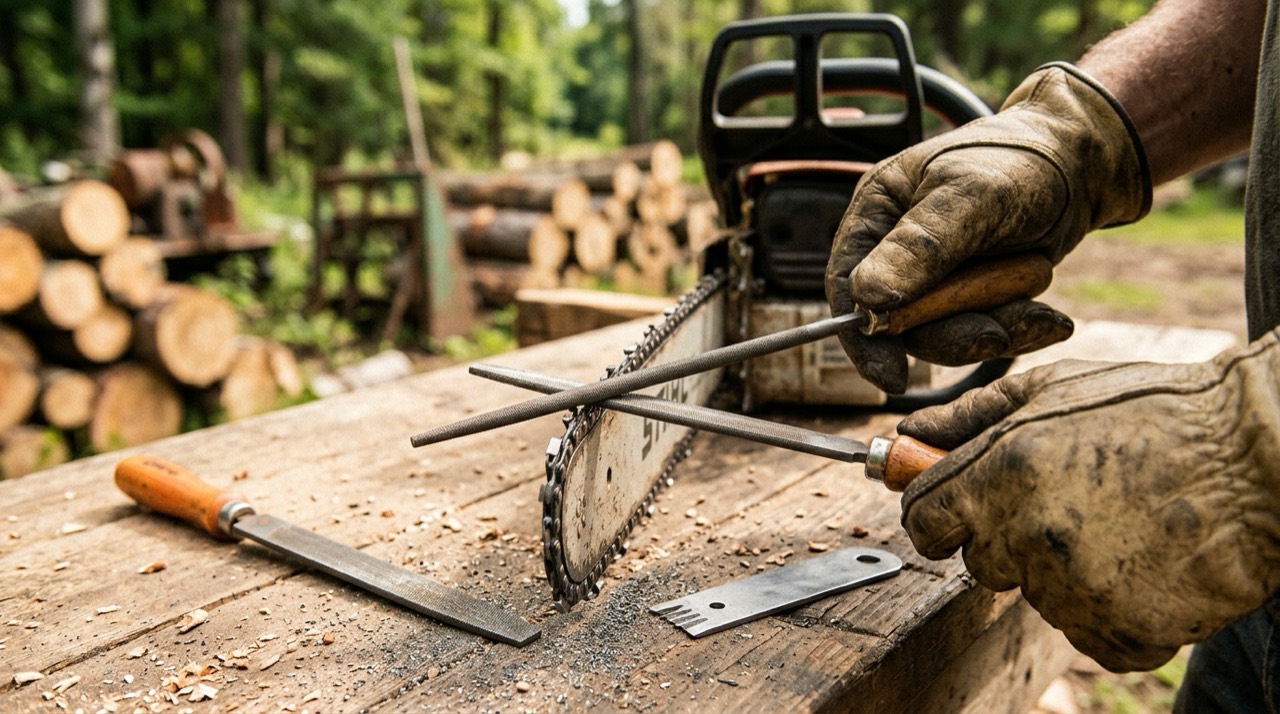
A chainsaw file is a small round steel file that seats in the curved cutting edge of each chain tooth and, drawn across it, restores a keen edge. A working kit adds a flat file for the depth gauges, a filing guide to hold the angle, and a handle.Round files do the main cutting work, but a good result needs a few partners. The flat file lowers the depth gauges (the small fins that control how deep each tooth bites), the guide keeps your filing angle consistent, and a handle saves your hands on long sessions. This guide covers the files and tools themselves; for the step-by-step method see our chainsaw sharpening guide, and to jump straight to recommendations, our best chainsaw file picks.
What size file does your chainsaw chain need?
File diameter must match your chain's pitch, because a file that is too big rides too high and a file that is too small hooks the tooth. Most chains take a round file between 5/32 inch on small chains and 7/32 inch on large 3/8-inch and .404-inch chains.Pitch is the spacing between the chain's rivets and is usually stamped on the drive links or printed on the chain's box. The common pitch-to-file pairings are listed in the table below, though a few 3/8-inch chains specify a 13/64-inch (5.2 mm) file, so always confirm against your chain maker's chart.
| Chain pitch | Round file diameter |
|---|---|
| 1/4 inch | 5/32 in (4.0 mm) |
| 3/8 inch low-profile (Picco) | 5/32 in (4.0 mm) |
| .325 inch | 3/16 in (4.8 mm) |
| 3/8 inch standard | 7/32 in (5.5 mm) |
| .404 inch | 7/32 in (5.5 mm) |
If you are unsure which chain you run, our chainsaw chains guide shows how to read the pitch and gauge markings before you buy a file.
How high should the round file sit in the chain tooth?
A round file should sit so that about one-fifth of its diameter rides above the top plate of the cutter, because that height cuts the correct hook and top-plate angle into the tooth. Too low and the edge turns blunt and back-slanted; too high and the tooth grabs.This is the reason file diameter has to match pitch so exactly. The gullet of each cutter is a set radius, and only a file of the right diameter rests at the height that shapes a clean, slightly hooked edge. Many round files and holders carry a stamped line, or use the tool's own shoulders, to show the correct height, and a filing guide fixes it for you. If the top of each cutter looks rounded-over rather than crisp after filing, the file is sitting too low, often because it is a size too small or worn thin. Stepping up to the diameter listed for your pitch in our chainsaw chains guide usually cures it.
Which chainsaw sharpening tools do you actually need?
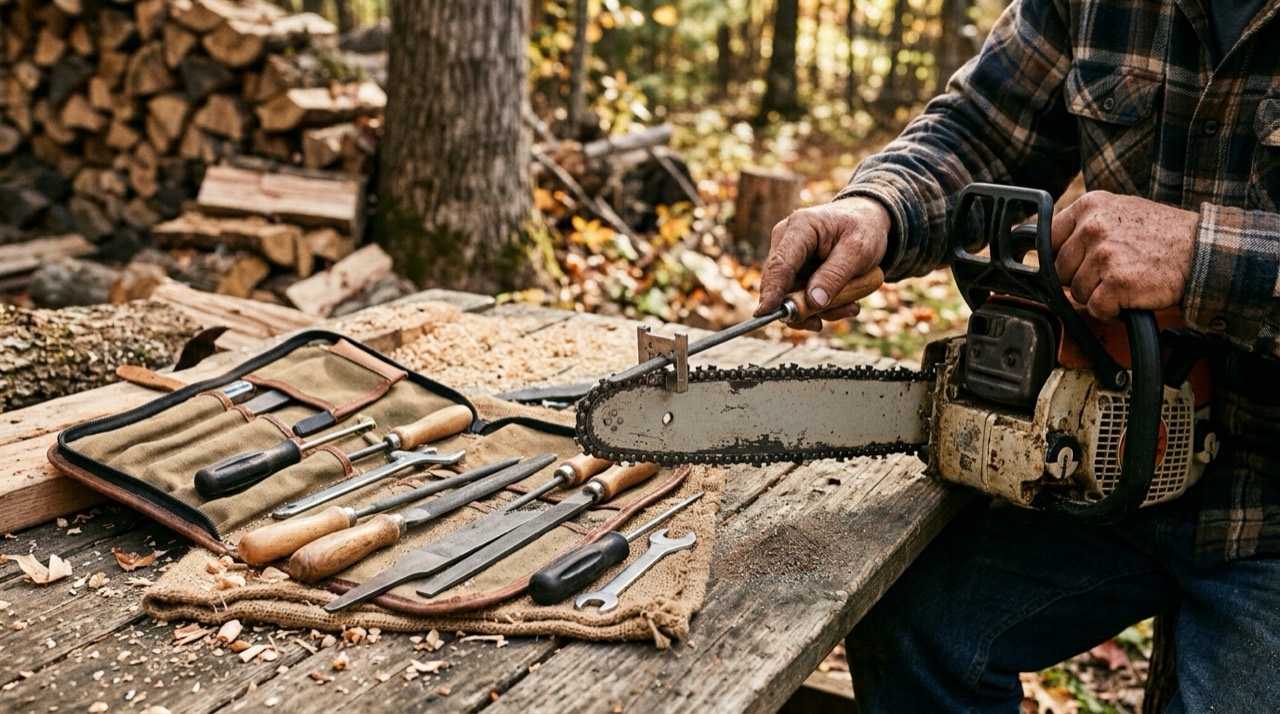
Four tools cover almost every sharpening job: a round file matched to your pitch, a flat file, a depth-gauge tool, and a filing guide or 2-in-1 holder. Together they set the cutting edge, the tooth angle, and how deep each tooth bites.The core kit is listed below, each tool named by the job it does.
- Round file: sharpens the top plate and side plate of every cutter; sized to the chain pitch.
- Flat file: lowers the depth gauges once they stand proud of the cutters.
- Depth-gauge tool: a slotted guide that shows exactly how much of each raker to remove.
- Filing guide or 2-in-1 holder: sets the top-plate angle so every tooth matches.
- File handle: a wooden or plastic grip that makes the round or flat file safer to push.
A 2-in-1 tool combines two of these jobs, filing the top plate and lowering the depth gauge in a single stroke, which is why beginners often start there.
Round file, 2-in-1 file, or filing guide — which is easiest?
A 2-in-1 file is the easiest tool for consistent results, because it builds in the filing angle and lowers the depth gauge at the same time. A plain round file is cheapest and most portable, while a bar-mounted guide gives the steadiest angle of all.Round files reward practice: hold the angle wrong and the tooth cuts poorly, so many owners add a clip-on roller guide or a flat angle plate to steer the stroke. The 2-in-1 holder removes most of that guesswork and is quick in the field, though you must buy the version that matches your pitch. Bar-mounted guides and roller jigs are the most accurate by hand and suit anyone whose cutters have drifted to different lengths. Our best chainsaw file picks cover all three routes.
How do you know when your chain needs filing?
A chain needs filing when it stops throwing coarse chips and starts producing fine, powdery sawdust, or when you have to lean on the saw to make it cut. A sharp chain pulls itself into the wood and self-feeds; a dull one rides, smokes, and wanders.The tell-tale signs are worth learning, because filing a chain the moment it dulls keeps the edge easy to restore and spares the chainsaw bar and engine the strain of a blunt cut. Watch for these:
- Fine dust instead of chips: sharp cutters slice square chips, while a dull chain grinds out sawdust.
- Extra downward pressure: a chain you have to force is telling you the edge is gone.
- Cuts that wander or curve: one side of the chain filed shorter or duller pulls the bar off line.
- Smoke with plenty of bar oil: friction from a dull chain scorches the wood and the bar.
- A rattly, grabby feel: often the depth gauges, not the cutters, needing attention.
Catching a chain early means two or three light strokes per tooth restore it; letting it go blunt or nicking it in the dirt means far more filing, or a trip to a grinder.
How do you match a file to chain pitch and gauge?
Match the file to pitch, not to the saw's bar length or engine size, because two very different saws can share the same chain. Read the pitch stamped on the drive links, then choose the round file diameter from the pairing table above.Gauge (the thickness of the drive link) affects which chain fits your bar but not which file you need, so ignore it when picking a file and use it only when buying a replacement chain. If your chain box is long gone, count the rivets and measure the distance across three of them, then halve it to find the pitch. Running more than one saw often means owning more than one file size, so check whether your saws share a pitch before you buy. The full method for reading these markings is in our chainsaw chains guide.
Should you file by hand or use a powered sharpener?
Hand filing suits almost every owner, because a file removes the least metal, costs little, travels anywhere, and restores a chain in minutes; a powered grinder earns its place only for many chains at once or for a chain damaged by rock or nails. Both put a keen edge on a cutter, but they wear a chain very differently.A round file shaves a thin, controlled amount from each cutter, so a chain hand-filed over its life yields the most sharpenings before it reaches the wear line. A bench or rotary grinder is faster and can re-cut a badly rounded or unevenly worn chain, but its stone takes off more steel and can blue the temper if pushed too hard, shortening chain life. The honest split is this: keep a file and guide in the truck for field touch-ups and routine upkeep, and reach for a grinder only when a chain is heavily damaged or when you are sharpening a stack of them. The powered options and when they make sense are covered in our chainsaw sharpening guide.
How long does a chainsaw file last, and how do you care for it?
A chainsaw file is a consumable that dulls after several chains, losing its bite so it skates instead of cutting. Files cut in one direction only, so lift on the return stroke, rotate the file a little each pass to spread the wear, and keep it dry to stop rust.File care is simple but worth the habit. Store files in a sheath or wrap so the teeth do not clash against other tools, tap out clogged filings with a file card or brush, and never oil the cutting faces, since oil loads the file and dulls its bite. A round file that squeaks or slides across the tooth without shaving metal is finished and should be replaced. Keeping a spare in your kit means a dull file never ends a job early. Routine saw upkeep beyond the chain is covered in our chainsaw maintenance guide.
How do you keep your sharpening files organised?
Keep your sharpening tools together in one pouch or a small case so the right file, guide, and depth-gauge tool are always matched to the chain on your saw. A file that rattles loose in a toolbox dulls against other steel and is never there when a chain goes off in the field.A tidy kit also stops the commonest field mistake: grabbing a file of the wrong diameter. Label each file with its size if you run saws of different pitches, wrap or sheath the files so their teeth do not clash, and store the roll somewhere dry, since surface rust ruins a file's bite quickly. A folded cloth or a purpose-made pouch keeps everything from the round file to the depth-gauge tool in cutting order. Where the rest of your gear lives is worth planning too; our outdoor tool storage guide covers keeping saws, files, and PPE dry and to hand.
What safety steps do sharpening files require?
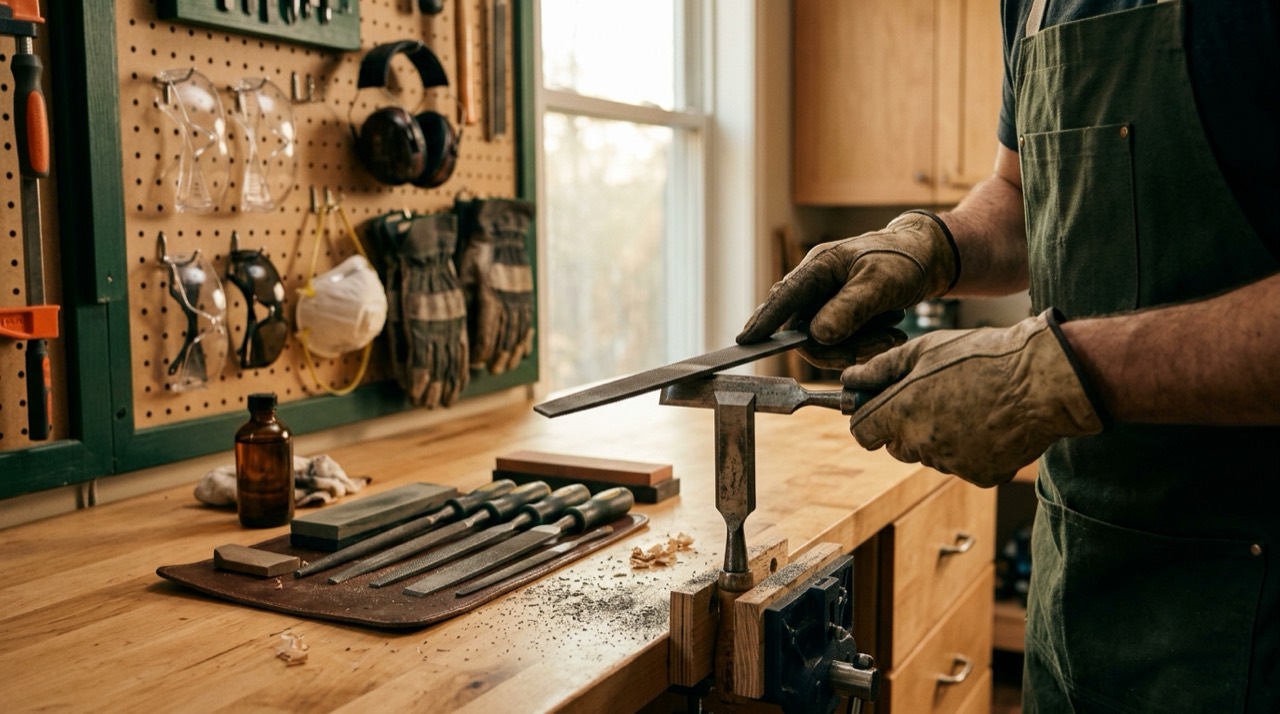
Before filing, stop the engine, remove the battery or pull the spark-plug boot, engage the chain brake or clamp the bar in a vise, and wear cut-resistant gloves, because the teeth stay razor-sharp even on a chain that cuts wood poorly. File on a stable surface, never with the saw able to run or the chain free to move.Good gloves prevent most filing nicks, so start with proper work gloves, and keep your full chainsaw chaps and PPE ready for the cutting that follows. These files and tools sit alongside the rest of our safety gear and accessories, and this guide is general information, not a substitute for hands-on training; demanding jobs such as felling large or leaning trees and any work near power lines belong to a trained professional.