



What is a chainsaw sharpening kit?
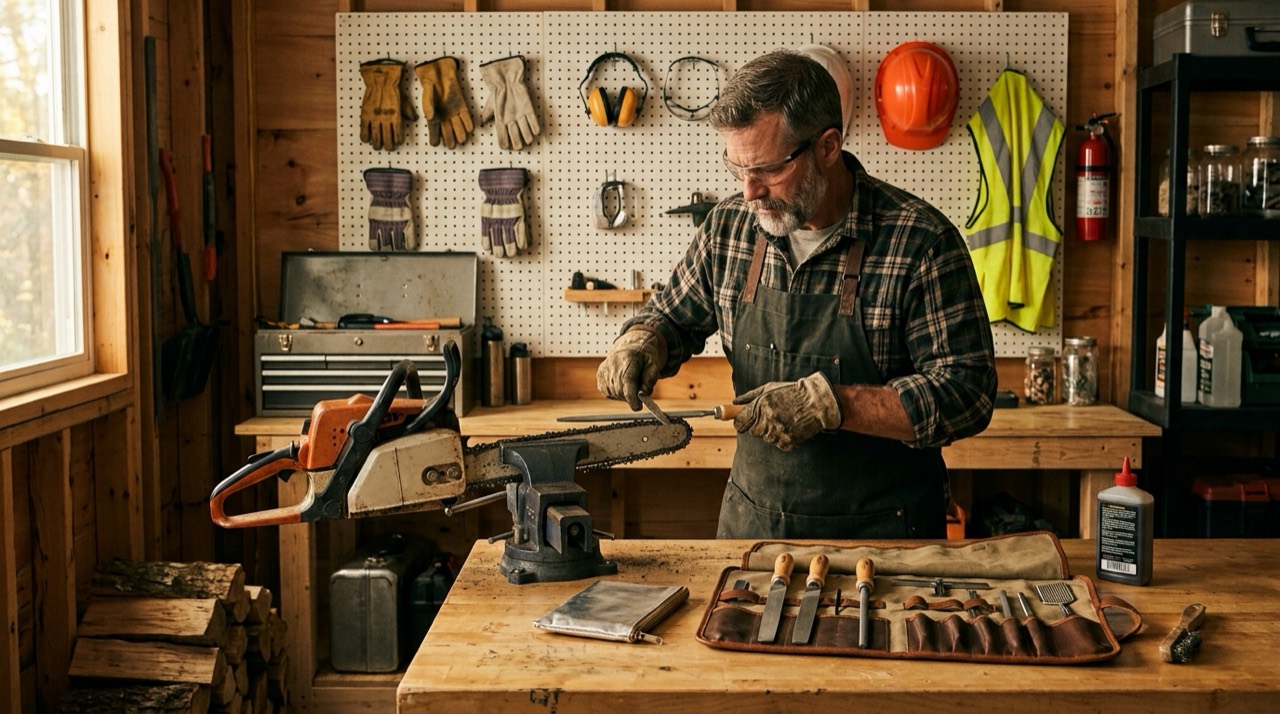
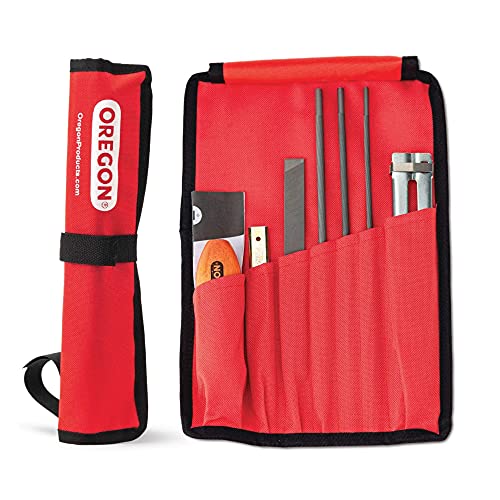
A chainsaw sharpening kit is a matched set of filing tools sold together in one pouch, usually a round file, a flat file, a filing guide, and a depth-gauge tool. Buying them as a kit means every piece is chosen to work with one chain pitch, so nothing is missing when you sit down to sharpen.Kits exist because sharpening well needs more than a single file. The round file cuts the tooth, but the flat file and depth-gauge tool set how deep each tooth bites, and the guide holds the angle. Assembling those parts separately is easy to get wrong, especially on pitch-specific pieces, which is why a bundled chainsaw sharpening kit is the simplest first purchase for a new saw owner.
What comes in a chainsaw sharpening kit?
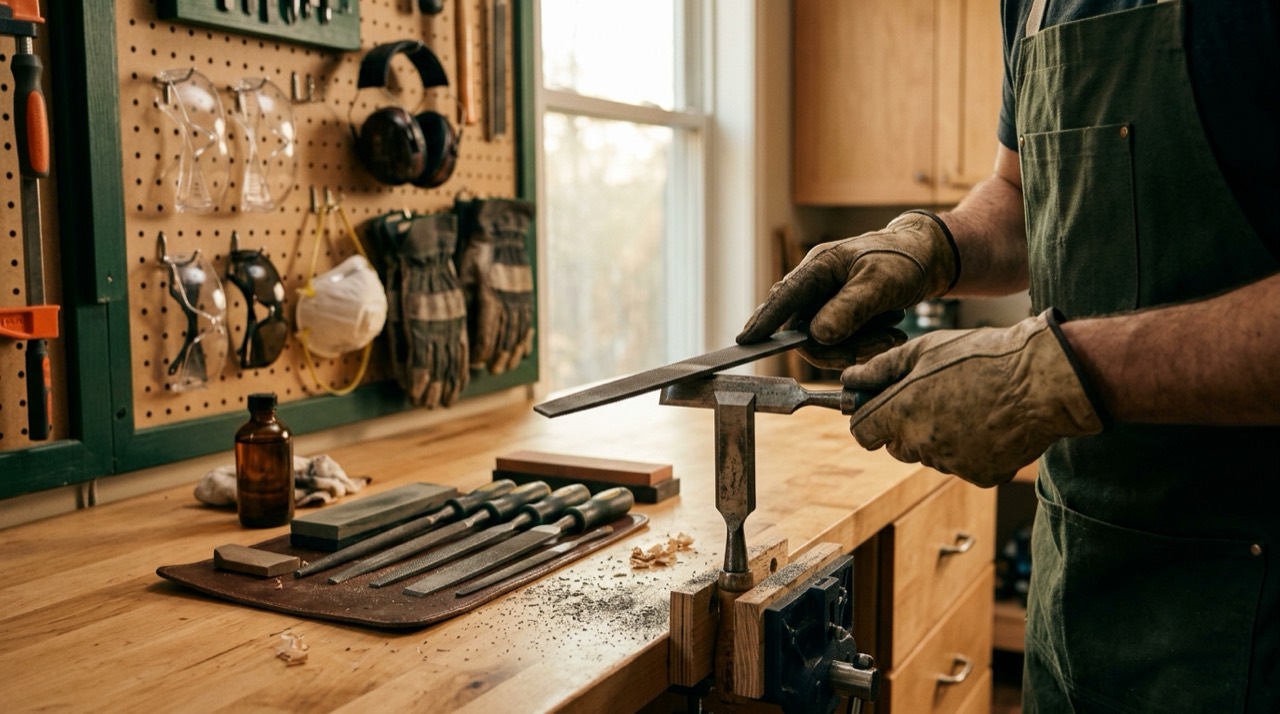
A typical chainsaw sharpening kit holds four or five tools, each doing one job in the sharpening sequence. Knowing what each piece is for helps you check that a kit is complete before you buy. The usual contents are listed below.- Round file: sharpens the top plate and side plate of each cutter, sized to the chain pitch.
- Flat file: lowers the depth gauges once they stand above the freshly filed cutters.
- Filing guide: a clip-on plate or roller that sets the top-plate angle for every tooth.
- Depth-gauge tool: a slotted guide that shows how much of each raker to file off.
- File handle and pouch: a grip for safe filing and a roll to keep the matched set together.
Some kits swap the separate files and guide for a single 2-in-1 tool, which files the top plate and lowers the depth gauge in one stroke. Either way, the goal is the same: set the edge, the angle, and the raker height correctly.
Which type of chainsaw sharpening kit should you choose?
Choose a kit by how you like to file and how many chains you keep. A simple field kit suits occasional users, a roller-guide or bar-mount kit suits owners who want repeatable angles, and a 2-in-1 kit suits anyone who wants speed with the least practice. The main kit types are described below.- Field file kit: round file, flat file, guide, and depth-gauge tool in a pouch for hand filing anywhere.
- Two-in-one kit: a combined file tool that sets the angle and depth gauge together for quick touch-ups.
- Roller-guide kit: adds a roller or clip-on guide that steadies the file for more consistent teeth.
- Bar-mounted kit: a jig that clamps to the bar and files every tooth at the same repeatable angle.
Powered options such as bench grinders and rotary tools sit outside the file-kit world; those are covered in our chainsaw sharpening guide. For pure hand filing, a field or roller-guide kit covers most owners.
How do you match a sharpening kit to your chain?
Match the kit to your chain's pitch, because the round file and 2-in-1 tools inside are all sized to a specific pitch. Read the pitch stamped on the drive links or printed on the chain box, then buy the kit version that lists that pitch and file diameter.Gauge, the thickness of the drive link, does not change which file you need, so use it only when buying a replacement chain, not a kit. If you run more than one saw, check whether they share a pitch before buying, since mixed pitches mean either a universal kit with several file sizes or more than one kit. Our chainsaw chains guide explains where to find the pitch and gauge markings, and reading them right saves buying the wrong file.
Brand-matched kit or universal kit — which should you buy?
A brand-matched kit sold for your saw's chain, such as a Stihl, Husqvarna, Oregon, or Pferd kit in your pitch, guarantees the file diameter and guide are correct, while a universal kit carries several file sizes to cover more than one chain. Match your pitch first, then decide how many pitches you need to cover.A single-pitch, brand kit is the simplest buy when you run one saw and know its pitch: everything inside fits, and there is nothing to sort. A universal kit earns its price when you own several saws of different pitches, since it bundles the common round-file sizes with one guide and depth-gauge tool. The trade is a little clutter and the need to pick the right file each time. Whichever you choose, confirm the kit lists your pitch, because a guide alone does not make a wrong-diameter file cut correctly. Our chainsaw chains guide shows where to read the pitch before you order.
What sets a beginner kit apart from a pro kit?
A beginner kit leans on a guide or a 2-in-1 tool that sets the angle for you, so good results come without practice, while a pro-style kit is often just quality bare files and a depth-gauge tool for someone who files free-hand. The difference is how much the kit steers your hand, not the quality of the edge either can reach.Beginner-friendly kits usually include a filing guide with the angle marked, sometimes a handle, and clear pitch labelling, all of which build good habits from the first stroke. Kits aimed at experienced filers strip that back to premium round and flat files, trusting the user to hold the angle, which is faster once the skill is there. A sensible path is to start with a guided kit, learn where the file should sit and how a sharp cutter looks and feels, then move to bare files or a roller guide for speed. The step-by-step filing method that both kinds follow is in our chainsaw sharpening guide.
Is a chainsaw sharpening kit worth it?
A chainsaw sharpening kit is worth it for almost every owner, because a sharp chain cuts faster, safer, and with less strain on the saw than a dull one, and hand filing removes the least metal so the chain lasts. The upfront cost is small next to a new chain, and most of the kit lasts for years.Only the files are consumable; the guide, depth-gauge tool, and handle are one-time buys. Keeping the chain sharp also protects the chainsaw bar and drivetrain from the strain a blunt chain puts on them. For the full sharpening method and the file-size chart, see our chainsaw sharpening guide, and for keeping the rest of the saw in shape, our chainsaw maintenance guide.
How do you look after a chainsaw sharpening kit?
Look after a sharpening kit by keeping the files dry, tapping the filings out after each use, and rolling everything back into its pouch so the matched set stays together. The guide and depth-gauge tool last for years, but the files rust and clog if they are left loose and damp.A few habits keep a kit ready. Store the pouch somewhere dry, since surface rust dulls a file fast; brush or tap packed filings from the file teeth so they keep biting; and never oil the file faces, because oil loads them and kills the cut. Check the round files now and then, and replace any that slide over a tooth without shaving metal, keeping a spare in the roll. Where the kit lives between jobs matters too; our outdoor tool storage guide covers keeping files, saws, and PPE dry and to hand, and the wider upkeep the saw needs is in our chainsaw maintenance guide.
Hand sharpening kit or bench grinder — when is a machine worth it?
A hand sharpening kit suits almost every owner, because it removes the least metal, costs little, and travels anywhere, while a bench or rotary grinder is worth it only for many chains at once or for a chain damaged by rock or nails. Both restore a keen edge; they differ in speed and how much steel they take.A hand kit files a thin, controlled amount from each cutter, so a chain kept up with a file yields the most sharpenings over its life. A grinder is faster and can re-cut a badly rounded or unevenly worn chain in one pass, but its stone removes more steel and, pushed too hard, can overheat and soften the cutter. For a homeowner or a working saw kept sharp as it goes, a kit is enough; a grinder makes sense in a shed sharpening a stack of chains or repairing damage. The powered options are covered in our chainsaw sharpening guide.