
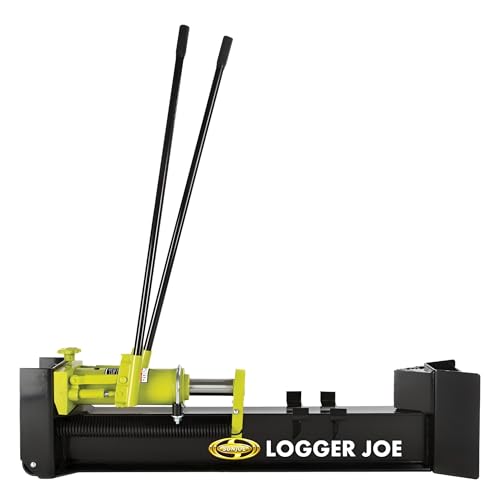


What are manual and kinetic log splitters?
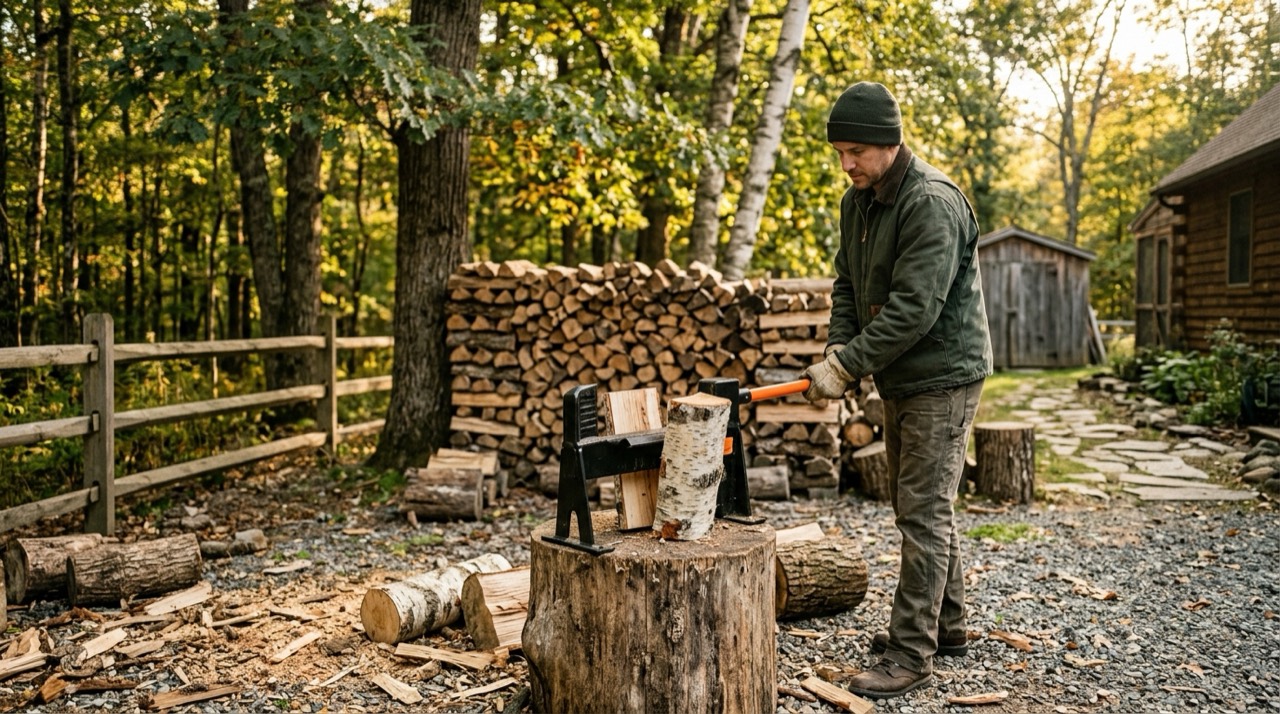
Manual and kinetic log splitters break firewood without a slow hydraulic ram doing the pushing. Manual models use your own effort through a lever pump, foot pedal, or slide hammer, while kinetic models spin a flywheel that fires a wedge through the round in roughly two seconds.
Both families sit inside the wider wood processing and splitting category, and both exist because a full gas or hydraulic log splitter is overkill for many households. A manual splitter is quiet, cheap, and needs no fuel or outlet. A kinetic splitter still runs on gas or a battery, but it swaps the heavy hydraulic pump for a spinning flywheel, so it cycles far faster than a comparable electric hydraulic splitter.
How do manual hydraulic, slide-hammer, and kinetic splitters work?
Manual hydraulic splitters build pressure in a small cylinder with a hand or foot pump, slide-hammer splitters convert the momentum of a dropped weight into a downward strike, and kinetic splitters release the stored spin of a flywheel through a rack-and-pinion drive. Three mechanisms share one job: concentrating force along the grain.
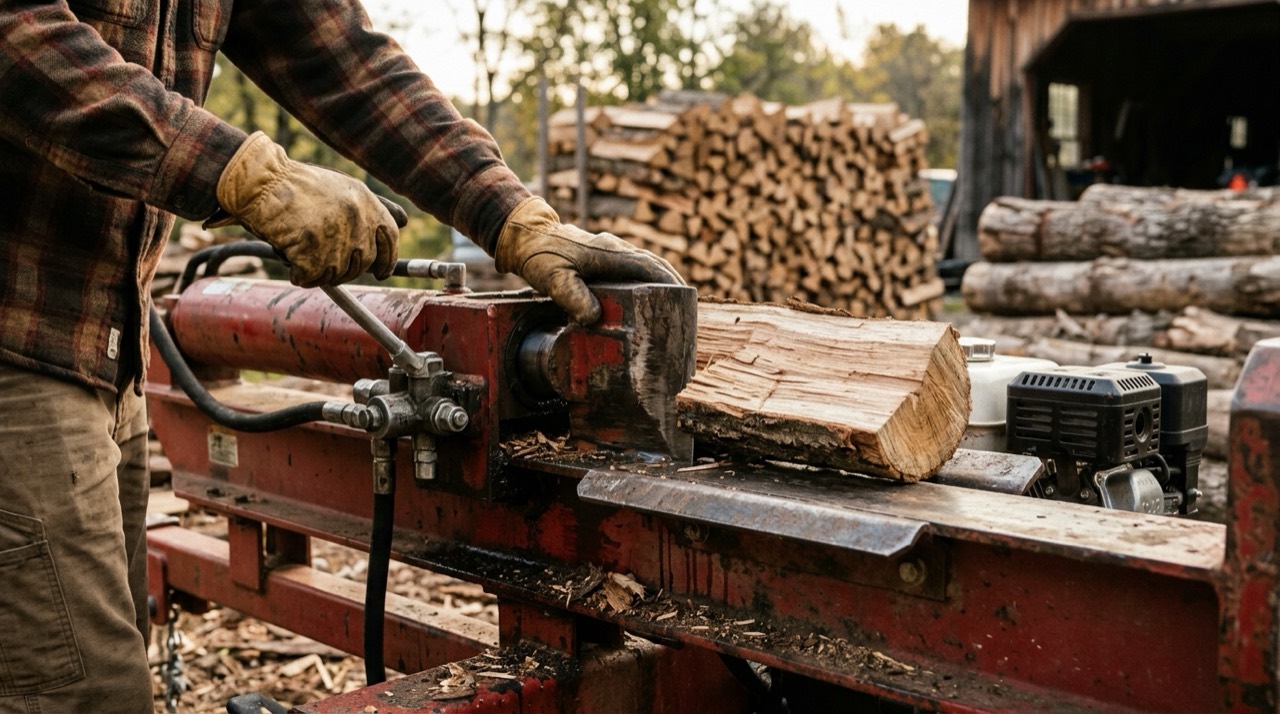
A manual hydraulic unit runs a two-speed pump. The fast stage moves the ram quickly until the wedge touches wood, then the pump shifts to a slower, higher-force stage that supplies the tonnage for the split itself. Because the ram advances in steps, a knotty round asks for more strokes rather than defeating the machine outright.
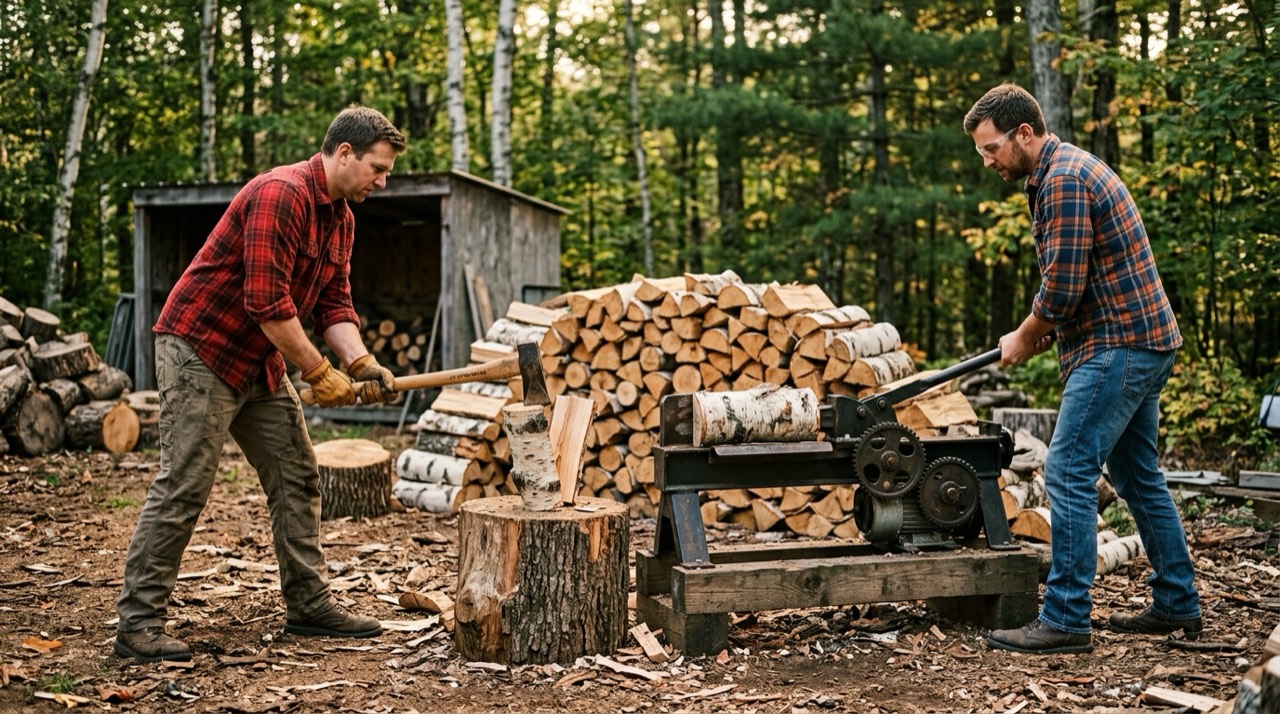
A slide-hammer splitter has no cylinder at all. You lift a heavy weight that rides on a vertical shaft and drop it onto a stop, and that momentum drives a wedge a little deeper into the round with every strike. It is a controlled, guided version of swinging a maul, but with the blade held safely away from your hands.
A kinetic splitter stores its energy before the split begins. An engine or motor keeps one or two flywheels spinning; when you trigger the cycle, a rack-and-pinion drive couples that stored rotation to the ram and throws the wedge through the log in about two seconds, after which the ram auto-returns. The catch is that a flywheel cannot dwell, so kinetic machines love volume but dislike the very toughest crotch wood.
Manual, kinetic, and hydraulic splitters compared
The four splitting methods below trade speed, force, and price against each other in predictable ways.
| Type | How it is powered | Typical cycle | Best for | Main trade-off |
|---|---|---|---|---|
| Manual hydraulic | Hand or foot pump | Several pumps per split | Occasional firewood, no power nearby | Tiring on knotty rounds |
| Slide-hammer | Your arm drives a sliding weight | One or two strikes | Small, straight rounds | Effort rises with log size |
| Kindling splitter | A mallet tap on a fixed blade | One tap | Kindling and thin offcuts | Not for full-size logs |
| Kinetic (flywheel) | Gas engine or battery motor | Around two seconds | High volume, fast splitting | Costs more, less brute tonnage than big hydraulics |
Manual hydraulic units are the value pick for anyone burning a few fires a week. Kinetic units win when you have cords to get through and cannot stand the slow return stroke of a hydraulic ram.
How much splitting force do these splitters deliver?
Manual hydraulic splitters are typically rated around 7 to 12 tons of published force, which is enough for most seasoned rounds up to about a foot across. That rating comes from the mechanical advantage of a two-speed hand pump, so the number on the box assumes you keep pumping; a knotty or green round simply takes more strokes.
Kinetic splitters are rated differently. Because a flywheel releases stored energy in one burst, makers describe them by the hydraulic class they match rather than a pump rating. DR markets its RapidFire flywheel machines as matching the output of hydraulic splitters in the 20-plus-ton range, while battery units such as the Ryobi 40V splitter are published for smaller rounds up to about 10 inches. Treat every figure as a manufacturer specification, not a bench measurement.
What size and type of wood can they handle?
Diameter, dryness, and grain decide whether a manual or kinetic splitter copes. Straight, seasoned rounds up to roughly 10 to 12 inches split cleanly on most units in this class. Green, stringy, or heavily knotted wood resists any splitter and is where these lighter machines struggle first, because they cannot dwell under load the way a slow hydraulic ram can.
Buck your logs to the machine's length limit before you start; a chainsaw sized for firewood makes that step quick, and our gas chainsaw guide covers saws suited to bucking. Splitting is easier when rounds are cut square and stood on a flat face.
How do you set up and split firewood step by step?
Set up on firm, level ground, buck your rounds to the machine's length limit, and split one seasoned piece at a time with your hands clear of the wedge. A repeatable routine is what turns a pile into stacked firewood without wasted effort. The core sequence is listed below.
- Level the splitter on solid ground or a sturdy bench so it cannot rock while you work.
- Buck logs to the machine's length limit with a saw from our gas chainsaw guide, and stand each round on its flattest cut face.
- Seat the round against the wedge, centred on the frame, before you apply any force.
- Work the pump lever, drop the slide weight, or trigger the flywheel in steady, controlled cycles.
- Let the wedge open the split fully, then clear both halves before loading the next round.
- Re-split large halves down to burnable size, standing each piece squarely as before.
Working through a session this way keeps the rhythm efficient and your hands well away from the splitting path.
What common mistakes make manual and kinetic splitting harder?
Most trouble comes from the wood and the setup rather than the machine. Feeding green or badly knotted rounds, splitting off-centre, and steadying a log by hand are the errors that waste effort and create risk. The most common mistakes are listed below.
- Splitting green or unseasoned wood, which is far tougher and belongs on a rack to dry first.
- Loading oversized or heavily knotted rounds that a light manual or battery unit cannot open.
- Setting the round off-centre, so the wedge glances instead of driving straight down the grain.
- Steadying a moving round by hand, which is the single most dangerous habit on any splitter.
- Skipping the length check, then jamming an over-long round that fouls the frame.
- Working bent over the ground instead of at a comfortable height on a sawhorse or log stand.
Season and buck your wood square first, and most of these problems disappear before you start.
Who is a manual or kinetic splitter right for?
Match the machine to how much you burn. A manual splitter suits light users, renters, and anyone who wants no engine noise, no fuel, and a tool that stores in a corner. A kinetic splitter suits a regular burner who processes a cord or more each season and is tired of a hydraulic ram's slow cycle. If you split only a wheelbarrow of kindling now and then, a good splitting axe or maul may be all you need.
Our best manual and kinetic splitter picks group real models by these buyer types so you can shortlist quickly.
How do you split safely with a manual or kinetic splitter?
Keep both hands clear of the wedge and never steady a round while the ram or flywheel is moving. Kinetic machines are especially demanding here because the cycle is fast and the ram returns on its own, so you set the log, release, and keep your hands back. Wear eye protection and gloves, since split wood throws chips and slivers; our guides to work gloves and hearing and eye protection cover suitable gear.
Work at a comfortable height on a stable base rather than bending over the ground, which a proper sawhorse or log stand makes easier and safer. These guides are general information, not a substitute for reading the manual that ships with your machine. Large, leaning, or spring-loaded trunks belong to a trained professional with the right equipment.
How do you maintain and store a manual or kinetic splitter?
Maintenance is light on this class of splitter, but a few habits keep it reliable for years. Manual hydraulic units want their fluid level and seals checked; slide-hammer tools want almost nothing; kinetic machines follow small-engine or battery care. Matching upkeep to the mechanism is the whole task.
A manual hydraulic splitter needs its hydraulic fluid kept to the maker's mark and its ram wiped clean so grit does not score the seals; a stiff or leaking pump usually points to a seal or fluid issue rather than a worn-out machine. A slide-hammer splitter is close to maintenance-free, so keep the shaft clean and lightly oiled and check the wedge stays tight. A gas kinetic machine is serviced like any small engine, with fresh fuel, oil changes, and a clean air filter and spark plug per its manual, while a battery kinetic unit only asks that you store the pack indoors at a moderate charge.
Store any splitter dry and under cover so the frame does not rust and the wedge stays keen; our outdoor tool storage guide covers protecting seasonal gear between winters. Treated this way, a simple manual or slide-hammer splitter can outlast several powered machines.
Where do you find a kinetic log splitter for sale, and what should you expect?
Kinetic log splitters are sold by only a handful of brands, so the shortlist is short. DR Power (now under Generac) offers the RapidFire flywheel range in gas and battery versions, and Ryobi sells a cordless 40V kinetic splitter through big-box retailers. A few importers list flywheel clones, but parts and support are the deciding factor, so stick with brands that carry spares.
Expect a kinetic splitter to cost more than a manual hydraulic unit of similar log capacity; you are paying for speed, not raw tonnage. If budget is the priority and you split only occasionally, a manual hydraulic splitter or a maul does the same job for far less. Compare the current models on our manual and kinetic splitter roundup, and see the firewood tools guide for the racks, carriers, and moisture meters that finish the job.