
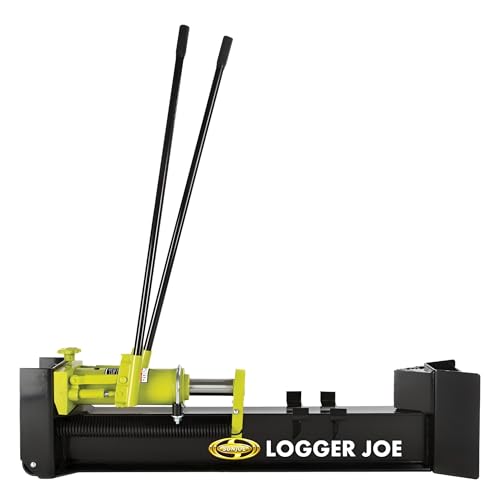


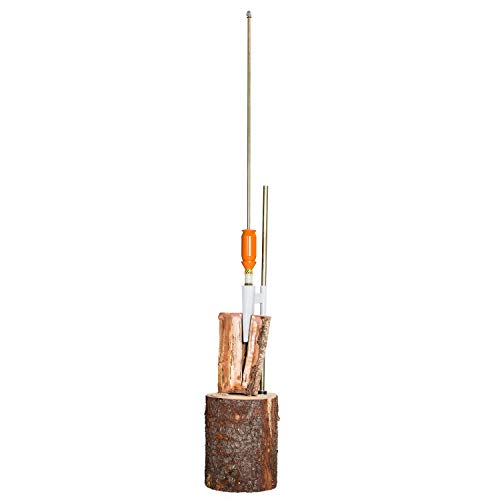
What is the DR RapidFire kinetic log splitter?
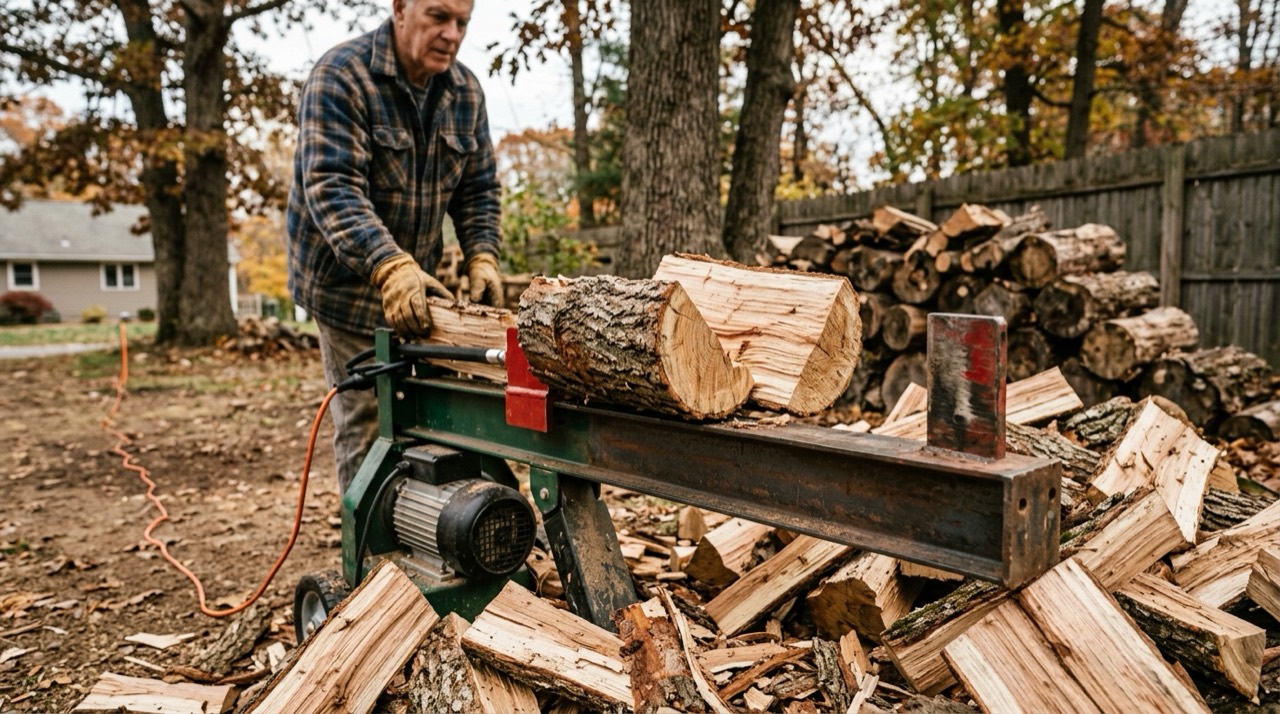
The DR RapidFire is a flywheel-driven kinetic log splitter that fires a wedge through a round in about two seconds instead of grinding through a slow hydraulic stroke. It stores engine energy in twin spinning flywheels, then releases it in a burst through a rack-and-pinion drive, so the ram advances and auto-returns almost instantly.
DR Power, now part of Generac, built its reputation on this design, and the RapidFire line is the reference point most buyers compare other kinetic splitters against. Where a gas hydraulic splitter trades speed for raw tonnage, the RapidFire trades a little tonnage for a dramatically faster cycle.
How does the RapidFire flywheel mechanism work?
The RapidFire works by banking engine energy in twin flywheels and releasing it in one fast burst. The engine spins the flywheels up to speed; when you pull both control handles, a rack-and-pinion drive engages, converting that stored rotation into a rapid forward thrust of the ram and wedge, which then auto-returns. Storing the energy first is what makes the cycle so quick.
Because both flywheels contribute, the machine delivers a strong, even push despite having no hydraulic cylinder. Between logs the engine simply respins the flywheels back to speed, ready for the next cycle, so throughput depends on how fast you reload rather than on a pump rebuilding pressure. This is the same principle behind the Ryobi 40V cordless kinetic unit, scaled up to a gas engine and a larger frame.
Which DR RapidFire models are available?
DR sells the RapidFire in a small family that shares the flywheel core but differs in engine size and frame. The lineup has typically included a lighter Premier model, a mid Pro-XT, and the heavier Pro-XL, with a battery-powered version added more recently to the range. Model names and availability shift year to year, so check the current DR catalogue before you buy.
The three things that separate the models are listed below.
- Engine or motor output, which sets how fast the flywheels respin between cycles.
- Flywheel mass and frame size, which decide the largest round the machine comfortably takes.
- Portability features such as wheel size and tow options for moving the unit around a property.
Every model uses the same fast-cycle principle, so the choice is mostly about how much wood you process and how big your rounds run.
Gas or battery RapidFire: which suits you?
Choose between gas and battery by weighing endurance against convenience. The gas RapidFire models keep splitting as long as you feed them fuel, respin the flywheels quickly, and cope with the largest rounds in the range, which makes them the choice for all-day sessions and bigger wood. The trade-off is engine upkeep, pull-starting, and noise that means hearing protection is non-negotiable.
The battery RapidFire removes fuel, fumes, and pull-starts, so it starts on a control and parks in a garage. Its ceiling is runtime and outright capacity, so it fits lighter, more intermittent use. If a cordless kinetic splitter appeals, also weigh the smaller Ryobi 40V kinetic unit, which targets the same fume-free niche at a lower price and log capacity.
How much can a RapidFire split, and how fast?
DR markets the RapidFire as matching hydraulic splitters in the 20-plus-ton class while cycling in around two seconds, which is the whole point of the machine. Those are manufacturer figures rather than bench measurements, but owner feedback broadly supports the speed claim: the auto-return means the limiting factor is how quickly you can load the next round, not the machine.
Capacity depends on the model and the wood. Seasoned rounds within the frame's length limit split cleanly, while very large, green, or heavily knotted pieces are where any kinetic machine works hardest, because a flywheel cannot dwell under load the way a hydraulic ram can. For the toughest crotch wood, a hydraulic splitter still has an edge on brute force.
How do you operate a RapidFire safely?
Operate the RapidFire with both hands on the controls and nothing near the wedge while it fires. A fast, auto-returning ram is unforgiving, so the routine matters. The sequence is listed below.
- Set the machine on firm, level ground and let the engine warm so the flywheels spin freely.
- Buck rounds to the frame's length limit and stand each on a flat cut face.
- Seat the round centred against the wedge before touching the controls.
- Engage both handles together so the split fires with your hands clear.
- Let the ram auto-return fully, then clear the halves before the next round.
Wear eye protection and hearing protection throughout, because a gas kinetic machine is both loud and quick.
How does the RapidFire compare with hydraulic and battery kinetic splitters?
Compared with the alternatives, the RapidFire trades a little brute tonnage for a much faster cycle. The table sets the three paths side by side on the attributes that decide a firewood day.
| Attribute | Gas kinetic (RapidFire) | Battery kinetic (Ryobi) | Gas hydraulic |
|---|---|---|---|
| Cycle time | About 2 seconds | About 2 seconds | Much slower |
| Endurance | As long as fuel lasts | Limited by battery | As long as fuel lasts |
| Toughest wood | Good | Modest | Best, dwells under load |
| Noise and fumes | High | None | High |
| Upkeep | Small engine | Battery care | Engine plus fluid |
For high-volume seasoned wood the RapidFire is hard to beat; for the very worst knotty crotch rounds a gas hydraulic splitter still holds the tonnage edge.
Who should buy a DR RapidFire?
The RapidFire suits a serious firewood burner who processes cords each season and has run out of patience with a slow hydraulic cycle. If your rounds are mostly straight and seasoned and you value throughput, the fast cycle pays for itself in time saved over a season.
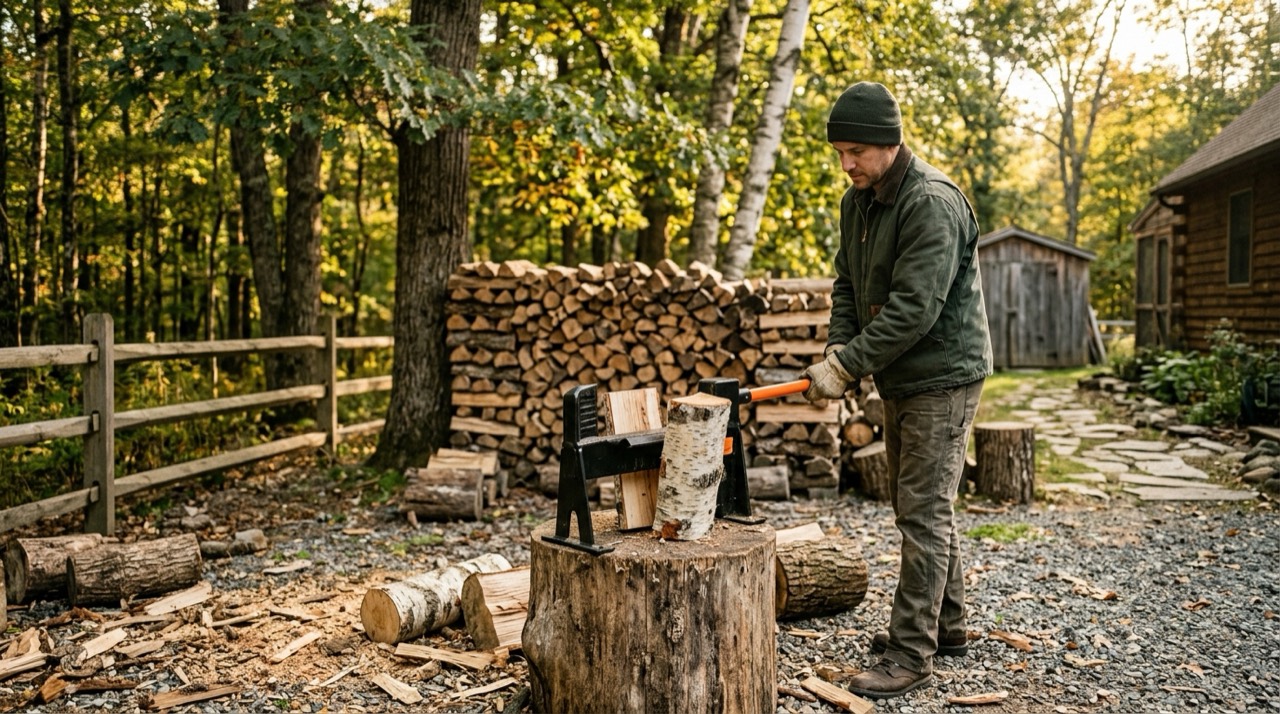
It is less sensible for light users, who are better served by a manual splitter or a good splitting maul, and for anyone whose wood is consistently huge and knotty, where hydraulic tonnage matters more than speed. Compare it against battery kinetic and manual options on our manual and kinetic splitter roundup before committing to the premium. Whatever you choose, pair it with eye and hearing protection, because a gas kinetic machine is both loud and fast.
What common problems do RapidFire owners run into?
Most RapidFire complaints trace to wood choice and engine care rather than the flywheel drive. The recurring issues, and their fixes, are listed below.
- Stalling on huge or green crotch wood: season and sort it, or send the worst pieces to a hydraulic machine.
- Hard starting after storage: run stabilised fuel or empty the tank between seasons, per the manual.
- A wedge that no longer bites cleanly: keep it sharp and the rack and pinion clear of debris.
- Vibration on soft ground: level the machine on a firm base so the frame does not walk.
The flywheel core itself is mechanically simple, so genuine drive failures are rare next to ordinary small-engine niggles.
How do you move a RapidFire around a property?
Move a RapidFire on its wheels or, on tow-capable models, behind a machine at low speed over firm ground. The gas units are heavy, so plan the route and split near where the wood is stacked rather than hauling rounds far. Larger models in the range add bigger wheels and tow options precisely so you can position the machine beside a woodpile, which saves far more effort than carrying every round to a fixed splitter. Check the current model's transport rating before towing it anywhere.
What does a RapidFire cost to run?
Running costs on a gas RapidFire look much like any small-engine tool rather than a hydraulic machine. There is no hydraulic fluid to change, which removes one messy maintenance job, but the engine still wants fresh fuel, oil changes, and clean air and spark according to the manual. Storing it with stabilised fuel or an empty tank between seasons keeps starts reliable.
The flywheel drive itself is mechanically simple, so beyond the engine the main wear items are the rack, pinion, and wedge, all supported through DR and Generac dealers. That parts backing is the single biggest reason to favour a branded RapidFire over an unbranded flywheel clone that may be impossible to service. Round out the setup with a stable sawhorse or log stand and the racks in our firewood tools guide so seasoned rounds are ready when the machine is.