


What is a bow saw?
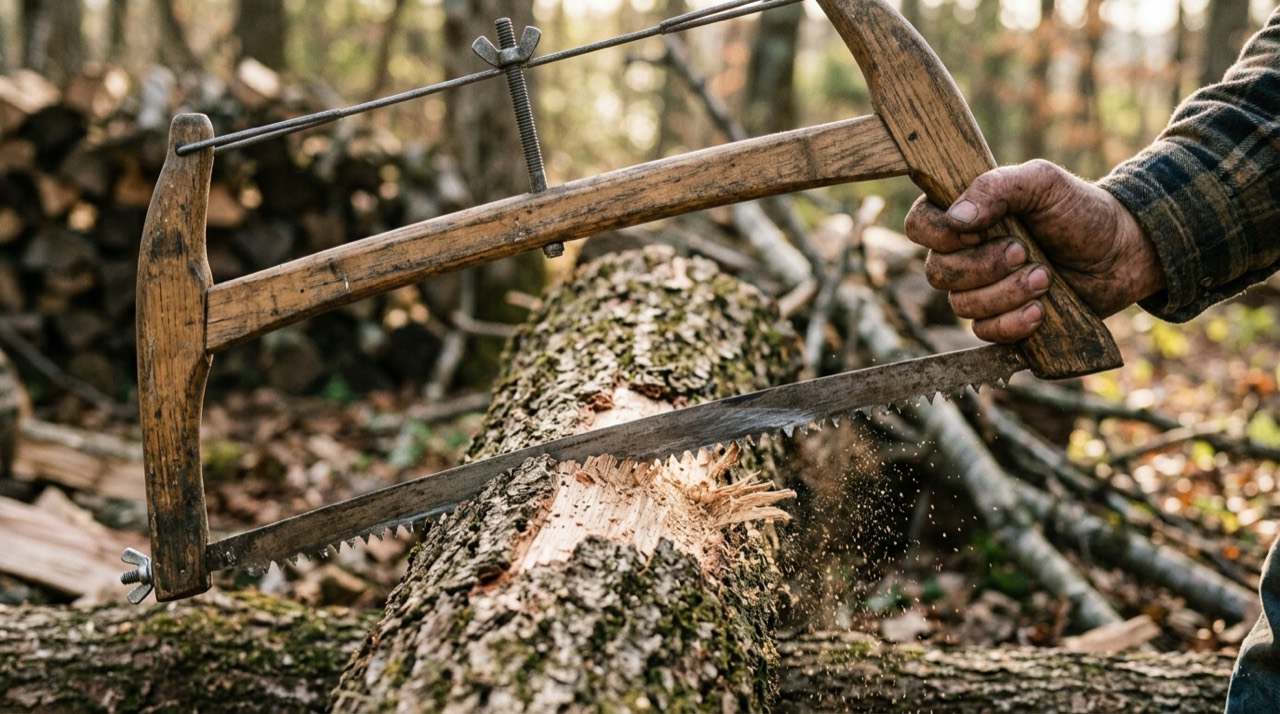
A bow saw is a hand saw with a tubular steel frame shaped like an archer's bow that holds a thin, coarse-toothed blade under tension. It cross-cuts logs, branches, and firewood quickly, cutting on both the push and the pull stroke. Homeowners, gardeners, and campers reach for one when a folding handsaw is too slow and a mini chainsaw is more tool than the job needs.
The frame does the hard work of holding the blade rigid, so the blade itself can stay thin and aggressive. Flip the tension lever and the blade drops out for replacement, which is why a good bow saw lasts decades — you renew the blade, not the whole tool. Older take-down versions with wooden frames are called buck saws, and the Swedish design is often labelled a Swede saw.
What are the parts of a bow saw?
A bow saw has four working parts: the bowed frame, the replaceable blade, a tensioning device, and a handle with a knuckle guard. Learning the parts makes buying spares and swapping blades far simpler, because every bow saw shares the same basic layout whatever the brand.
- Frame — the tubular steel or aluminium bow, usually flattened into a D-shape, that holds the blade rigid and sets how deep a log the saw can swallow.
- Blade — a long, thin, coarse-toothed steel strip, pinned at each end and treated as a cheap wear part rather than a permanent fixture.
- Tensioner — a cam lever or wingnut that pulls the blade taut; flipping it drops the blade out in seconds.
- Handle and knuckle guard — the grip you push from, often wrapped around a guard that shields your hand from bark, thorns, and the frame itself.
- Mounting pins — the two small pins or slots that locate the blade's end holes and keep it square in the frame.
Because the frame outlasts many blades, most of a bow saw's working life is spent renewing that one cheap part rather than replacing the tool.
What is a bow saw best for?
A bow saw is best for cross-cutting green or seasoned wood between roughly 1 and 6 inches thick — limbing branches, bucking firewood to length, felling saplings, and cutting camp wood. Its big teeth and deep gullets clear the wet fibres that would pack solid in a fine blade.
Match the saw to the wood in front of you:
- Branches and prunings up to about 3 inches — a 21-inch frame or a folding camp saw handles these all day.
- Firewood rounds and thick limbs up to about 6 inches — a 24- or 30-inch frame gives a longer, faster stroke.
- Clean cuts on living plants near buds and branch collars — reach for a pruning saw or loppers instead, which leave tidier wounds that heal.
- Large logs, standing trees, or storm cleanup — that is chainsaw work; a bow saw is slow and tiring once wood passes 6 to 8 inches.
What size bow saw do I need?
Bow saw size is set by the thickness of wood you cut most often. A 21-inch saw suits branches and general yard work, a 24-inch handles most firewood, and a 30-inch clears big rounds fastest but is heavier and harder to steer through a cut. Longer blades give a longer stroke, so each pass removes more wood.
Frame depth matters as much as blade length. The gap between the blade and the top of the bow decides how thick a log you can push all the way through — a deep D-shaped frame swallows a fatter round than a shallow, flat one. If you mostly buck firewood, size up; if you mostly trim shrubs, a compact 21-inch frame is easier to control and lighter to carry.
Which blade should I fit — green wood or dry wood?
Fit a green-wood (raker-tooth) blade for living branches and wet logs, and a dry-wood (peg-tooth) blade for seasoned firewood. Raker blades group cutting teeth with scoop-shaped rakers that lift damp sawdust out of the kerf, so the blade keeps biting instead of clogging in sappy wood.
Peg-tooth blades use rows of simple triangular teeth and leave a cleaner cut in dry, hard timber, where a raker blade can feel rough and grabby. Most saws ship with a general green-wood blade because that is what people cut most — spare blades are cheap, so keeping one of each and swapping them takes less than a minute. Blade coarseness runs from about 4 to 9 teeth per inch; fewer, bigger teeth cut fast in soft green wood, while finer teeth suit seasoned hardwood. Keeping one green-wood and one dry-wood blade on hand covers almost every job.
Full-size or folding — which should you carry?
Choose a full-size tubular bow saw for the woodpile and a folding take-down saw for camping, the truck, or a backpack. A rigid steel frame cuts straighter and faster on big rounds, while a folding aluminium frame packs flat and protects the exposed blade until you tension it.
Folding saws such as classic take-down camp models trade a little rigidity for portability, and they cut well above their size once assembled. If a saw lives in your shed and only meets a woodpile, a heavy steel 24- or 30-inch frame is the better buy. If it travels with you, weight and pack size win. Our best bow saw picks cover both, from woodpile workhorses to packable camp saws.
How does a bow saw compare with a pruning saw, loppers, or a chainsaw?
A bow saw sits between hand pruners and a chainsaw: it out-cuts a pruning saw or loppers on firewood-sized wood, yet stays safer and quieter than a powered saw on small jobs. Each tool owns a band of wood sizes, and matching the tool to that band saves both effort and money. The common hand-cutting tools line up by the wood they suit below.
| Tool | Best wood size | Cut quality | Speed | Best use |
|---|---|---|---|---|
| Hand pruners | Up to ~3/4 in | Very clean | Instant | Stems, twigs, deadheading |
| Loppers | Up to ~2 in | Clean | Fast | Thicker branches within reach |
| Pruning saw | ~1-5 in | Clean on live wood | Moderate | Tidy cuts near branch collars |
| Bow saw | ~1-6 in | Coarse | Fast | Firewood, limbs, camp wood |
| Mini chainsaw | ~2-6 in | Rough | Very fast | Repeat cuts, light felling |
Reach for a bow saw when the job is bucking or limbing more wood than loppers can bite but less than justifies pulling out fuel, oil, and hearing protection for a chainsaw. On living plants where the wound must heal cleanly, a pruning saw or loppers leaves a tidier cut; on a stack of firewood, the bow saw wins on speed. Once wood passes roughly 6 inches, or a tree is standing or leaning, the job moves to the chainsaws range and, if you are unsure, a professional.
How do you use a bow saw safely?
Use a bow saw safely by securing the wood first, keeping your free hand and legs out of the blade's path, and letting the saw's own weight feed the cut. Long, smooth strokes that use most of the blade cut faster and tire you less than short, forced jabs. Start the kerf with a few gentle pull strokes, brace your thumb well clear of the teeth, then settle into a steady rhythm.
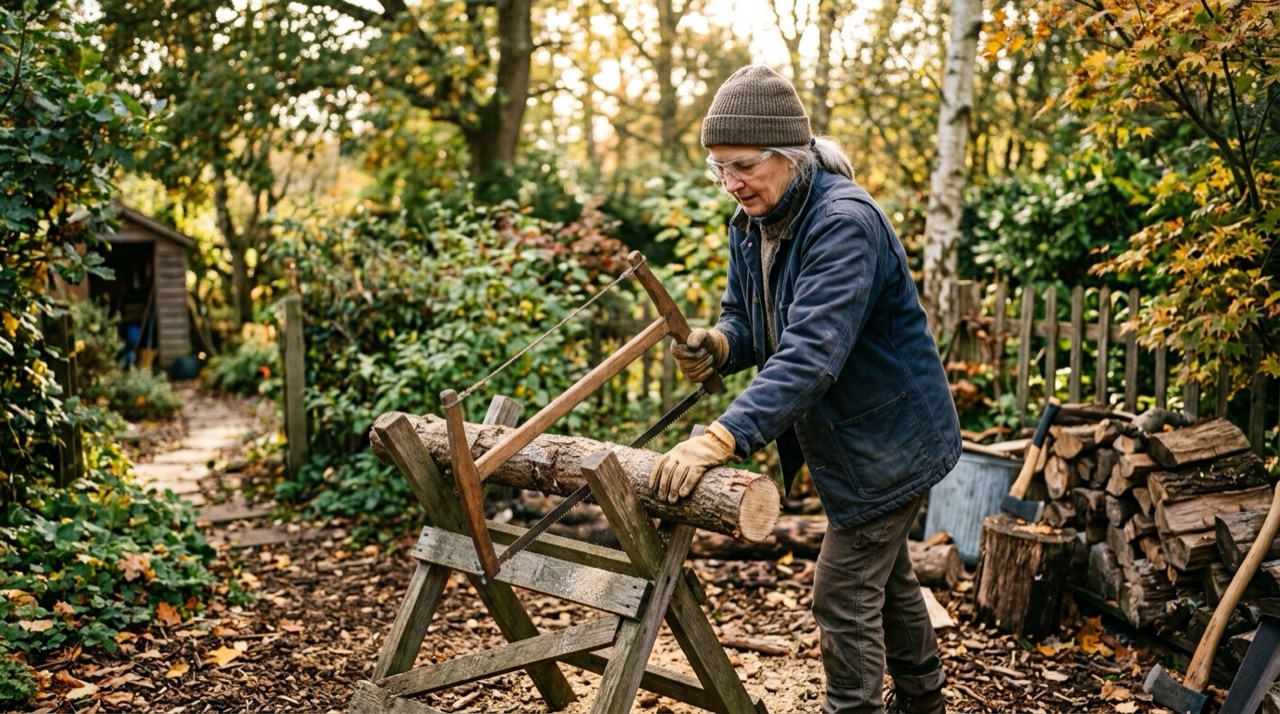
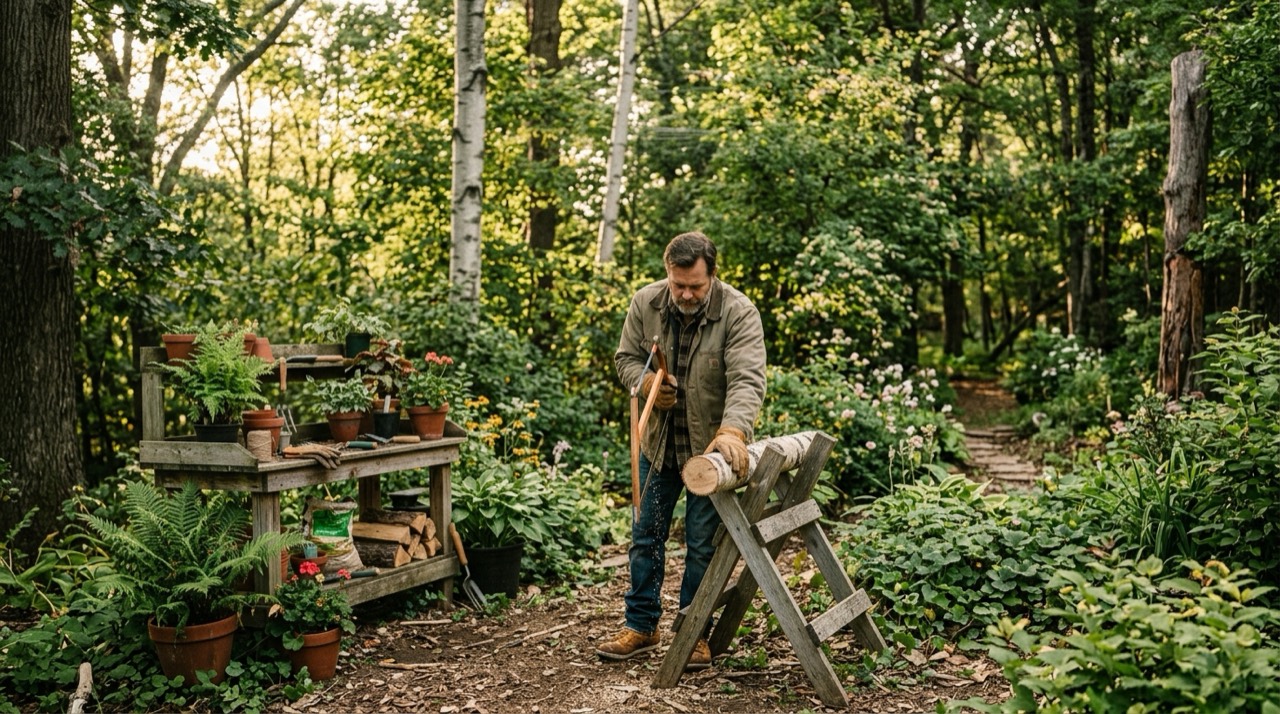
Wear work gloves and eye protection, and steady the wood on a sawhorse or log stand rather than holding it with your hand or foot. Watch for the blade binding as the cut closes on itself — a pinched blade jerks the saw and can slip. Fit the blade guard for storage, keep the blade lightly oiled against rust, and treat felling anything large or leaning as a job for a chainsaw and, if in doubt, a professional. For jobs beyond hand-sawing, compare your options in bow saw vs hacksaw, or browse the wider hand and cutting tools range for the right tool for finer jobs.
How do you keep a bow saw cutting well?
Keep a bow saw cutting well by storing it dry, wiping the blade clean of sap after each use, and renewing the blade the moment it drags. The frame needs almost nothing; the blade is where all the maintenance lives, and because a spare costs little, upkeep is cheap.
After a cutting session, brush the sawdust out of the frame, run an oily rag down the blade to lift sap and hold off rust, and fit the blade guard before the saw goes on its hook. A blade that wanders, grabs, or leaves a rough, slow cut has usually dulled or lost tension rather than failed outright — check tension first, then fit a fresh blade if the teeth are rounded or chipped. For the full routine on choosing, tensioning, and de-rusting blades, see the bow saw blades guide, and keep a little bar and chain oil on the shelf for rust protection.
What mistakes should you avoid with a bow saw?
The most common bow saw mistakes are forcing the cut, running a slack or wrong-tooth blade, and holding the wood unsafely. None damages the saw as fast as it tires and endangers the user, and every one is easy to avoid once you know the pattern.
- Forcing the saw — bearing down hardens the work and makes the blade wander; let the saw's weight and long strokes do the cutting.
- Running the wrong blade — a dry-wood peg blade clogs in green timber and a green-wood raker blade cuts rough in seasoned hardwood, so match the blade to the wood.
- Under-tensioning — a loose blade buckles, binds, and cuts crooked; tension it until it rings and stays straight.
- Holding wood by hand or underfoot — steady the piece on a sawhorse or log stand instead, and keep your free hand behind the teeth.
- Skipping eye protection — dry chips flick back toward your face, so wear eye protection even on small jobs.
- Sawing loaded branches blind — a limb under tension can snap back, so read the wood and relieve the compression side first.