


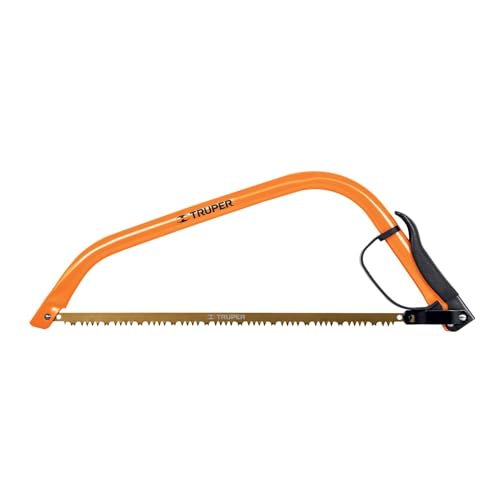


Choosing, Tensioning, and Caring for Bow Saw Blades
A bow saw is only as good as the blade it holds, and blades are cheap, so choosing the right one and keeping it tensioned and rust-free matters more than the frame. The right tooth pattern, correct tension, and a wipe of oil will out-cut an expensive saw running a dull, slack blade every time.
Which blade type should you fit?
Fit the blade type to the wood's moisture. Green-wood (raker) blades group cutting teeth with scoop-shaped rakers that lift wet sawdust out of the kerf, so they slice living branches and fresh logs without clogging. Dry-wood (peg) blades use finer rows of plain triangular teeth and leave a cleaner, faster cut in seasoned hardwood. The comparison below lines up the two.
| Blade type | Tooth pattern | Typical TPI | Best on | Weakness |
|---|---|---|---|---|
| Green-wood (raker) | Cutters plus rakers | ~4-6 | Wet, sappy, living wood | Rough in dry hardwood |
| Dry-wood (peg) | Plain peg teeth | ~6-9 | Seasoned firewood | Clogs in green wood |
Blade length should match your frame — a 21-inch saw takes a 21-inch blade — and coarser, larger teeth cut faster while finer teeth cut cleaner. Keeping one green and one dry blade covers almost every outdoor job.
How do you read a bow saw blade's tooth pattern?
Read a bow saw blade by its tooth shape and spacing: raker blades group two or four pointed cutting teeth with a scooped raker between them, while peg blades run a simple row of evenly spaced triangular teeth. The pattern tells you at a glance which wood the blade is built for.
- Raker (green-wood) pattern — pointed cutters slice the wood fibres and the scooped rakers plane the loosened chips out of the kerf, which is what stops sappy wood clogging the blade.
- Peg (dry-wood) pattern — plain triangular teeth, finer and more numerous, that shear cleanly through hard, dry fibres where there is little wet sawdust to clear.
- Teeth per inch (TPI) — printed or countable along the blade; roughly 4 to 6 TPI cuts fast in green wood, while 6 to 9 TPI leaves a cleaner cut in seasoned timber.
- Set — the slight left-right splay of the teeth that cuts a kerf wider than the blade so it does not jam; more set suits wet wood, less suits dry.
Once you can spot a raker from a peg blade, buying the right spare — or telling why a cut feels rough — becomes obvious rather than guesswork.
How tight should a bow saw blade be?
A bow saw blade should be tight enough to ring lightly when flicked and to stay dead straight under a hard cut. Most frames tension with a cam lever at the nose: seat the blade on both pins, flip the lever, and it snaps the blade taut. A slack blade wanders, buckles, and binds; an over-forced frame can strain at the joints, so aim for firm and straight rather than banjo-tight.
To swap or tension a blade, work in order:
- Release the cam lever or wingnut to slacken the frame.
- Lift the old blade off both mounting pins.
- Seat the new blade with the teeth pointing the right way for your saw.
- Re-tension the lever until the blade is straight and firm.
- Test on scrap and re-seat if the blade tracks off line.
Which way should the teeth face when you fit a blade?
Fit the blade so the manufacturer's arrow points forward, away from the handle, though on most symmetrical bow saw blades the orientation barely matters because the teeth cut on both strokes. Check for a stamped arrow or wording along the blade before you tension it.
Raker blades whose teeth are grouped in one direction cut best fitted the maker's way, so the rakers clear sawdust on the dominant stroke. If there is no arrow and the teeth look symmetrical, either way works. What matters more is that the blade is seated fully on both mounting pins and sits square in the frame — a blade fitted crooked or half-seated tracks off line no matter which way the teeth point. Give the tensioned blade a quick sight down its length to confirm it is straight and centred before the first cut.
Why does a bow saw cut crooked?
A bow saw cuts crooked for three common reasons: a slack blade, a bent blade, or uneven pressure. Check tension first, because a loose blade wanders sideways under load and buckles in the cut. Next, sight down the blade for a kink or twist and replace it if it is bent, since no amount of technique straightens a warped blade. Finally, watch how you saw — leaning the frame over or pushing harder on one stroke than the other steers the kerf off line. Keep the frame square to the wood, let the blade find its own path, and ease off the pressure to coax a drifting cut back straight rather than forcing it.
Can you sharpen a bow saw blade?
Most modern bow saw blades are induction-hardened — the teeth are often blued or blackened — and are made to be replaced rather than filed, because a fresh blade costs little and cuts better than a hand-touched hardened one. Softer, silver-toothed peg blades can be sharpened with a triangular file matching the tooth angle, followed by lightly re-setting the teeth so they clear a kerf. For most owners, though, fitting a new blade when cutting slows is faster and cheaper than sharpening. There is a quick answer to this in our bow saw sharpening explainer.
How do you free a stuck or rusted blade?
Free a seized blade by releasing all frame tension first, then working penetrating oil into the mounting pins and easing the blade off rather than prying it, which bends both blade and frame. A blade that has rusted onto its pins is common on saws stored damp.
- Slacken fully — open the cam lever or back off the wingnut so there is no tension on the blade.
- Oil the pins — work a drop of penetrating or bar oil into each mounting hole and give it a minute.
- Ease, don't pry — wiggle the blade end off its pin by hand and avoid levering against the frame with a screwdriver.
- Clean the pins — wipe rust and old sap off the pins and frame slots before fitting the new blade.
- Prevent a repeat — dry and oil the blade before storage so the next change is finger-tight.
If a pin is badly corroded or bent, the frame is usually still fine once cleaned — it is almost always the cheap blade, not the saw, that has failed.
How do you stop a bow saw blade rusting?
Stop rust by keeping the blade dry and lightly oiled between jobs. Wipe sap and moisture off after use, run a rag with a little machine or bar-and-chain oil down the blade, and store the saw indoors with its blade guard fitted. Sap is the bigger enemy on green-wood blades — it gums the gullets and slows the cut — so an occasional wipe with a solvent keeps the teeth clearing freely. Store spare blades flat and dry. The same bar and chain oil you use on powered saws works fine as a rust preventative here, and a wall hook or tool rack keeps the blade off damp concrete. When a blade finally dulls or kinks, recycle it and fit a fresh one from our best bow saw guide.
What blade problems mean it is time to replace?
Replace a bow saw blade when the teeth are rounded, chipped, or bent, when the blade kinks or takes a permanent bow, or when it drags and grabs despite correct tension and a clean gullet. These faults cannot be filed out of a hardened blade, and a fresh one costs little.
Rounded, shiny teeth have simply worn dull and will only get slower. A chipped or missing tooth leaves a ridge that grabs and steers the cut. A kink or twist — usually from prying, or from the blade folding during storage — makes the saw track off line no matter how you hold it. Rust pitting weakens the steel and roughens the cut. Any one of these is the end of that blade's working life, so recycle it and fit a new one in the size that matches your frame. Keeping a spare on the shelf means a failed blade never stops the job; see the size guidance in the best bow saw guide.