
Bow Saw Vs Hacksaw
Bow Saw Vs Hacksaw, ranked from aggregated owner ratings and reviews, not first-hand testing. Real pros, cons, and who each pick is best for.

Our Top 3 Picks
Quick Comparison
| Product | Best for | Buy | |
|---|---|---|---|
| Bahco 10-24-23 ERGO Bow Saw | Best Overall | See Amazon | View (paid link) |
| Fiskars Bow Saw (21-inch) | Best Value | See Amazon | View (paid link) |
| Bahco 317 Bow Saw (30-inch) | Best Heavy-Duty | See Amazon | View (paid link) |
| Agawa Canyon BOREAL21 Folding Bow Saw | Best Compact | See Amazon | View (paid link) |
| Truper 30264 Bow Saw (21-inch) | Best for Beginners | See Amazon | View (paid link) |
| Sven-Saw 15-Inch Folding Saw | Editor's Pick | See Amazon | View (paid link) |
Bow Saw vs Hacksaw: Which One Do You Need?
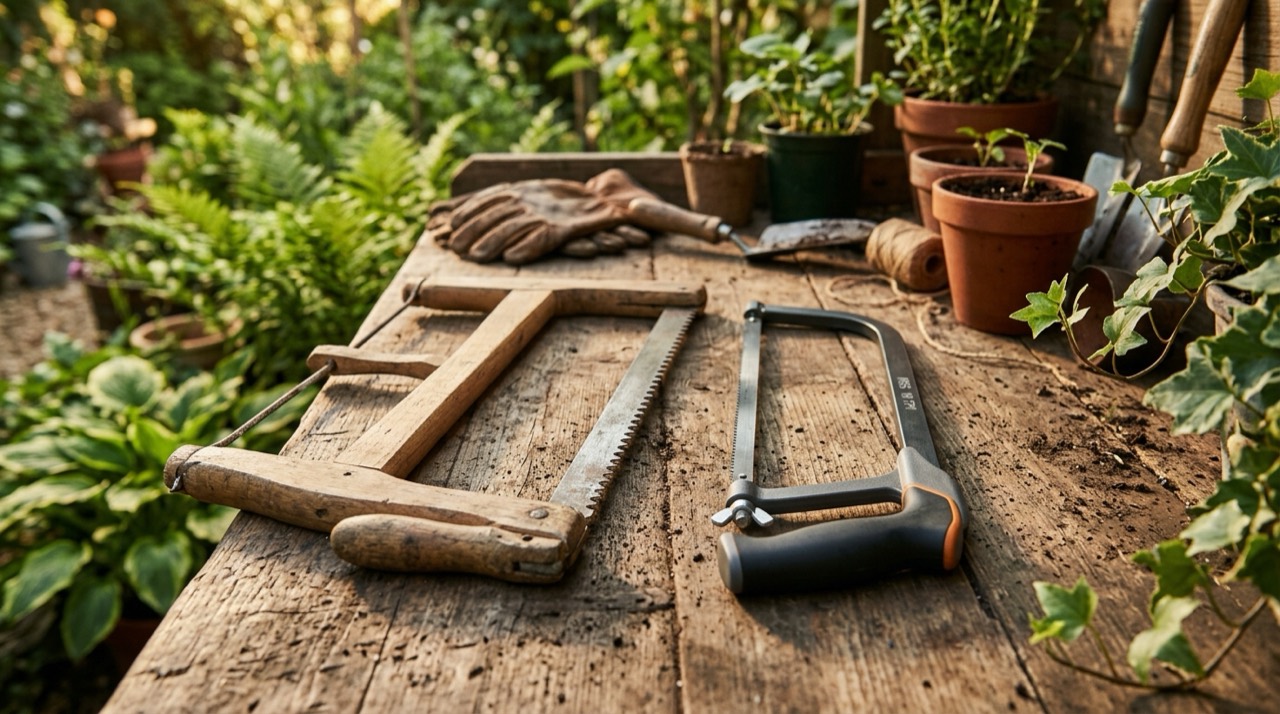
A bow saw and a hacksaw look alike — both stretch a replaceable blade across a metal frame — but they are built for opposite materials. A bow saw cuts wood with a long, coarse, deep-toothed blade; a hacksaw cuts metal and hard plastic with a short, fine-toothed blade. Use the wrong one and you will either clog a hacksaw solid or strip a bow saw's teeth.
What is the core difference?
The core difference is the material each is designed for. A bow saw has big teeth with wide gullets that clear sawdust from wood, and a 21- to 36-inch blade for a long, fast stroke. A hacksaw has fine, closely spaced teeth on a rigid 10- to 12-inch blade tensioned hard in a C-frame, which is what lets it saw steel pipe, bolts, rod, and plastic. Bow saws cut on both strokes; hacksaw teeth face forward and cut on the push.
How do the frames and tensioning differ?
The frames tell the two saws apart at a glance: a bow saw uses a deep, springy bow that holds a long blade at moderate tension, while a hacksaw uses a rigid C-frame that clamps a short blade under very high tension. That difference in tension is what suits each to its material.
Wood cutting tolerates — and even benefits from — a little blade flex, so a bow saw's frame can be light and deep to clear big rounds. Metal cutting demands a blade that will not wander or buckle as it bites hard steel, so a hacksaw's frame is short and stiff and tensions the blade close to its breaking limit with a wingnut or lever. A hacksaw also lets you mount the blade at 45 or 90 degrees for flush cuts, something a bow saw's fixed pins never allow. Try to over-tension a bow saw to hacksaw levels and you strain its joints; run a hacksaw blade slack and it snaps.
When should you pick a bow saw?
Pick a bow saw whenever the material is wood — bucking firewood, limbing branches, felling saplings, or cutting camp wood between roughly 1 and 6 inches thick. Its coarse teeth power through wet, sappy fibres that would instantly pack a fine hacksaw blade. For larger firewood, a 30-inch frame such as the Bahco (paid link) 317 clears rounds far faster than a short saw. See the full range in our best bow saw guide.
When should you pick a hacksaw?
Pick a hacksaw whenever the material is metal or rigid plastic — cutting a bolt to length, trimming a threaded rod, shortening copper or steel pipe, or slicing PVC and conduit. The fine teeth take small, controlled bites that a coarse wood blade cannot, and the high-tension frame keeps thin blades from wandering or snapping.
Which cuts faster and cleaner on each material?
Each saw is several times faster than the other on its own material and close to useless on the wrong one. A bow saw's coarse, deep-gulleted teeth clear damp wood chips and rip through a branch in a few strokes; a hacksaw's fine teeth would pack solid with the same wet sawdust almost immediately.
On metal the roles reverse. A hacksaw's closely spaced teeth take small, controlled bites that leave a clean, square edge on a bolt or pipe, while a bow saw's big teeth skate, skip, and strip on steel without cutting. Cut quality follows the same split: a bow saw leaves a rough kerf that is fine for firewood but too coarse for joinery, whereas a hacksaw leaves a smooth edge suited to metal that will be threaded, filed, or fitted. The lesson is not that one saw is better — it is that they are not substitutes, and the fast, clean cut only happens when the blade matches the material.
What TPI should each blade be?
Tooth count is where the two tools separate most clearly. Bow saw blades are coarse, at roughly 4 to 9 teeth per inch, so they clear wood chips fast. Hacksaw blades are fine, and the right teeth per inch (TPI) depends on the metal, as shown below. The rule of thumb is to keep at least three teeth in contact with the material at all times, so thinner stock needs a finer blade.
| Tool | Blade length | Typical TPI | Cuts | Frame |
|---|---|---|---|---|
| Bow saw (green wood) | 21-36 in | ~4-6 | Wet logs, branches | Deep tubular bow |
| Bow saw (dry wood) | 21-30 in | ~6-9 | Seasoned firewood | Deep tubular bow |
| Hacksaw (thick metal) | 10-12 in | 14-18 | Bar, thick pipe | Rigid C-frame |
| Hacksaw (thin metal) | 10-12 in | 24-32 | Tube, sheet, conduit | Rigid C-frame |
Do bow saws and hacksaws share any parts?
Bow saws and hacksaws share the same basic idea — a replaceable blade stretched across a metal frame — but almost nothing physical crosses over. Their blades differ in length, tooth count, mounting, and hardness, and neither frame accepts the other's blade.
A bow saw blade is long (21 to 36 inches), coarse, and pinned through end holes into a deep bow; a hacksaw blade is short (10 to 12 inches), fine, and pinned into a rigid C-frame at both ends. Even the pins and slots are sized differently, so you cannot fit one into the other. The only real overlap is the habit of keeping spare blades on hand — sound practice for both, since a fresh blade is cheaper than the time lost to a dull one. Keep the bow saw's spares in the shed and the hacksaw's in the toolbox, each with its own coarse-and-fine pair.
What safety differences matter between the two?
Both saws are hand-powered and far safer than a chainsaw, but each has its own hazard. A bow saw's exposed, aggressive blade can skate off green bark on the starting stroke and catch a thumb, so start gently and keep your free hand behind the teeth. A hacksaw's risk is the blade snapping under high tension and the fresh, sharp burr it leaves behind.
For either tool, eye protection matters — wood chips and metal filings both flick toward the face — and work gloves guard against bark, thorns, and the sharp swarf a hacksaw throws. Secure the workpiece rather than holding it: clamp metal in a vice for a hacksaw, and steady wood on a sawhorse for a bow saw. Neither saw belongs to jobs beyond its material — do not force a bow saw through a nail-embedded log or a hacksaw through a thick branch, where a bound or snapped blade is most likely.
Can one frame saw do both jobs?
No single frame saw does both jobs well, despite the family resemblance. A few blades and frames are marketed as all-purpose, accepting both coarse wood teeth and finer metal teeth, but the length, tension, and stroke are always a compromise — long deep frames flex too much for precise metal cuts, and short rigid frames are slow and clumsy on wood. Because both tools are inexpensive, you are far better served by a dedicated bow saw for wood and a dedicated hacksaw for metal than by one saw that does each job poorly. Keep the bow saw in the shed for firewood and branches, and the hacksaw in the toolbox for pipe, bolts, and rod.
Which saw should you buy first?
Buy the saw that matches your most common material first, then add the other as the jobs demand. If your work is mostly outdoors — firewood, branches, and camp wood — start with a bow saw and add a cheap hacksaw for the occasional bolt or length of pipe.
If you spend more time in a workshop cutting rod, conduit, and pipe, buy a high-tension hacksaw first and add a bow saw when garden work calls for it. Because both tools are inexpensive, most sheds end up with both rather than trying to make one do the other's job. Pair whichever you choose with the right blades — a green-wood and a dry-wood blade for the bow saw, and a coarse and a fine blade for the hacksaw — so a single tool covers the full range of its own material without a mid-job trip to the store.
Many workshops simply keep both, since neither can safely do the other's job. If your work is mostly outdoor wood, start with a bow saw and add a hacksaw for the occasional bolt; if you cut metal often, a high-tension hacksaw earns its place first. Whichever you use, wear eye protection and work gloves, and for finer garden cuts consider a pruning saw or loppers instead of forcing a frame saw.
Full Ranking, Reviewed

Best for Homeowners who want one saw for branches and firewood alike
- Tubular steel frame with a cushioned ERGO handle and knuckle guard
- Cam-lever tension system that swaps blades without tools
- Ships with a coarse green-wood (raker) blade around 23 inches long
- Powder-coated frame that resists sap build-up and rust
- Comfortable grip and knuckle protection over long cutting sessions
- Fast, tool-free blade changes between green and dry blades
- Widely stocked replacement blades keep it running for years
- Factory green-wood blade leaves a rougher cut in dry hardwood
- 23-inch frame is bulky to carry on a backpacking trip
Verdict: A dependable, comfortable all-rounder most yards never need to upgrade from.

Best for Budget-minded gardeners cutting branches and light firewood
- 21-inch coated blade with hardened teeth for green and dry wood
- Steel tubular frame with a tension lever on the nose
- Low-friction blade coating that reduces sap sticking
- Enclosed handle that shields knuckles from bark and thorns
- Light in the hand and easy for occasional users to control
- Coated blade sheds sap and slows rust between jobs
- Priced well below professional Swedish saws
- Hard-point teeth are made to be replaced, not filed sharp
- Shorter stroke than a 30-inch saw on big rounds
Verdict: A tidy, affordable saw that covers the everyday pruning and firewood jobs most homes have.
Best for People bucking a season's worth of firewood rounds
- 30-inch tubular frame for a long, fast cutting stroke
- Deep frame clearance that takes rounds up to roughly 8 inches
- Lever tensioner that keeps the long blade tracking straight
- Coarse raker blade suited to green and freshly felled wood
- Long stroke clears firewood far quicker than a 21-inch saw
- Deep throat handles bigger rounds before you reach for a chainsaw
- Rugged frame stands up to repeated woodpile use
- Heavy and unwieldy for overhead or fine pruning cuts
- Too large to be practical for camping or the truck
Verdict: The saw to grab when the job is a stack of firewood rather than a few branches.

Best for Backpackers and overlanders who want a full-size cut from a flat pack
- Folds flat to protect the 21-inch blade and stow in a pack
- Aluminium and composite frame that keeps weight near a pound
- Quick-change system accepting wood and pruning blades
- Blade tensions as the frame unfolds, with no wingnut to lose
- Full 21-inch cutting capacity from a packable folding frame
- Light enough for canoe trips and long hikes
- Tool-free blade swaps in the field
- Costs more than a basic steel yard saw
- Composite frame flexes more than rigid tubular steel on hard cuts
Verdict: The bow saw for people who carry their tools on their back and still want a real cut.
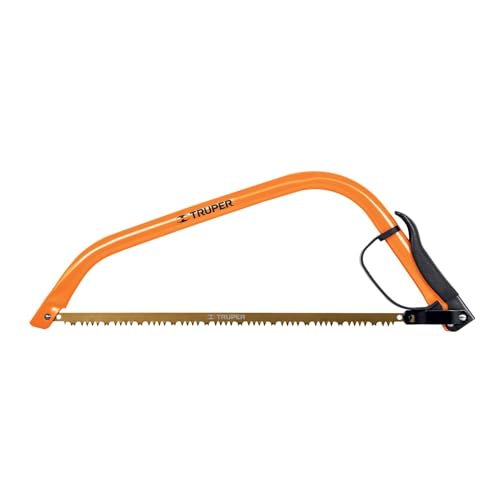
Best for First-time buyers wanting a simple, cheap saw for occasional cleanup
- 21-inch steel frame with a straightforward lever tensioner
- Basic raker blade for general branch and green-wood cutting
- Painted frame with a simple over-hand grip
- Standard blade size that is easy to find as a replacement
- Very affordable entry into frame saws
- Light and uncomplicated for new users
- Common blade size keeps replacements cheap
- No knuckle guard, so mind your hand on the pull stroke
- Plain handle is less comfortable over long sessions
Verdict: A no-frills starter saw that handles the occasional branch without spending much.

Best for Campers and hunters who want a proven, pocketable take-down saw
- Aluminium handle that the blade folds into for safe carry
- Assembles into a rigid triangular bow in seconds
- 15-inch blade suited to camp wood and small limbs
- Long-running, simple design with very few parts
- Packs down flat and weighs only a few ounces
- Rigid triangle frame cuts above its size
- Durable design with little to break or lose
- 15-inch blade limits it to smaller wood
- Blade sits exposed during assembly until it is tensioned
Verdict: A classic backcountry saw that has earned its place in packs for good reason.
Frequently Asked Questions
Can you use a hacksaw to cut wood?
You can cut thin, dry wood with a hacksaw in a pinch, but it is slow and the fine teeth clog quickly on anything green or thick. For branches, firewood, or camp wood, a bow saw with coarse, deep-gulleted teeth cuts many times faster and will not pack solid with damp sawdust.
Can a bow saw cut metal?
No. A bow saw's coarse wood teeth skip, dull, and strip almost immediately on metal, and the blade is not hardened for it. Cutting metal is a hacksaw's job — its fine, closely spaced teeth and rigid high-tension frame are designed to bite steel, copper, and rod cleanly.
What TPI should a hacksaw blade be?
Match hacksaw TPI to the metal: 14 to 18 TPI for thick bar and pipe, 24 TPI for general work, and 32 TPI for thin tube, sheet, and conduit. The guiding rule is to keep at least three teeth touching the material at once, so thinner stock needs a finer blade.
Do bow saws and hacksaws use the same blades?
No, their blades are not interchangeable. Bow saw blades are long (21 to 36 inches), coarse, and pinned into a bow frame; hacksaw blades are short (10 to 12 inches), fine, and mounted in a rigid C-frame. Each frame only accepts its own blade type, so keep the right spares for each tool.