





How Do You Cut Firewood and Branches with a Bow Saw?
Cutting firewood and branches with a bow saw comes down to securing the wood, using long full-length strokes, and reading the cut so the blade never binds. Let the saw's weight and sharp teeth do the work — forcing a bow saw only tires you and makes it wander. The steps below turn a pile of limbs into stove-length firewood safely.
How do you set up before cutting?
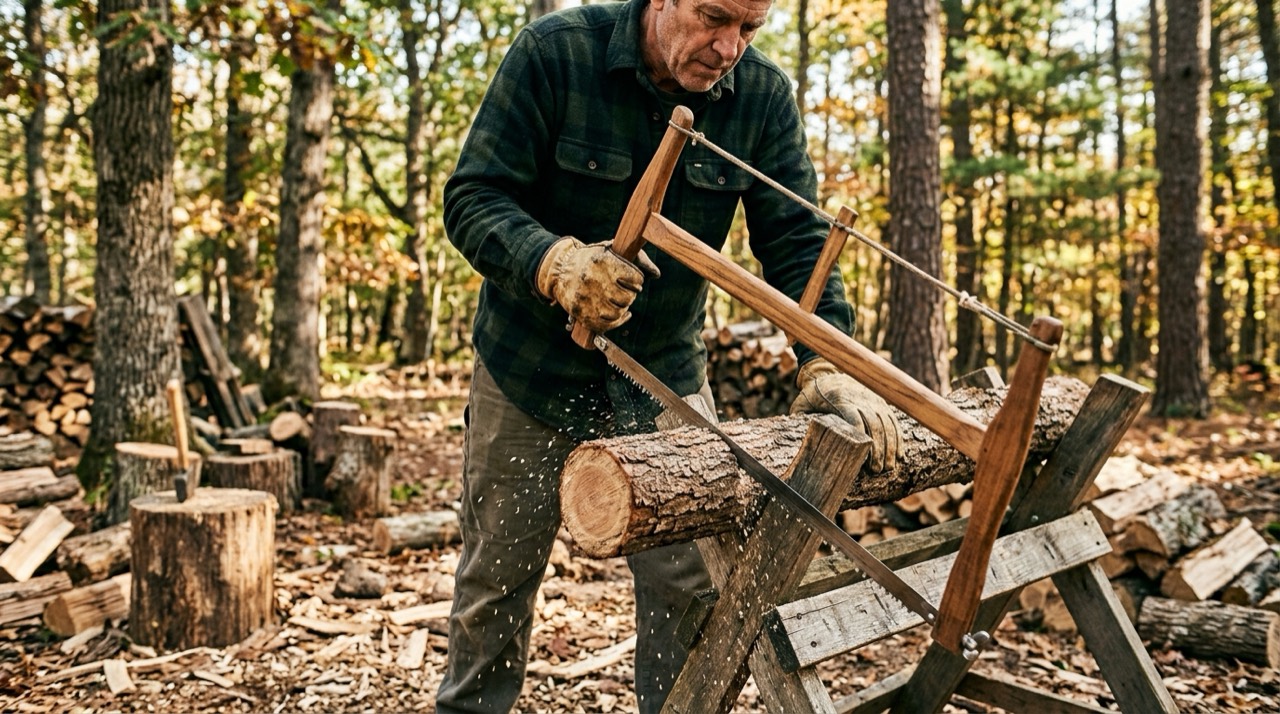
Set up by choosing a stable work height and clearing your footing. A sawhorse or log stand holds the wood at knee-to-hip height so your back stays straight and the blade runs clear of the ground. Never pin a branch under your boot and saw toward your leg, and never hold a loose piece in one hand while sawing with the other.
Before the first stroke, run this quick checklist:
- Pull on work gloves and eye protection.
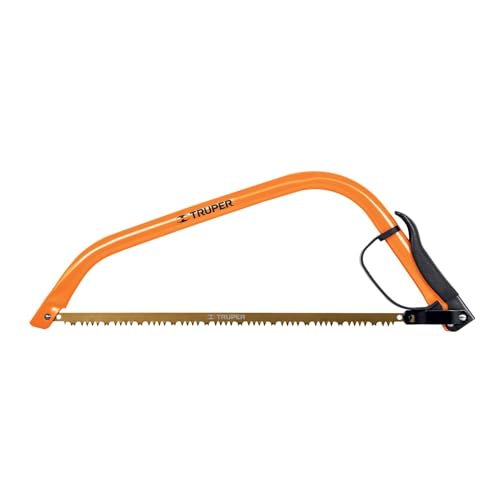
- Check the blade tension and lock the frame's cam lever.
- Seat the wood firmly in the sawhorse cradle so it cannot roll.
- Clear your stance so nothing is in the blade's path if it slips.
- Plan the cut length — most stoves and fire pits want 14- to 16-inch pieces.
What is the correct cutting technique?
Correct technique starts the kerf gently and then settles into a rhythm. Place the blade where you want the cut, steady the wood with your gloved hand well behind the teeth, and draw a few light pull strokes to notch a groove. Once the groove holds the blade, lengthen your strokes to use most of the blade, keep the frame square to the wood, and let each pass clear its own sawdust. A bow saw cuts on both the push and the pull, so keep steady pressure in both directions rather than bearing down.
Angle matters on branches. Cut straight down through supported wood, but on a limb that overhangs the sawhorse, make a small relief cut on the underside first so the bark does not tear a long strip as the piece drops.
What is the fastest way to buck a pile of firewood?
Buck a pile fastest by batching the work: cut every round to the same length using a marked gauge, keep the saw moving in long strokes, and only move to splitting once a stack is cut. Handling each piece once, in sequence, beats drifting between cutting and splitting.
- Set a length gauge — mark a stick to your stove length and lay it against each log rather than eyeballing.
- Load the sawhorse with several limbs at once so you are not bending for each piece.
- Cut with full strokes, letting the raker teeth clear their own sawdust, and let the offcut drop clear each time.
- Work from the unsupported end so each piece falls away instead of pinching the blade.
- Stack as you go, moving cut rounds to the splitting area in batches for the splitting axes and mauls and firewood tools that finish the job.
A dedicated sawbuck that cradles the log at a comfortable height turns this into a steady rhythm and is the single biggest speed gain for anyone cutting firewood by hand.
How do you cut a log lying on the ground?
Cut a ground log by supporting it so the kerf stays open and by keeping the blade clear of soil, which dulls teeth fast. Where you can, roll the log onto a couple of scrap timbers or into a log stand rather than sawing it flat on the dirt.
Cut most of the way through from the top, stopping just before the blade reaches the ground, then roll the log a quarter-turn and finish the cut from the fresh face. This keeps the teeth out of the grit and stops the closing kerf from pinching the blade against the earth. If the log must stay put, drive a small wedge into the top of the kerf on a thick round to hold it open. Never let the blade run into stones, wire, or embedded nails — a single strike can ruin a whole run of teeth and end the blade's life on the spot.
How do you limb a branch or small tree safely?
Limb a felled branch by working from the base toward the tip, cutting the limbs on the far side of the trunk from where you stand so the trunk stays between you and the blade. Cut the underside of any limb that is bearing weight first, then finish from the top.
Watch for branches that are propping the trunk off the ground — cutting these releases the load and can drop or roll the trunk suddenly, so keep your feet clear and plan where the wood will move. Take off long limbs in sections rather than at the base, so you are never cutting the full thickness with the whole branch swinging. A springy limb pinning the trunk is a tension cut: relieve the compression side with a shallow cut first, as covered below, before you finish it. For tidy cuts flush to a living trunk, a pruning saw leaves a cleaner wound than a coarse bow saw blade.
How do you cut a branch that is springy or under tension?
Cut springy or loaded branches carefully, because a limb bent under tension can snap back hard when the saw finally releases it. Read the wood first: work out which side is compressed and which is stretched, cut a shallow relief on the compression side, then finish the cut from the tension side so the wood closes gently instead of pinching the blade or kicking. Never stand in the arc a loaded branch will swing through, and move bystanders clear before you start. A bent sapling trapped under a fallen log — a spring pole — stores a lot of energy and is genuinely dangerous; if you are not trained to release that tension safely, leave it to a chainsaw operator who is.
How do you stop the blade binding?
Stop the blade binding by controlling how the cut closes. As you saw through a supported log, the two ends can sag inward and pinch the blade — support both ends, or cut just outside the sawhorse cradle so the offcut falls away freely. If the blade starts to grip, stop pushing, rock it gently to free it, and reposition rather than forcing through. A small hardwood wedge dropped into the kerf on big rounds keeps it open.
For thicker firewood, work through a stack methodically: buck each round to length, then move the cut pieces to a splitting area. Green rounds cut cleaner than expected with a raker blade, and the firewood tools and splitting axes and mauls you use next will finish the job.
What should you do when the cut slows down mid-job?
When a bow saw suddenly slows, stop and diagnose rather than pushing harder — the cause is almost always a clogged, dull, or slack blade, or a kerf that has closed on the blade. Forcing a slow saw only tires you and steers the cut off line.
Run through the checks in order:
- Check for binding — if the kerf has pinched shut, back the blade out, support both ends, or wedge the cut open.
- Clear the gullets — sap-packed teeth stop clearing sawdust, so wipe the blade with a rag or a little solvent.
- Test the tension — a blade that has worked loose wanders and drags, so re-seat the cam lever.
- Feel the teeth — rounded or shiny teeth mean the blade is dull; fit a fresh one rather than fighting it.
- Confirm the right blade — a dry-wood peg blade clogs in green timber, so switch to a raker blade for sappy wood.
Because spare blades are cheap, a stalled cut is rarely worth wrestling with — swapping to a sharp blade restores full speed in under a minute.
When should you stop and reach for a chainsaw?
Stop and switch to a chainsaw once wood passes roughly 6 to 8 inches, or when a tree is standing, leaning, or under tension. A bow saw is safe and efficient on cut, supported wood, but felling, storm cleanup, and overhead limbs carry real risk of the wood moving unpredictably. Large or leaning trees, and any work near power lines, belong to a chainsaw and, if you are unsure, a trained professional. For small powered cuts, a mini chainsaw bridges the gap, and our best bow saw picks cover the hand-saw side. This is general guidance, not a substitute for hands-on training.