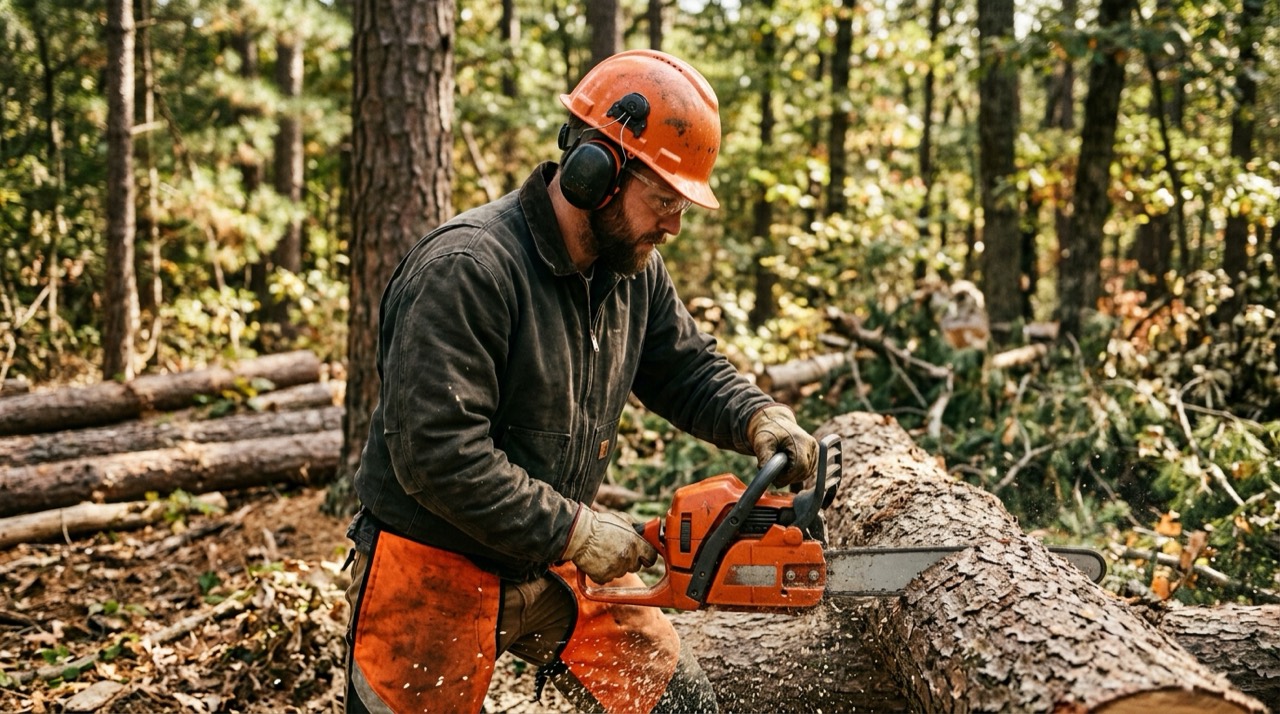


Do you need hearing and eye protection for chainsaws and outdoor power tools?
Hearing and eye protection are essential any time you run a chainsaw, brush cutter, blower or mower. A gas chainsaw produces roughly 106 to 120 dB at the operator's ear — loud enough to cause permanent hearing loss — while flying chips, bark and sawdust threaten your eyes on every cut.
These two zones sit alongside legs, head and hands in a full safety gear kit. This guide covers only the ears and eyes: how loud your tools really are, how to read the numbers printed on the packaging, and which combination protects you without cooking your patience on a hot day. Everything below is based on manufacturer specs, the relevant US and international standards, and aggregated owner feedback.
How loud is a chainsaw, and when does noise damage hearing?
A running gas chainsaw sits around 106 to 120 dB at the operator's ear, and hearing damage begins with sustained exposure above about 85 dB. Louder tools shorten the safe exposure time dramatically — every 3 dB roughly halves how long you can listen unprotected.
Noise-induced hearing loss is cumulative and permanent: the tiny hair cells in the inner ear do not grow back. The US Occupational Safety and Health Administration (OSHA) sets an action level of 85 dBA over an 8-hour shift and a permissible exposure limit of 90 dBA, while NIOSH recommends a stricter 85 dBA limit. Most petrol outdoor tools blow straight past those numbers, so protection is not optional. Even quieter battery chainsaws often run near 90 to 100 dB, and backpack blowers and wood chippers are among the loudest yard machines you can own.
What does the NRR number on ear protection mean?
The Noise Reduction Rating (NRR) is a decibel figure, printed on every US hearing protector by EPA rule, that estimates how much noise the device blocks in a laboratory test. Higher is better, but the label overstates real-world protection, so you must derate it.
NRR is measured under ideal lab conditions with a perfect seal. In the field, OSHA's simple estimate subtracts 7 from the NRR and halves the result to approximate protection against a given noise level. NIOSH goes further, suggesting you derate the labeled NRR by 25% for earmuffs, 50% for formable foam earplugs, and 30% for other plugs. So a 30 dB muff realistically delivers closer to 20 to 22 dB once fit and seal are accounted for. The practical lesson: choose a rating with headroom, and wear the device correctly every second the tool runs.
Earmuffs or earplugs — which is better for chainsaw work?
Earmuffs and earplugs both work; the best choice depends on comfort, heat and how often you take them off. Earmuffs seal fast and suit stop-start cutting, while foam earplugs pack the highest ratings and stay cooler under a helmet in summer.
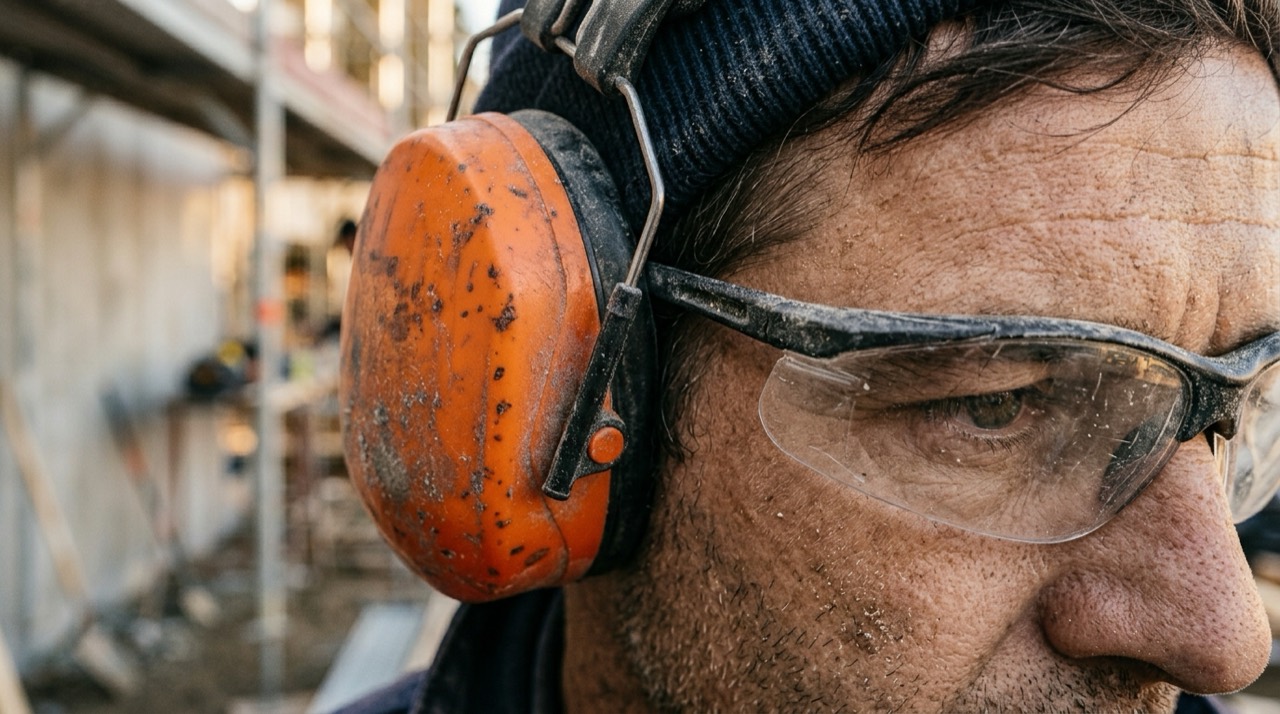
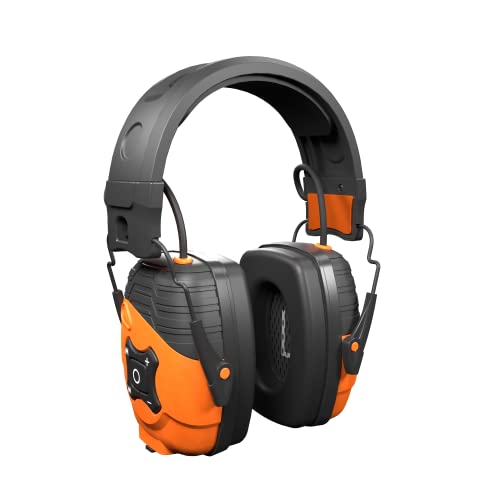
Earmuffs are quick to lift on and off between cuts, hard to lose, and easy to fit over a beanie, but they trap heat and clash with some helmet brims. Foam earplugs such as Howard Leight MAX-1 (around NRR 33) block more on paper and sit comfortably under a forestry helmet, yet they demand a proper roll-and-insert technique and are fiddly with dirty hands. For the loudest jobs — felling with a big gas saw, all-day chipping — many pros wear both at once, called dual protection, which adds roughly 5 dB over either device alone. Electronic and Bluetooth muffs add situational awareness or comms without giving up the seal.
What safety glasses do you need for cutting wood?
Safety glasses for cutting wood must be marked to ANSI Z87.1, and ideally Z87+ for high-impact protection. That stamp, moulded into the lens and frame, proves the eyewear passed standardised impact tests — ordinary fashion sunglasses offer no such guarantee against a flung chip or kickback debris.
ANSI/ISEA Z87.1-2020 is the US standard for eye and face protection. A plain "Z87" mark covers basic impact; "Z87+" covers high-impact (high-mass and high-velocity) hazards, which is what you want around saw chains, grinders and brush cutters. In Europe and Australia the equivalent is EN 166. Look also for an anti-fog coating and wraparound side coverage, because a gap at the temple lets sawdust reach the eye. Match the lens tint to the light: clear indoors and in shade, tinted or mirrored in bright sun.
Do mesh face shields protect your eyes on their own?
Mesh face shields on a forestry helmet do not fully protect your eyes on their own — the mesh stops large chips and branches but lets fine dust and small particles through. Always wear ANSI Z87.1 safety glasses underneath a mesh visor.
Mesh visors are popular because they never fog and stay clear in humid conditions, which is why they dominate arborist safety helmets. Their weakness is the open weave: sawdust, grinding grit and fine debris pass straight through the holes. A clear polycarbonate face shield blocks fine particles but fogs and scratches more easily. The reliable answer is layering — glasses against the fine stuff, a visor against the big stuff — which is exactly how professional felling PPE is assembled alongside chainsaw chaps and cut-resistant work gloves.
How do you fit earmuffs and earplugs so they actually protect?
Fit decides real-world protection more than the number on the box, because a tiny gap under a cushion or a shallow earplug leaks the exact high-frequency noise a chainsaw produces. Seat muffs flat against the skull, and insert plugs deep enough to sit flush in the canal.
Foam earplugs only reach their rating when they are rolled thin and placed deep, so use this sequence every time:
- Roll the plug into a thin, crease-free cylinder between clean fingers.
- Reach over your head with the opposite hand and pull the ear up and back to straighten the canal.
- Insert the plug well into the canal and hold it for 20 to 30 seconds while the foam expands.
- Check the seal — your own voice should sound deep and muffled; if it sounds normal, the plug is too shallow.
Earmuffs are more forgiving but still leak through gaps. Sweep hair clear of the cushions, choose thin-armed safety glasses so the arms do not break the seal, and make sure the cushions press evenly all the way around. The common seal-breakers are thick glasses arms, a beanie bunched under one cup, long hair, and a forestry helmet brim that lifts a cup edge. Fix those before the saw starts, not after.
How do you match ear and eye protection to each outdoor tool?
Match the amount of protection to your loudest tool and your longest session, because the machine that sets your daily noise dose decides the rating you need. A brief prune with a battery chainsaw asks less than a day felling with a big gas chainsaw.
Use these rough pairings as a starting point for common jobs:
- Petrol chainsaw, wood chipper or backpack blower: a high-rated muff or foam plugs, plus Z87+ glasses and a face shield for felling and limbing.
- Battery chainsaw or string trimmer: a mid-rated muff or plugs and Z87.1 glasses for any sustained run.
- Petrol lawn mower or edger: hearing protection for long sessions, and glasses whenever debris can fly.
A small suburban yard usually means short, stop-start bursts where quick-on earmuffs shine; managing acreage means hours of continuous exposure where a comfortable, cooler foam plug — or dual protection — keeps you covered without fatigue. When you are unsure, err toward more headroom: over-protecting your ears has no downside, while under-protecting them is permanent.
How do you care for and store hearing and eye protection?
Well-kept gear protects better and lasts longer, so clean it, inspect it, and store it out of heat and sunlight rather than leaving it in a hot shed or truck cab. Sweat, dust and UV all degrade cushions and lenses over time.
Keep your ears and eyes covered by these habits:
- Replace foam earplugs when they no longer expand slowly and fully; treat cheap plugs as near-disposable.
- Wipe earmuff cushions clean and swap them when they harden, crack or lose their spring — hygiene kits are sold for most muffs.
- Wash safety glasses in mild soapy water and dry with a soft cloth; grit on a dry lens is what scratches it.
- Retire any lens once scratches blur your vision, because a scratch is also a weak point on impact.
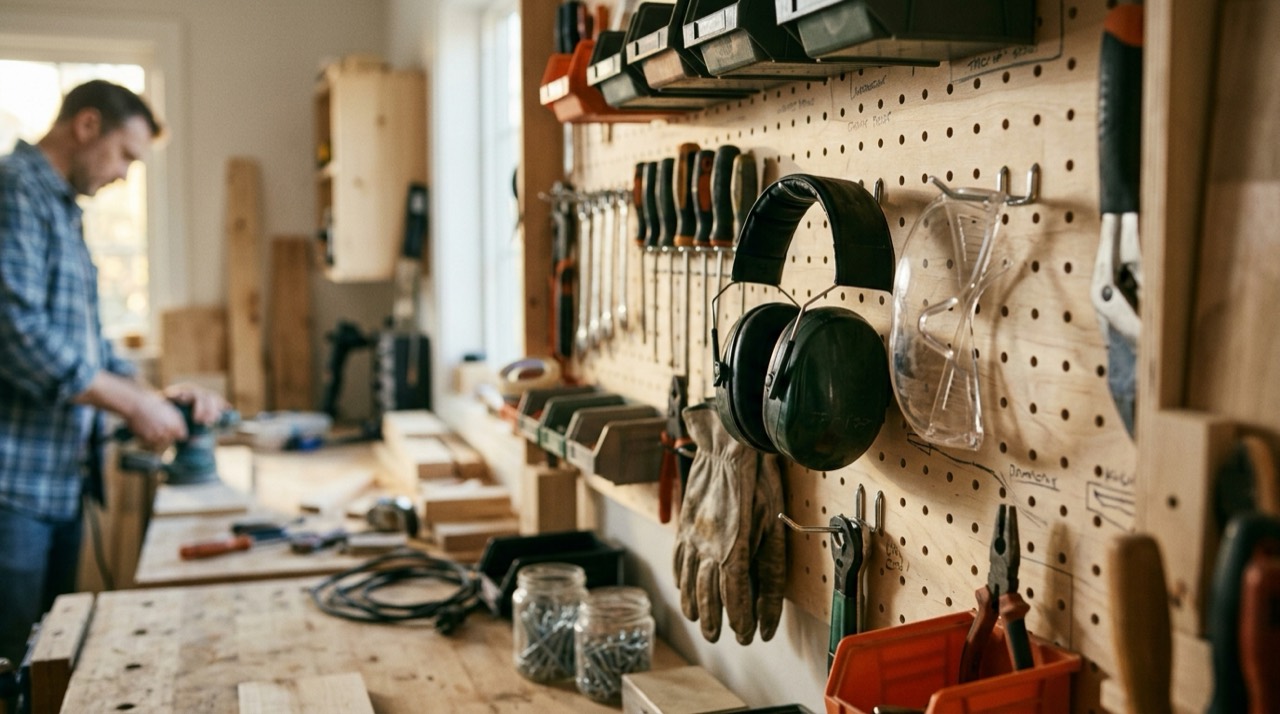
- Store everything in a case or bin, away from the sun, alongside the rest of your tool storage.
A muff with a hardened cushion can lose several decibels of its rating, so treating cushions and plugs as consumables is part of the protection, not an afterthought.
When should you get your hearing tested or call in a professional?
Get a baseline hearing test if you use loud tools regularly, and repeat it periodically so you catch early high-frequency loss while you can still act on it. For genuinely hazardous work — large, leaning or storm-damaged trees — hire a trained arborist rather than risk it.
Persistent ringing, needing the television louder than others, or struggling to follow speech in a noisy room are signals to see an audiologist rather than push on. Because noise damage is cumulative and silent, a periodic check turns an invisible problem into a number you can track. No amount of hearing or eye protection substitutes for training, situational judgement and the full PPE stack — chainsaw chaps, a helmet with a face shield and cut-resistant work gloves. This guide is general information, not a replacement for your tool's manual or professional instruction for high-risk cutting.
Your chainsaw hearing and eye protection checklist
The essentials below cover the ears and eyes for a typical homeowner running a chainsaw and other petrol tools:
- Earmuffs or earplugs rated to a realistic derated level for your loudest tool.
- ANSI Z87.1 (ideally Z87+) safety glasses with anti-fog and side coverage.
- A mesh or polycarbonate face shield for felling, limbing and clearing.
- Electronic or Bluetooth muffs if you need to hear speech or warnings.
- Spare foam earplugs for dual protection on the loudest, longest jobs.
Ready to buy? Our best hearing and eye protection picks compare specific earmuffs, earplugs and safety glasses by NRR, standard and best use. Remember that this guide is general information, not a substitute for a tool's manual or professional training for high-risk work such as felling large or leaning trees.