

What PPE do you need to run a chainsaw safely?
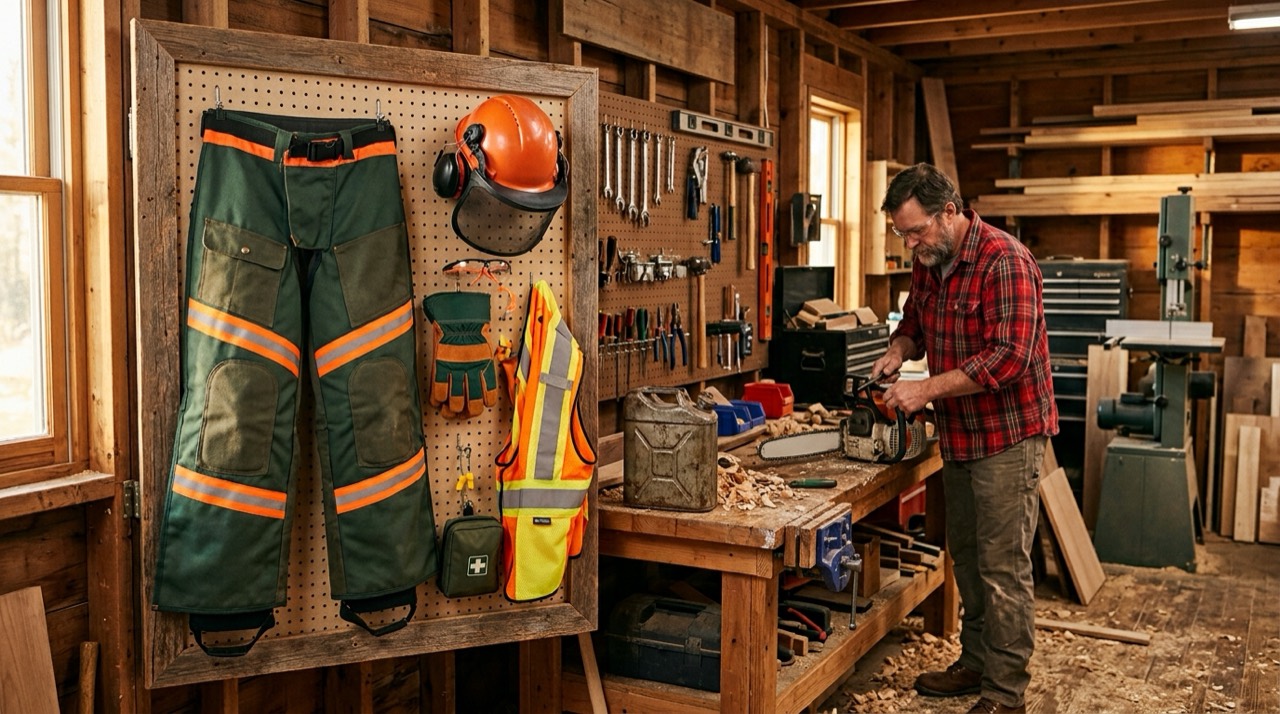
Chainsaw PPE protects five zones: your legs, your head and face, your ears, your eyes, and your hands and feet. Chainsaw chaps or protective trousers matter most, because the majority of serious saw injuries land on the left thigh and knee. Match every layer to a recognised safety standard, not to guesswork.
The core kit below is ordered by how exposed each body part is during normal cutting:
- Legs — chainsaw chaps or protective trousers certified to ASTM F1897.
- Head, face and eyes — a forestry helmet with a mesh face shield worn over safety glasses.
- Ears — earmuffs or plugs, covered in our hearing and eye protection guide.
- Hands — cut-resistant work gloves with a reinforced left-hand back.
- Feet — chainsaw-rated or steel-toe boots with aggressive tread.
What are chainsaw chaps and how do they stop the chain?
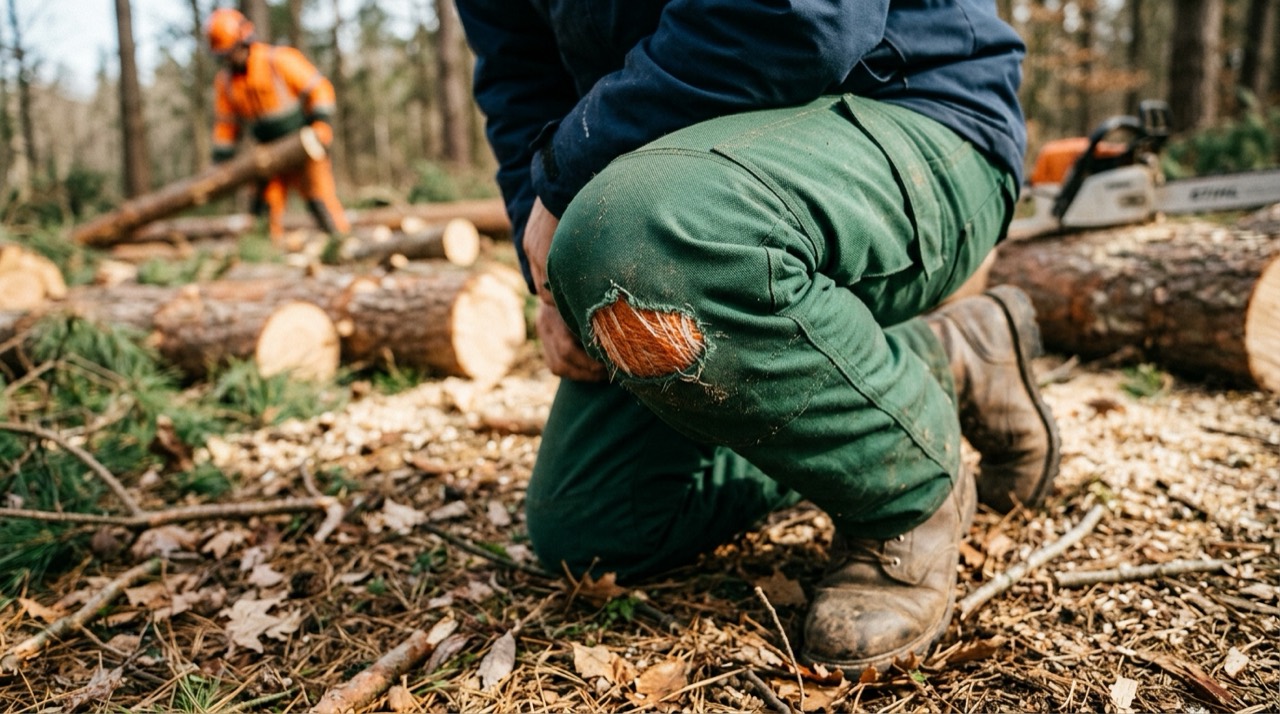
Chainsaw chaps are leg coverings packed with layers of loose, cut-retardant fibers that stall a moving chain in a fraction of a second. When the chain tears the outer shell, long fibers are dragged out, wrap around the drive sprocket, and jam the saw before the cutter reaches your skin.
Chaps therefore do not "cut-proof" your legs the way a steel plate would. They work by sacrificing themselves: the pulled fibers stop the chain once, and the garment must then be replaced. This pull-and-jam action is why chaps are certified against specific chain speeds rather than sold as indestructible armor.
Which chainsaw chaps standards actually matter?
Certification is the whole point of chaps, so buy only pairs marked to ASTM F1897 and carrying a UL mark in North America. ASTM F1897 sets the leg-protection performance requirement, and OSHA's logging rule (1910.266) requires cut-resistant leg protection for professional saw work.
Buyers in Europe, the UK and Australia will instead see EN ISO 11393, which replaced the older EN 381 and grades garments by protection class and chain speed. Whichever mark applies where you live, avoid uncertified "chainsaw-style" trousers with no test standard printed on the label — a garment with no standard is not protective equipment.
Apron chaps or full-wrap chaps — which coverage do you need?
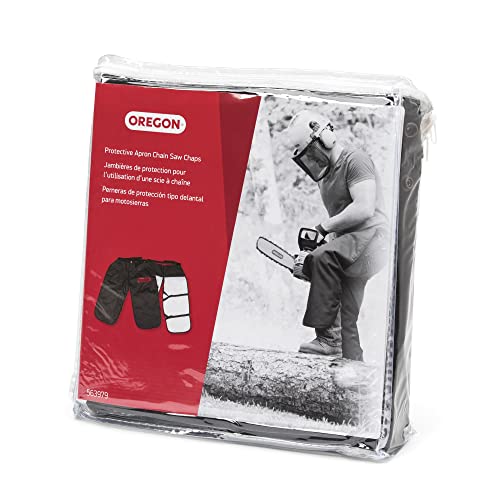
Apron chaps protect the front and outer sides of your legs and suit most homeowners cutting firewood on the ground. Full-wrap chaps add protection around the back of the lower leg, which matters when a saw can swing behind the calf — common when limbing, working on slopes, or cutting in awkward positions.
Apron style is lighter, cooler and cheaper. Full-wrap is the safer pick if you cut often, work on uneven ground, or run a top-handle or arborist saw where the bar moves close to your body. Our best chainsaw chaps roundup separates the two styles clearly.
What length and size of chaps should you buy?
Measure from your waist or belt line to the top of your boot, then pick the chap length closest to that figure, usually somewhere between 32 and 40 inches. Chaps that are too short leave the shin exposed; chaps that are too long drag, snag, and can trip you.
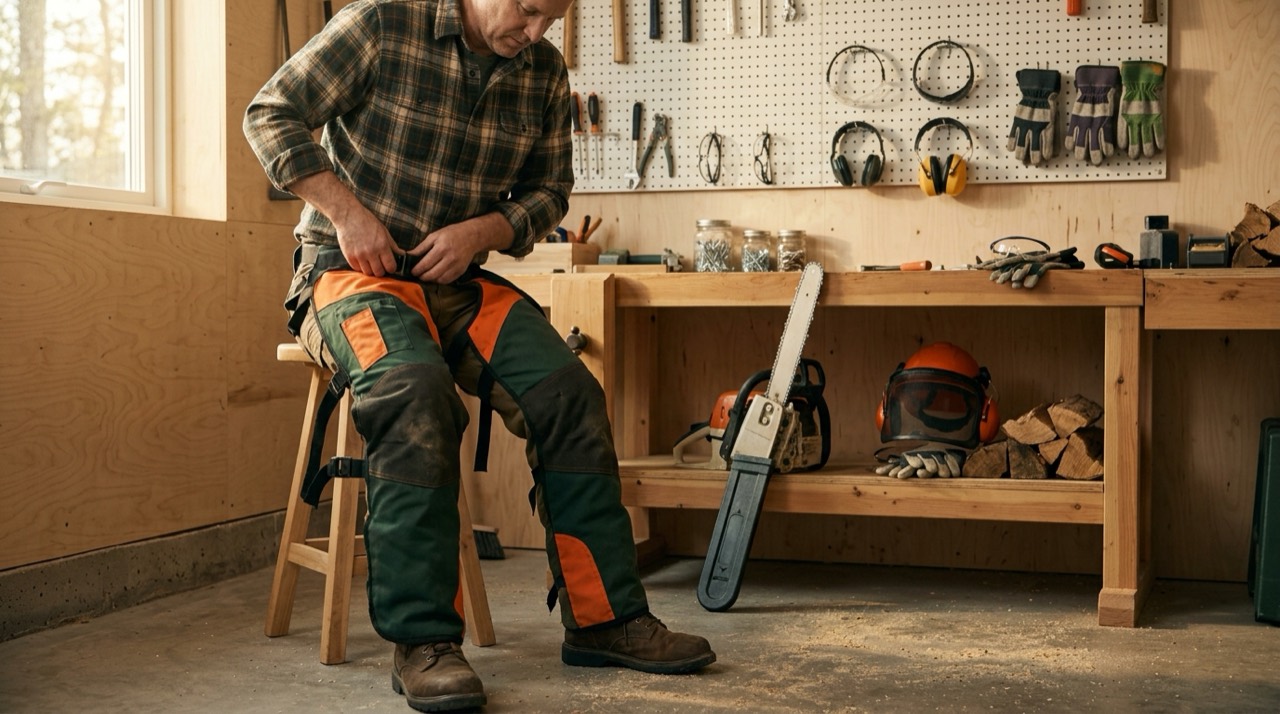
Waist straps and leg buckles then fine-tune the fit over your normal work clothes. The chaps should sit snug yet let you kneel and climb freely. Fit is a safety feature, not just a comfort one — loose, twisted, or gaping chaps expose the very areas they are meant to guard.
Do chainsaw chaps work with battery and electric saws?
Chainsaw chaps are designed and tested mainly against gas saws, whose clutch lets the chain stall when fibers jam the sprocket. Many battery and electric chainsaws drive the chain more directly and may keep pulling, and some run at higher no-load speeds than certain chaps are rated for.
Chaps still add meaningful protection with cordless saws and should always be worn, but read the manufacturer's guidance, because some state their chaps are not rated for the fastest electric models. Never treat a quiet battery saw as safe to run bare-legged — it cuts flesh just as fast as a gas saw.
What protection completes the chainsaw PPE kit?
Legs are the priority, but a chainsaw throws chips, noise and kickback at the rest of you too. A helmet with a mesh visor guards against flying debris and low branches, muffs protect hearing from saws that routinely exceed safe noise levels, and gloves improve grip while shielding the vulnerable back of the left hand.
Round the kit out with sturdy boots, close-fitting clothing, and no dangling laces or loose sleeves. Keep your gear stored with the saw and its bar oil and fuel so you are never tempted to start a job "just this once" without it.
Which chainsaw injuries does PPE actually prevent?
Chainsaw PPE prevents the two injury patterns that dominate saw accidents: deep lacerations to the legs and hands from chain contact, and impact or debris wounds to the head, face and eyes. Legs and the left hand are struck most often, which is why chaps and gloves come first.
Most chain-contact wounds land on the front of the left thigh and knee, where the bar naturally swings after a cut finishes or when the saw is carried running. Certified chaps turn that laceration into a torn garment. Head and eye injuries come from flying chips, snapping branches, and kickback driving the bar upward, which a helmet and mesh visor intercept. Hearing damage is slower and invisible: repeated exposure to a saw's noise erodes hearing over years, so muffs matter even though the harm isn't immediate. No single item covers everything — each layer of the kit answers a different, well-documented hazard.
How do you put on and check chainsaw PPE before every cut?
Put your PPE on in a fixed order every time and check each piece as you go, so nothing is skipped or worn wrong. A quick, repeatable routine catches a loose strap, a cracked visor, or missing hearing protection before the saw ever starts, when fixing them is trivial.
Work through the kit from the ground up:
- Pull on chainsaw-rated or steel-toe boots and lace them fully, tucking the laces away.
- Strap on your chaps or step into protective trousers, fastening every waist and leg buckle snug.
- Fit the helmet, adjust the harness, and lower the mesh face shield; add safety glasses under it for fine debris.
- Lower the earmuffs or fit plugs until the saw noise is clearly dampened.
- Put on cut-resistant gloves and flex your hands to confirm you can still work the throttle and chain brake.
Finish by checking that clothing is close-fitting with no dangling sleeves or drawstrings, then start the saw only once every layer is confirmed.
How much does a full chainsaw PPE kit cost?
A complete homeowner chainsaw PPE kit — chaps, helmet with visor, muffs, gloves and boots — generally costs a modest fraction of a good saw, and far less than a single emergency-room visit for a leg wound. Legwear and the helmet are the biggest line items.
Certified apron chaps sit at the affordable end, with full-wrap chaps and protective trousers costing more for the extra coverage and fabric. A forestry helmet that combines a hard hat, mesh visor and earmuffs in one unit is often the best value, because it covers three zones at once. Gloves and boots vary widely, though you likely own suitable boots already. Because chaps and trousers are consumable and must be retired after any chain contact, budget for eventual replacement rather than treating the kit as a one-time purchase. Buying the whole kit together, and storing it with the saw and its bar oil and fuel, makes it far more likely every layer actually gets worn.
Do homeowners have to follow OSHA chainsaw PPE rules?
Homeowners aren't legally bound by OSHA, which regulates workplaces, but the rules it sets for professional operators are the clearest safety benchmark a private user can follow. OSHA's logging standard (1910.266) requires employers to provide cut-resistant leg protection, head protection, eye and face protection, and hearing protection.
For a homeowner, the practical takeaway is simple: equip yourself the way the standard requires a paid sawyer to be equipped. That means certified leg protection to ASTM F1897, a helmet, a face shield or safety glasses, and hearing protection — the same layers, whether or not anyone is checking. Insurers, tree-work contracts, and some rural property rules may also require this gear, and following the professional standard is the most reliable way to protect yourself. This guide is general information, not a substitute for hands-on training or the specific rules that apply where you work.
How should you match chainsaw PPE to the job — small yard versus acreage?
Match your PPE to how much and how hard you cut, not to the smallest job you can picture. A homeowner trimming a few branches a year needs the same core protection as a landowner clearing acreage; the difference is coverage, durability and comfort rather than whether to bother at all.
For occasional light work — bucking a fallen limb or cutting firewood a few times a season — certified apron chaps, a combination helmet, muffs and gloves are enough, and a shared set can cover a household. For frequent cutting on uneven ground, limbing, or work with a top-handle or arborist saw, step up to full-wrap chaps or protective trousers so the back of the leg is covered, and choose breathable gear you'll actually keep on through long sessions. Whatever the scale, never treat a small job as a reason to skip PPE — many chain-contact injuries happen during quick, "just one cut" tasks.
When should a chainsaw job be left to a professional?
Leave felling large, leaning, or dead trees, any cutting near power lines, and all overhead or off-the-ground work to trained, insured professionals. These jobs involve stored tension, unpredictable fall paths, and electrocution risk that no PPE can manage on its own.
Chaps and a helmet lower the odds of injury; they do not make a dangerous task safe. If you are unsure how a tree will move, or the work needs a ladder, a climb, or a saw held above shoulder height, stop and call an arborist. This guide is general information, not a substitute for hands-on training.