
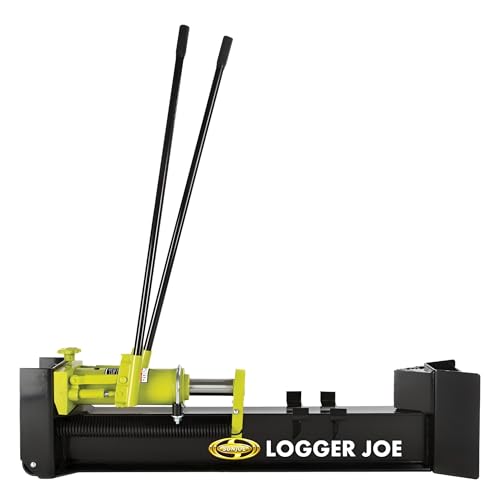


What is an electric log splitter, and who is it for?
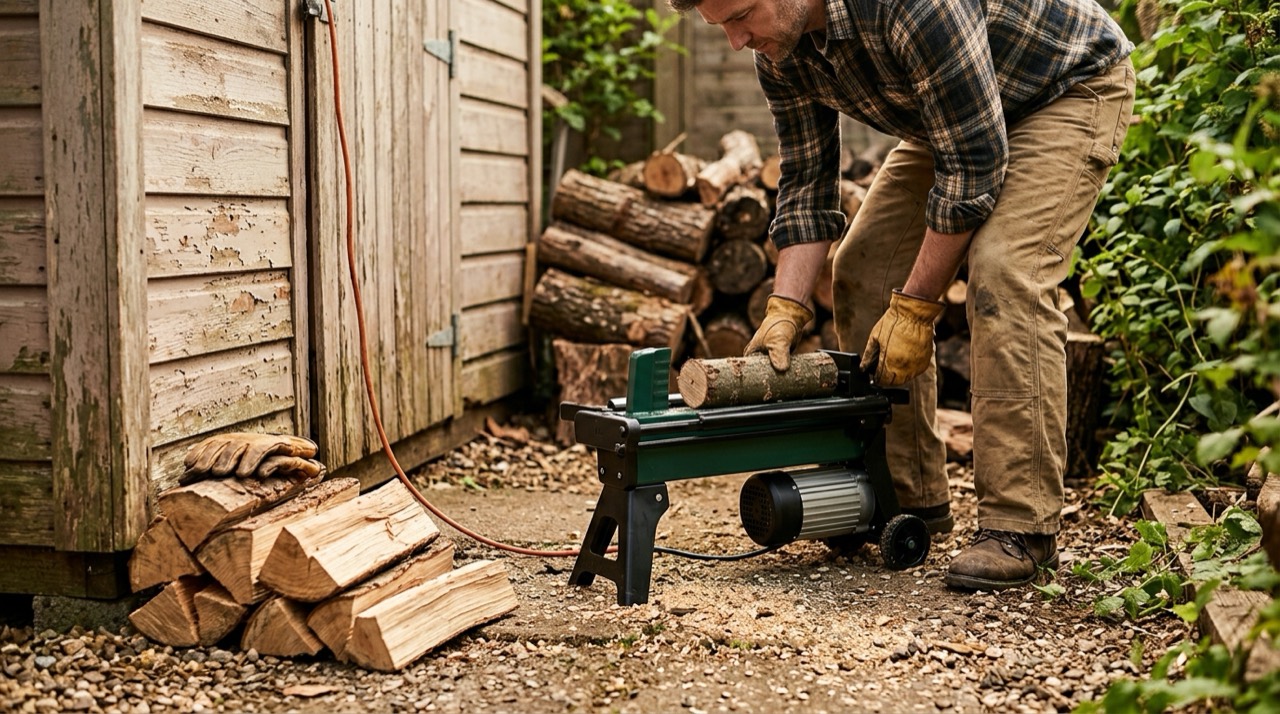
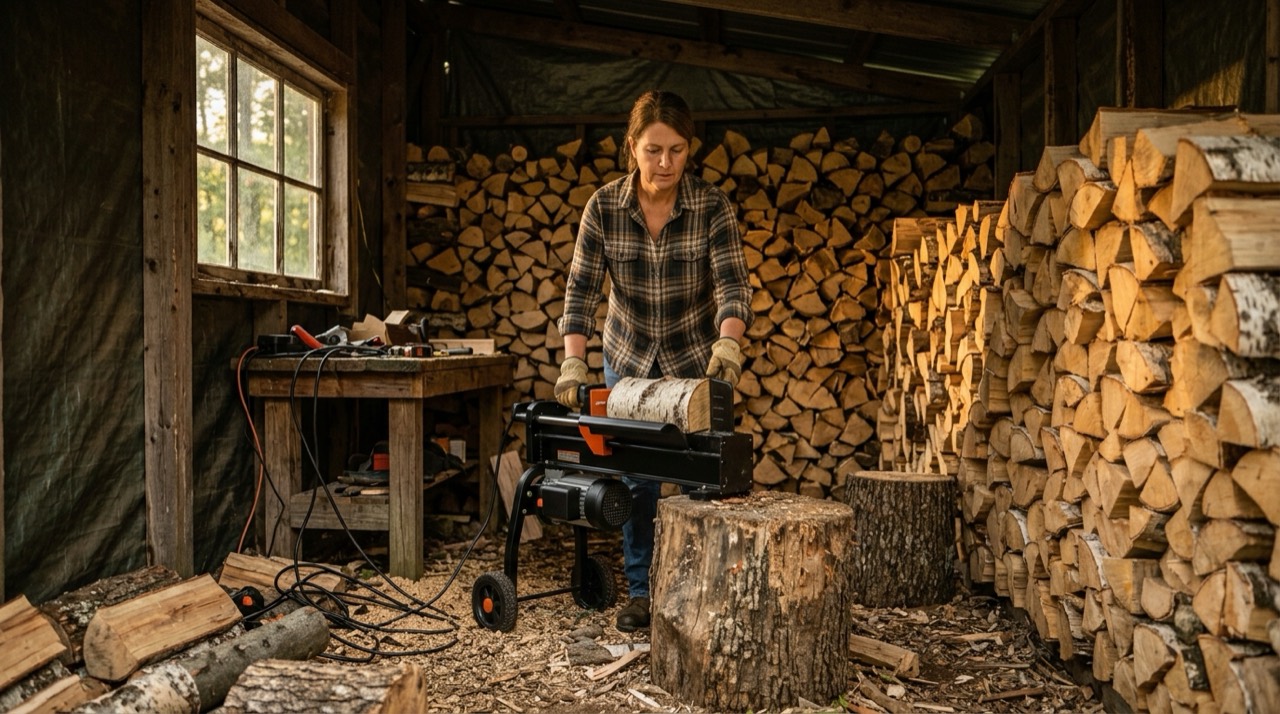
An electric log splitter is a hydraulic ram driven by a household-powered motor that forces a log against a steel wedge to split firewood. It suits homeowners who burn a few cords a year, work in a garage or driveway, and want a quiet, fume-free machine.Electric splitters plug into a standard outlet, so they run indoors and in enclosed spaces where a petrol engine would be unsafe. Most consumer models produce between 5 and 10 tons of force, enough for the seasoned, moderate-diameter rounds that make up typical home firewood. If you process whole cords of large or knotty hardwood, or work far from power, a gas or hydraulic log splitter will keep up better, and this guide sits inside our wider wood processing hub so you can weigh every splitter type in one place.
How does an electric log splitter work?
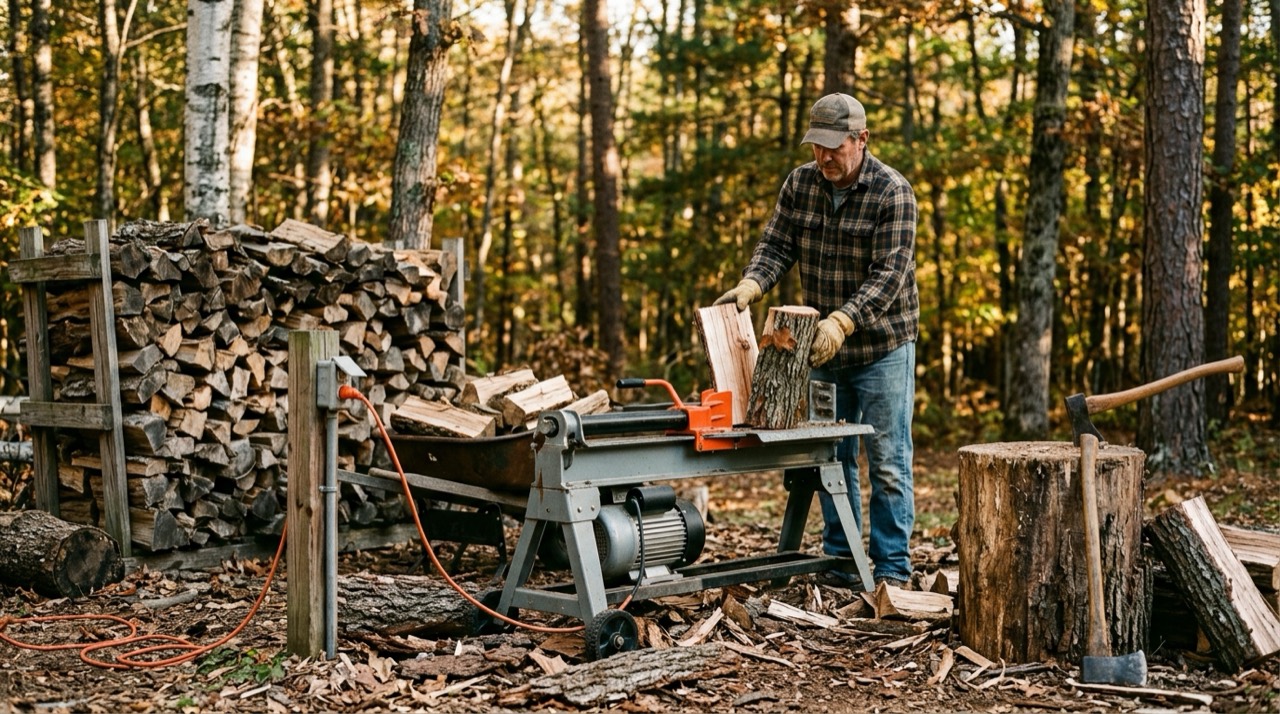
An electric log splitter uses its motor to drive a hydraulic pump, which forces pressurised oil into a cylinder that pushes a steel ram and the log against a fixed wedge until the round splits. Squeezing a two-hand control starts the stroke, and releasing it returns the ram.The chain from wall socket to split log is short and entirely mechanical. The 15-amp motor spins a gear pump, the pump raises hydraulic oil to a high pressure, and that pressure acts on the face of the ram piston to produce the machine's rated tonnage. Because the force comes from steady fluid pressure rather than a swinging blade, the ram advances slowly and predictably, which is what makes a powered splitter safer to feed than an axe but also why each cycle takes several seconds. Most home machines are horizontal-only: the log lies on a beam and the ram drives it into the wedge. Better models add an auto-return ram and an adjustable stroke limiter, so the ram travels only as far as the log height needs and wastes no time on short rounds. Knowing this pump-and-ram chain helps when something goes wrong, because a splitter that has lost force almost always has a problem in the oil, the pump, or the power supply rather than in the wedge itself.
How many tons of splitting force do you need?
Splitting force, measured in tons, decides how thick and how tough a log the machine can break. Most electric splitters deliver 5 to 10 tons: 5 tons handles small, seasoned softwood, 7 tons covers most home firewood, and 10 tons manages larger or drier hardwood rounds.Tonnage is not the only factor, because dry wood splits far more easily than green wood, and straight-grained species part more readily than knotty or twisted ones. Buying more force than you need adds weight and cost, while too little leaves the ram stalling in tough rounds. A splitter that constantly stalls also works its motor and pump harder, so a little headroom on tonnage pays off in longevity as much as speed. The rough classes below map tonnage to the wood most owners report splitting.
- 5 tons: small-diameter, well-seasoned softwood and kindling.
- 6.5 to 7 tons: general home firewood up to around 10 inches across.
- 9 to 10 tons: larger rounds and drier hardwood such as oak and maple.
What log size can an electric splitter handle?
Electric log splitters typically accept logs up to about 20 inches long and 10 to 12 inches in diameter, with the smaller 5-ton machines limited to shorter, narrower rounds. The cradle length and ram travel set the hard limits, so measure your firewood before you buy.Diameter matters more than length for how hard a log is to split, because a wide, knotty round resists the wedge even inside the size limit. Cut your rounds to a consistent length that clears the machine's stated capacity, and set aside oversized or forked pieces for a splitting axe or maul or a larger splitter.
How fast is an electric log splitter, and how much can it split?
An electric log splitter completes a full split-and-return cycle in roughly 15 to 20 seconds, slower than a petrol machine but fast enough to work through a few cords across a season. A realistic output is a wheelbarrow or two of split wood in an unhurried hour.Throughput depends far more on your workflow than on the machine's rated cycle time. The factors that actually set your splitting pace are listed below.
- Ram speed: the published cycle time, plus any stroke limiter that shortens travel on small logs.
- Log handling: lifting rounds onto the beam and stacking split wood usually takes longer than the ram does.
- Wood toughness: knotty or oversized rounds need repositioning and second passes that slow the average.
- Rest breaks: the motor's thermal cut-out forces a pause if you overwork it, so a steady pace beats a hard sprint.
If you routinely process many cords or want to clear a big load in an afternoon, the faster cycle and non-stop runtime of a gas or hydraulic splitter will suit you better. For a homeowner topping up a woodpile a few rounds at a time, the electric machine's slower rhythm is rarely the real bottleneck.
Electric, gas, or manual: which splitter type fits you?
Choose electric for quiet, low-maintenance splitting near power, choose gas or towable hydraulic for large volumes and off-grid work, and choose manual for small amounts of easy wood on a tight budget. Your yearly firewood volume and where you work decide the answer.Electric splitters win on noise, fumes, and upkeep, which is why so many suburban owners pick them, but they trade away the raw tonnage and unlimited runtime of a petrol machine. If you are weighing the options, our manual and kinetic splitter guide covers the pull-lever and flywheel alternatives, and the gas log splitter guide covers the high-tonnage end.
What power supply does an electric log splitter need?
Most electric log splitters run on a standard 120-volt household outlet drawing around 15 amps, so they need a capable circuit and a short, heavy-gauge extension cord. A thin or overly long cord starves the motor, causing weak splits and overheating.Use a 12-gauge outdoor extension cord kept as short as practical, and avoid running the splitter on the same circuit as other heavy loads. Many owners plug into a GFCI-protected outdoor outlet, which is sensible around damp ground, though a nuisance-tripping GFCI can also signal an overloaded circuit. If the motor bogs down or the thermal reset trips, the cord or circuit is the first thing to check. Keeping the supply clean protects the motor and keeps the ram splitting at full force.
How do you set up and split your first load?
Setting up an electric log splitter takes only a few minutes: assemble the stand, check the hydraulic oil, connect a heavy-gauge cord, and place the machine on firm, level ground before you feed the first round. A tidy setup makes the whole session faster and safer.Follow these steps for a smooth first session.
- Assemble the stand or wheels and confirm the hydraulic reservoir is filled to its mark.
- Set the splitter on firm, level ground at a comfortable working height, with room to stack split wood on the discharge side.
- Connect a short 12-gauge outdoor extension cord to a capable, ideally GFCI-protected outlet.
- Cut your rounds to a length inside the machine's rating, using a sawhorse or log stand to speed the cutting.
- Seat the first round flat against the ram, move both hands clear, then actuate the control and let the wedge do the work.
- Clear each split piece before feeding the next, and pause to rest the motor if the thermal reset trips.
Wear eye protection and gloves throughout, keep the cord clear of the beam, and keep bystanders well back from the moving ram.
What maintenance keeps an electric log splitter working?
Electric log splitters need far less upkeep than petrol machines, but they still rely on clean hydraulic fluid, a greased wedge and rails, and correct ram operation. The most common problems are low or aerated hydraulic oil and a dry beam that slows the ram.Check the hydraulic fluid level periodically, keep the splitting rails lightly greased so the ram slides freely, and clear wood debris after each session. Check the beam and wedge for burrs or dings after heavy use and dress them smooth, so the ram is not fighting a rough surface. Store the machine somewhere dry, because rust on the beam and moisture in the reservoir cause most off-season faults. There is no fuel, oil mixing, spark plug, or filter to service, which is the electric splitter's biggest ownership advantage.
What goes wrong with an electric log splitter, and how do you fix it?
When an electric log splitter stops working well, the cause is almost always weak power, low hydraulic oil, or a round beyond its rating rather than a broken machine. Work through the supply and the fluid first, because those two account for most faults.The common faults and their usual fixes are set out below.
- The motor bogs down or the thermal reset trips: the extension cord is too long or thin, or the circuit is shared. Fit a short 12-gauge cord on a dedicated circuit, then let the motor cool before restarting.
- The ram splits weakly or stalls: check the hydraulic fluid level and top up with the specified oil, then bleed trapped air by cycling the ram with the reservoir cap loosened per the manual.
- The ram moves slowly or sticks: grease the beam and rails so it slides freely, and clear packed bark and chips from the track.
- Oil weeps from a fitting: check and snug the hydraulic connections, and watch for a hardening seal that needs a service.
- The round will not split at all: it may be too large, too green, or too knotty, so cut it smaller with a chainsaw, season it longer, or move it to a splitting axe or maul.
Always unplug the splitter before you inspect the beam, clear a jam, or open the reservoir, and follow the model's manual for the correct oil and service steps.
How do you use an electric log splitter safely?
Operating an electric log splitter safely means keeping both hands and all bystanders clear of the wedge and ram at all times, wearing eye protection and gloves, and working on firm, level ground. The ram exerts tons of force and will crush a hand or finger caught in the split.Place and steady the log, then move your hands away before you actuate the lever, and never reach across the beam to reposition wood while the ram is moving. Split only rounds within the machine's rated size, unplug the splitter before clearing a jam, and keep children and pets well away. Sturdy work gloves and eye protection are the minimum kit. This guide is general information, not a substitute for the operator's manual or hands-on training.