Best Electric Log Splitter
Best Electric Log Splitter, ranked from aggregated owner ratings and reviews, not first-hand testing. Real pros, cons, and who each pick is best for.

Our Top 3 Picks
Quick Comparison
| Product | Best for | Buy | |
|---|---|---|---|
| Sun Joe LJ10M | Best Overall | See Amazon | View (paid link) |
| WEN 56207 | Best Value | See Amazon | View (paid link) |
| Boss Industrial ES7T20 | Best Premium | See Amazon | View (paid link) |
| Powerhouse XM-380 | Editor's Pick | See Amazon | View (paid link) |
| Sun Joe LJ603E | Best for Beginners | See Amazon | View (paid link) |
| Yardmax YS0552 | Best Compact | See Amazon | View (paid link) |
How to choose the best electric log splitter
The best electric log splitter for you is the lowest-tonnage machine that still parts your typical firewood in one pass, sized to the length and diameter of the rounds you cut. For most owners that means a 6.5 to 7-ton splitter, stepping up to 10 tons only for larger or drier hardwood.Build quality, log capacity, and how easily the machine moves and stores matter as much as headline tonnage. The picks above span light 5-ton splitters to a 10-ton workhorse, and the sections below explain how to read the specs so the ranking makes sense for your wood and your space.
How did we choose these electric log splitters?
These picks were selected by comparing published manufacturer specifications against the patterns in aggregated owner feedback, favouring machines whose tonnage, log capacity, build, and support suit typical home firewood. The ranking reflects real-world value, not first-hand lab testing.Three things carried the most weight. First, whether the rated force and log capacity match the wood most homeowners actually split, so the machine parts rounds in one pass rather than stalling. Second, build quality and the reputation established brands such as Sun Joe (paid link), WEN, Boss Industrial (paid link), and Powerhouse hold for durability and available parts. Third, the practical details owners repeatedly praise or complain about, including stand height, wheels, cycle speed, and the reliability of the thermal-overload reset. Where a machine trades tonnage for portability or a lower price, that trade-off is noted rather than penalised, because the right splitter depends on your wood and your space. Figures quoted throughout are typical published values, so confirm the exact spec of the model and revision you buy.
How much splitting force (tonnage) do you need?
Splitting force should track how tough your wood is, not just how big. Small, seasoned softwood parts at 5 tons, general home firewood is happiest at 6.5 to 7 tons, and larger or drier hardwood such as oak wants 9 to 10 tons of force.The comparison table below lines up our picks by tonnage, log capacity, and the buyer each one suits, so you can see where your firewood lands.
| Splitter | Force | Max log (approx.) | Best for |
|---|---|---|---|
| Sun Joe LJ10M | ~10 tons | 20.5 in x 10 in | Larger and drier hardwood rounds |
| WEN 56207 | ~6.5 tons | 20.5 in x 10 in | Value-focused general firewood |
| Boss Industrial ES7T20 | ~7 tons | 20.5 in x 12 in | A heavier-built, US-assembled machine |
| Powerhouse XM-380 | ~7 tons | 20.5 in x 12 in | Reliable all-round home splitting |
| Sun Joe LJ603E | ~5 tons | 18 in x 10 in | First-timers with small, soft wood |
| Yardmax YS0552 | ~5 tons | 20.5 in long | Small spaces and lighter splitting |
What log length and diameter can these splitters take?
Log capacity is set by the cradle length and ram travel, and most of these machines accept rounds up to about 20 inches long and 10 to 12 inches across. The 5-ton models take shorter, narrower wood, so match the machine to the firewood you actually cut.Measure a typical round before buying, and remember diameter and knots resist the wedge more than length does. Cut your firewood to a consistent length below the stated limit, and route oversized or forked pieces to a splitting maul or a bigger gas log splitter.
Which electric log splitter suits your firewood and space?
Match the machine to the toughest wood you split regularly and the space you have to store it. A 5-ton splitter suits small, seasoned softwood and tight garages, a 6.5 to 7-ton machine covers most mixed home firewood, and a 10-ton splitter earns its keep on larger, drier hardwood.Reading the picks through that lens makes the choice clearer.
- Small, easy wood and tight spaces: the compact Yardmax YS0552 (paid link) and lightweight Sun Joe LJ603E handle kindling and seasoned softwood without dominating a single-car garage.
- General mixed firewood on a budget: the 6.5-ton WEN 56207 includes a raised stand and delivers strong force for the money.
- All-round reliability: the 7-ton Powerhouse XM-380 and the heavier, US-assembled Boss Industrial ES7T20 add build quality and a wider 12-inch log capacity.
- Larger or drier hardwood: the 10-ton Sun Joe LJ10M carries the most force in the electric class for tough rounds within its size limit.
If your pile is mostly oak, elm, or gum, size up rather than buying the cheapest machine, and read our electric log splitter guide on matching tonnage to species before deciding.
What features separate a good electric splitter from a cheap one?
The features that separate a quality electric splitter from a throwaway are a sturdy steel beam, a well-guarded control, a log cradle or tray that stops split wood falling, and a reliable thermal-overload reset. These make the machine safer, faster, and less frustrating to feed.Portability features matter too, because these machines are heavy: built-in wheels, a stand that raises the beam to a comfortable height, and a manageable weight all reduce strain. Established names such as Sun Joe, WEN, Boss Industrial, and Powerhouse also offer parts and support that no-name imports rarely match.
How do the top picks compare on portability and setup?
Portability separates these machines as much as tonnage, because a splitter you can move and feed comfortably gets used while a low, heavy one gets left in the shed. Wheels, a raised stand, and a manageable weight all reduce the strain of a long splitting session.The lighter 5-ton Sun Joe LJ603E and Yardmax YS0552 are easy to carry and store, but their low beam means you either bend to feed them or set them on a bench. The WEN 56207 and Powerhouse XM-380 include stands that raise the beam to a workable height and wheels for moving between storage and work spot, which spares your back over a full load. The Boss Industrial ES7T20 is the heaviest and least compact here, the price of its sturdier frame and wider log tray. If you split standing for an hour at a time, prioritise a raised stand; if you split rarely and store in a cramped space, prioritise a light, compact body. A nearby sawhorse or log stand speeds cutting rounds to length whichever machine you pick.
What does an electric log splitter cost to run and maintain?
An electric log splitter costs very little to run, drawing ordinary household electricity with no petrol, two-stroke oil, or spark plugs to buy. The main upkeep is topping up and eventually changing the hydraulic fluid, greasing the beam, and keeping the machine dry.Budget for a quality 12-gauge extension cord if you do not already own one, since the motor needs clean power to split at full force. Beyond that, running costs are minimal, which is the electric splitter's biggest advantage over a gas splitter that needs fuel and engine servicing.
What warranty and brand support should you expect?
Expect a limited consumer warranty of one to a few years on most electric log splitters, covering manufacturing defects rather than wear or misuse. More important than the paperwork is whether the brand actually stocks spare parts and answers support questions, which is where established names pull ahead of no-name imports.Sun Joe, WEN, Boss Industrial, and Powerhouse all sell through channels that make parts such as seals, switches, and hydraulic components easier to source years later. A cheap unbranded splitter can prove a false economy if a failed switch or leaking seal cannot be replaced. Register the machine if the maker offers it, keep your receipt, and read the warranty's exclusions, which typically void cover if you split oversized rounds or run undersized cords. Confirm the current warranty terms with the seller, since they vary by model and region.
What safety gear should you budget for?
Safety gear for log splitting starts with eye protection and sturdy gloves, because splinters, bark, and the crushing force of the ram are real hazards. Plan for both before your first session, and add hearing protection if you run the machine for long stretches.Keep both hands clear of the wedge, split only rounds within the machine's rated size, and unplug it before clearing a jam. Start with the right work gloves and eye and hearing protection, and read our full electric log splitter guide if you are still narrowing your shortlist.
Full Ranking, Reviewed
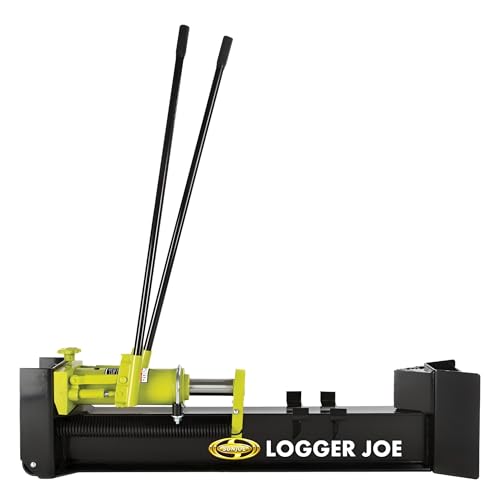
Best for Homeowners splitting larger or drier hardwood rounds
- Around 10 tons of splitting force from a 15-amp electric motor
- Accepts logs up to about 20.5 inches long and 10 inches across
- Runs on a standard household outlet with no fuel or fumes
- Built-in wheels and a stand for easier moving and feeding
- Highest tonnage in the electric class for tough rounds
- Fume-free and quiet enough for garage use
- Well-supported brand with available parts
- Heavy to move compared with 5-ton models
- Ram cycle is slower than a petrol splitter
Verdict: A high-tonnage electric splitter that handles most home firewood, including larger hardwood, which is why it tops the list for owners who want capacity without a petrol engine.

Best for Value-focused buyers splitting general home firewood
- Around 6.5 tons of force from a 15-amp motor
- Handles logs up to roughly 20.5 inches long and 10 inches across
- Sliding rails and a hydraulic ram for repeatable splits
- Includes a stand that raises the beam to a workable height
- Strong tonnage for the price
- Comes with a raised stand for easier feeding
- Backed by WEN's consumer warranty and support
- Not built for large hardwood rounds
- Slower cycle than gas machines
Verdict: A lot of splitting force for the money, with a stand included, making it the easy value pick for typical seasoned firewood.

Best for Buyers who want a heavier-built, US-assembled machine
- Around 7 tons of force from a 15-amp electric motor
- Accepts logs up to about 20.5 inches long and 12 inches across
- Assembled in the USA with a sturdy steel frame
- Includes wheels and a log tray to catch split wood
- Robust build with a reputation for durability
- Wider 12-inch log capacity than many rivals
- Log tray keeps split pieces from falling
- Costs more than budget electric splitters
- Heavier and less compact to store
Verdict: A well-built 7-ton splitter for owners willing to pay more for a heavier frame and a strong owner reputation.

Best for Reliable all-round home splitting
- Around 7 tons of force from a 15-amp electric motor
- Accepts logs up to about 20.5 inches long and 12 inches across
- Auto-return ram and an adjustable stroke limiter for faster cycling
- Wheels and a stand for moving and feeding at height
- Consistent performance that owners praise
- Stroke limiter speeds up small-log splitting
- Handles wider 12-inch rounds
- Slower than a petrol splitter under load
- Heavy to reposition without the wheels
Verdict: A dependable 7-ton splitter with a strong owner following, our pick for buyers who want proven reliability over the lowest price.
Best for First-timers splitting small, seasoned softwood
- Around 5 tons of force from a compact electric motor
- Accepts logs up to about 18 inches long and 10 inches across
- Lightweight body that is easy to move and store
- Plugs into a standard outlet for simple, fume-free use
- Light and approachable for new users
- Easy to store in a garage or shed
- Affordable entry to powered splitting
- Limited to small, well-seasoned rounds
- Struggles with knotty or green hardwood
Verdict: An easy, light 5-ton splitter for beginners and small firewood jobs, best kept to seasoned softwood and modest rounds.
Best for Small spaces and lighter splitting
- Around 5 tons of force from a 15-amp motor
- Accepts logs up to roughly 20.5 inches long
- Compact footprint suited to garages and small yards
- Wheels for moving the machine between storage and work spot
- Compact and easy to tuck away
- Full-length log capacity despite low tonnage
- Simple household-outlet operation
- Low tonnage limits it to easier wood
- Basic frame compared with premium models
Verdict: A compact 5-ton splitter for tight spaces and lighter firewood, a tidy choice where a big machine will not fit.
Frequently Asked Questions
How many tons of force do I need in an electric log splitter?
For most home firewood, a 6.5 to 7-ton electric log splitter is the sweet spot, parting seasoned rounds up to about 10 inches across. Small, soft wood splits fine at 5 tons, while larger or drier hardwood such as oak is better matched to a 9 or 10-ton machine.
Can an electric log splitter split oak and other hardwoods?
Yes, higher-tonnage electric splitters around 9 to 10 tons can split seasoned oak and similar hardwoods within their size limit, though green or knotty rounds are much harder. For large volumes of tough hardwood, a gas or towable hydraulic splitter parts wood faster and handles bigger logs.
Do electric log splitters come with a stand?
Some electric log splitters, such as the WEN 56207, include a stand that raises the beam to a comfortable working height, while others sit low and are used on a sturdy bench or the ground. A stand saves your back, so check whether one is included before buying.
Are electric log splitters worth it compared with a maul?
Electric log splitters are worth it if you process more than a little firewood, since they part rounds a maul struggles with and spare your back and shoulders. For a small amount of easy, straight-grained wood, a splitting maul is cheaper and needs no power, so the volume you cut decides.