


Can you run an electric log splitter indoors?
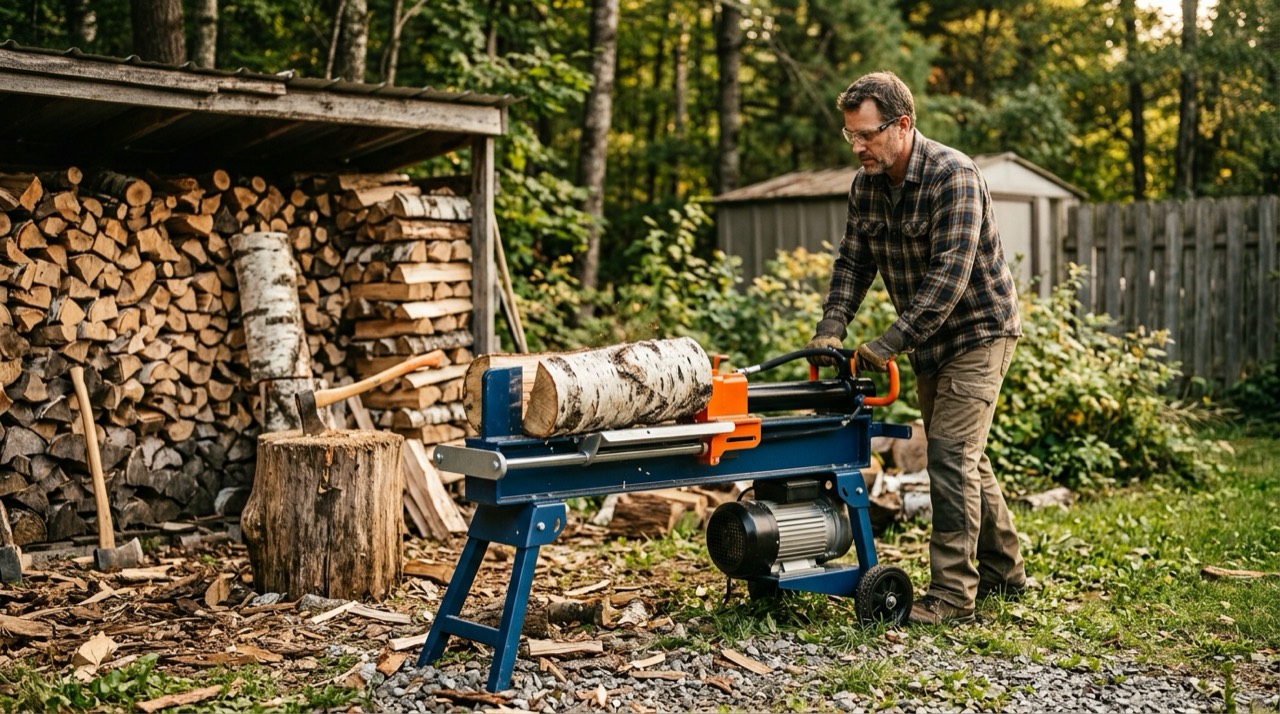
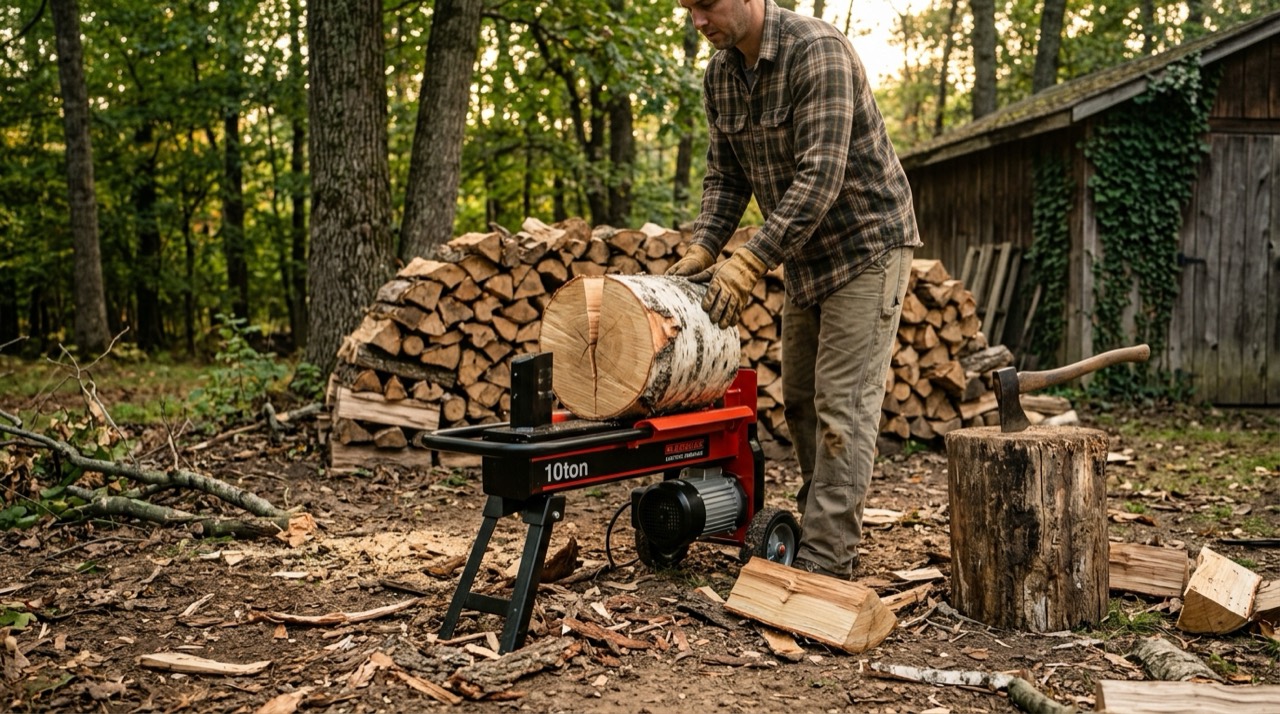
Yes, you can run an electric log splitter indoors, because it has no engine and produces no exhaust fumes, unlike a petrol splitter that must never run in an enclosed space. That makes a garage, workshop, or covered porch a practical place to split firewood in bad weather.This fume-free operation is the single biggest reason people choose electric over gas for home use. You still need room to work safely, a suitable outlet, and a dry, ventilated space, but you avoid the carbon-monoxide danger that rules out any petrol machine indoors. Working under cover also lets you split through rain or cold that would otherwise stop the job, which is a real advantage when firewood season and bad weather arrive together. For the full range of electric models, see our electric log splitter guide.
Why do electric splitters suit small yards and garages?
Electric log splitters suit small properties because they are quieter, lighter, and more compact than gas machines, and they need no fuel storage. A suburban owner can split a season's firewood in a single-car garage without disturbing neighbours or venting exhaust.The advantages that make electric splitters small-space friendly are listed below.
- Fumes: none, so they are safe to run in a garage or covered area with ventilation.
- Noise: an electric motor is far quieter than a petrol engine.
- Size: 5 to 7-ton models tuck into a corner or against a wall.
- Fuel: nothing flammable to store, and no stale petrol to manage.
These same traits make electric splitters easy to share, lend, or move between a shed and a work spot. For anyone in a townhouse, on a small block, or in a neighbourhood with noise rules, that quiet, contained operation is often the deciding factor over a more powerful gas machine.
How much clearance do you need to split indoors?
Splitting indoors needs enough clear floor for the machine, a full round on the beam, and room to step back from the ram, plus space to stack split wood on the discharge side. A single-car garage bay is usually ample for a 5 to 7-ton splitter and a modest woodpile.Lay the space out so the work flows in one direction. The essentials to plan for are listed below.
- Machine footprint: the splitter plus its stand and wheels, with the beam clear of walls and shelving.
- Operator zone: room to stand square to the control with both hands on the machine and nothing underfoot.
- Infeed and outfeed: unsplit rounds within easy reach on one side, a bin or stack for split wood on the other.
- Cord run: a clear path for the extension cord along a wall, never across where you walk.
Keeping these zones separate stops you reaching over the beam or tripping on wood while the ram is moving, which are the two most common indoor hazards.
What power and ventilation does indoor splitting need?
Indoor splitting needs a standard 120-volt outlet on a circuit that can carry the motor's roughly 15-amp draw, plus enough ventilation to keep the space comfortable. Use a short, 12-gauge extension cord and avoid sharing the circuit with other heavy appliances.While an electric splitter emits no exhaust, a closed garage still benefits from an open door or window for airflow and dust, and good lighting makes the work safer. Position the splitter so the cord runs safely along a wall rather than across a walkway, and never coil a running cord tightly on a reel, as that traps heat. Sweep up bark and sawdust as you go, and lay down a tarp or mat if you want to keep the floor clean. If the motor's thermal reset trips, the cord or circuit is usually undersized, so improving the supply fixes most indoor power problems.
How do you keep a garage clean and safe while splitting?
Keep an indoor splitting area clean by containing the bark, chips, and dust each round sheds, and by clearing split wood before it piles up underfoot. A tarp under the machine and a broom kept close by handle most of the mess.Wood splitting throws surprisingly fine debris, so lay down a tarp or rubber mat to catch bark and make cleanup a matter of folding and tipping it into a bin. Sweep between loads so chips do not become a slip hazard, and keep the outfeed area tidy so split pieces are stacked rather than scattered. An open door or window helps clear the fine dust that even fume-free splitting stirs up, and good lighting lets you see knots and hand placement clearly. Store the bar oils, fuels, and finishes for other tools well away from the work zone; our outdoor tool storage guide covers keeping a garage workshop orderly.
Will neighbours hear an electric log splitter?
An electric log splitter runs at roughly the volume of a circular saw or vacuum cleaner, far quieter than a petrol engine, so neighbours are unlikely to be troubled by daytime use. The loudest sounds are usually the wood cracking and split pieces dropping, not the motor.That low noise is a genuine advantage on a small block or in a townhouse, where a petrol splitter or chainsaw might breach local noise rules or simply annoy people close by. Even so, it is courteous to split during reasonable hours and to check any body-corporate or council noise restrictions if you live somewhere dense. For your own comfort over a long session, hearing protection is still sensible, and the same hearing and eye protection you would wear for other yard tools covers splitting too. Working under cover also muffles what little sound the machine makes.
How do you move and store an electric splitter in a small space?
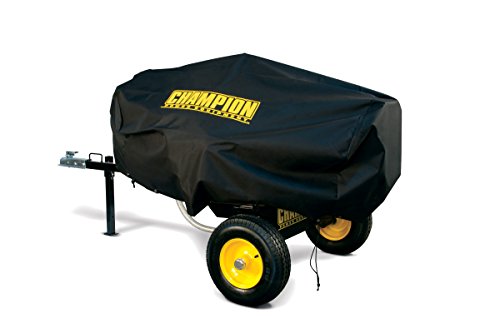
Moving and storing an electric splitter in a small space is easier than with a gas machine, but the heavier 7 to 10-ton models still weigh over 100 pounds, so built-in wheels matter. Roll the splitter to its work spot, then return it to a dry corner when the job is done.Store the machine dry to prevent rust on the beam and moisture in the hydraulic reservoir, and protect it before long idle periods in an unheated space. If you split only once or twice a year, storing the machine on a low shelf or wheeling it flat against a wall keeps a single-car garage usable the rest of the time. A wall or corner keeps it out of the way, and a sawhorse or log stand nearby speeds cutting rounds to length before splitting.
How do you set up a back-friendly splitting station?
A back-friendly splitting station raises the beam to around waist height so you are not stooping to feed rounds, and keeps heavy wood within a short, low lift. Bending and twisting under load, not the splitting itself, causes most of the aches people blame on the machine.Set the machine on a stand or sturdy bench that brings the beam to a comfortable height, and stage your unsplit rounds on a nearby sawhorse or log stand rather than on the ground. Lift with your legs, slide rather than carry where you can, and let the wheels move the machine so you are not dragging it. Splitting in shorter sessions with breaks, instead of one marathon, also protects your back and gives the motor time to stay cool. These small ergonomic choices matter more over a full woodpile than the difference between a 5 and 7-ton machine.
Where does an electric splitter reach its limits?
An electric splitter reaches its limits when the volume of wood, the size of the rounds, or the distance from power outgrows a household machine. Splitting many cords, handling logs over about 12 inches, or working away from an outlet all point toward a gas or towable hydraulic splitter.For most suburban firewood, though, an electric splitter in the garage covers the job with none of the fumes, noise, or fuel of a petrol machine. Renting a larger splitter for a one-off big job can also make more sense than buying a heavier machine you would rarely use. If you are unsure which side of that line you fall on, compare volumes and log sizes in our electric log splitter guide before you buy, and keep basic work gloves and eye protection on hand for every session.