


How does tonnage relate to the wood you split?
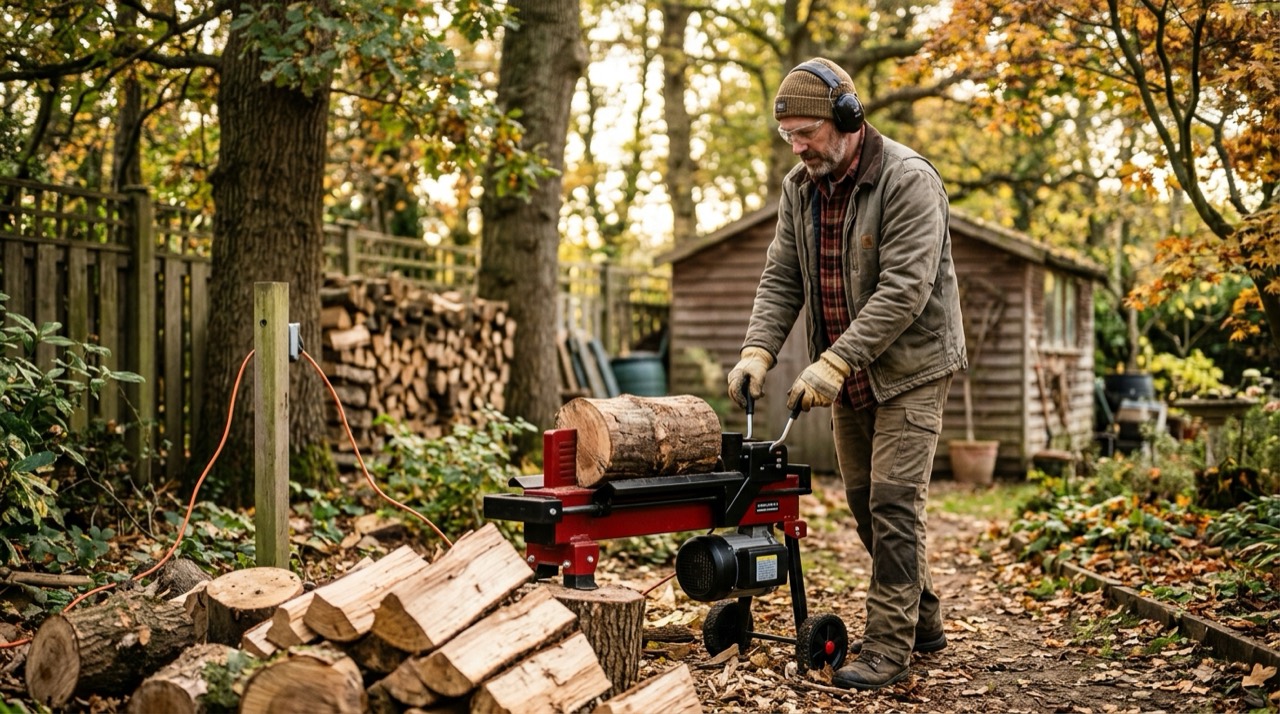
Tonnage is the force an electric log splitter's hydraulic ram applies to drive a log against the wedge, and the wood's toughness decides how much you need. Dry, straight-grained softwood parts at 5 tons, while dense, knotty, or green hardwood can demand 9 to 10 tons or more.Manufacturers rate splitters by maximum tons, but that number only tells you the ceiling. The real question is whether that force overcomes your particular wood, which depends on species, moisture, diameter, and grain. Getting this match right is the difference between a machine that powers through your pile and one that leaves you fighting the last stubborn rounds by hand. The rest of this guide breaks those factors down so you can size a splitter to the firewood in your yard rather than to a spec sheet. For the full model line-up, see our electric log splitter guide.
Which wood species need the most force?
Hardwood species need more splitting force than softwoods, and among hardwoods the tough, interlocked grains resist the wedge most. Pine, fir, and poplar split easily, oak and maple need real force, and elm, sweetgum, and sycamore are notoriously stringy even for powerful machines.The list below groups common firewood by how hard it is to split.
- Easy: pine, fir, spruce, cedar, and poplar, along with most softwoods.
- Moderate: ash, cherry, birch, and straight-grained oak.
- Hard: sugar maple, hickory, and dense seasoned oak rounds.
- Very hard: elm, sweetgum, and sycamore, whose interlocked grain resists splitting.
If your firewood is mostly elm or gum, size up on tonnage or expect to cut the toughest rounds smaller with a chainsaw first.
How do moisture and seasoning change splitting force?
Green, unseasoned wood is much harder to split than dry, seasoned wood, because moisture makes the fibres flexible and springy rather than brittle. A round that stalls a 7-ton splitter while green may pop apart easily once it has dried for six to twelve months.Seasoning also depends on species and climate, so a stack that looks dry on the outside can still be wet in the core. A simple moisture meter takes the guesswork out, with firewood generally ready to burn and easier to split below about 20 percent moisture. Where you can, split wood after it has begun to season, or size up on tonnage if you must split it green. Our firewood tools guide covers moisture meters and stacking that speed seasoning.
How much do diameter and knots matter?
Diameter and knots often matter more than raw species, because a wide round has more fibre to break and a knot forces the wedge through crossed, tangled grain. A clear 8-inch round of oak can split easily, while a knotty 12-inch round of the same tree fights back.Work around this by splitting from the outside edge inward rather than aiming for the centre, and by rotating a stubborn round to attack a clear face. Splitting a round into halves and then quarters, working inward from the bark, keeps each pass within the machine's comfortable range. Rounds with major knots, forks, or crotch wood are the hardest of all and may be better handled by a splitting maul, a wedge and sledge, or a higher-tonnage gas splitter.
Does a longer log need more force to split?
Log length has surprisingly little effect on the force a split needs; a 20-inch round is no meaningfully harder to part than a 12-inch one of the same diameter and species. Diameter, grain, moisture, and knots drive the tonnage you feel, not length.What length does change is handling and ram travel. A longer round is heavier to lift onto the beam and takes a longer ram stroke to split end to end, which is where a stroke limiter that shortens travel on shorter logs saves time. Very long rounds can also exceed the cradle capacity outright, so cut your firewood to a consistent length inside the stated limit. In practice, keep length within spec for fit and handling, and judge the tonnage you need from diameter and wood type instead.
Why does a round stall an electric log splitter?
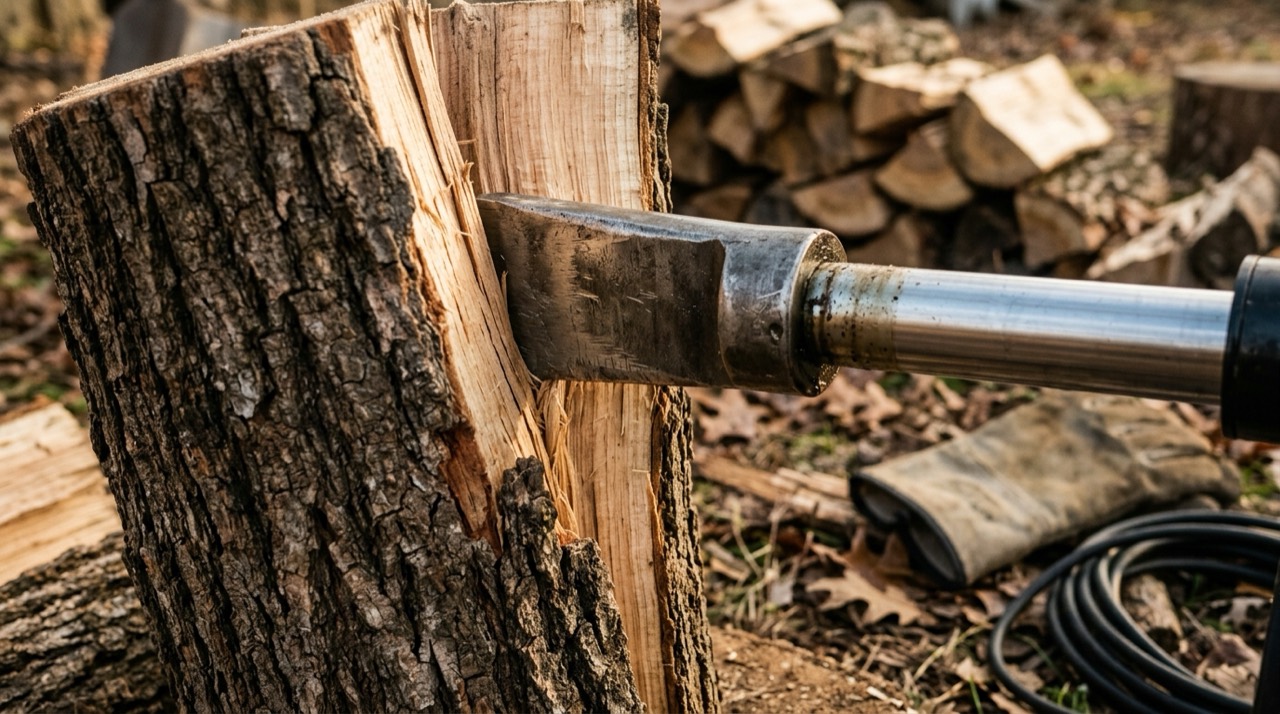
A round stalls when the wood's resistance exceeds the force the hydraulic ram can deliver, at which point the pump reaches its pressure-relief setting and the ram simply stops advancing. The motor keeps running, but the wedge sits buried in the log without parting it.Stalling is not immediately harmful, because the relief valve exists to protect the pump, but repeatedly forcing a machine against a round it cannot split does take a toll. The motor works hard and heats up, often tripping the thermal cut-out, and the extra strain shortens the life of the pump and seals over time. A splitter that stalls constantly is a sign the tonnage is wrong for the wood, not that the machine is faulty. The fix is to reduce the demand rather than push harder: back the ram off, rotate or reposition the round, take a smaller bite from the edge, or set the toughest pieces aside for a higher-tonnage gas splitter or a maul.
How do you split rounds near the machine's limit?
Splitting tough rounds near your machine's limit is about technique as much as force: attack the edge rather than the centre, and break the round down in stages so each pass stays within the ram's comfortable range. A methodical approach parts wood a head-on shove cannot.Use the following sequence on a stubborn round.
- Position the round so the wedge meets a clear face, away from obvious knots.
- Take the first split from the outside edge, not the middle, where the wood parts more easily.
- Work around the round in slabs, rotating it to keep attacking clear grain.
- Halve the remaining core, then quarter it, so no single pass demands full tonnage.
- Set aside knotty, forked, or crotch pieces for a maul and wedge or a bigger machine.
Splitting from the bark inward exploits the wood's natural cleavage lines and keeps the ram from burying itself in the dense heart of the round. For the hardest pieces, cutting them shorter with a chainsaw first reduces the fibre the wedge must break in a single pass.
Does frozen or very cold wood split differently?
Frozen wood often splits more easily than the same wood at room temperature, because the moisture locked in the fibres turns brittle and the round tends to crack cleanly. Many people who split in a cold climate deliberately work in winter for this reason.The effect is strongest in wood that still holds some moisture; bone-dry seasoned wood changes little with temperature. It is no substitute for seasoning, since frozen green wood still carries a heavy load of water and will hiss and burn poorly, but for splitting day itself the cold can be an ally. The trade-off is that cold, stiff hydraulic oil moves more slowly, so give the machine a minute to warm up and expect a slightly sluggish first few cycles in freezing conditions.
How should you size electric splitter tonnage to your firewood?
Size your splitter to the toughest wood you split regularly, not the average, so it does not stall on the hard rounds. As a rough guide, 5 tons suits seasoned softwood and kindling, 7 tons covers most mixed home firewood, and 10 tons handles larger or drier hardwood.The table below matches typical tonnage to wood type and round size.
| Force | Wood type | Round size |
|---|---|---|
| ~5 tons | Seasoned softwood, kindling | Up to ~8 in |
| ~6.5 to 7 tons | Mixed seasoned firewood | Up to ~10 in |
| ~9 to 10 tons | Drier hardwood, larger rounds | Up to ~12 in |
Remember these are guides, not guarantees, because a single knotty elm round can defeat a machine that splits everything else in your pile. When in doubt, choose the higher tonnage within your budget and space. See the best electric log splitter picks for models at each force level, and match them to the wood you actually burn.
What tonnage suits a mixed firewood pile?
For a typical mixed pile of seasoned pine, ash, and moderate oak, a 7-ton electric splitter is the sensible choice, handling the easy softwood effortlessly and the oak within reason while leaving only the occasional knotty round for hand tools. Size to the oak, not the pine.Picture a homeowner burning three cords a year: roughly half easy softwood, a third mixed hardwood, and a handful of gnarly rounds. A 5-ton machine would fly through the softwood but stall on the oak, while a 10-ton machine would handle everything at more cost and weight than the pile demands. The 7-ton middle ground splits the great majority in one pass, and the few elm or forked rounds that resist it are quicker to cut smaller or split with a splitting maul than to justify a heavier machine. Sizing to the toughest wood you meet regularly, rather than the average, is the principle that keeps you from buying too little or too much. Compare models at each force level in the best electric log splitter picks.