
How do you build a gas log splitter?
Building a gas log splitter means assembling a hydraulic system around a steel beam: an engine driving a two-stage hydraulic pump, a cylinder and ram, a control valve, a reservoir of hydraulic oil, hoses and fittings, and a hardened wedge, all mounted on a frame strong enough to resist tons of force. Home-built splitters are a common project among people with welding and hydraulics experience, and complete plans and component kits are sold for the purpose.The core sizing decisions mirror those on a factory machine. The cylinder bore and the pump's pressure rating determine tonnage, the pump's GPM and the cylinder size set cycle time, and the engine must have enough power to keep the pump turning under full load. Our gas and hydraulic log splitter guide explains how these parts combine to produce splitting force, which is essential background before buying any components.
Safety is the reason to be cautious here. A log splitter stores and releases enormous force, and a poorly welded beam, an undersized hose, or a badly plumbed valve can fail under pressure with serious injury as the result. Hydraulic components must be rated for the system pressure, hoses must be correctly crimped, and the frame must not flex under load. This is not a beginner project.
What components do you need to build a gas log splitter?
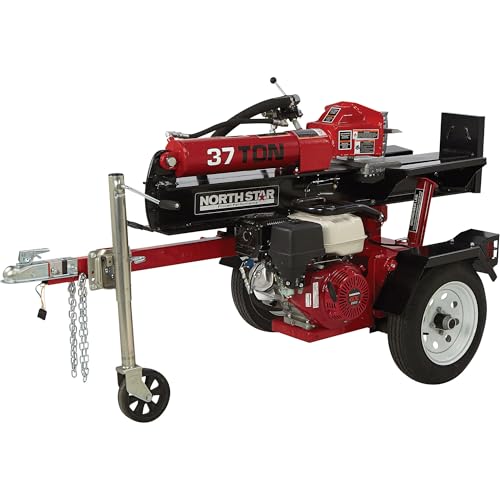
A home-built gas log splitter needs the same core parts as a factory machine, each rated for the forces involved. The essential components are listed below.- A petrol engine of a few horsepower to drive the pump.
- A two-stage hydraulic pump, the part that makes tens of tons from a small engine.
- A hydraulic cylinder and ram sized for your target tonnage and log length.
- A control valve with detent and auto-return, plus a relief valve to cap pressure.
- A reservoir, filter, and correctly rated hoses and fittings.
- A hardened steel wedge and a heavy I-beam frame that will not flex under load.
Complete plans and component kits are sold for the purpose, and following a proven design is far safer than improvising dimensions.
How do you size the cylinder, pump, and engine?
Size the cylinder bore and system pressure for your target tonnage first, then match the pump and engine to drive them. Force in tons equals piston area multiplied by pressure, so a 4-inch-bore cylinder at about 3,000 PSI yields roughly 18 to 19 tons, while a 4.5-inch bore or a higher pressure pushes past 25 tons.The pump's GPM and the cylinder size together set cycle time, and the engine must have enough sustained power to keep the pump turning at full pressure without bogging. Undersize any one part and the machine disappoints: a big cylinder on a weak pump cycles slowly, and a strong pump behind a small engine stalls under load. Our gas and hydraulic log splitter guide explains how these parts combine before you buy any of them.
Does it cost less to build or to buy a log splitter?
Building rarely beats buying on price once you count every component and your time, because the pump, cylinder, valve, engine, and steel add up to close to the cost of a supported factory machine — and without a warranty. A home build can still make sense for someone who already has an engine or steel, or who wants a specific size no maker offers.For most people, a factory splitter is cheaper all-in, backed by a warranty, and built from matched components. If you would rather buy a ready-made machine, our best gas log splitter picks span the tonnage range.
What safety points matter on a home-built splitter?
Safety is the reason to be cautious, because a log splitter stores and releases enormous force and any weak link can fail under pressure. Every hydraulic component must be rated for the system pressure, hoses must be correctly crimped, welds must be sound, and the frame must not flex under load.Have the finished machine and its welds checked by someone qualified before you split with it, and wear eye and hearing protection and work gloves from the first use. A home-built splitter carries no warranty and no factory validation, so the engineering is entirely on the builder.
For most people, a factory-built splitter is safer, often cheaper once you account for parts and time, and comes with a warranty and supported components — see our best gas log splitter picks. If you do build one, treat it as an engineering task, follow proven plans exactly, and have the finished machine and its welds checked by someone qualified. This is general information, not construction or engineering advice.