


Where can you buy a gas log splitter?
Gas log splitters are sold through farm and home-improvement retailers, dedicated outdoor-power dealers, big-box stores, warehouse clubs, and online marketplaces. Tractor Supply carries its CountyLine house brand, Northern Tool stocks Powerhorse and the premium NorthStar line, home centres and clubs list Champion and YARDMAX, and independent outdoor-power dealers handle higher-end brands with service on hand.Where you buy shapes the support you get, not just the price. A dealer costs more but assembles the machine, explains its controls, and repairs it when a seal or pump eventually fails. Big-box and online sellers are cheaper but leave assembly, first-fill checks, and servicing to you. For a machine that combines a petrol engine with a hydraulic system, local service access is worth paying something for, especially on a first splitter where you are still learning what normal feels like. This buying landscape sits alongside the model rankings in our best gas log splitter picks.
Should you buy new, used, or rent?
Buy new if you split every season and want a warranty, buy used if you split occasionally and can inspect a machine, and rent if you split once a year or for a single big clean-up. The right path follows how often you process wood and how confident you are checking an engine and hydraulics.New machines cost the most but come with warranty cover, supported parts, and a known history. Used splitters can be genuine bargains, because they hold up well when maintained, but you inherit any neglect and get no warranty. Rentals remove ownership entirely for a fixed daily fee. The three routes trade money for risk and convenience, summarised below.
| Option | Best for | Watch out for |
|---|---|---|
| New | Regular seasonal use, warranty peace of mind | Highest upfront cost |
| Used | Occasional use, buyers who can inspect | No warranty, hidden hydraulic wear |
| Rental | One-off jobs, a single storm clean-up | Daily fees mount over a season |
What should you check on a used gas log splitter?
Inspect a used gas splitter's engine, hydraulics, and beam before you pay, because these are where the costly faults hide. Start the engine cold to see how it fires, run a full cycle to feel for smooth ram travel, and look underneath for hydraulic leaks. Weeping seals, milky fluid, or a jerky, hesitating ram all point to a neglected hydraulic system that can cost more to fix than you saved.The points below are the ones buyers most often regret skipping.
- Engine: check it starts on a cold pull and idles without heavy smoke.
- Hydraulic fluid: confirm the level is correct and the oil is clean, not milky or dark.
- Ram and cylinder: watch a full cycle for smooth, leak-free travel in both directions.
- Beam and wedge: look for cracks, deep gouging, or a bent or chipped wedge.
- Hoses and fittings: check for chafing, weeping, or crushed lines.
A well-kept used splitter can save real money, but a machine with tired hydraulics or a hard-starting engine can turn into a repair bill. If you are not comfortable judging these things yourself, take along someone who is, or choose a new machine or a rental instead.
Is renting a log splitter cheaper than buying?
Renting is cheaper only for infrequent splitting, because daily hire fees add up fast against the one-time cost of ownership. A rental makes sense for a single storm clean-up or a one-off delivery of rounds, where you split hard for a day or two, then hand the machine back with no storage, winterising, or maintenance to worry about.If you split firewood every year, ownership usually wins within a few seasons, and you gain the freedom to split whenever the wood and weather line up rather than booking a hire slot. Weigh your annual volume honestly: a few afternoons a year points to renting or even a splitting axe and maul, while steady cords justify buying your own. Either way, cut rounds to length first over a sawhorse or log stand, pull on work gloves, and read our gas and hydraulic log splitter guide before you commit.
How much should you budget for a new gas log splitter?
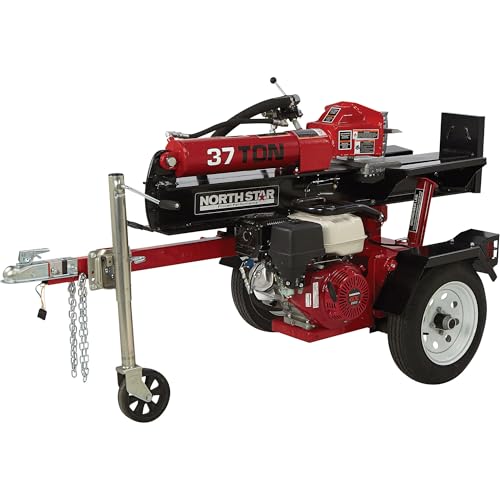
Budget by tonnage and brand, because those two factors move the price more than any feature: compact 22-ton house-brand machines sit at the bottom, mid-size 25-to-28-ton splitters occupy the broad middle, and premium 30-plus-ton machines with Honda engines sit at the top. Add the cost of hydraulic oil, PPE, and a hitch if you tow.Where you buy shifts the figure too. Big-box stores and warehouse clubs price aggressively but leave assembly and first-fill checks to you, while a dealer charges more and includes setup, a walkthrough, and service when a seal or pump eventually needs work. On a first splitter, that hand-holding can be worth the premium. The rough price ladder by tonnage is set out below.
| Tier | Typical tonnage | What you get |
|---|---|---|
| Entry | 22 tons | Compact, house-brand, lighter engine |
| Mid | 25-28 tons | Convertible layout, mainstream brands |
| Premium | 30-37 tons | Heavy build, Honda-class engine, full beam |
What questions should you ask a private seller?
Ask a private seller about the machine's age, hours, service history, and any faults before you drive out to see it, so you can rule out a tired splitter over the phone. The questions that save a wasted trip are listed below.- How old is it, and roughly how many cords has it split?
- When was the hydraulic fluid and filter last changed?
- Has the engine ever been hard to start or needed carburettor work?
- Are there any leaks, and does the ram cycle smoothly in both directions?
- Why are you selling, and do you still have the manual and any tow hardware?
Honest answers to these tell you as much as the inspection does. A seller who has changed the fluid, keeps the manual, and describes normal cold-start behaviour is a better bet than one who is vague about upkeep.
How do you inspect the hydraulics on a used splitter?
Inspect the hydraulics by running the machine through full cycles and watching for leaks, milky fluid, and hesitation, because the hydraulic system is where the expensive faults hide. Do the checks below in order before you pay.- Start the engine cold to judge how easily it fires and whether it idles without heavy smoke.
- Check the hydraulic fluid on the dipstick or sight glass, confirming the level is correct and the oil is clean, not milky or burnt-dark.
- Run several full cycles and watch the ram extend and retract smoothly, with no juddering or slowing.
- Look under the beam and around the cylinder and fittings for weeping oil or fresh drips.
- Split a test round if you can, to feel whether the machine reaches its rated force without stalling.
Weeping seals, milky oil, or a jerky ram point to a neglected system that can cost more to repair than you saved on the purchase. If you cannot judge these yourself, bring someone who can, or choose a new machine or a rental instead.
What paperwork and extras should come with a splitter?
A gas splitter should come with its operator's manual, and ideally the original tow hardware, a documented hydraulic-oil specification, and any warranty paperwork on a newer machine. The manual matters more than buyers expect, because it lists the exact hydraulic-oil grade and capacity, the service intervals, and the tonnage and log-size limits.On a used sale, a machine that still has its manual and a clear service record is worth more than a cheaper one with no history, because you know what fluid it takes and how it has been treated. New machines from a dealer add assembly, a warranty, and supported parts. Note the hydraulic-oil grade before your first top-up, and keep work gloves and eye and hearing protection on hand for the first session.
Is a house brand or a premium brand better value?
House brands offer more tonnage for the money, while premium brands offer engine pedigree, build quality, and resale value — the better choice depends on how hard and how often you split. For occasional seasonal firewood, a well-kept house-brand splitter does the same job for less; for years of high-volume hardwood, a premium machine's engine and heavier build repay the extra.The deciding factor is service access as much as the badge. A supported brand means seals, filters, and pump parts are easy to source when they eventually wear, whereas a bargain off-brand can strand you when a component fails. The model rankings in our best gas log splitter picks weigh tonnage, engine, and support together.
How do you transport a gas log splitter home safely?
Transport a gas splitter home on a trailer or by towing it slowly on private ground, using its coupler and safety chains and securing it against rolling. These machines are heavy, so plan the load and have help on hand rather than manhandling one alone.Road-towing a splitter behind a vehicle has its own requirements for hitching, lighting, and speed, and rules vary by region, so check what applies before you set off. On the property, tow at walking pace on firm ground and chock the wheels once the machine is in position. Drain or stabilise the fuel if the machine will sit for a while after you get it home, and store it under cover to protect the engine and hydraulics.