Best Gas Log Splitter
Best Gas Log Splitter, ranked from aggregated owner ratings and reviews, not first-hand testing. Real pros, cons, and who each pick is best for.

Our Top 3 Picks
Quick Comparison
| Product | Best for | Buy | |
|---|---|---|---|
| Champion 27-Ton Gas Log Splitter (100251) | Best Overall | See Amazon | View (paid link) |
| CountyLine 25-Ton Gas Log Splitter | Best Value | See Amazon | View (paid link) |
| Champion 22-Ton Towable Gas Log Splitter | Best Compact | See Amazon | View (paid link) |
| NorthStar 30-Ton Horizontal/Vertical Log Splitter | Best Premium | See Amazon | View (paid link) |
| Boss Industrial 34-Ton Gas Log Splitter | Best Heavy-Duty | See Amazon | View (paid link) |
| YARDMAX YS2865 28-Ton Full-Beam Gas Log Splitter | Editor's Pick | See Amazon | View (paid link) |
How to choose the best gas log splitter
The best gas log splitter is the one whose tonnage clears your toughest wood with a cycle time and layout that spare your back — for most owners that means a 25-to-30-ton horizontal/vertical machine with a dependable engine. Bigger tonnage helps only if you split large, green, or knotty hardwood, and smaller units save money if your wood is soft and seasoned.Our picks span a compact 22-ton starter to a 34-ton heavy hauler, all from established brands with parts and dealer support. The sections below explain how to read tonnage, cycle time, engine, and layout so the ranking makes sense for your wood pile.
How much splitting force do you need?
Splitting force should match the hardest wood you handle, not the average. Seasoned softwood yields at 10 to 15 tons, most seasoned hardwood at 20 to 25 tons, and large green or knotty rounds of oak, elm, or gum at 27 tons and up. The table below lines up our picks by force, engine, and the wood each one suits.| Splitter | Force | Engine | Best for |
|---|---|---|---|
| Champion 27-Ton (100251) | 27 tons | ~224cc Champion | All-round firewood and hardwood |
| CountyLine 25-Ton | 25 tons | ~208cc Kohler/Briggs | Value seasoned-hardwood splitting |
| Champion 22-Ton Towable | 22 tons | ~196cc Champion | Smaller properties and lighter wood |
| NorthStar 30-Ton | 30 tons | Honda GX-series | Premium, high-volume hardwood |
| Boss Industrial 34-Ton | 34 tons | ~300cc | Large, knotty, green rounds |
| YARDMAX YS2865 28-Ton | 28 tons | ~208cc Briggs | Full-beam heavy firewood |
Does cycle time matter more than tonnage?
Cycle time matters as much as tonnage once you are splitting volume, because a faster ram means more finished firewood per hour. Most hydraulic gas splitters cycle in 10 to 14 seconds, and a two-second difference adds up across a full cord. If speed is your priority over maximum force, a kinetic splitter from our manual and kinetic splitter guide cycles in two to three seconds.For hardwood and big rounds, though, tonnage and a horizontal/vertical layout still come first, since no cycle speed helps if the ram stalls in the wood.
Horizontal or vertical — which should you buy?
Buy a horizontal/vertical splitter if you handle heavy rounds, and a horizontal-only model only if your logs are light enough to lift comfortably. Vertical operation lets you roll a heavy round to the machine and split it upright, sparing your back, which is why nearly every splitter above 22 tons converts between both positions.Horizontal-only units are lighter and cheaper, and fine for a modest stack of manageable logs, but wrestling a 150-pound oak round onto a beam gets old fast. Match the layout to your heaviest wood, not your lightest.
Which engine and brand should you trust?
Engine reliability and brand support decide how a splitter holds up over years of seasonal use. Honda, Briggs & Stratton, Kohler, and Champion engines all have wide parts availability, and buying from an established maker means hydraulic seals, filters, and valves are easy to source. A machine that will not start in autumn is worth nothing, however high its tonnage.Look for an easy-pull recoil, a two-stage pump, and a sound warranty. Off-brand splitters can look like bargains but often leave you stranded when a seal or pump fails, so the picks above stick to supported brands.
What else should you budget for?
Beyond the splitter, budget for hydraulic oil, work gloves, and eye and hearing protection before your first session. Split wood throws chips, and petrol engines are loud enough to need ear defenders.A towable splitter also needs a proper hitch and safe road setup, and a sawhorse or log stand speeds up cutting rounds to length first. If your wood is soft and your volume light, weigh these picks against our electric log splitter guide before you commit to a petrol engine.
How do you match tonnage to your wood species?
Match tonnage to the hardest, greenest, biggest wood you split rather than the average round, because a machine that stalls on your worst logs wastes the whole session. Seasoned softwood parts at 10 to 15 tons, most seasoned hardwood at 20 to 25 tons, and large green or interlocked-grain rounds of oak, elm, or gum can demand 27 tons and up.Moisture and grain move the figure as much as species does. The same oak round splits far more easily seasoned than green, and stringy species such as elm and sycamore hold together where straight-grained ash falls apart. If most of your wood is dry and straight-grained, a 22-to-25-ton pick clears it comfortably; if you cut green rounds or notoriously tough species, the 28-to-34-ton machines in the table above earn their extra cost and weight.
What beam length and log capacity should you look for?
Check the maximum log length and diameter a splitter accepts, because a machine that will not take your rounds is no bargain however high its tonnage. Most consumer gas splitters handle rounds up to roughly 24 to 25 inches long, and their tonnage rather than the beam opening limits diameter — a 27-ton machine works through far larger rounds than a compact 22-ton one.Cut your rounds to a consistent length that fits the beam before you start, ideally to the firebox length of your stove, using a sawhorse or log stand to hold them steady and square. Over-long rounds foul the wedge and waste strokes, while oversized-diameter rounds are better split in the vertical position or quartered first.
Which features actually matter on a gas log splitter?
The features worth paying for are the ones that save your back and your time over a long session, not cosmetic extras. The details that separate a comfortable splitter from a frustrating one are listed below.- Horizontal/vertical conversion, so heavy rounds roll to the machine instead of being lifted onto the beam.
- An auto-return control valve that retracts the ram hands-free while you fetch the next round.
- Log-catching cradles or a stripper plate that hold the split halves instead of dropping them on the ground.
- A two-stage hydraulic pump for a workable cycle time under load.
- An easy-pull recoil start and accessible fill points for fuel, engine oil, and hydraulic fluid.
- A proper tow package with pneumatic tyres if you move the machine to the wood rather than the wood to the machine.
How do you maintain a gas log splitter season to season?
Maintaining a gas log splitter means servicing the engine like any small motor and keeping the hydraulic system clean, which together preserve both tonnage and reliability. Neglect shows up as hard starting and a weak, jerky ram. The seasonal routine below keeps a machine splitting for years.- Change the engine oil at the interval in the manual, and check the level before every session.
- Check the hydraulic fluid with the ram retracted and the engine off, topping up with the specified anti-wear oil.
- Change the hydraulic filter on schedule, since grit is what destroys pumps and valves.
- Inspect hoses, fittings, and the cylinder for weeping or chafing before each use.
- Keep the wedge and beam clear of debris, and grease the ram slide.
- Store the machine under cover with fuel stabiliser, or drain the fuel, if it sits over summer.
When should you size up, and when should you size down?
Size up when your wood is regularly green, knotty, or over about 20 inches across, and size down when it is seasoned, straight-grained, and moderate, because carrying tonnage you never use only adds weight, cost, and fuel burn. The honest test is your worst rounds, not your typical ones.If a 25-ton machine stalls in your green oak or elm two or three times a session, a 30-plus-ton splitter pays for itself in saved effort and re-splits. If instead you are splitting dry pine and small hardwood and rarely trouble the ram, a compact 22-ton unit is easier to move, store, and maintain, and leaves budget for good work gloves and eye and hearing protection.
Do you need a towable splitter or a stationary one?
Choose a towable splitter if you bring the machine to scattered wood across a property or woodlot, and a stationary one if you split in a fixed spot and can carry rounds to it. Most mid-size gas splitters tow at low speed on private ground with a 2-inch ball coupler, but road-towing carries its own requirements.A towable machine needs a proper hitch, working lighting where required, and safe load practice, so check local rules before taking one on the road. If your splitting happens in one place near the woodpile, the tow package is weight you may not need, and a stationary layout with the wood stacked within reach can be more efficient. Either way, cut and stage rounds first with the right firewood tools.
Which pick fits which owner?
The right pick follows your wood and your volume more than the highest tonnage on the list. The Champion 27-Ton suits the largest group — owners cutting mixed seasoned hardwood who want convertible layout without a premium price. The CountyLine 25-Ton is the value route for the same wood through Tractor Supply, while the Champion 22-Ton Towable is the sensible pick for smaller properties and lighter, seasoned rounds.Step up only when your wood justifies it. The NorthStar (paid link) 30-Ton adds a Honda engine and heavier build for high-volume hardwood, the YARDMAX (paid link) YS2865 offers a reinforced full beam for dense firewood, and the Boss Industrial (paid link) 34-Ton is the machine for anyone regularly fighting big green or knotty rounds that stall a 25-ton splitter. If your wood is soft and your volume light, weigh all of these against the quieter, lower-maintenance options in our electric log splitter guide before committing to a petrol engine.
Full Ranking, Reviewed
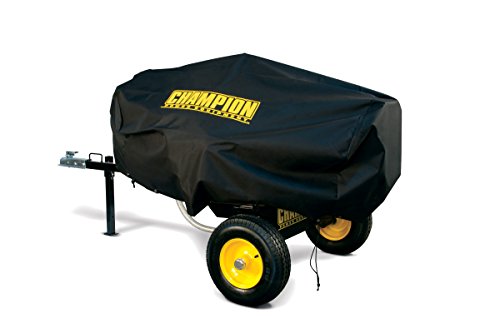
Best for Owners splitting mixed firewood and seasoned hardwood
- 27 tons of splitting force from a ~224cc Champion engine
- Converts between horizontal and vertical positions
- Auto-return valve retracts the ram hands-free
- Towable at low speed with a 2-inch ball coupler
- Strong all-round tonnage for most hardwood
- Horizontal/vertical operation spares your back
- Well-supported brand with available parts
- Heavy to move by hand off the tow ball
- Petrol engine needs seasonal maintenance
Verdict: A versatile mid-size splitter that covers the firewood most owners actually cut, which is why it is a perennial recommendation.
Best for Value-focused buyers splitting seasoned hardwood
- 25 tons of force, commonly with a Kohler or Briggs engine
- Horizontal and vertical splitting positions
- Sold and serviced through Tractor Supply
- Log cradles to catch the split halves
- A lot of tonnage for the price
- Widely available through Tractor Supply
- Convertible layout for heavy rounds
- Fit and finish trails premium brands
- Cycle time is average, not fast
Verdict: A dependable, keenly priced splitter for seasonal firewood, and a favourite for owners who want tonnage without a premium badge.

Best for Smaller properties and lighter, seasoned wood
- 22 tons of force from a compact ~196cc engine
- Lighter and easier to tow than 30-ton machines
- Horizontal/vertical conversion for heavier rounds
- Auto-return ram for quicker cycles
- Easier to move and store than big splitters
- Enough force for most seasoned hardwood
- Lower running cost than larger engines
- Can stall in large green or knotty rounds
- Less suited to high-volume cord work
Verdict: A right-sized splitter for homeowners whose wood is mostly seasoned and moderate, without the bulk of a 30-ton machine.
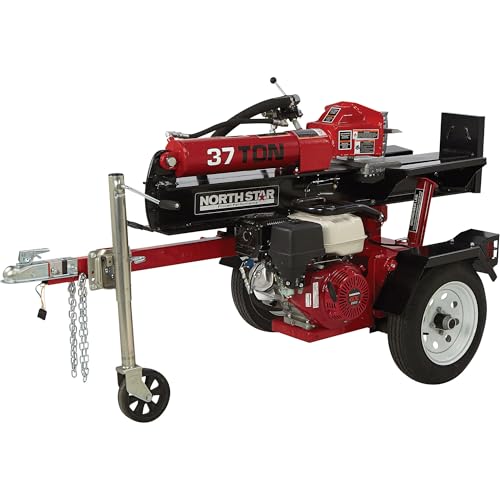
Best for High-volume splitting of large hardwood
- 30 tons of force driven by a Honda GX-series engine
- Heavy-duty beam and cylinder for hard use
- Horizontal and vertical operation
- Large pneumatic tyres for towing on the property
- Premium Honda engine with a strong reputation
- Robust build for years of heavy use
- Handles big, dense hardwood rounds
- Premium price over house-brand splitters
- Heavy and bulky to store
Verdict: A step up in engine quality and durability for owners processing serious volumes of large hardwood every season.
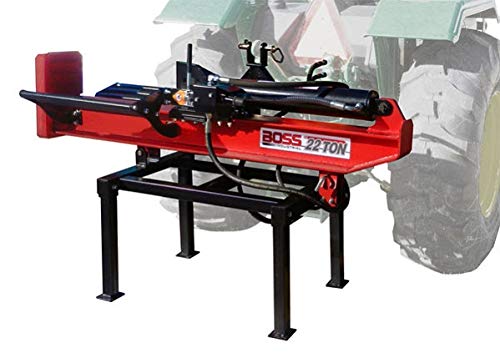
Best for Large, green, or knotty rounds that defeat smaller units
- 34 tons of force for the toughest wood
- Horizontal/vertical operation for heavy rounds
- Two-stage hydraulic pump
- Log cradle wings to hold split halves
- Very high tonnage for stubborn hardwood
- Splits large-diameter and green wood
- Convertible layout reduces lifting
- More splitter than average firewood needs
- Large, heavy, and thirstier to run
Verdict: A high-tonnage machine for anyone regularly fighting big elm, gum, or green oak that stalls a 25-ton splitter.

Best for Heavy firewood cutters who want a reinforced beam
- 28 tons of force with a ~208cc Briggs & Stratton engine
- Full-beam design resists flex under load
- Horizontal and vertical splitting
- Adjustable log cradles and stripper plate
- Strong, rigid beam for demanding work
- Balanced tonnage and cycle time
- Good log-catching cradles
- Heavier than compact 22-ton units
- Petrol upkeep like all gas splitters
Verdict: A well-built 28-ton splitter with a reinforced beam that appeals to owners processing a lot of dense firewood.
Frequently Asked Questions
What size log splitter do I need for firewood?
For general firewood, a 25-ton gas log splitter handles most seasoned hardwood, while 20 tons is enough for softwood and smaller rounds. Step up to 30 tons or more only if you regularly split large-diameter, green, or knotty hardwood such as oak, elm, or gum. Sizing for your hardest wood keeps the ram from stalling.
Is a 22-ton log splitter enough for oak?
A 22-ton splitter handles most seasoned oak up to moderate diameters, but large or green oak rounds can push it to its limit. If you routinely split big, freshly felled, or knotty oak, a 27-to-30-ton machine works through those rounds with less strain. Seasoned wood always splits far more easily than green.
Are gas or electric log splitters better?
Gas log splitters are better for large volumes, big or green hardwood, and off-grid work, delivering 20 to 37 tons with unlimited runtime. Electric splitters are better for quiet, low-maintenance splitting of smaller seasoned wood near an outlet. The right choice follows your wood and where you split, not price alone.
How fast can a gas log splitter split wood?
Most hydraulic gas log splitters complete a full cycle, ram out and back, in about 10 to 14 seconds. Faster is not always better, because a quicker cycle gives you less time to load the next log safely. Kinetic splitters are far faster at two to three seconds, but trade some sustained force for that speed.