


What is a zero-turn mower and how does it steer?
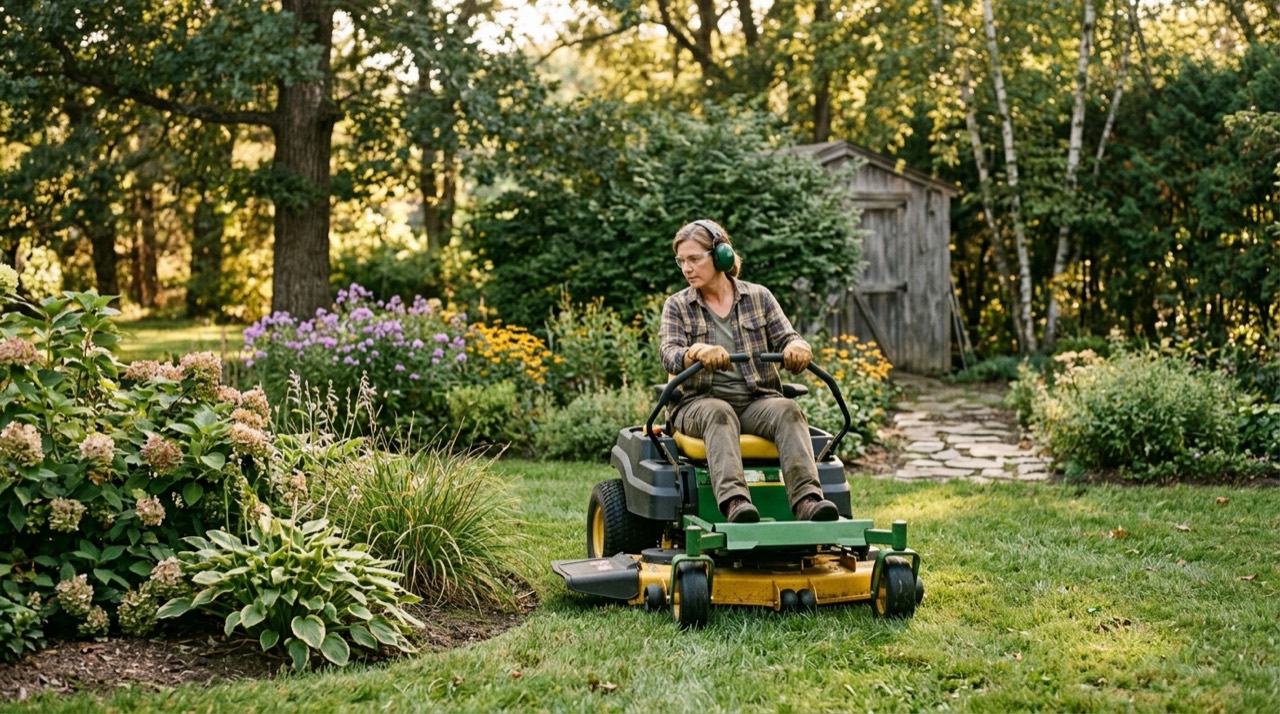
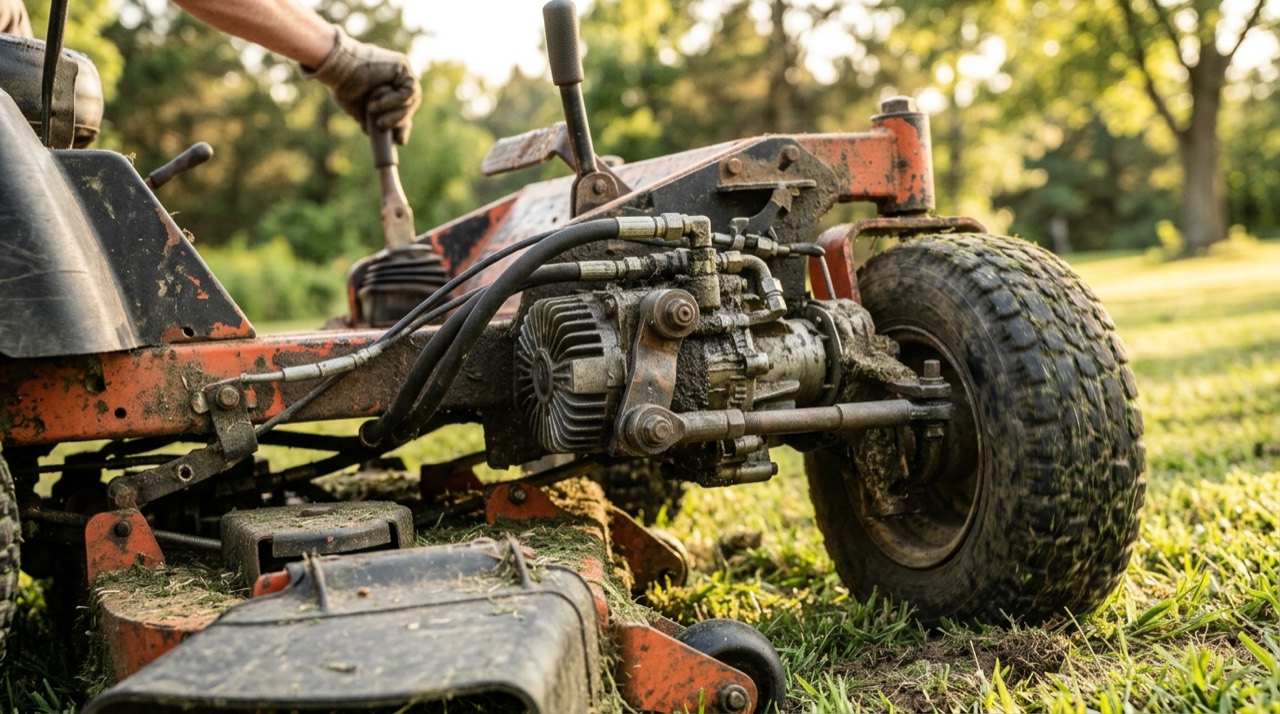
A zero-turn mower is a riding mower that steers with two lap bars instead of a wheel, driving each rear wheel independently so the machine can pivot almost on the spot. That near-zero turning radius lets it curl tightly around trees, beds, and posts, which is why it clears open lawns far faster than a steering-wheel tractor.Push one lap bar forward and that wheel drives ahead; pull the other back and it reverses, spinning the deck through a tight arc. Power reaches each rear wheel through its own hydrostatic transaxle, while two swivelling caster wheels up front simply follow. The cutting deck sits mid-frame between the axles, so you can see the front edge and steer the blades right up to an obstacle. It takes a lawn or two to trust the controls, but most owners describe the learning curve as short.
How do you drive a zero-turn mower?
You drive a zero-turn with two lap bars, one for each rear wheel: push both forward to travel straight, push one further than the other to curve, and pull one bar back while pushing the other to spin the machine on the spot. There is no steering wheel and no drive pedal to master.Pulling both bars back reverses the mower, and returning them to the neutral centre brings it to a stop. The controls are proportional, so gentle inputs give gentle turns while sharp inputs give sharp ones, and most new owners feel clumsy for the first lawn or two before the movements become automatic. Practise on open, flat, dry grass in a low ground-speed setting before you take one near beds, fences, or any grade. Make wide, gentle turns first and tighten them only as your hands learn the bars. Keep the speed low until the steering feels second nature, and avoid slopes entirely while you are still learning, because an abrupt lap-bar input on a hill is exactly what breaks traction loose.
Who should buy a zero-turn mower?
A zero-turn mower earns its keep once your open lawn passes roughly half an acre and carries obstacles worth mowing around. The speed advantage grows with every tree, garden bed, and fence line, because trimming is where a tractor loses the most time.Smaller, flat, obstacle-free lawns rarely justify the price or storage footprint; a gas walk-behind or self-propelled mower or a quiet battery push mower will finish those in less time than it takes to unpark a rider. If your ground is mostly hilly, wet, or heavily terraced, read the slope section below before you commit, and compare a lawn tractor against a zero-turn first.
How does a zero-turn mower compare with a lawn tractor?
A zero-turn trims faster around obstacles and finishes open lawns sooner, while a lawn or garden tractor usually costs less, feels more planted on gentle slopes, and can tow carts and spreaders. Choose by whether finish speed or budget, slopes, and towing matter most to you.The core difference is steering. A zero-turn pivots in place on its two driven rear wheels, so it curls around trees and beds without the three-point turn a wheel-steer tractor needs, and that saved trimming time is where it wins. A tractor sits the deck beneath the operator, steers with a familiar wheel, and accepts attachments that turn it into a year-round yard machine, but it loses time weaving around every obstacle. If your lawn is open and landscaped, the zero-turn saves real time; if you value a low price, moderate-slope stability, or towing, the tractor is the smarter buy. Our lawn tractor vs zero-turn comparison weighs the two side by side, and the riding mowers and tractors guide covers the tractor side in full.
How big a deck do you need for your acreage?
Match deck width to how much open grass you cut and how quickly you want to finish. As a rough published guide, a wider deck clears more ground per pass, so acreage and deck size climb together; the figures below are common sizing advice, not a promise for every yard.The table pairs typical residential deck widths with the acreage they suit and an approximate top speed.
| Deck width | Suits about | Typical top speed | Best for |
|---|---|---|---|
| 34-42 in. | Up to ~1 acre | 6-7 mph | Tight suburban lots, gates, storage-limited garages |
| 46-50 in. | ~1-2 acres | 7 mph | Standard large yards with beds and trees |
| 52-54 in. | ~2-4 acres | 7-8 mph | Big open lawns and light acreage |
| 60-61 in. | ~4 acres and up | 8-10 mph | Wide open ground and semi-commercial use |
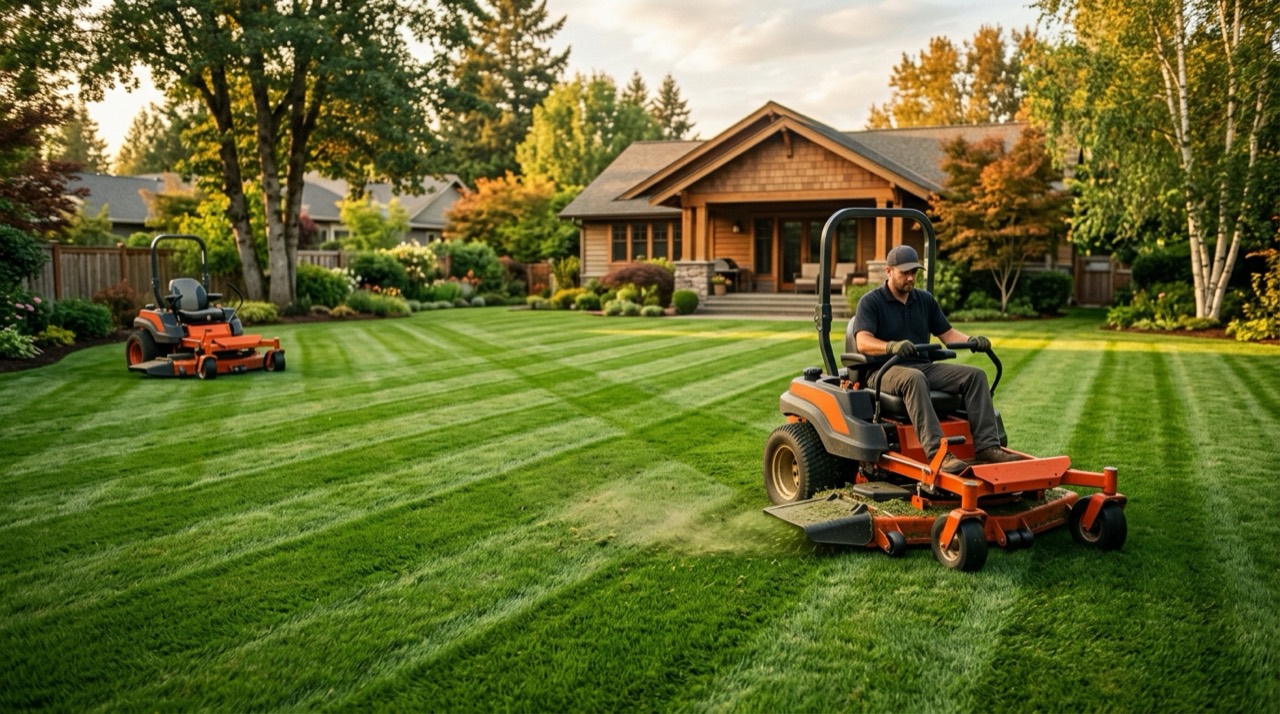
Remember that a wider deck needs wider gates and more turning room, and it can scalp uneven ground. If your lawn is broken up by narrow paths, size down; if it is wide open, size up and finish sooner. For very large blocks, weigh a riding mower or garden tractor too.
Gas or battery: which zero-turn suits you?
Choose gas for the longest run time and quick refuelling on big acreage, and battery for quiet, low-maintenance mowing on up to a couple of acres. Both cut the same grass; the split is about run time, noise, and upkeep.Gas zero-turns from Ariens, Toro, Cub Cadet, Husqvarna, and Gravely run Kohler, Kawasaki, or Briggs and Stratton engines and refuel in seconds, which keeps them the default for four acres and beyond. Battery models such as the EGO Power+ Z6 and the Ryobi 48V zero-turn skip oil changes, spark plugs, and pull-starts, start instantly, and run quietly enough for early mornings; owners report roughly one to two-plus acres per charge depending on grass and deck size. If low maintenance matters more than range, a battery zero-turn is worth a serious look, provided its charge range comfortably covers your lawn in one session.
What separates a durable zero-turn from a cheap one?
Durability lives in the deck, the transaxles, and the frame, not the horsepower number. A fabricated welded-steel deck, commercial-grade transaxles, and a heavy welded frame are what let one zero-turn outlast another under the same annual hours.The parts worth checking before you judge one machine against another are listed below.
- Deck construction: a fabricated 10 or 11-gauge steel deck resists dents and lasts far longer than a thin stamped deck.
- Transaxles: commercial units such as Hydro-Gear ZT-3100 or ZT-3400 outlast the entry-level EZT drives fitted to budget machines.
- Frame and spindles: a fully welded frame and cast-iron spindle housings shrug off the pounding of rough acreage.
- Seat and suspension: a high-back seat, or a suspension platform like Toro's MyRIDE, protects your back over long sessions.
- Engine pedigree: Kawasaki FR and FS engines and Kohler 7000-series V-twins have long residential track records.
Match those to how many hours you will really mow. A homeowner cutting an acre a week does not need commercial transaxles, but a semi-commercial user on heavy hours will wear out an entry machine quickly. Weighing build against price is exactly what our best zero-turn mowers picks set out, tier by tier.
How much does a zero-turn mower cost to own?
Budget for more than the sticker: fuel or charging, blades, belts, spindle bearings, and hydraulic upkeep all add up over the years. Residential machines are the cheapest to buy, while commercial-grade decks and transaxles cost more upfront but last far longer under heavy hours.The big ongoing jobs are simple and cheap if you stay ahead of them: sharpen or swap blades each season, keep deck belts and spindles in good order, and service the hydrostatic transmissions on the maker's schedule. Skipping deck leveling and blade care is the fastest way to a streaky, scalped finish. Our lawn mower maintenance guide covers the seasonal checklist that keeps a rider cutting cleanly.
What mistakes do first-time zero-turn owners make?
The most common first-year mistakes are tearing the turf on tight pivots, scalping high spots with a wide deck, mowing with dull blades, and pushing a machine onto slopes beyond its rating. All of them come from treating a fast, responsive rider like a slower tractor.The mistakes below cause most of the ragged results new owners see.
- Spinning too fast on a tight turn, which tears a divot as the inside wheel scuffs the grass; slow down and ease the pivot.
- Running a wide deck flat out over uneven ground, which scalps the high spots; drop your speed on lumpy lawns.
- Mowing with dull or unbalanced blades, which frays the grass and browns the tips.
- Leaving the deck unlevel, so the cut streaks and scallops instead of striping cleanly.
- Mowing wet grass or exceeding the slope rating, both of which cost traction and safety.
Most of these fixes cost nothing but patience. Slow down, keep the blades sharp and the deck level, and stay within the slope limit, and a zero-turn rewards you with a clean, fast cut. Our lawn mower maintenance guide covers blade and deck setup in detail.
Are zero-turn mowers safe on slopes?
Treat slopes as the one place a zero-turn demands real caution, because the same responsive steering that makes it fast also makes it easy to lose traction sideways. Most makers cap safe operation at roughly 10 to 15 degrees and warn against mowing across steep faces, where a rear caster can break loose.Mow up and down gentle grades rather than across them, slow right down, and never mow wet or slick slopes. Keep the machine below its rated slope limit, add a roll-over protection bar and seat belt where fitted, and wear sturdy boots, eye and hearing protection, and close-fitting clothes. Steep, terraced, or ditched ground is often safer with a walk-behind or a specialist machine, and slope work near drop-offs is a job to plan carefully rather than rush. These guides are general information, not a substitute for reading your owner's manual and matching the machine to the terrain. When in doubt on difficult ground, get hands-on guidance before you ride. Ready to compare specific models? See our best zero-turn mowers picks for the machines that suit each yard size.