Lawn Tractor Vs Zero Turn Mower
Lawn Tractor Vs Zero Turn Mower, ranked from aggregated owner ratings and reviews, not first-hand testing. Real pros, cons, and who each pick is best for.

Our Top 3 Picks
Quick Comparison
| Product | Best for | Buy | |
|---|---|---|---|
| Toro TimeCutter 50 in. | Best Overall | See Amazon | View (paid link) |
| Ariens IKON XD 52 in. | Best Value | See Amazon | View (paid link) |
| Gravely ZT XL 52 in. | Best Premium | See Amazon | View (paid link) |
| Cub Cadet Ultima ZT1 42 in. | Best for Beginners | See Amazon | View (paid link) |
| Husqvarna MZ61 in. | Best Heavy-Duty | See Amazon | View (paid link) |
| EGO Power+ Z6 (ZT5207L) | Editor's Pick | See Amazon | View (paid link) |
Lawn tractor vs zero-turn mower: which should you buy?
Choose a zero-turn mower for speed and tight trimming on open, obstacle-filled lawns, and a lawn tractor for lower cost, gentler slopes, and towing or bagging. Both are riding mowers; the split comes down to how you steer, how fast you finish, and what else you ask the machine to do.A zero-turn steers with two lap bars and pivots on the spot, so it curls around trees and beds and clears open grass fast. A lawn or garden tractor steers with a wheel, sits the deck under the operator, and trades trimming speed for stability, a lower price, and the ability to pull carts, spreaders, and other attachments. The table below lines up representative machines from both camps.
| Model | Type | Deck | Steering | Best at |
|---|---|---|---|---|
| Toro TimeCutter 50 | Zero-turn | 50 in. | Lap bars | Fast open cutting, tight trimming |
| Cub Cadet XT1 Enduro LT 46 | Lawn tractor | 46 in. | Wheel | Budget, towing, easy learning |
| John Deere X350 | Garden tractor | 42-48 in. | Wheel | Premium build, attachments |
| Ryobi 42 in. Electric | Zero-turn | 42 in. | Lap bars | Quiet, compact, low upkeep |
| Husqvarna MZ61 | Zero-turn | 61 in. | Lap bars | Big acreage, heavy hours |
| Ariens IKON XD 52 | Zero-turn | 52 in. | Lap bars | Value acreage cutting |
How do the two machines steer differently?
The steering split is the whole story: a zero-turn drives each rear wheel independently through two lap bars and pivots in place, while a tractor turns its front wheels with a wheel and swings through an arc. That single difference drives the speed, price, and slope trade-offs.On a zero-turn, pushing one bar forward while pulling the other spins the machine on its own footprint, so it wraps around a tree in one motion. A tractor must approach, pass, and reverse to catch the strip a zero-turn never missed, which is why open landscaped lawns favour the zero-turn. The flip side is that a tractor's planted front wheels and wheel steering feel instantly familiar and hold a line on a side slope that would let a zero-turn's light front casters wash out. Neither is simply better; they are tuned for different lawns, and the right pick follows your ground, not the badge.
Which is safer and better on slopes?
A lawn tractor generally handles moderate slopes more securely than a zero-turn, because wheel steering and a lower, planted stance resist the sideways slide that unsettles a zero-turn's front casters. Both have slope limits, commonly around 15 degrees, and neither belongs on wet or steep ground.On a zero-turn, the weight sits over the driven rear wheels while the unpowered front casters carry little load, so a side slope can wash them out and spin the machine downhill. A tractor's steered front wheels bite and hold a line better on the same grade. Whichever you choose, mow up and down gentle slopes rather than across them, slow right down, never mow wet or frosted grass, and stay within the rated limit. Use a roll-over bar with the seat belt fastened where one is fitted, and wear eye and hearing protection. Steep, terraced, or ditched ground is often safer with a walk-behind. This is general guidance, not a substitute for your owner's manual and the machine's rated limits.
When does a zero-turn win?
Pick a zero-turn when your lawn is open but full of obstacles and you value finishing fast. The pivot-in-place steering cuts trimming time dramatically around trees, beds, posts, and fence lines, and higher ground speeds clear wide areas quickly. That advantage grows with every obstacle, which is why acreage owners with landscaped yards lean zero-turn. The trade-off is a higher price and a steeper first-hour learning curve; the zero-turn mower guide walks through the controls.When does a lawn tractor win?
Pick a lawn or garden tractor when budget, slopes, or towing matter more than raw speed. Tractors cost less for the same deck width, feel more planted on moderate grades, and accept carts, baggers, dethatchers, and spreaders that turn the mower into a year-round yard machine. Wheel steering is also instantly familiar to anyone who has driven a car. See the wider riding mowers and tractors guide for towing and attachment options.Which finishes a lawn faster?
For a landscaped lawn, a zero-turn finishes noticeably faster, because it erases the trimming time a tractor loses around every obstacle. On a wide, obstacle-free field the gap shrinks to the difference in deck width and ground speed.Picture a two-acre lawn dotted with a dozen trees and several beds. A wheel-steer tractor slows and three-point turns at each one, then a string trimmer cleans up what it missed; a zero-turn curls around each obstacle in a single pass and leaves little to trim. Over a season, that saved trimming time adds up to many hours. Strip the obstacles out, though, and a wide tractor deck on open ground closes most of the gap, which is why open acreage without landscaping is the one case where a tractor keeps pace. Count your obstacles honestly: the more trees, beds, posts, and fence lines you mow around, the more decisively the zero-turn wins on time.
What about attachments and towing?
Tractors are the better all-round yard machines because their frames, drivetrains, and wheel steering handle loaded carts, spreaders, baggers, and dethatchers that most zero-turns cannot pull comfortably. If mowing is only half the job, that versatility often decides it.A garden tractor will tow a cart of firewood, drag a spreader across the lawn, run a dethatcher in spring, and bag leaves in autumn, turning one machine into a year-round tool. Some zero-turns accept a light rear hitch and a small cart, but they are built to mow fast, not to haul. If you already own a separate utility vehicle or trailer, the tractor's towing edge matters less and the zero-turn's mowing speed can win outright. Weigh how much non-mowing work you actually ask of the machine across a year. The riding mowers and tractors guide lists the attachment options in full.
Cost, terrain, and maintenance
Weigh price against terrain before you decide. Tractors generally undercut comparable zero-turns and hold traction better on gentle slopes, while zero-turns can slide sideways on wet or steep ground and demand more slope caution. Maintenance is similar on both, sharp blades, a level deck, clean air filters, and serviced transmissions, and the lawn mower maintenance guide covers the shared checklist. Whichever you choose, stay within the machine's slope rating and wear eye and hearing protection; mow up and down gentle grades, never across steep or wet ones.Storage, learning curve, and resale
Factor in the parts of ownership beyond cutting. A lawn tractor's wheel steering is instantly familiar, so anyone in the household can hop on and mow, while a zero-turn needs a lawn or two of practice before it feels natural. Zero-turns are also wider through the deck and rear tyres, so measure your gates and shed door before buying. On resale, both hold value reasonably when well maintained, though a fabricated-deck zero-turn or a premium tractor like the John Deere X350 tends to keep more of its worth than an entry machine. Think about who will drive it and where it will live, not just which cuts faster.What does a quick decision checklist look like?
Run through the checklist below to settle the choice quickly. Match the statements to your situation, and whichever side collects more ticks points to your machine.- Open lawn with many trees, beds, or fences, and you value finishing fast: zero-turn.
- Tight budget for the deck width you need: tractor.
- Moderate slopes you mow regularly: tractor.
- Frequent towing, bagging, or spreading: tractor.
- Wide, mostly open acreage where speed pays: zero-turn.
- Anyone in the household should be able to hop on and mow: tractor.
- Noise-sensitive property and small acreage: an electric zero-turn like the Ryobi (paid link) 42-inch.
Few lawns tick only one side, so weight the statements that describe your week most often. If the ticks split evenly, the tie-breaker is usually terrain: hills lean tractor, open landscaping leans zero-turn.
Making the final call
Decide by your dominant need. If landscaping and finish time drive you, a zero-turn wins clearly; if budget, slopes, towing, or a simple learning curve matter more, a tractor is the smarter buy. Many acreage owners land on a value zero-turn like the Ariens IKON XD once they realise how much trimming time it saves. Whichever way you lean, size the deck to your lawn and read the full zero-turn mower guide before you sign.Full Ranking, Reviewed

Best for Homeowners with 1-3 acres who want a proven, comfortable all-rounder
- 50-inch fabricated-option deck with Toro's Smart Speed range of ground speeds
- Toro or Kohler 7000-series V-twin engine, typically in the 23-24.5 HP class
- Available MyRIDE suspension platform that isolates the operator from bumps
- Dual Hydro-Gear hydrostatic transaxles with a top speed around 7 mph
- Widely available parts and dealer support across the US
- Comfortable ride and forgiving controls for newer zero-turn owners
- Strong reputation for a clean, even cut on typical residential lawns
- Stamped deck on lower trims is less rugged than a fabricated one
- MyRIDE and larger engines push the price up quickly
Verdict: A dependable, comfortable residential zero-turn that suits most large yards without drama.

Best for Acreage owners who want a fabricated deck and commercial-style transaxle on a budget
- 52-inch fabricated steel deck built to shrug off dents and heavy grass
- Kawasaki FR-series or Kohler 7000 engine, commonly around 21-23 HP
- Hydro-Gear ZT-3100 transaxles rated for more hours than entry EZT units
- High-back seat and a top speed near 7 mph across the residential range
- Fabricated deck and better transaxles than most machines at its price
- Simple, rugged design that owners report is easy to service
- Comfortable seat for longer mowing sessions
- No suspension platform, so rough ground is felt more than on a MyRIDE Toro
- Heavier and wider, so it needs generous gate clearance
Verdict: The value pick: fabricated-deck durability and stronger transaxles for close to entry-level money.

Best for Buyers who mow a lot of hours and want prosumer durability short of full commercial
- 52-inch fabricated 10-gauge deck aimed at heavy residential and light commercial use
- Kawasaki FR-series V-twin, commonly around 23-24 HP
- Hydro-Gear ZT-3400 commercial-grade transaxles for longer service life
- Foldable ROPS bar available and a robust welded frame
- Commercial-grade transaxles that hold up under high annual hours
- Thick fabricated deck resists damage on rough acreage
- Backed by Gravely and Ariens' established dealer network
- Costs noticeably more than residential-only machines
- Overkill for small, flat suburban lawns
Verdict: A step up in durability for owners who mow enough hours to outlast a residential machine.

Best for First-time zero-turn owners and tighter lots that need a narrower deck
- 42-inch fabricated deck that fits through standard gates and storage bays
- Kohler 7000-series engine, commonly around 22 HP
- Dual hydrostatic transaxles with a top speed near 7.5 mph
- Lap-bar steering with adjustable, forgiving control geometry
- Compact width is easy to store and to learn on
- Fabricated deck is unusual at this size and price
- Wide dealer and parts availability
- 42-inch deck is slow going on very large acreage
- Entry transaxles are not built for heavy commercial hours
Verdict: An approachable, gate-friendly zero-turn that is easy to learn without feeling flimsy.
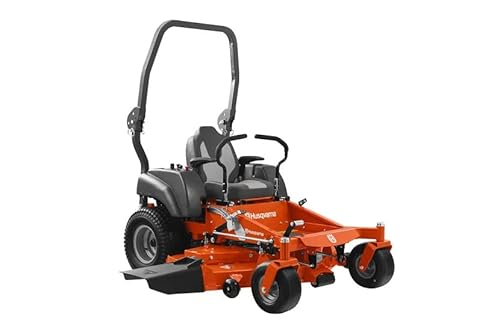
Best for Large properties and semi-commercial users who want speed and a wide deck
- 61-inch fabricated deck that clears wide open ground in fewer passes
- Kawasaki FR730V V-twin, commonly around 24 HP
- Roll-over protection bar and seat belt fitted as standard
- Commercial-style transaxles with a top speed around 8.5 mph
- Wide deck and higher speed cut big lawns fast
- ROPS and seat belt add a real safety margin on open ground
- Rugged build suited to high annual hours
- Too wide for tight lots and narrow gates
- Higher fuel use and a bigger storage footprint
Verdict: Built for acreage: a wide, fast, rugged deck for owners who measure lawns in acres.

Best for Owners up to a couple of acres who want quiet, maintenance-free electric mowing
- 52-inch deck driven by EGO's 56V ArC Lithium battery system
- Runs on up to six batteries for a published range around two acres
- Instant start with no oil, spark plugs, or fuel to manage
- Lap-bar or available e-Steer controls with a top speed near 8 mph
- Very quiet and clean, suited to early-morning or noise-sensitive areas
- Almost no routine maintenance beyond blade care and charging
- Batteries interchange with EGO's wider cordless tool range
- Range is capped by battery capacity, so big acreage means recharging
- Higher upfront cost once you buy the full battery set
Verdict: The standout electric pick: quiet, low-upkeep mowing for lawns inside its battery range.
Frequently Asked Questions
Is a zero-turn faster than a lawn tractor?
Yes, a zero-turn is usually faster overall on open lawns, both because it runs a slightly higher ground speed and because its pivot-in-place steering slashes the time lost trimming around trees, beds, and fences. On a wide, obstacle-free field the gap narrows, but any landscaping tips the advantage firmly to the zero-turn.
Are lawn tractors better on hills than zero-turns?
Lawn tractors generally hold moderate slopes better than zero-turns, because wheel steering and a lower, planted stance resist the sideways slide that unsettles a zero-turn's front casters. Both have slope limits, commonly around 15 degrees; mow up and down gentle grades, never across steep or wet ones, and stay within the rated limit.
Can a zero-turn mower tow like a lawn tractor?
Some zero-turns can tow light carts if fitted with a rear hitch, but tractors are the better tow vehicles: their frames, drivetrains, and wheel steering handle loaded carts, spreaders, and dethatchers more comfortably. If year-round towing and attachments matter as much as mowing, a lawn or garden tractor is the safer bet.
Which is cheaper to maintain, a tractor or a zero-turn?
Maintenance costs are broadly similar: both need sharp blades, a level clean deck, fresh air filters, oil changes, and serviced transmissions. Zero-turns add the cost of two hydrostatic transaxles instead of one, but the routine upkeep and the seasonal checklist are effectively the same for either machine.