



How steep a slope can a zero-turn mower handle?
A zero-turn mower is safe on slopes up to roughly 10 to 15 degrees for most residential models, and you should treat the maker's rated limit as a hard ceiling, not a target. Beyond that grade the machine's responsive steering and lightly loaded front casters make a sideways slide much more likely, which is the main way zero-turns get into trouble on hills.Fifteen degrees is steeper than it looks: it is roughly a 3-foot rise over 10 feet of run. If you cannot tell whether a bank is inside the limit, measure it or walk it first, and when it feels marginal, mow it with a walk-behind instead. Your owner's manual lists the exact figure for your model, and it overrides any general rule here.
How do you measure a slope's grade before mowing?
Measure a slope in degrees or percent before you commit a zero-turn to it, because judging a bank by eye routinely overstates what is safe. A rise of about 3 feet over 10 feet of run is roughly 15 degrees, near the limit of most residential machines.The methods below give a usable grade reading without special tools.
- Lay a straight board down the slope, rest a spirit level on it, and measure the gap under the downhill end to work out rise over run.
- Use a smartphone inclinometer app laid flat on the same board for a direct degree reading.
- Convert if needed: percent grade is rise divided by run times 100, while degrees come from the arctangent of rise over run.
- Take readings at several points, because a bank is often steeper in one section than the average suggests.
If any reading is at or above your machine's rated limit, keep the zero-turn off that section and cut it with a walk-behind. Your owner's manual lists the exact figure for your model, and it overrides any general rule here.
Why do zero-turns slide on hills when tractors grip?
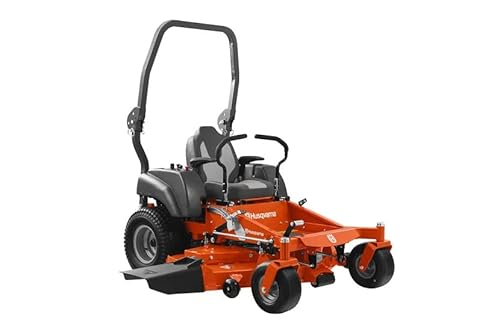
Zero-turns slide because their weight sits over the driven rear wheels while two unpowered front casters carry little load and steer nothing. On a side slope those casters can wash out, and because each rear wheel is driven independently, a slight loss of traction on one side spins the machine downhill rather than holding a line.A wheel-steer lawn tractor or garden tractor resists this better: its front wheels are planted and steer positively, and its lower, more even weight distribution holds a side slope that would unsettle a zero-turn. That is exactly why buyers with hilly ground often weigh a tractor against a zero-turn before choosing. It does not make zero-turns unsafe; it means they demand more respect on grades.
How do you mow a slope safely on a zero-turn?
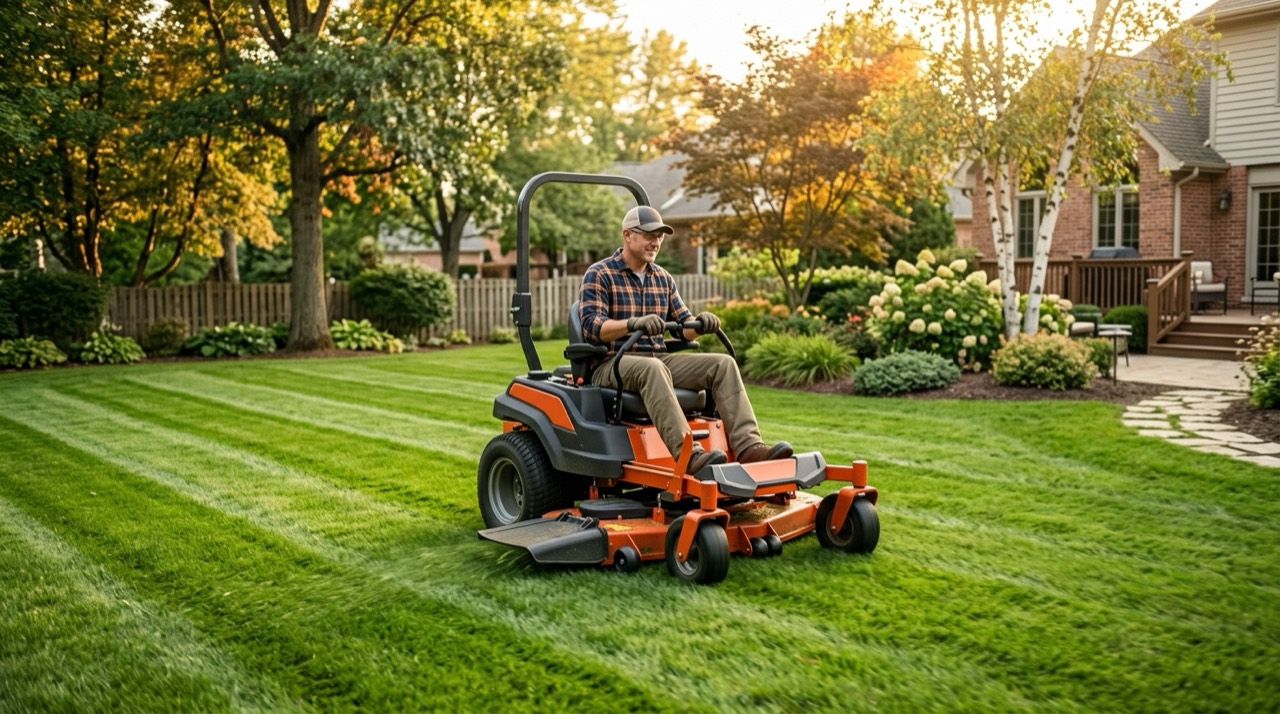
Mow slopes up and down the fall line rather than across them, keep your speed low, and leave a wide margin from any drop-off, ditch, or water. Slow, deliberate control is the single biggest safety factor, because sudden lap-bar inputs at speed are what break traction loose.The habits below keep a zero-turn planted on the grades it is rated for.
- Slow right down before you reach the slope and stay in a low ground-speed setting.
- Mow straight up and straight down the grade, never traversing across a steep face.
- Make turns on the flat at the top or bottom, not partway up the slope.
- Keep both hands on the bars and avoid abrupt direction changes.
- Reverse down a slope you cannot climb rather than turning across it.
- Stop and reassess if a wheel starts to slip; walk-behind that section if needed.
Never mow wet, frosted, or slick grass on any grade, and keep bystanders and pets well clear of the discharge and the downhill side.
What should you do if a zero-turn starts to slide?
If a zero-turn begins to slide sideways on a slope, ease off both lap bars smoothly to shed speed, point the machine straight down the fall line, and let it roll to a controlled stop; do not yank the bars or try to steer across the slide.A sideways slide happens when a rear wheel or a front caster loses grip, and sharp control inputs only make it worse. Steer gently in the direction of the slide to regain a straight line down the hill, keep your feet on the machine and your body centred, and resist the instinct to stab a bar, which can spin the mower. Once stopped, reverse straight back down onto level ground rather than turning across the face. If a section slides every time, it is steeper or slicker than the machine can safely hold, so finish it with a walk-behind. Never jump from a moving mower except to escape a rollover, and keep the roll bar up with the belt fastened so the machine, not your body, takes any tip-over.
When should you keep a zero-turn off a slope entirely?
Keep a zero-turn off any slope steeper than its rated limit, any wet or frosted grass, and any bank near a drop-off, ditch, pond, or retaining wall. In those situations the risk of a slide or rollover outweighs the time a rider saves.The ground below belongs to a walk-behind mower or a professional, not a zero-turn.
- Grades measured above the machine's rated slope limit.
- Wet, frosted, dewy, or recently rained-on grass on any incline.
- Slopes that end at a drop-off, ditch, water, road, or wall with no run-out.
- Terraced or benched ground where a wheel could catch an edge.
- Loose, sandy, or soft soil that gives way under the tyres.
On this kind of ground a self-propelled walk-behind, a string trimmer on the steepest strips, or a hired contractor with the right machine is the safer answer. Trying to force a zero-turn where it does not belong is how the worst mowing injuries happen, so match the machine to the terrain rather than the terrain to the machine.
What safety gear and features matter on slopes?
Use a roll-over protection bar with the seat belt fastened whenever the machine has one, because the ROPS-and-belt combination is what protects you in a rollover. An unbelted operator on a folded-down bar loses that protection entirely, so raise the bar and buckle up on any open or sloped ground.Round out the setup with sturdy non-slip boots, eye and hearing protection, and close-fitting clothing that will not snag. Keep tyres at the pressures in the manual, since uneven pressure changes how the machine sits on a grade, and check that the parking brake holds before you rely on it. If a bank is steeper than your rated limit, terraced, or near a drop-off, treat it as a job for a walk-behind mower or a professional rather than forcing a zero-turn where it does not belong.
Do heavier or ROPS-equipped zero-turns handle slopes better?
A heavier zero-turn with a low centre of gravity and a wide wheelbase feels steadier on a grade, and a roll-over protection bar with a seat belt protects you if it does tip, but neither raises the machine's rated slope limit. Weight and a ROPS reduce the consequences; they do not license steeper ground.A wider, lower machine puts more tyre on the slope and resists the lean that lightens the uphill wheels, so commercial-style zero-turns often feel more planted than light residential ones. Even so, the maker sets the slope rating with that design already accounted for, so a sturdier machine is not cleared for a steeper hill unless its own manual says so. The ROPS matters most when something goes wrong: raised and paired with a fastened belt, it keeps a rollover survivable, while a folded-down bar or an unbelted operator throws that protection away. Treat the rated limit as the ceiling on every machine, and use the ROPS and belt every time you mow open or sloped ground.
How can you make a zero-turn more stable on grades?
Improve stability on grades by keeping weight low and traction even, though setup changes never raise the machine's rated slope limit. The single biggest factor is still your own restraint: slow speeds and smooth inputs keep more grip in reserve than any accessory can add.A few practical steps help on the grades a machine is already rated for. Set all four tyres to the pressures in the manual, because a soft tyre leans the machine and reduces the contact that holds a slope. Keep the deck and frame free of packed mud that shifts weight, and fit the correct tyres for your ground, since worn or hard tyres wash out sooner. Some owners add wheel weights within the maker's guidance, but never exceed the rated limit on the strength of any modification. When traction still feels marginal, that slope simply belongs to a walk-behind. These notes are general guidance and do not replace your owner's manual or hands-on training; before you buy, read the full zero-turn mower guide so the controls are second nature before you ever take one onto a hill.