Best String Trimmer
Best String Trimmer, ranked from aggregated owner ratings and reviews, not first-hand testing. Real pros, cons, and who each pick is best for.


Our Top 3 Picks
Quick Comparison
| Product | Best for | Buy | |
|---|---|---|---|
| EGO Power+ ST1623T String Trimmer | Best Overall | See Amazon | View (paid link) |
| Ryobi 40V Expand-It String Trimmer | Best Value | See Amazon | View (paid link) |
| Milwaukee M18 FUEL String Trimmer | Best Premium | See Amazon | View (paid link) |
| Echo SRM-225 String Trimmer | Best Heavy-Duty | See Amazon | View (paid link) |
| Stihl FSA 60 R String Trimmer | Editor's Pick | See Amazon | View (paid link) |
| Worx WG163 GT 3.0 String Trimmer | Best for Beginners | See Amazon | View (paid link) |
How to choose the best string trimmer for your yard
The best string trimmer for you comes down to yard size, how tough the growth is, and whether you want the simplicity of battery power or the endurance of gas. Settle those three questions first, then weigh weight, line-feed system, and which battery platform you want to own.Our shortlist spans battery and gas models from the brands owners rate most consistently, compared below.
| Model | Power | Shaft | Best for |
|---|---|---|---|
| EGO Power+ ST1623T | 56V battery | Straight | All-round homeowner use |
| Ryobi 40V Expand-It | 40V battery | Straight | Value and attachments |
| Milwaukee M18 FUEL | 18V battery | Straight | Cordless pro-level power |
| Echo SRM-225 | Gas 2-stroke | Straight | Large yards and endurance |
| Stihl FSA 60 R | 36V battery | Straight | Light, quiet homeowner work |
| Worx WG163 GT 3.0 | 20V battery | Straight | Small yards and beginners |
How much power does your yard actually need?
Yard size drives the power decision more than any single spec. A quarter-acre of soft grass barely taxes a 20V trimmer, while a half-acre with fence lines and weeds wants a 40V–56V battery or a gas engine. Acreage and roadside brush belong to gas or the strongest cordless models.Owners of small city lots consistently report that lightweight 20V and 40V trimmers handle weekly upkeep without complaint, while people on larger blocks value the non-stop runtime of gas — you refuel in seconds instead of waiting on a charge. If runtime is your main worry, a second battery usually costs less than stepping up to gas altogether.
How much should you spend on a string trimmer?
Plan on roughly $60–120 for a budget corded or entry 20V trimmer, $150–300 for a capable 40V–56V cordless kit with battery and charger, and $250–450 for a pro-grade gas or high-voltage machine. The battery and charger, not the bare tool, drive most of the cordless price.Price tiers line up with buyers fairly predictably, as summarised below.
| Budget | Typical tool | Best suited to |
|---|---|---|
| $60–120 | Corded or 20V starter kit | Small lawns, occasional use |
| $150–300 | 40V–56V cordless kit | Most homeowners, ¼–½ acre |
| $250–450+ | Gas 2-stroke or pro cordless | Large yards, heavy or daily use |
The trap at the low end is buying a kit with a small, slow-charging battery, then paying nearly the tool's price again for a spare so you can keep working. At the top end, the trap is paying for professional durability and power you'll use twice a year. If you already own batteries on a major platform, a bare tool at $80–150 is almost always the smartest spend, because it skips the pack you don't need a second copy of.
What trimmer head and line feed save the most time?
The line-feed system decides how much time you lose mid-job. Automatic and speed-feed heads let you advance or reload line in seconds, while cheap bump heads still work but interrupt your rhythm. On the EGO, reviewers single out the POWERLOAD head — which winds fresh line for you at the push of a button — as a genuine time-saver.Line diameter should match the growth: about 0.080 inch for grass and 0.095 inch for mixed weeds. Heavier line cuts faster but draws more power and shortens battery runtime, so there's no gain in over-speccing it for a small lawn. It's also worth checking how easy the specific head is to reload — some spools drop in as a pre-wound cartridge, while others make you hand-wind line each time, and that difference adds up over a season.
What weight and comfort features actually matter?
The features that decide comfort over a long session are total weight, balance, vibration, and how the load sits on your body — not the headline voltage. A trimmer that feels light in the store can feel very different after twenty minutes of holding the head out at arm's length.The comfort details worth checking before you buy are listed below.
- Total weight with the battery fitted, since the big pack that gives you runtime is also what tires your arms.
- Front-to-back balance, because a head-heavy tool forces your shoulders to fight it the whole time.
- An adjustable shoulder harness or strap, which transfers weight off your hands and is close to essential on 16-inch and gas models.
- Anti-vibration mounts, which matter most on gas engines where hours of buzz cause real hand fatigue.
- A comfortable loop handle you can reposition, plus a soft over-mould where your hands actually grip.
- A variable-speed trigger, letting you dial power down for light grass to save both runtime and your ears.
Weight and balance are hard to read off a spec sheet, so handle the tool if you can, or weigh owner comments about fatigue as heavily as comments about power. A slightly less powerful trimmer you can swing comfortably for an hour beats a stronger one you set down after ten minutes.
Which battery platform should you commit to?
Commit to the battery system you'll grow into, because the packs cost more over time than the bare tools do. EGO 56V, Milwaukee M18, DeWalt 20V, and Ryobi ONE+/40V each run dozens of other yard and shop tools, so the trimmer is really an entry point into a whole cordless toolkit.If you already own cordless drills or a mower on one of these systems, buying the matching trimmer as a bare tool saves the most money. The same packs power our recommended battery chainsaws and cordless mowers, and you can see the full range in the string trimmers guide.
Which of these string trimmers is right for you?
The right pick from our shortlist depends on your yard and which battery system, if any, you already own. Each model earns its place for a different buyer, so match the tool to your situation rather than the highest rank.Sort yourself by need and the choice gets simple:
- If you want one strong, low-fuss tool for a typical yard, the EGO Power+ ST1623T is the all-rounder — gas-like cutting, push-button line loading, and a battery worth building a kit around.
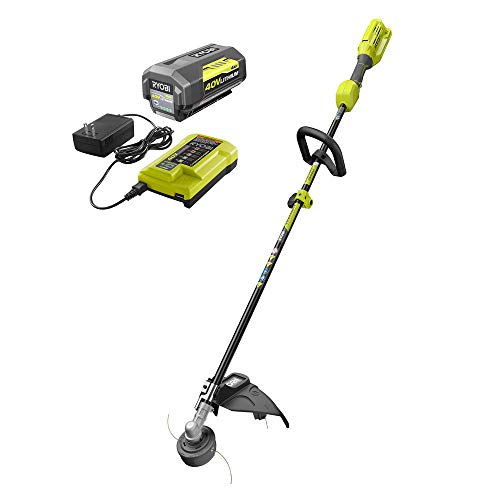
- If value and flexibility matter most, the Ryobi (paid link) 40V Expand-It turns one powerhead into an edger, blower, or pole saw, and its packs are cheap to add to.
- If you already run Milwaukee (paid link) M18 tools or trim near-daily, the M18 FUEL brings pro-grade power and a rugged attachment system, though it's overkill for a small lawn.
- If you have acreage, roadside brush, or thick weeds and don't mind maintenance, the gas Echo SRM-225 gives non-stop runtime nothing cordless quite matches for all-day work.
- If you want the lightest, quietest option and value dealer support, the Stihl (paid link) FSA 60 R is an easy homeowner tool for grass and light weeds.
- If it's a small lawn and a tight budget, the Worx WG163 is the friendliest starting point and doubles as a wheeled edger.
If two picks feel close, let the deciding factor be the battery platform you'll grow into and the honest size of your yard, not the badge. You can weigh all six side by side in the comparison table at the top of this page.
What should you skip when buying a string trimmer?
Skip paying for power you'll never use and gimmicks that add weight. A homeowner with a small lawn rarely needs a 56V straight-shaft or a gas engine, and a brushless motor matters far more than a big voltage number on the box. Prioritise comfortable weight, a decent harness, and easy line loading instead.Gas models reward people who will actually maintain them; if you dislike mixing fuel and changing spark plugs, a quality battery trimmer will make you happier. For truly heavy, woody growth, redirect that budget toward a dedicated brush cutter rather than a stronger trimmer.
Do corded electric string trimmers still make sense?
Corded electric trimmers still make sense for small yards close to an outlet, where they offer the lowest price, the lightest weight, and unlimited runtime with almost no maintenance. Their obvious limit is the cord, which restricts range and rules them out for anywhere without nearby power.Our shortlist leans battery and gas because those suit the widest range of yards, but a corded trimmer is a genuinely smart buy for the right situation. If your entire lawn sits within an extension cord's reach of a socket, a corded model will trim it for years with nothing to charge, mix, or replace but line. The catch is managing the cord — keeping it behind you, out of the cutting arc, and clear of the spinning head — plus the hassle of an outdoor-rated extension lead. For a compact, level lot with power at hand it's hard to beat on value; for anything sprawling, sloped, or far from the house, a cordless tool from the list above will make you far happier.
Full Ranking, Reviewed

Best for Homeowners who want gas-like power without the fuel and noise
- 56V ARC Lithium battery platform shared across EGO's outdoor range
- POWERLOAD head that winds fresh line at the push of a button
- Telescopic carbon-fiber straight shaft for reach and durability
- 16-inch cutting swath with variable-speed trigger
- Reviewers report cutting power close to a small gas trimmer
- Push-button line loading removes the usual reloading hassle
- Runs on the same battery as EGO mowers and blowers
- Heavier than budget 20V trimmers once the big battery is fitted
- Higher upfront cost than corded or entry cordless models
Verdict: The all-round pick for a typical yard: strong cordless performance, a genuinely convenient head, and a battery platform worth buying into.
Best for Value hunters who want one powerhead for many attachments
- 40V brushless motor with attachment-capable straight shaft
- Accepts Expand-It edger, blower, pole-saw and cultivator heads
- Variable-speed trigger and reload-quick line head
- Shares the Ryobi 40V battery family used across its yard tools
- Attachment capability turns one tool into a whole yard system
- Widely available and typically priced below premium rivals
- Owners praise the runtime-to-price balance for average yards
- Not as powerful as 56V or pro-grade cordless trimmers
- Attachment heads add to the overall cost over time
Verdict: The best value for buyers who want expandability: a capable trimmer that becomes an edger, blower or pole saw when you add heads.

Best for Tradespeople and demanding homeowners on the M18 system
- M18 FUEL brushless powerhead tuned for high-torque cutting
- Quik-Lok attachment system for edger, blower and other heads
- Choice of speed settings for runtime or maximum power
- Runs on the broad Milwaukee M18 battery platform
- Reviewers rate it among the strongest cordless trimmers available
- Quik-Lok heads extend it into a full tool system
- Rugged build aimed at daily professional use
- Premium price, especially once batteries are included
- Overkill for a small, simple lawn
Verdict: The premium cordless choice for people already on M18 or wanting pro-grade power and a rugged attachment system.

Best for Large yards and thick weeds where non-stop runtime matters
- 21.2cc 2-stroke engine on a rigid straight shaft
- Rapid-Loader or Speed-Feed head options for quick reloading
- Handles heavier line for tougher weeds and tall grass
- Refuels in seconds for uninterrupted long sessions
- Owners report years of reliable service with basic upkeep
- Non-stop runtime for acreage and roadside growth
- Straight shaft accepts stronger line for heavy weeds
- Requires 2-stroke fuel mixing and routine engine maintenance
- Louder and heavier than comparable cordless models
Verdict: The pick for big properties and heavy weeds: a proven gas workhorse that trades convenience for endurance and durability.

Best for Homeowners wanting quiet, low-maintenance cordless trimming
- 36V AK-system battery aimed at homeowner-sized yards
- Loop-handle straight shaft with light, balanced handling
- Simple line head sized for grass and light weeds
- Part of Stihl's cross-compatible AK cordless range
- Light and quiet, easy to handle for long trims
- Backed by Stihl's dealer service network
- Low upkeep compared with a gas equivalent
- Better suited to grass than thick, woody weeds
- Typically bought through dealers rather than big-box stock
Verdict: A well-balanced homeowner cordless trimmer from a trusted brand — ideal if you value light weight and dealer support over raw power.

Best for Small lawns and first-time buyers on a budget
- 20V PowerShare battery shared with other Worx tools
- Converts from trimmer to wheeled edger in seconds
- Light 12-inch cutting head that's easy to control
- Command Feed spool advances line at the push of a button
- Very light and beginner-friendly to handle
- Doubles as an in-line edger for driveways and paths
- Affordable entry into a cordless tool platform
- Limited power and runtime for large or overgrown yards
- Small cutting swath means more passes on big lawns
Verdict: The easiest starting point for a small yard: cheap, light, and doubles as an edger, though it isn't built for heavy growth.
Frequently Asked Questions
Is a battery string trimmer as good as a gas one?
For most homeowner yards, yes. Modern 40V and 56V cordless trimmers match small gas engines for everyday grass and weeds, based on specs and owner feedback, while running quieter and needing far less maintenance. Gas still wins for acreage and all-day, non-stop cutting.
Do I need a straight or curved shaft trimmer?
Choose a straight shaft for more reach under shrubs, taller users, attachment capability, and heavier work; choose a curved shaft for a lighter, cheaper tool that's easy to swing around a small yard. Straight shafts are generally the more versatile long-term buy.
How long does a string trimmer battery last per charge?
Runtime varies with voltage, load, and line thickness, but homeowner cordless trimmers typically give roughly 20–60 minutes of trimming per charge. Keeping a spare battery on the same platform is usually cheaper than moving up to a gas model for more runtime.
Can one battery run my trimmer and other tools?
Yes, if you stay on one platform. EGO 56V, Milwaukee M18, DeWalt 20V, and Ryobi ONE+/40V batteries run trimmers, blowers, mowers, and even some [battery chainsaws](/chainsaws/battery-chainsaws/), so buying matching bare tools shares packs and saves money.