

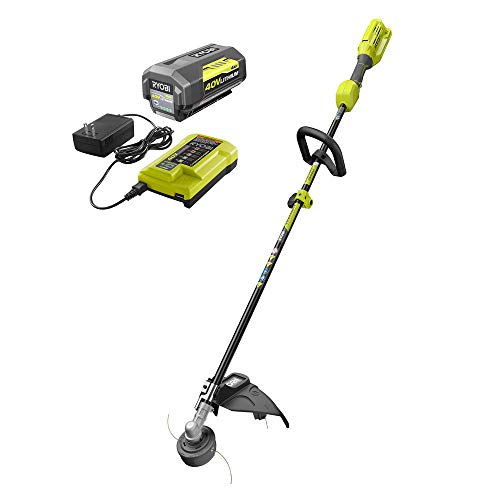


Is a weed wacker the same thing as a string trimmer?
Yes — "weed wacker," "weed eater," "whipper snipper," and "string trimmer" all describe the same tool: a motorised head that spins nylon line to cut grass and light weeds. The different names are brand names and regional slang, not different machines.The confusion is a trademark story. The tool was invented in 1971 by George Ballas, who reportedly got the idea watching the spinning bristles of an automatic car wash and rigged fishing line to a popcorn-can lid on a powerhead. He sold the result as the "Weed Eater." Black+Decker later trademarked "Weedwacker," which is why so many Americans use that word generically. In Australia and New Zealand the same tool is a "whipper snipper," and in the UK it's often a "strimmer." Manufacturers themselves mostly use the neutral term "string trimmer" on the box. Whatever the label on the shelf, you're looking at the same machine, and this string trimmers guide covers how to pick one.
What are the regional names for a string trimmer around the world?
The same tool answers to different names depending on where you are: "weed eater" and "weed wacker" dominate North America, "whipper snipper" is standard in Australia and New Zealand, "strimmer" is the everyday British word, and "line trimmer" or "string trimmer" are the neutral terms makers print on the box.Most of these names trace back to a brand or a bit of onomatopoeia. "Whipper snipper" captures the sound of the line whipping through grass, and it is so entrenched in Australia that even retailers use it on shelf labels. "Strimmer" is a blend of "string" and "trimmer" that became generic in the UK. You'll also hear "weed whip" — which older gardeners use for the manual, swing-blade version of the tool — and "cordless trimmer" or "battery whipper snipper" as the electric versions took over. None of these point to a genuinely different machine; they are regional and brand labels for one invention. If a listing, manual, or forum uses a term you don't recognise, it almost certainly still means the line-spinning tool covered throughout this string trimmers guide.
How does spinning string actually cut grass and weeds?
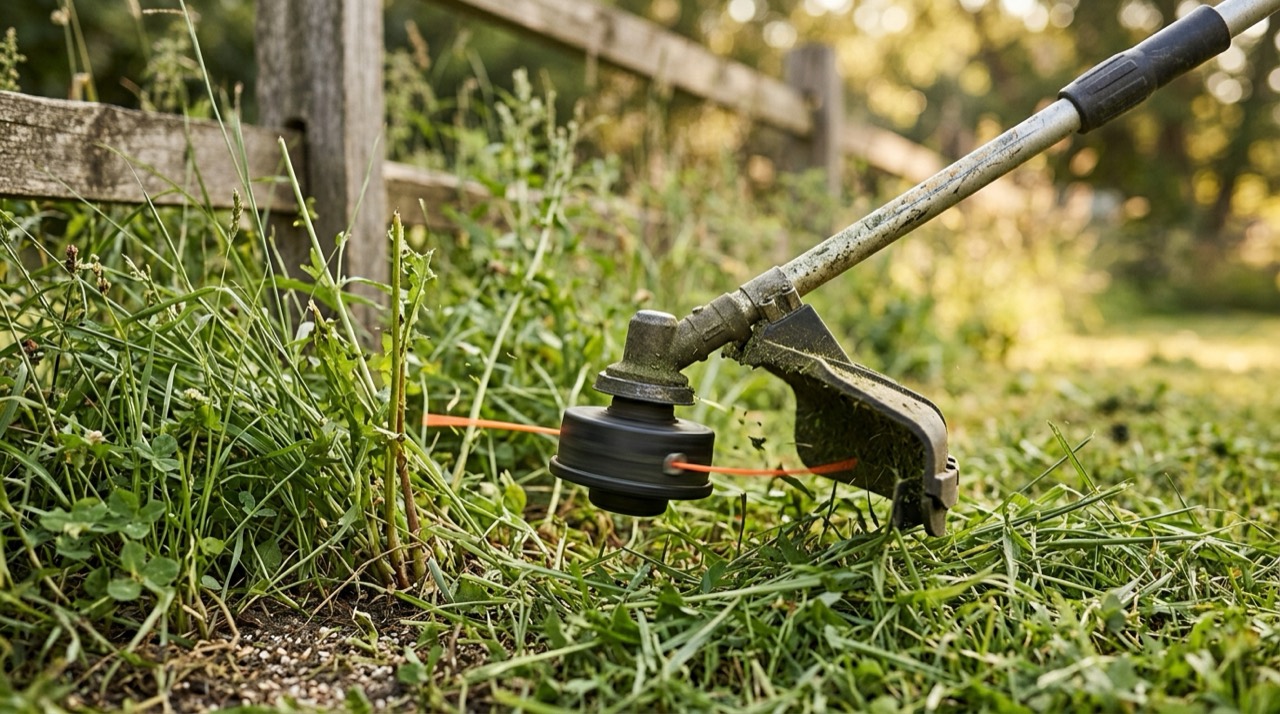
A string trimmer cuts because the line's tip moves so fast that flexible nylon becomes an effective blade. Spun at thousands of RPM, the tip of a trimmer line can travel several hundred feet per second, and at that speed it slices through grass and soft stems on impact rather than pushing them over.The physics explains a lot of everyday trimmer behaviour. Because tip speed does the cutting, the outer end of the line is far more effective than the middle — which is why technique guides tell you to cut with the very tip. It also explains why line length matters: as line wears down and shortens, the tip slows and cuts get ragged, so the bump-feed head exists to keep paying out fresh length. The nylon (technically a monofilament, the same family of plastic as fishing line) is chosen because it is tough, cheap, and safe when it flicks a fence or your boot — unlike a metal blade, which is why trimmers are safe around obstacles that would be dangerous with a brush cutter. The trade-off is that nylon simply can't sustain the impact of woody stems; it chips, frays, and snaps, which is the whole reason blades exist for heavier growth.
Where does a brush cutter differ from a string trimmer?
A brush cutter is a heavier straight-shaft tool that swaps nylon line for a metal blade to cut saplings, brambles, and woody stems a string trimmer can't manage. Many professional straight-shaft powerheads accept both a line head and a blade, blurring the line between the two.The three closely related tools compare like this.
| Tool | Cutting element | Best for |
|---|---|---|
| String trimmer | Nylon line | Grass, light weeds, edging |
| Brush cutter | Metal blade or heavy line | Saplings, brambles, dense scrub |
| Wheeled string mower | Heavy nylon line on wheels | Large fields of tall weeds |
If your "weeds" are really young trees or thick woody stems, no amount of line will do the job cleanly — that's brush-cutter or blade territory, covered in the brush cutters guide. The practical dividing line is roughly finger-thickness: anything a nylon string can whip apart is trimmer work, and anything that needs slicing is a blade job. That's also why brush cutters use a bike-style handlebar and a full harness — the extra control matters when a spinning steel blade meets a sapling and can kick back.
Which brush-cutter blade suits which job?
When growth outgrows nylon line, the blade you fit to a brush cutter decides what it can handle: a grass/weed blade for dense weeds, a three- or four-tooth brush knife for tough stems and light saplings, and a toothed circular ("saw") blade for genuine woody saplings and thin trunks. The heavier the blade, the more control and protection the work demands.The common blade choices sort out as shown below.
| Blade type | Cuts | Notes |
|---|---|---|
| Nylon line head | Grass, soft weeds, edging | Safest; fine on obstacles |
| Grass/weed blade (multi-blade) | Thick weeds, matted growth | Faster than line in dense weeds |
| 3- or 4-tooth brush knife | Brambles, woody stems, light saplings | Needs a harness and care |
| Toothed circular saw blade | Saplings and small trunks | Most aggressive; strong kickback risk |
Blades change the tool's character completely. A spinning steel blade that meets a sapling can kick back hard toward the operator, which is exactly why brush cutters use a bike-style handlebar, a full harness, and heavier guarding than a grass trimmer. Match the blade to the stem thickness, never run a blade a powerhead isn't rated for, and step up to a dedicated brush cutter rather than forcing a light line trimmer through work it was never built for.
Which tool should you use for each job?
Match the tool to the growth: a string trimmer for grass, light weeds, and edging; a brush cutter for saplings, brambles, and dense scrub; and a wheeled string mower for large fields of tall weeds. Choosing correctly saves line, fuel, and a lot of effort.Common jobs sort out cleanly by tool, as listed below.
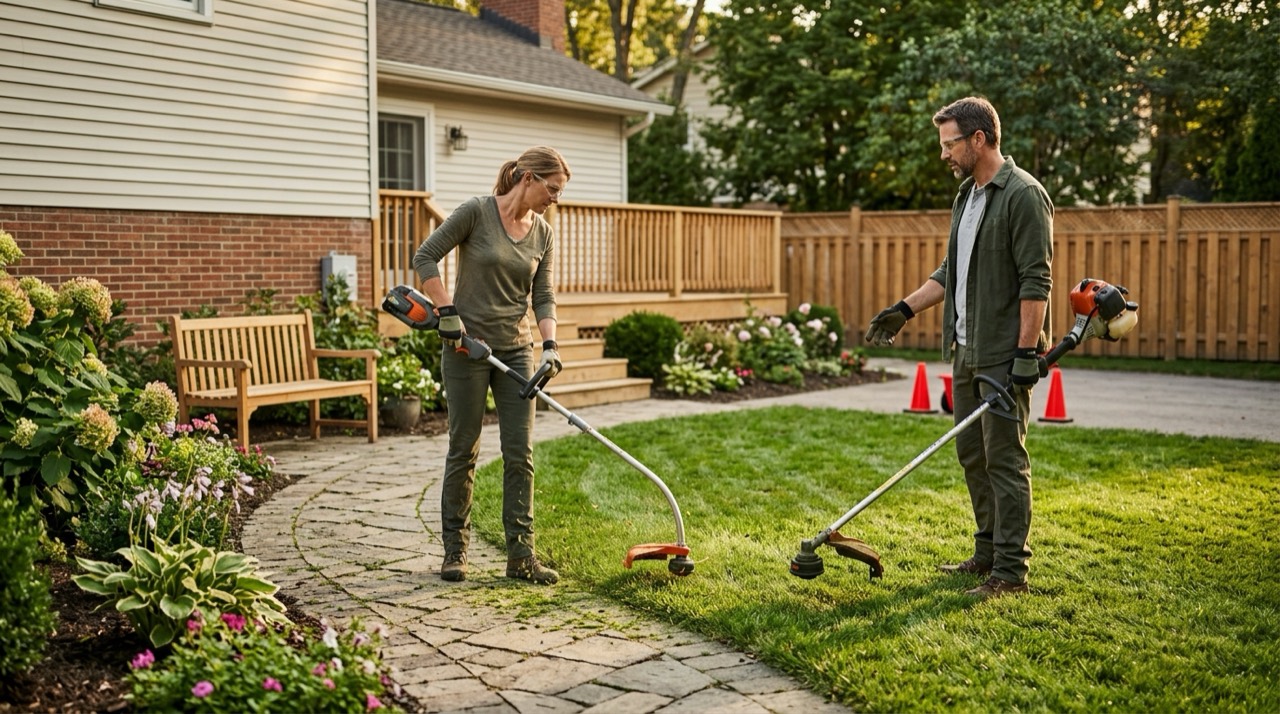
- Trimming around fences, beds, and trees uses a standard string trimmer.
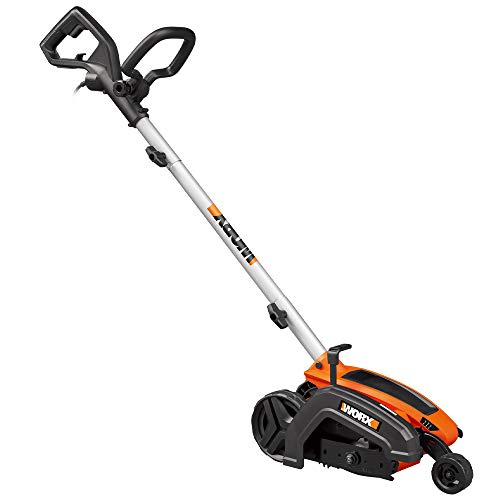
- Cutting a crisp border along paths suits a trimmer turned on edge or a dedicated lawn edger.
- Clearing brambles, saplings, and woody scrub calls for a brush cutter with a blade.
- Knocking down half an acre of tall weeds is a job for a wheeled string mower.
Using the wrong tool is where most frustration comes from. People try to clear waist-high scrub with a light cordless trimmer, burn through spool after spool of line, and conclude the tool is weak when it was simply never designed for that growth. The reverse is just as common — hauling out a heavy gas brush cutter to tidy a small lawn edge that a compact trimmer would finish in minutes. Sizing the tool to the job protects both the machine and your patience.
Do you need a separate edger, or will a trimmer do both?
A string trimmer can edge well enough for most homeowners by turning it a quarter-turn so the line spins vertically along a border, but a dedicated edger cuts a deeper, straighter, more consistent line — especially where lawn meets a driveway or path. Whether you need both comes down to how crisp you want the result.Turning a trimmer on edge is free and quick, and for a tidy weekly border it is genuinely all many yards need. Its weakness is depth and consistency: the flexible line wanders, struggles to slice through built-up soil along a hard edge, and leaves a softer line than a blade. A wheeled lawn edger rolls along the border on a guide wheel and cuts a clean, repeatable groove that looks sharper and holds its shape between mows. If your idea of a finished lawn includes a knife-edge along the drive, buy the edger; if you just want the fringe knocked back, the trimmer you already own will do.
What about weed-wacker attachments and combo systems?
Many string trimmers double as the powerhead for a whole attachment system — edger, brush cutter, pole saw, cultivator, and hedge-trimmer heads all clip onto one straight shaft. Split-boom "combi" tools from Stihl, Husqvarna, Ryobi, and EGO let a single motor do many jobs.The appeal is storage and cost: instead of five separate machines you own one powerhead and a rack of heads. That's how a single trimmer purchase can also handle overhead branches with a pole saw head or shape shrubs with a hedge-trimmer head. Before buying into a system, check that the heads you want are actually offered for that specific powerhead, since attachment fittings are not universal across brands. Weigh the trade-off honestly, too: a combi tool is convenient and saves shed space, but a powerhead strong enough to swing a hedge-trimmer head is heavier than a basic grass trimmer, and swapping heads mid-job takes a minute each time. For someone who only ever trims grass, a plain fixed-shaft string trimmer is simpler and lighter.