



How is Stihl's string trimmer lineup organised?
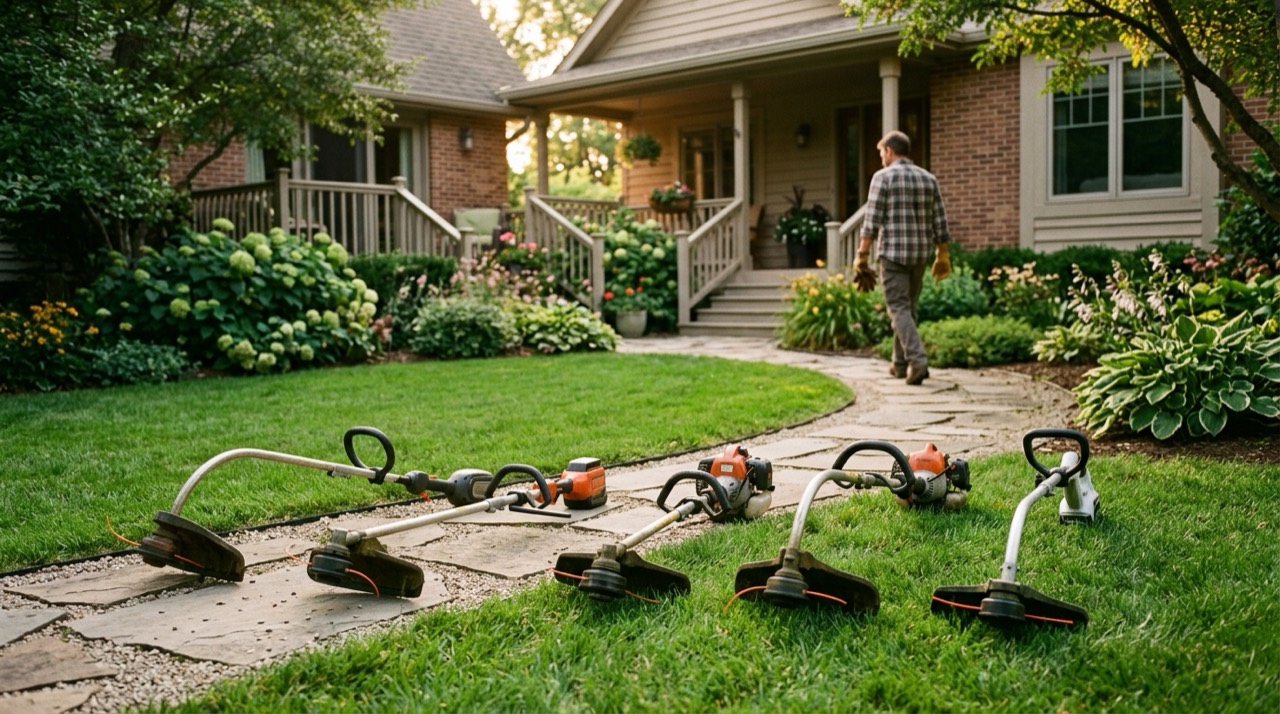
Stihl splits its trimmers into gas FS models and battery FSA models, then grades each by user: homeowner, "farm and ranch," and professional. The number rises with power, and letters such as R (loop handle) or C-E (Easy2Start) tell you the handle style and starting features at a glance.Because Stihl sells so many variants, the naming code is the fastest way to navigate the range. A low FS or FSA number with an R is a light homeowner trimmer; a higher number without extra comfort letters is usually a professional tool built for daily commercial use. Stihl trimmers are sold and serviced through authorised dealers rather than big-box shelves, which is part of why owners often cite the after-sale support. For how Stihl sits among rivals, see our best string trimmer picks.
Which Stihl gas trimmer suits a homeowner?
For most homeowners the Stihl FS 56 RC-E is the popular gas pick — a loop-handle trimmer with Easy2Start and a straightforward line head. Owners with larger properties or tougher weeds commonly step up to the FS 70 R, FS 91 R, or FS 111 R for more engine power.Stihl's gas homeowner range runs roughly from the compact FS 38 and FS 40 up through the FS 56 RC-E, with the FS 70 R bridging into heavier work. The professional FS 91, FS 111, and FS 131 models add power and durability for people cutting for hours at a time. All are two-stroke tools, so budget for fuel mixing, spark-plug changes, and air-filter cleaning — the trade-off for non-stop runtime that battery models can't yet match on large acreage.
Which Stihl battery trimmer should you consider?
Stihl's battery trimmers span the plug-in AK-system FSA 57 for small yards up to the pro AP-system FSA 90 R and FSA 135. The FSA 60 R sits in the homeowner sweet spot, offering quiet, low-maintenance cordless trimming with light, balanced handling.The AK line (FSA 57, FSA 60 R) targets homeowners and shares batteries with other AK garden tools, while the AP line (FSA 90 R, FSA 135 R) is built for professionals who want cordless convenience without a big drop in capability. Based on published specs and owner feedback, the FSA 60 R handles typical grass and light weeds comfortably; if your yard has heavy or woody growth, a gas FS model or a brush cutter remains the better tool. The same AP batteries also run Stihl cordless pole saws.
Which Stihl trimmer head and line should you run?
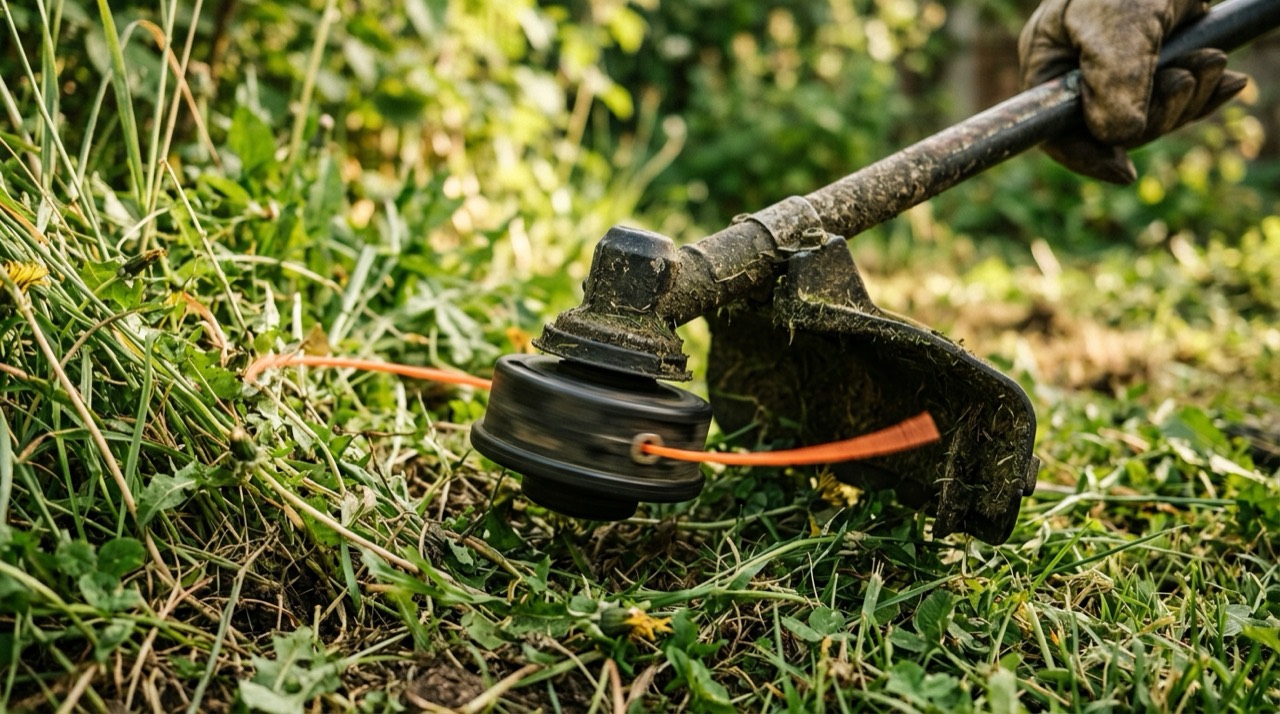
Stihl offers several cutting heads to match the job: the AutoCut bump-feed head for everyday grass, the TrimCut manual-feed head for people who prefer to advance line by hand, and the PolyCut plastic-blade head for tougher weeds. Line diameter runs roughly 2.0–2.4 mm (about 0.080–0.095 inch) on homeowner FS and FSA models, and heavier on pro tools.Picking the head is mostly about how much line fuss you want. The AutoCut is the default on most homeowner trimmers and pays out fresh line when you tap the head on the ground; the TrimCut lets you twist and pull line manually, which some owners find more reliable; and the PolyCut swaps line for small pivoting plastic blades for weeds that chew through nylon. Whatever head you fit, stay within the line diameter Stihl lists for that model — over-thick line loads the AK or AP battery, overheats the head, and can trip the tool's overload protection. For genuinely woody growth, no head or line turns a trimmer into the right tool; that's when a metal blade on a brush cutter takes over. Stihl sells its line by the spool and in pre-cut lengths, and matching the shape — round for grass, twisted or quiet line for weeds — makes as much difference as the diameter.
What do Stihl's model codes actually mean?
In a Stihl name, FS means a gas trimmer and FSA means battery; the number rises with power; R marks a loop handle for trimming; and C-E signals the Easy2Start system. Reading the code tells you the tool's class before you look at a single spec.The core code elements decode as follows.
| Code | Meaning |
|---|---|
| FS | Gas-powered trimmer |
| FSA | Battery-powered trimmer |
| Higher number | More engine or motor power |
| R | Loop handle (trimming, not bike-handle brush work) |
| C-E | Comfort features including Easy2Start |
Once you can read the code, comparing Stihl models is quick: decide gas or battery, pick a power level for your yard, and let the letters confirm the handle and starting features. From there the choice is mostly about how big and how tough your yard really is.
What is Stihl's Easy2Start, and does starting differ by model?
Easy2Start (the "C-E" in a model code) is a low-effort starting system on many Stihl gas trimmers that uses a spring between the starter cord and the engine, so a slow, gentle pull turns the engine over instead of the hard yank a traditional recoil needs. Battery FSA models skip the question entirely — you simply squeeze the trigger.Starting is one of the clearest differences between Stihl's gas and cordless lines. A basic FS gas trimmer needs the usual choke-and-pull routine, and cold starts can take a few pulls until the fuel catches; Easy2Start softens that considerably and is worth looking for if a hard recoil pull is a concern. The FSA battery trimmers have no choke, no cord, and no warm-up: fit a charged AK or AP pack, press the lockout, and pull the trigger. For anyone who dreads wrestling a stubborn two-stroke on a cold morning, that instant, no-effort start is one of the strongest reasons owners move from an FS to an FSA model.
How do you maintain a Stihl gas trimmer?
Keep a Stihl gas trimmer reliable by running fresh 50:1 fuel mixed with Stihl two-stroke oil, cleaning the air filter regularly, checking the spark plug each season, and draining the tank before long storage. Stale fuel is the single most common reason a two-stroke won't start after sitting.A basic seasonal routine keeps an FS-series engine healthy.
- Mix fuel at Stihl's 50:1 ratio using quality two-stroke oil, and only mix what you'll use within a few weeks.
- Store fuel in a sealed can out of sunlight, and drain the trimmer's tank before it sits for the off-season.
- Clean or replace the air filter when it looks dirty — a clogged filter richens the mix and saps power.
- Pull and inspect the spark plug each season, cleaning or replacing it if the tip is fouled or worn.
- Clear grass and debris off the cutting head and shield after each use so the line feeds freely.
- Keep the shield's line-limiter blade intact, since a missing blade lets line run too long and strain the engine.
Battery FSA models need almost none of this — a charged pack stored somewhere cool and dry is most of the job. That lower upkeep is a big part of why many homeowners move to cordless, and why the fuel-and-oil discipline above matters most to owners who genuinely prefer a gas tool. Our bar oil, chain oil and fuel guide covers two-stroke mixing in more detail.
Are Stihl string trimmers worth the price?
Stihl trimmers usually cost more than big-box equivalents, and whether that's worth it depends on how much you use the tool and how much you value dealer support. Based on owner feedback and Stihl's reputation, the draw is build quality, parts availability, and a dealer who sets the tool up and services it — not a bargain sticker price.For a light user with a small lawn, an inexpensive cordless trimmer from another brand may be all you ever need, and paying a premium is hard to justify. For someone trimming a larger property regularly, or a professional running the tool daily, the durability and easy servicing tend to pay back over years of use. It's also worth remembering that Stihl is sold through dealers rather than every online retailer, so factor in a trip to a local shop when you compare it against a trimmer you can add to an online cart. Weigh those trade-offs against the broader field in our best string trimmer picks before committing to any one brand.
How do Stihl trimmers compare with EGO, Milwaukee and Ryobi?
Against the leading cordless brands, Stihl's strengths are build quality, dealer setup and service, and a deep pro range, while EGO, Milwaukee, and Ryobi often win on raw cordless value, big-box availability, and shared battery platforms you may already own. The right choice depends on whether you value hands-on dealer support or one-stop online convenience.Judged honestly on published specs and owner feedback, a homeowner Stihl FSA 60 R trades blows with an EGO ST1623T or a Ryobi 40V tool for typical grass and light weeds; the EGO tends to lead on outright cutting power and its POWERLOAD head, while Ryobi leads on price and attachment breadth. Milwaukee's M18 FUEL aims at tradespeople already invested in M18 and is arguably the strongest cordless trimmer of the group, at a premium. Stihl's real edge shows up over years of ownership and on its gas FS line, where the dealer network, parts availability, and durability matter more than a launch-day price. If you want to see all of these weighed side by side rather than brand by brand, our best string trimmer picks compare current models across every power class.