


What does chainsaw maintenance actually involve?
Chainsaw maintenance is the routine of keeping the chain sharp and tensioned, the air filter clean, the fuel fresh and correctly mixed, the bar oiled, and the spark plug and bar in good order so the saw starts easily and cuts safely. Most of it takes only minutes and prevents the failures that kill saws.Stale or wrongly mixed fuel is the single biggest cause of a saw that runs badly, and a dull chain is the single biggest cause of slow, dangerous cutting. Get those two right and you have solved most chainsaw problems before they start. This guide sits inside our chainsaws hub and covers gas, battery, and corded saws, while the supplies that make the routine easy are gathered in our best chainsaw maintenance picks.
How often should each maintenance task be done?
Chainsaw maintenance splits into tiers by frequency: quick checks every refuel, a light service every one or two tanks of fuel, a fuller service each season or after heavy use, and a storage routine before any long break. Matching each task to its interval keeps a saw reliable without over-servicing it.The table below groups the common jobs by how often a typical homeowner needs to do them. Adjust upward if you cut dirty, dusty, or frozen wood, which wears parts faster.
| Interval | Tasks |
|---|---|
| Every refuel | Check chain tension, top up bar oil, clear packed sawdust |
| Every 1-2 tanks | Touch up the chain with a file, inspect and tap out the air filter |
| Each season or after heavy use | Deep-clean the filter, re-gap or replace the plug, clean the bar groove, inspect the sprocket and chain wear |
| Before storage | Drain or stabilise the fuel, sharpen and oil the chain, slacken the tension |
A saw cutting clean, seasoned firewood needs the lighter end of each interval, while one bucking muddy storm-fall or milling green hardwood needs the heavier end. Logging your fuel fill-ups is an easy way to remember when the chain is due for a file, and a saw used in dust needs its filter checked far more often than the calendar suggests.
What tools do you need for basic chainsaw maintenance?
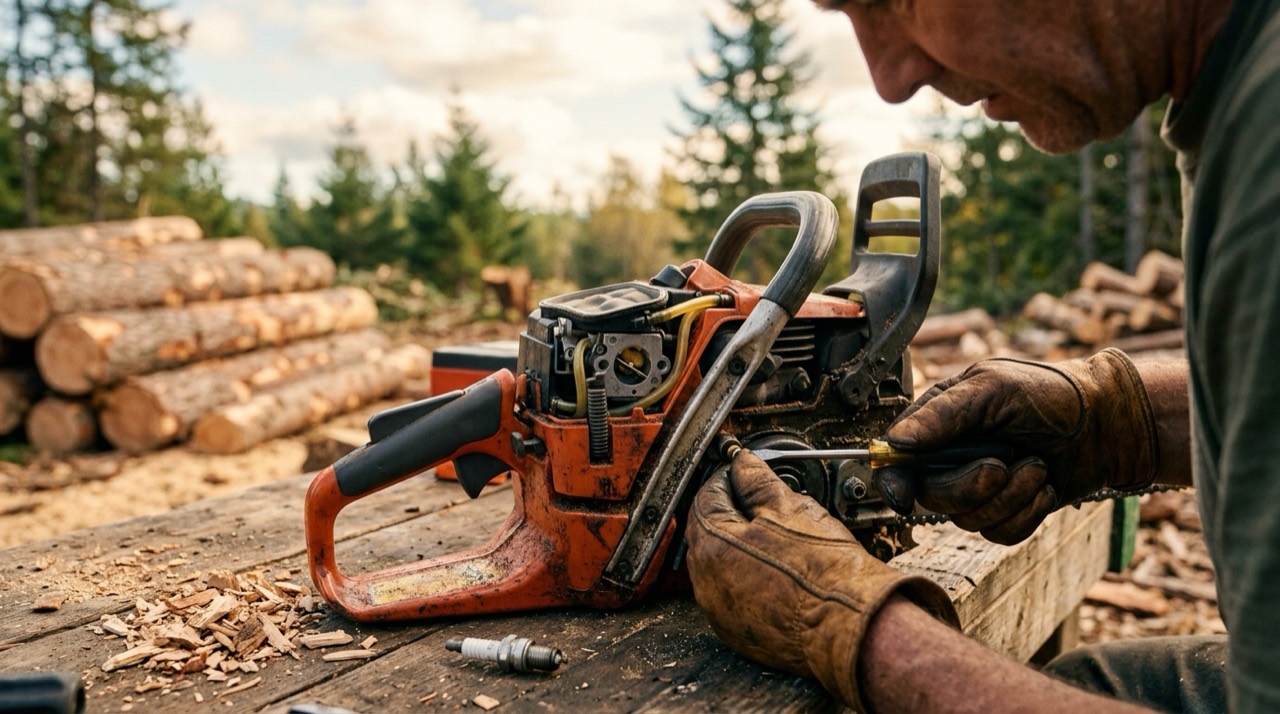
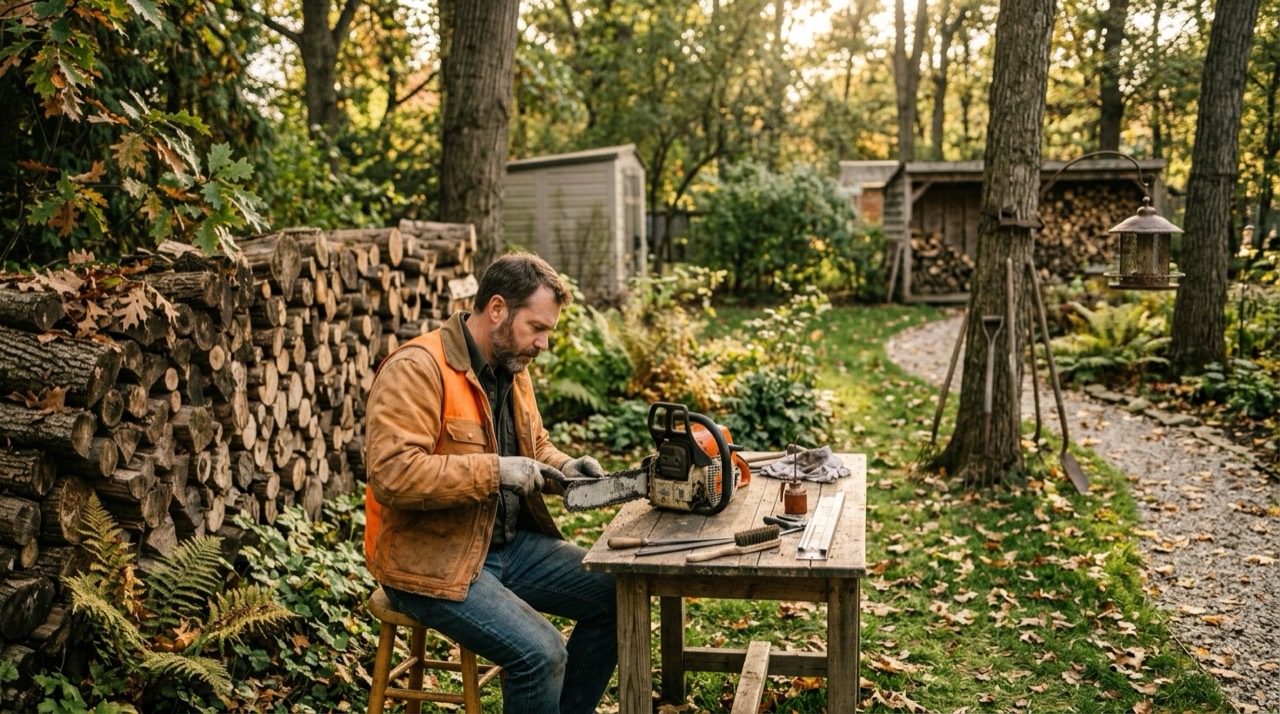
Basic chainsaw maintenance needs only a small, inexpensive tool set, most of which fits in a pouch or a small box. You can cover every routine job with the items below without buying anything specialised.- A round file sized to your chain pitch, plus a flat file and depth-gauge tool, or an all-in-one guide that combines them.
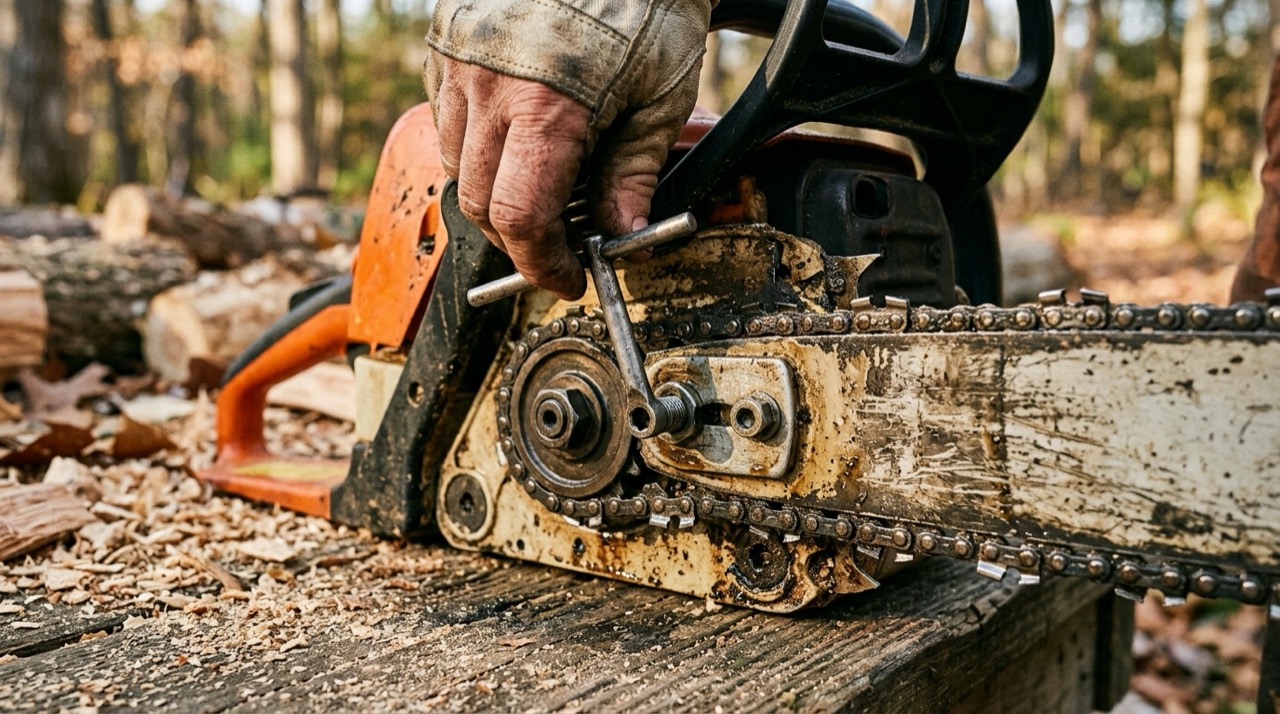
- A scrench, the combined screwdriver and socket tool, to loosen the bar nuts and turn the tensioning screw.
- A stiff brush or an old paintbrush for clearing sawdust from the body, intake, and bar groove.
- Purpose-made bar and chain oil, and, for gas saws, a quality two-stroke oil or pre-mixed fuel plus a stabiliser.
- Cut-resistant gloves and eye protection for handling the sharp chain on the bench.
- A spare spark plug and air filter for gas saws, so a fouled part never ends a job.
Match the file diameter to your chain, because an oversized or undersized file reshapes the cutter wrongly and slows every cut afterwards. Our sharpening files and tools guide explains how to read your chain's pitch and gauge, and the best chainsaw maintenance picks gather the consumables in one place.
How do you keep a chainsaw chain sharp and tensioned?
Keep the chain sharp by touching up the cutters with a round file every one or two tanks of fuel, and check tension every time you refuel. A sharp chain pulls itself into the wood and throws chips, while a dull one forces you to push down and overheats the bar.Correct tension means the chain sits snug against the underside of the bar with no sag, yet still pulls freely around the bar by a gloved hand when the saw is cold. Chains stretch as they warm, so re-check after the first few cuts. Our chainsaw sharpening guide covers filing angles and depth gauges in detail, and our chainsaw chains guide explains when a chain is worn out rather than just dull. The quick tension routine is:
- Loosen the bar nuts a half turn with the saw cool.
- Turn the tensioning screw until the chain just meets the bar underside.
- Lift the bar nose, hold it up, and retighten the bar nuts.
- Pull the chain around by gloved hand to confirm it still moves freely.
What fuel and 2-stroke mix does a gas chainsaw need?
Gas chainsaws run on petrol blended with two-stroke engine oil, most modern saws at a 50:1 ratio, which is about 2.6 fluid ounces of oil per US gallon. Always use the exact ratio printed on your saw or in the manual, because some older engines call for 40:1 or 32:1.Fuel quality matters more than fuel brand. The steps below keep a mix from wrecking a carburettor:
- Mix only what you will use within about a month, in a clean, labelled can.
- Use a quality two-stroke oil with fresh petrol, ideally ethanol-free or low-ethanol.
- Add a fuel stabiliser if the mix may sit for more than a few weeks.
- Shake the can before filling, and store it out of direct sunlight.
Ethanol in pump petrol attracts water and gums up carburettors, which is why many owners buy pre-mixed canned fuel for occasional saws. You can compare oils, stabilisers, and pre-mix in our bar oil, chain oil and fuel guide.
How do you clean a chainsaw air filter and spark plug?
Clean the air filter whenever it looks dusty, and at least once a season, because a clogged filter starves the engine, makes the saw run rich, and causes it to bog down and start hard. Most filters lift out after you remove the top cover, and a foam or fine-mesh filter can be brushed, tapped, or washed depending on its type.The spark plug needs less frequent attention but is worth checking yearly. Pull the plug, look for heavy black or oily deposits, clean the electrode with a wire brush, and confirm the gap matches the manual, which is typically around 0.02 inch. Replace the plug if the electrode is worn or the porcelain is cracked. A fresh filter and plug together fix a surprising share of hard-starting complaints.
Which bar and chain oil should you use, and how much?
Use a purpose-made bar and chain oil, which is tackier than motor oil so it clings to the moving chain instead of flinging off. A chainsaw uses roughly one reservoir of bar oil for every tank of fuel, so top up the oil every time you refuel.Check the automatic oiler is working by holding the running saw's bar tip a few inches from a light surface and revving it; a thrown line of oil confirms flow. Running a bar dry ruins both the bar and the chain quickly. In cold weather a thinner winter-grade oil flows better through the oiler. Our bar and chain oil guide compares the common options.
How do you clean the bar groove and check the sprocket?
Clean the bar groove and oil holes whenever you sharpen, because packed sawdust and old oil block the oil feed and starve the chain of lubrication. A clogged groove is a common hidden cause of a bar that runs dry even when the reservoir is full.Work through the bar and drive end in order:
- Take off the side cover and remove the chain and bar.
- Scrape the groove with a flat blade or a purpose-made groove cleaner to lift out compacted debris.
- Clear the oil holes at the base of the bar so oil can reach the groove.
- Check the groove depth and rails; a bar with rounded or uneven rails, or a groove worn wider than the drive links, is due for replacement.
- Inspect the drive sprocket for deep wear grooves, and turn the bar end-for-end when refitting to even out wear.
A worn sprocket chews through a new chain quickly, so replace them as a matched pair once the teeth are visibly grooved. Our chainsaw bars guide covers reading bar wear, and the chainsaw chains guide explains matching a chain to the bar and sprocket.
What maintenance does a battery or electric chainsaw need?
Battery and corded chainsaws skip all of the fuel, filter, and spark-plug work, but they still need a sharp, correctly tensioned chain and topped-up bar oil, exactly like a gas saw. The bar and chain are mechanical parts that wear regardless of the power source.Battery packs should be stored at a partial charge in a cool, dry place, never left flat or baking in a hot shed for months. Keep the motor vents clear of packed sawdust. If you are weighing lower upkeep against gas power, our battery chainsaw guide covers the trade-offs.
How should you store a chainsaw over winter?
Store a chainsaw clean, with a sharp chain, a lightly oiled bar, and either empty or stabilised fuel, in a dry place away from children. For gas saws, stale fuel left in the carburettor over winter is the number-one reason a saw will not start in spring.Either run the tank dry and let the carburettor empty, or fill with stabilised fuel and run the saw briefly so the treated mix reaches the carburettor. Fit the bar scabbard and store the saw flat. The off-season storage cluster further down this page walks through winterising step by step.
What are the most common chainsaw maintenance mistakes?
Most chainsaw maintenance mistakes come down to neglect or shortcuts, and they cause the failures owners blame on the saw itself. The frequent ones are listed below so you can avoid them.- Running stale or ethanol-heavy pump fuel, which gums the carburettor and causes hard starting.
- Cutting with a dull chain, which overheats the bar, burns the wood, and forces dangerous downward pressure.
- Over- or under-tensioning the chain, either of which speeds up wear and, when too loose, risks the chain coming off the bar.
- Skipping the bar oil top-up, or never checking that the oiler actually throws oil, which ruins a bar in minutes.
- Using thin motor oil instead of tacky bar oil, so the lubrication flings off the chain.
- Storing the saw with untreated fuel in the tank over a long break.
Each of these is cheap to prevent and expensive to fix once the damage is done. Keeping the chain sharp and the fuel fresh alone prevents the majority of problems, which is why those two jobs sit at the centre of every service routine.
When does a chainsaw problem need a professional?
Some chainsaw work belongs to a trained technician or arborist, not a driveway service. Internal carburettor rebuilds, ignition-coil faults, and clutch or crankshaft repairs need the right tools and knowledge, and a badly reassembled saw is dangerous.Just as importantly, felling large, leaning, or dead trees, any cutting near power lines, and all overhead work belong to trained professionals whatever the saw's condition. Always wear chainsaw chaps and PPE when you run or test a saw. This guide is general information based on manufacturer guidance and owner experience, not a substitute for hands-on training.