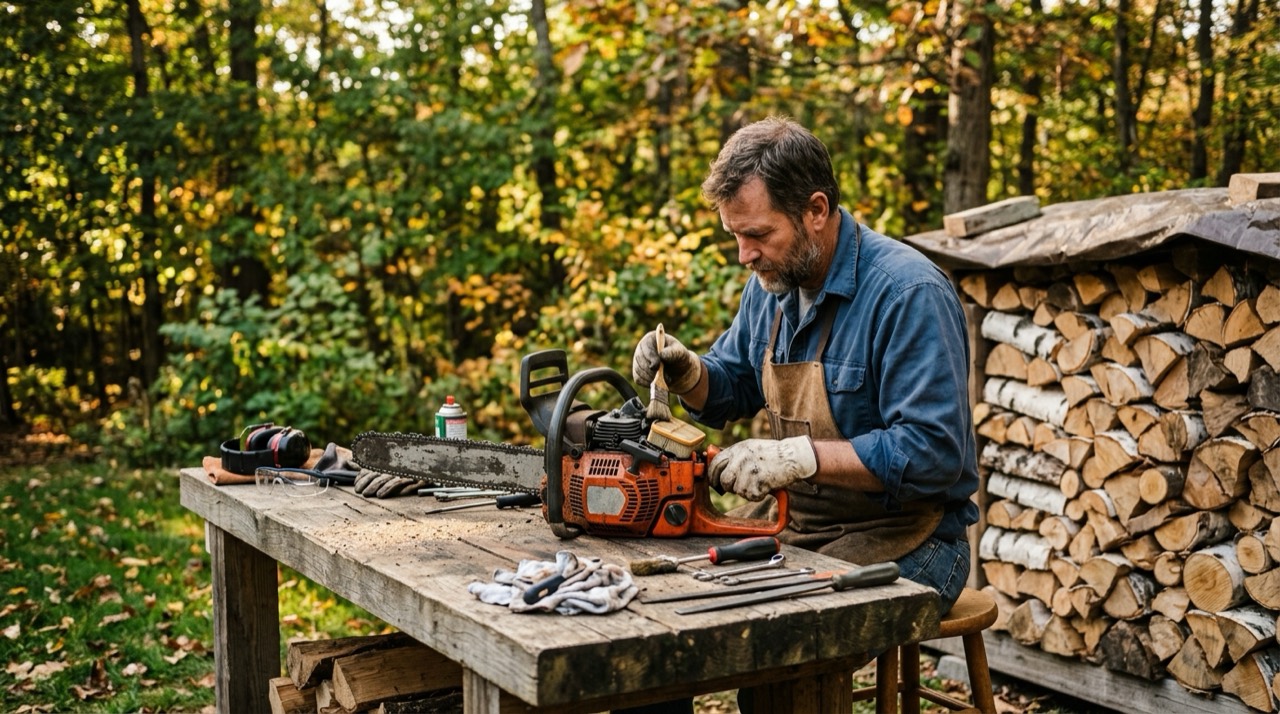

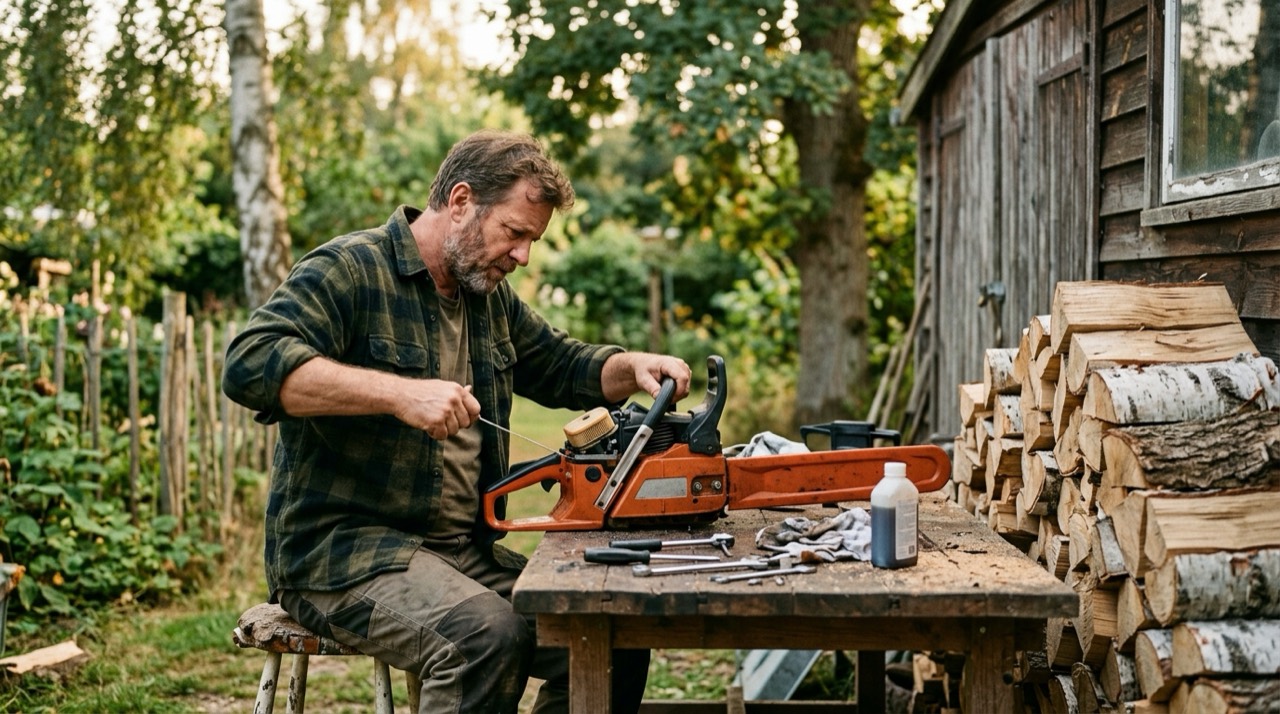




Why does a chainsaw start but then stall?
A chainsaw that fires up then dies is almost always starved of clean fuel or air: stale or wrongly mixed fuel, a clogged fuel or air filter, a gummed carburettor, or a blocked fuel tank vent. The engine catches on the choke's rich mixture, then quits once it has to run on the leaner normal mixture.Because the causes cluster around the fuel and air systems, you can usually find the fault by working through them cheapest-first. The routine below assumes a gas saw, since battery and corded saws rarely stall this way; if a cordless saw cuts out, check the battery charge and the chain brake instead. This diagnosis pairs with our full chainsaw maintenance guide.
What should you check first when a chainsaw won't stay running?
Start with the fuel and the choke, because they cause most stalling and cost nothing to rule out. Work down the list in order, testing the saw after each step so you know which fix actually solved it.- Confirm the fuel is fresh and correctly mixed, and drain any that is weeks old.
- Check you are not leaving the saw on full choke, which floods it once warm.
- Remove and inspect the air filter, and clean it if it is dusty or clogged.
- Pull the spark plug, check for fouling, clean or replace it, and confirm the gap.
- Check the fuel tank vent and the in-tank fuel filter for blockages.
If the saw runs cleanly after one of these, stop there. If it still stalls with fresh fuel, a clean filter, and a good plug, the problem is deeper in the fuel system.
How do you diagnose a stalling chainsaw step by step?
Diagnose a stalling chainsaw by working from the cheapest, most common causes to the rarest, testing after each change so you know which fix worked. This ordered routine covers the fuel, air, spark, and vent faults that cause almost every start-then-die problem.- Drain any fuel more than a few weeks old and refill with a fresh 50:1 mix, or the ratio your saw specifies, then try to run it.
- Confirm you are not running the saw on full choke once it is warm, which floods it and kills the idle.
- Remove the air filter, clean or replace it, and test with the filter off briefly to see if airflow was the problem.
- Pull the spark plug, check for black or oily fouling, clean or replace it, and reset the gap to the manual figure.
- Loosen the fuel cap and run the saw; if it now keeps running, the tank vent is blocked and needs clearing.
- Replace the in-tank fuel filter if it looks dirty, as a clogged pickup starves the carburettor under load.
- If it still stalls, spray carburettor cleaner through the intake to shift light varnish before considering a rebuild.
Stop at the first step that cures the stall. If none do, the fault is inside the carburettor or the ignition, which is covered below.
How does stale or wrong fuel cause stalling?
Stale or wrongly mixed fuel is the most common reason a saw starts then dies. Petrol degrades in weeks, and the ethanol in pump fuel absorbs water and leaves gummy deposits that clog the tiny carburettor passages a saw needs to idle and run.Fix it by emptying the old fuel, refilling with a fresh 50:1 mix (or the ratio your saw specifies), and running the saw to draw clean fuel through. For a saw used only occasionally, switching to ethanol-free pre-mixed fuel prevents the problem returning. You can compare fuels and stabilisers in our bar oil, chain oil and fuel guide.
How do a dirty air filter or blocked vent cause stalling?
A clogged air filter chokes the engine of air so it runs too rich and stalls, while a blocked fuel tank vent creates a vacuum that starves the engine of fuel until it dies. Both mimic a carburettor fault but are far cheaper to fix.Clean or replace the air filter first, then test. If the saw runs then stalls after a minute and restarts only when you crack the fuel cap open, the tank vent is blocked and needs clearing. The essential maintenance parts and tools for these jobs are in our best chainsaw maintenance picks.
Why does a chainsaw stall only when warm or under load?
A saw that runs cold but stalls once warm or when you push it into a cut points to a heat-sensitive or flow-limited fault rather than a simple dirty filter. The usual suspects are a failing ignition coil, a partly blocked fuel filter or vent, or a lean carburettor setting.An ignition coil that breaks down when hot lets the saw run for a minute or two, then cuts the spark as the engine warms; it restarts once cool and fails again, and the coil must be replaced. A partly clogged fuel filter or tank vent flows just enough at idle but starves the engine under the higher demand of a cut, so the saw bogs and dies when you load it. A carburettor set too lean, often after old fuel has shifted its calibration, runs hot and stalls under load.
Work through the cheap causes first: fit a fresh in-tank fuel filter, clear the vent, and fit fresh fuel. If a warm saw keeps cutting out with the spark disappearing as it heats, suspect the coil. Persistent lean running that needs the mixture screws reset is a job for a technician on most modern saws.
When is the carburettor or ignition the real problem?
When fresh fuel, a clean filter, a good plug, and a clear vent do not cure the stalling, the fault is usually a dirty or misadjusted carburettor or, less often, a failing ignition coil. A carburettor clogged with old-fuel varnish cannot meter fuel steadily, so the engine surges and dies.A light case may clear with carburettor cleaner sprayed through the intake, but a saw that needs its idle and mixture screws reset, or its carburettor stripped and rebuilt, is beyond a quick driveway fix for most owners. An ignition coil that fails only when hot causes a saw to run then cut out as it warms, and it must be replaced, not cleaned.
How do you clean a gummed chainsaw carburettor?
Clean a lightly gummed carburettor with aerosol carburettor cleaner before attempting any strip-down, as many mild cases clear without removing parts. This handles the varnish that old fuel leaves in the fine passages, which is a frequent cause of surging and stalling.- Empty the stale fuel and fit fresh mix, since cleaning around old fuel achieves little.
- Remove the air filter to expose the carburettor throat.
- Spray carburettor cleaner into the intake in short bursts, then start the saw and let it run through the cleaner.
- Repeat once or twice, running the saw at varying throttle to draw cleaner through the circuits.
- If the saw idles and revs cleanly afterward, refit the filter and retest under a cut.
Know when to stop: if the saw still surges, hunts, or dies after cleaning, the carburettor likely needs a rebuild kit, an ultrasonic clean, or the idle and mixture screws reset with the correct tool. Many modern saws have limiter caps on those screws, and adjusting them wrongly can make a saw run lean and seize, so this stage is best left to a small-engine technician. The consumables for the cheaper fixes are in our best chainsaw maintenance picks.
What tools do you need to diagnose a stalling chainsaw?
Diagnosing a stalling saw needs only a handful of basic tools, most of which come with the saw or live in a maintenance kit. You can rule out the common faults without specialist equipment.- A scrench, or a screwdriver and socket, to remove the covers, filter, and spark plug.
- Fresh, correctly mixed fuel to eliminate stale fuel as a variable in one step.
- A spare spark plug and air filter, so you can swap rather than just clean and retest.
- Aerosol carburettor cleaner for shifting light varnish from the passages.
- A replacement in-tank fuel filter, which is cheap and a common hidden culprit.
- Gloves and eye protection for handling the chain and spraying solvent.
A spark tester is a useful extra if you suspect ignition, letting you confirm the plug is firing before you buy a coil. Beyond that, a saw that resists every basic fix needs a technician's diagnosis rather than more parts thrown at it. The routine that keeps a saw from stalling in the first place is in our chainsaw maintenance guide, and always wear chainsaw chaps and PPE when running a suspect saw.
When should you take a stalling chainsaw to a professional?
Take a stalling saw to a dealer or small-engine technician once you have ruled out fuel, filter, plug, and vent and the problem points at the carburettor internals, the ignition, or the crankcase seals. These repairs need the right tools and a proper diagnosis, and a poorly reassembled saw is a safety hazard.Never test a suspect saw without full protective gear, and keep hands clear of the chain while the engine runs. Wear chainsaw chaps and PPE for any test cut. This is general troubleshooting guidance based on common owner experience, not a substitute for a technician's inspection or hands-on training.