




How should you store a chainsaw for the off-season?
Store a chainsaw for the off-season clean, with a sharp chain, a lightly oiled bar, and its fuel either drained or stabilised, in a dry place well away from children. The goal is to stop stale fuel gumming the carburettor and to keep moisture off the bar and chain while the saw sits idle.Off-season storage is where most spring no-start problems are made or avoided, so it is worth twenty minutes before the saw goes on the shelf. The steps below apply mainly to gas saws; battery and corded saws need only a clean, sharp chain, an oiled bar, and correct battery storage. The wider routine is in our chainsaw maintenance guide.
What should you do with the fuel before storage?
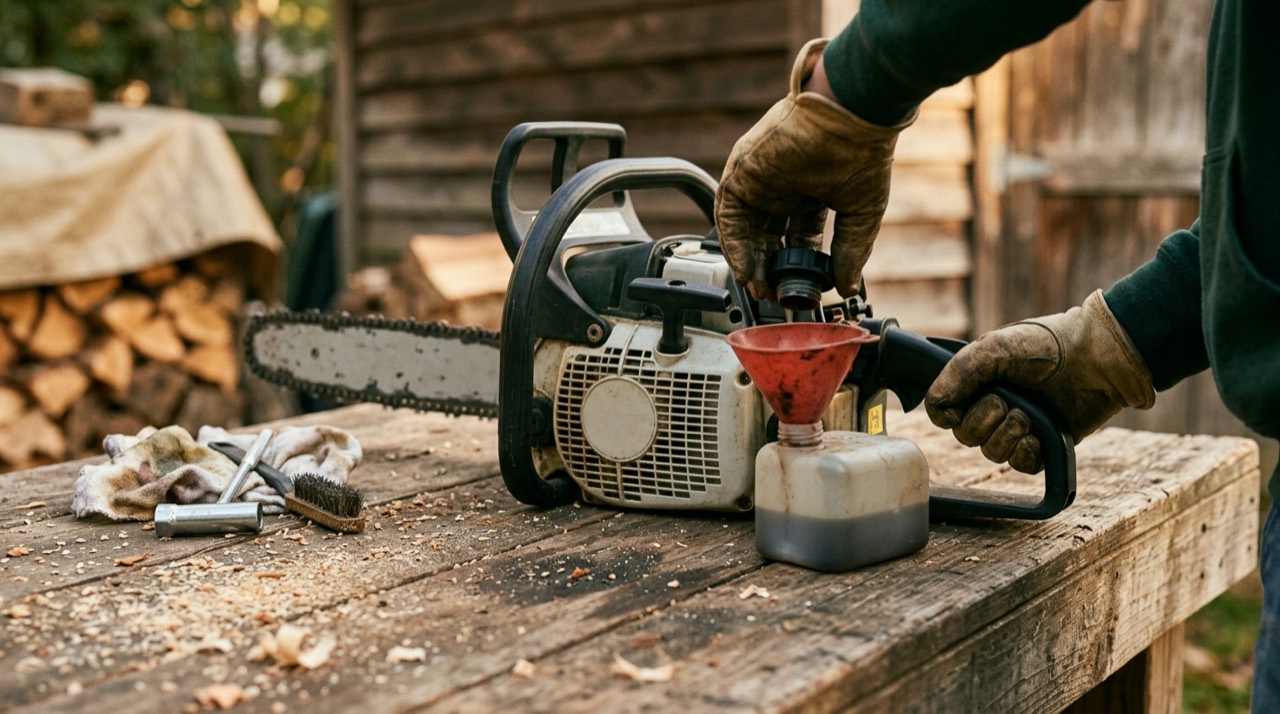
Deal with the fuel first, because stale petrol left in the carburettor is the number-one reason a saw will not start after winter. You have two reliable options, and either works if you do it fully.- Run the tank dry: empty the fuel tank, then start the saw and let it idle until it stops, so the carburettor runs empty.
- Or stabilise it: fill with fresh fuel treated with a stabiliser, then run the saw for a couple of minutes so the treated mix reaches the carburettor.
Do not simply leave a part-full tank of untreated pump fuel in the saw for months, as that is exactly what varnishes the carburettor. Fuels and stabilisers are covered in our bar oil, chain oil and fuel guide.
How do you run a chainsaw's carburettor dry for storage?
Run the carburettor dry when you want to store a gas saw with no fuel left to varnish it, which is the surest way to avoid a stale-fuel no-start. The aim is to empty not just the tank but the fuel sitting in the carburettor.- Run the saw during your last cutting session until the tank is nearly empty, so little fuel is left to pour off.
- Tip the remaining fuel out of the tank into your fuel can, keeping it for use within its shelf life.
- Restart the saw and let it idle in a safe, ventilated spot until it stalls from fuel starvation.
- Give the starter a few more pulls to burn off the last traces in the carburettor.
- Wipe the saw down, then store it as normal with a sharp, oiled chain.
Running dry suits saws stored for a long off-season or those prone to carburettor gumming. The alternative, storing with stabilised fuel, is better if you may need the saw at short notice during the break, since a fully dry saw needs refuelling and priming before it will run. Fuels and stabilisers are compared in our bar oil, chain oil and fuel guide.
How long can you store a chainsaw with fuel in it?
Untreated petrol mix in a chainsaw stays usable for only a few weeks before it degrades and starts to gum the carburettor, while fuel treated with a stabiliser can sit for several months. Ethanol-free pre-mixed fuel lasts longest, often a year or more sealed and a good while once opened.The practical rules are simple. For a break of a few weeks, fresh mix with a stabiliser is fine left in the saw, as long as you run it through the carburettor. For a full off-season of several months, either stabilise the fuel or run the carburettor dry, because untreated mix will not survive that long. For very long or uncertain storage, running dry removes all doubt.
Two habits make this easier: mix only what you will use within a month, so you are never storing large amounts of ageing fuel, and date your fuel can when you mix it. If you rely on a saw only seasonally, ethanol-free pre-mix bought by the can sidesteps the shelf-life problem almost entirely, which is why it suits occasional users. The wider service routine that surrounds storage is in our chainsaw maintenance guide.
How do you prepare the bar, chain, and body before storage?
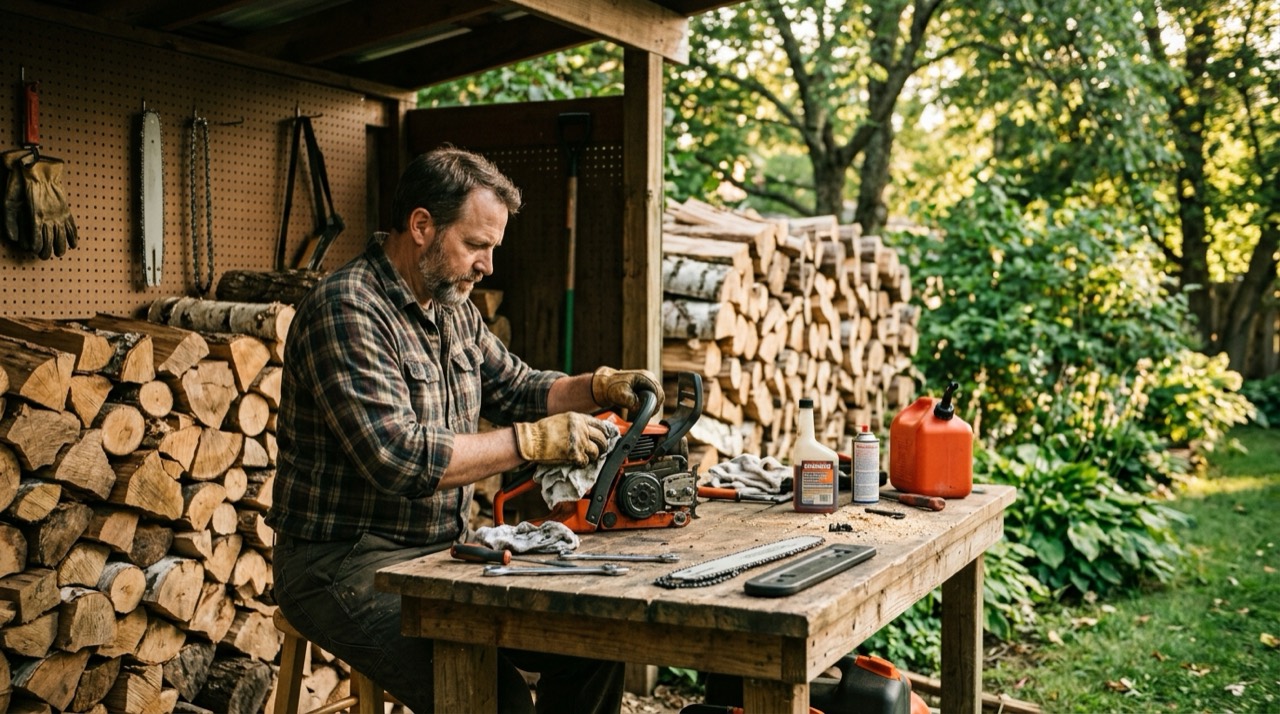
Clean the saw, sharpen the chain, and wipe a light film of oil over the bar and chain so they do not rust while the saw sits. A chain put away sharp and oiled is ready to cut the moment you need it next season.Work through the body too, because packed sawdust holds moisture. The preparation steps are:
- Brush sawdust and oil residue off the body, bar, and around the clutch and sprocket.
- Remove and clean the air filter, and clear the bar groove and oil holes.
- Sharpen the chain, then wipe the bar and chain with a light coat of oil.
- Slacken the chain slightly so it is not under tension for months.
Where and how should you store the saw and batteries?
Store the saw flat in a dry, ventilated spot out of direct sunlight, with the bar scabbard fitted and the saw kept away from children and ignition sources. A shed or garage shelf is fine as long as it stays dry; damp promotes rust on the bar and chain.Batteries need their own care. Store lithium packs at a partial charge, roughly half full, in a cool, dry place, and never leave them fully flat or sitting in a hot or freezing shed for the season. If you are choosing a lower-maintenance saw for next year, our battery chainsaw guide weighs the options.
How should you store a chainsaw in a humid or freezing climate?
Adjust off-season storage for your climate, because damp and hard frost attack different parts of a stored saw. Humidity rusts the bar and chain, while deep freezes are toughest on batteries and on any water in the fuel.In a humid or coastal climate, moisture is the enemy of bare metal. Wipe the chain and bar with a slightly heavier film of oil, fit the scabbard, and if possible keep the saw in a sealed box with a desiccant pack rather than on an open, damp shelf. In a freezing climate, keep lithium batteries indoors at a stable, cool room temperature rather than in an unheated shed, since deep cold saps and can damage a pack; let a cold battery warm to room temperature before charging. Ethanol in untreated pump fuel absorbs water that can freeze and separate, another reason to run dry or use ethanol-free pre-mix where winters are severe.
Wherever you store the saw, keep it out of direct sunlight, away from ignition sources, and beyond the reach of children. If lower off-season fuss is pushing you toward a cordless saw, our battery chainsaw guide weighs the trade-offs.
Does short-term storage need the same steps as winter storage?
Short breaks of a week or two do not need the full winterising routine, but they still reward a few basic steps. The difference is mainly about the fuel: a saw idle for a fortnight will not varnish the way one left for months does.For a short break, top up the bar oil, wipe the chain, fit the scabbard, and store the saw somewhere dry; fresh stabilised fuel can safely stay in the tank. For anything beyond about a month, treat it as off-season storage and either stabilise the fuel fully or run the carburettor dry. The chain and bar care is the same either way, since a clean, sharp, lightly oiled chain resists rust whether the saw sits for a week or a season.
The simplest rule is to match the effort to the time: minutes of care for a short break, a full twenty-minute winterise before a long one. Getting the long-storage fuel step right is what prevents the spring no-start that sends so many saws to the repair shop. For the consumables that make either routine easy, see our best chainsaw maintenance picks, and wear chainsaw chaps and PPE whenever you run the saw to test it.
What does a chainsaw need before its first cut of the season?
Before the first cut, give the saw a quick pre-season check: fresh fuel, chain tension, bar oil, and a test that the oiler is throwing oil. A saw stored correctly should start within a few pulls, but the tension and oil still need setting after months on the shelf.Run through it in order:
- Fill with fresh fuel mix and top up the bar oil reservoir.
- Check and set the chain tension while the saw is cold.
- Start the saw, let it warm, and confirm the oiler throws a line of oil.
- Re-check tension after the first few cuts, as the chain settles.
What storage mistakes damage a chainsaw?
The mistakes that damage a stored chainsaw are easy to avoid once you know them. The most common are listed below.- Leaving untreated pump fuel in the tank and carburettor for months.
- Storing the saw with a dull, dirty, or rust-prone bare chain.
- Keeping batteries fully flat or in a hot, humid, or freezing space.
- Storing the saw damp, uncovered, or within reach of children.
Getting these right costs almost nothing and saves a spring trip to the repair shop. For the parts and consumables that make off-season care easy, see our best chainsaw maintenance picks, and always wear chainsaw chaps and PPE when you test the saw. This is general guidance based on manufacturer advice and owner experience, not a substitute for your saw's manual.