

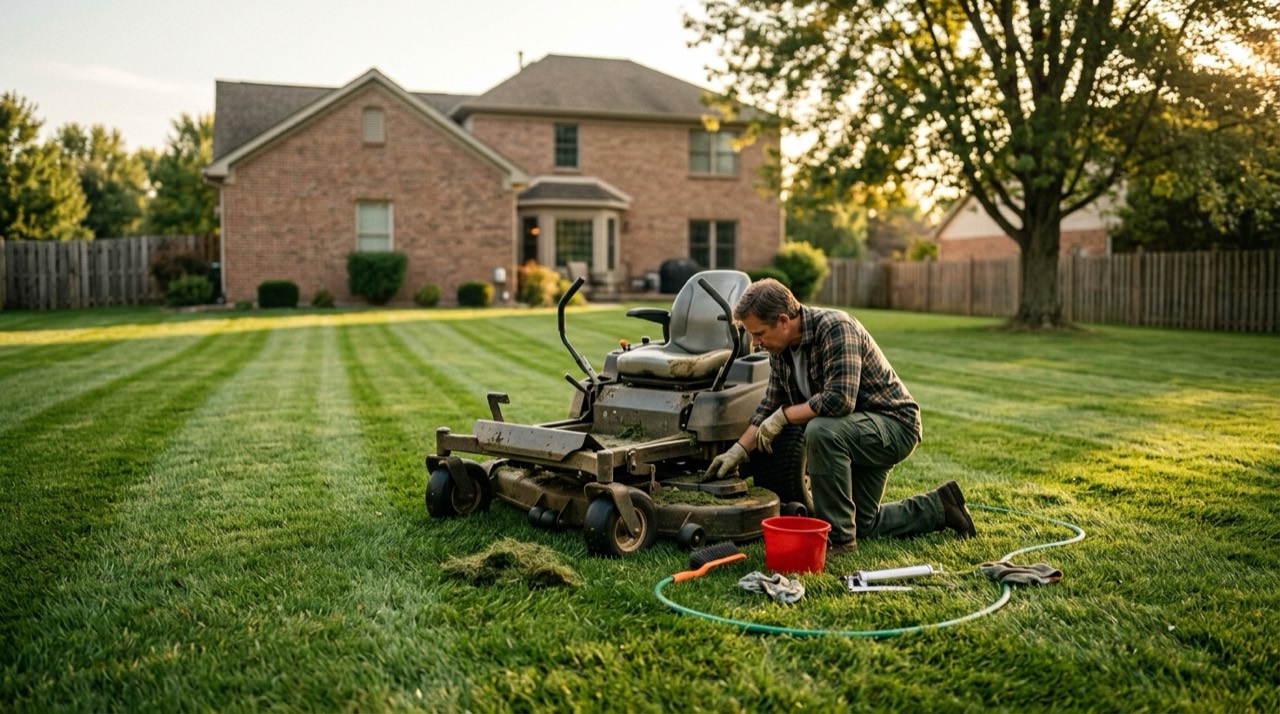




How do you keep a zero-turn mower cutting cleanly?
Keep a zero-turn cutting cleanly by staying ahead of three jobs: sharp balanced blades, a level clean deck, and serviced hydrostatic transmissions. Neglect any one and the machine tells on you immediately, streaking, scalping, or crawling, because a zero-turn's speed magnifies small setup faults into visible stripes across the lawn.None of this is difficult; it is a short seasonal routine plus a few checks before each mow. The pages below expand on the full-fleet checklist, but the essentials that keep a zero-turn specifically at its best are blade care, deck leveling, and hydro maintenance, covered in turn here.
How often should you sharpen and change mower blades?
Sharpen zero-turn blades every 20 to 25 hours of mowing, or whenever the grass tips look torn and frayed rather than cleanly cut. Dull blades bruise the grass, which browns the lawn and forces the engine to work harder, so a quick sharpen is the highest-value maintenance job you can do.Follow a simple rhythm to keep blades in good shape.
- Inspect the blades before each mow for nicks, bends, and worn cutting edges.
- Sharpen to a factory-style edge with a file or bench grinder, keeping the original angle.
- Balance each blade after sharpening so vibration does not wear the spindle bearings.
- Replace any blade that is cracked, badly bent, or worn thin at the sail.
Always disconnect the spark plug lead, or remove the battery on an electric model, before you reach under the deck. Wear cut-resistant work gloves and keep the blade wrenched securely, because a mower blade is sharp enough to cause serious injury even off the machine.
How do you level a zero-turn mower deck?
Level the deck so the blades sit slightly lower at the front than the rear, a small forward rake of around an eighth of an inch, on firm flat ground with the tyres at the correct pressure. A level, correctly raked deck is what turns sharp blades into an even stripe instead of a scalloped, scalped finish.Set tyre pressures first, because uneven pressure tilts the whole deck. Then check side-to-side level by measuring blade-tip height at the same point on each side, and adjust the deck hangers until they match. Finally set the front-to-rear rake using the maker's measurements. Work through it methodically and recheck after the first cut; the lawn mower maintenance guide has the shared step-by-step for riding decks.
How do you clean a zero-turn deck the right way?
Clean the deck underside after every few mows, because packed, drying clippings hold moisture that rusts the steel, unbalances the blades, and chokes the airflow so the cut turns ragged. A clean deck is the cheapest way to protect both the finish and the metal.Disconnect the spark plug lead, or remove the battery on an electric model, before you reach under the deck.
- Raise the deck to its highest setting, or use ramps or a jack rated for the machine's weight.
- Chock the wheels and set the parking brake so nothing can roll.
- Scrape the packed clippings off the underside with a plastic or wooden scraper, working around each blade.
- Rinse through the deck wash port if the machine has one, briefly running the blades per the manual to clear the rest.
- Let the deck dry, then wipe a light coat of protectant on bare metal to slow rust.
Wear cut-resistant work gloves whenever your hands are near the blades, and never work under a raised deck that is not securely supported on stands or ramps.
What hydrostatic transmission care does a zero-turn need?
Service the two hydrostatic transaxles on the maker's schedule, keep them clean and cool, and never run them low on fluid, because the twin hydros are the most expensive part of a zero-turn to replace. Most residential units are effectively sealed, while commercial transaxles like Hydro-Gear ZT-3400 units use serviceable fluid and filters.Keep debris off the transaxle cooling fins so they shed heat, check for weeping seals, and follow any purge procedure in the manual after fluid work so trapped air does not leave one wheel weak. Clean the deck underside after mowing to stop packed clippings from rusting metal and unbalancing blades, and store the machine with fresh fuel stabiliser or a charged battery over winter.
What belt and spindle checks does a zero-turn need?
Check the deck drive belt and the blade spindles each season, because a worn belt slips and a failing spindle bearing ruins the cut and can shed a blade. Both are easy to inspect and far cheaper to replace early than to run to failure.The signs that a belt or spindle needs attention are listed below.
- A deck belt that is glazed, cracked, frayed, or stretched enough to slip under load.
- Spindle bearings that feel rough, notchy, or loose when you rock a blade by hand, with the spark plug lead disconnected.
- A grinding or squealing noise from the deck, or blades that spin down slowly after you disengage them.
- Vibration that persists even after the blades are sharpened and balanced.
Replace a suspect belt with the maker's part, and repack or replace spindle bearings before they seize, since a locked spindle can burn a belt or bend a blade. Grease any spindle zerk fittings on schedule, and recheck belt tension after the first few hours on a new or replaced belt, when fresh belts stretch the most.
How do you store a zero-turn mower for winter?
Store a zero-turn clean, dry, and stabilised: treat or drain the fuel, put the battery on a maintainer, set the tyres to pressure, and keep the machine under cover so damp and rodents cannot attack it over the off-season.The end-of-season steps below keep a zero-turn ready for spring.
- Clean the deck and machine so no clippings hold moisture against the metal.
- Add fuel stabiliser and run the engine briefly to carry it through the system, or drain the fuel per the manual.
- Change the engine oil and filter so acids do not sit in the crankcase all winter.
- Charge an electric model's battery, or fit a maintainer to a gas machine's battery, and store loose batteries cool and dry.
- Set the tyre pressures and store the machine on a firm, dry floor, ideally covered.
A little outdoor tool storage planning keeps the machine off damp ground and out of the weather, which is what preserves the deck, seat, and wiring between seasons and saves a frustrating no-start in spring.
What is the seasonal maintenance schedule for a zero-turn?
Follow a simple seasonal rhythm so nothing gets missed, because most zero-turn failures come from skipped basics rather than bad luck. A short checklist done on time is far cheaper than a seized spindle or a cooked transaxle.The tasks below spread across the mowing year.
- Before each mow, check the blades, tyre pressures, and oil or charge level, and clear grass from the deck.
- Every 25 hours or so, sharpen and balance the blades and grease any zerk fittings.
- Each season, change the engine oil and filter, replace the air filter, and inspect belts and spindles.
- At season's end, clean the machine, top up or stabilise the fuel, and store batteries charged in a cool dry place.
Grease points, belt condition, and the air filter are the easy-to-forget items that quietly shorten a mower's life, so build them into the routine. Stay on top of all of this and a zero-turn holds its cut for years; the full zero-turn mower guide and the wider lawn mowers pillar cover the buying and running decisions around them.
How do you troubleshoot common zero-turn problems?
Most zero-turn faults trace to a short list of causes you can check yourself: a machine that will not start, one drive wheel that feels weak, an uneven cut, or a vibration. Working through the likely causes in order usually finds it without a dealer visit.The table pairs the common symptoms with their usual causes and first fixes.
| Symptom | Likely cause | First fix |
|---|---|---|
| Will not start | Dead battery, stale fuel, safety switch not engaged, seat or brake interlock | Charge the battery, add fresh fuel, sit fully in the seat, set the parking brake |
| One side drags or feels weak | Air in a hydro after fluid work, loose drive belt, tow-release valve left open | Purge the hydros per the manual, close the tow-release levers, check the belt |
| Uneven or streaky cut | Unlevel deck, uneven tyre pressure, dull or bent blades | Set tyre pressures, level the deck with a forward rake, sharpen and balance blades |
| Excess vibration | Unbalanced or bent blade, worn spindle, loose hardware | Balance the blades, check the spindles, retorque the bolts |
| Scalping | Deck set too low, speed too high on uneven ground, soft tyre | Raise the deck, slow down on lumps, correct the tyre pressure |
If a hydro stays weak after purging, or a spindle is worn, book a dealer service before the fault damages something costlier. The lawn mower maintenance guide covers the shared riding-mower checklist behind these fixes, and the full zero-turn mower guide covers the buying decisions around them.