By Owen Fitzgibbon, Editorial Director & Safety Reviewer · Updated August 31, 2026
Direct Answer
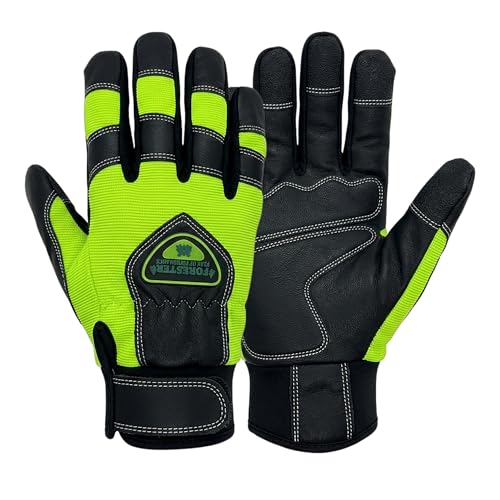
Yes, you need special chainsaw gloves for saw work. Certified chainsaw gloves put a saw-clogging protective layer on the back of the left hand — the hand nearest the bar — that ordinary work gloves lack. Regular gloves help with grip and splinters but give no protection against a moving chain.
Yes — running a chainsaw calls for certified chainsaw gloves, not ordinary work gloves. The difference is a pad of saw-clogging fibres on the back of the left hand, tested to EN ISO 11393-4, that is designed to jam the chain and trip the brake before it reaches skin. Ordinary gloves have no such layer, so they offer grip and splinter protection but nothing against a moving chain.
Why the left hand?
The left hand grips the front handle closest to the bar, so it is the most exposed in a kickback or a one-handed slip. Certification concentrates protection there and keeps the palm unarmoured so you retain the grip and feel needed to control the saw safely. The design follows the saw's fixed handle layout, so left-handed users still wear the protection on the left glove — the risk is defined by where the hand sits on the machine, not by which hand is dominant.
How the protection works, and its limits
The pad is a mass of long, loose synthetic fibres. When the chain's drive links catch it, they pull the fibres out into the sprocket and clutch, stalling the chain in a fraction of a second. That mechanism has two honest limits. First, it is single-use: any real contact spends the pad, so a struck glove is retired even if it still looks intact. Second, it only clogs a driven, moving chain caught on the back of the hand — it does nothing if you close your palm around a running chain, because the palm carries no pad and there is nothing to jam. These gloves reduce the severity of a common injury; they do not make a saw safe to grab.
What ordinary gloves still do
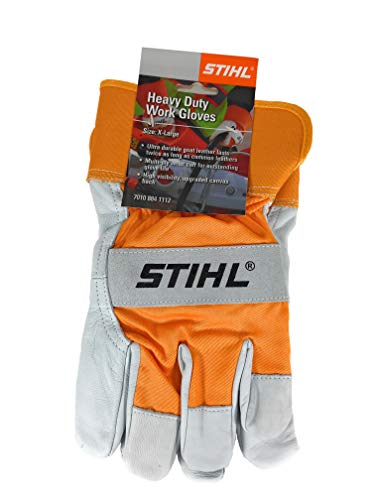
Plain leather or synthetic gloves remain useful for hauling, splitting and handling rough wood, where grip, warmth and splinter protection matter more than saw resistance. Keep a pair for those jobs — just do not mistake them for saw protection. A cut-rated glove is no substitute either: a high cut level resists a slow static blade, not a chain moving at 16 to 24 metres per second. Our best gloves for work roundup covers those non-saw tasks, and the wider work gloves guide explains how cut ratings and saw certification differ.
Choosing the right pair
Match the glove's protection class to your saw's chain speed — Class 0 (16 m/s) for occasional small-saw use, Class 1 (20 m/s) for regular mid-size cutting — and size the left glove carefully so the pad stays in position. A glove that shifts moves the very panel meant to protect you. For specific models across homeowner and professional use, see the chainsaw glove roundup.
Common mistakes with chainsaw gloves
The frequent errors are treating any glove as saw-proof, sizing up for comfort, and keeping a struck glove in service. A comfortable leather or cut-rated glove has no saw-clogging pad, so it offers no protection against a moving chain, however tough it feels. A glove bought a size too big lets the left-hand pad slide out of position at the moment it is needed. And because the fibre is single-use, a glove that has already taken contact is spent even if it looks intact. Match the class to your saw, size the left glove first, retire it after any strike, and keep a certified pair for cutting and a separate pair for hauling and splitting.
A worked example
Say you own a mid-size gas saw and cut firewood a few weekends each autumn. The chain speed puts you in Class 0 or Class 1 territory, not Class 2, so a homeowner-grade certified glove such as a Husqvarna Classic or Functional is the right match — a bulky professional Class 2 glove would only cost dexterity for protection you do not need. Size the left glove to your measured palm so the pad sits square on the back of the hand, wear it only while the saw is running, and switch to a plain leather pair for stacking and splitting once the saw is off. Inspect the protective panel before each session, and the day it takes any contact, replace it. That routine covers the real risk without over-buying.
Gloves are one layer, not the whole answer
Chainsaw gloves are cheap insurance against a common injury, but they are one part of a PPE system that includes chainsaw chaps, a helmet and face shield, and hearing and eye protection. No glove lets you grab a running chain, and none replaces the chain brake, a firm two-handed grip, a properly tensioned chain from a good chainsaw maintenance routine, and leaving work at height to trained climbers. Worn together and used with sound technique, they turn a serious risk into a manageable one.