

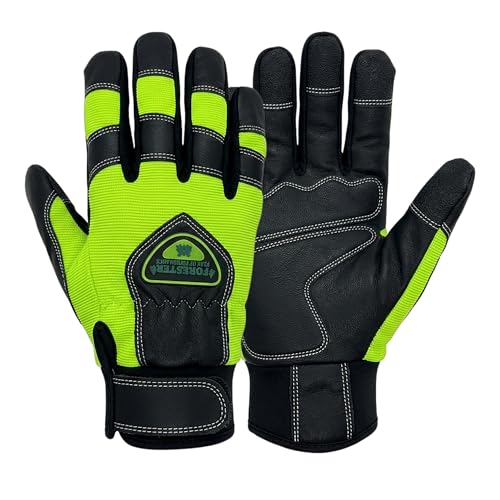
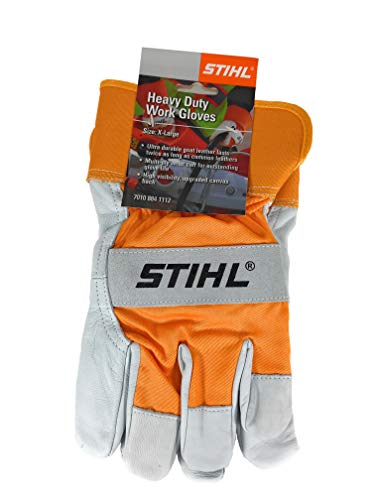


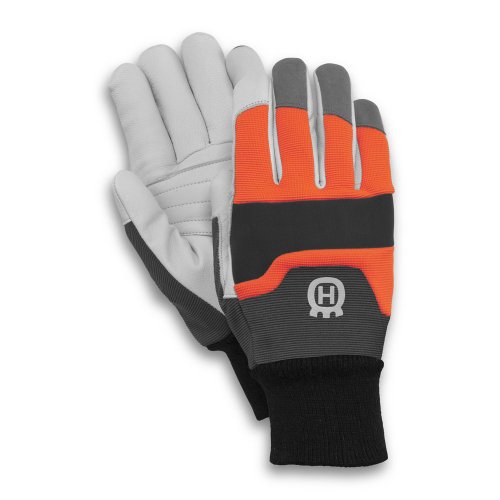
How does chainsaw glove protection actually work?
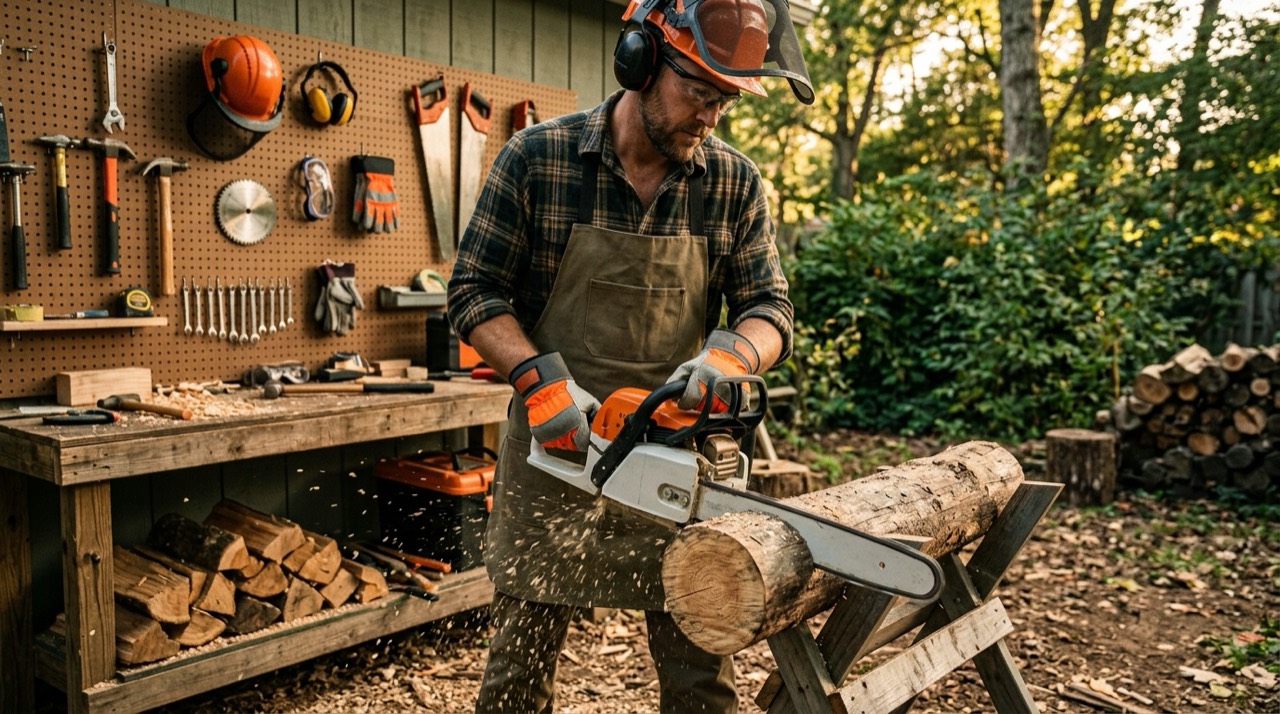
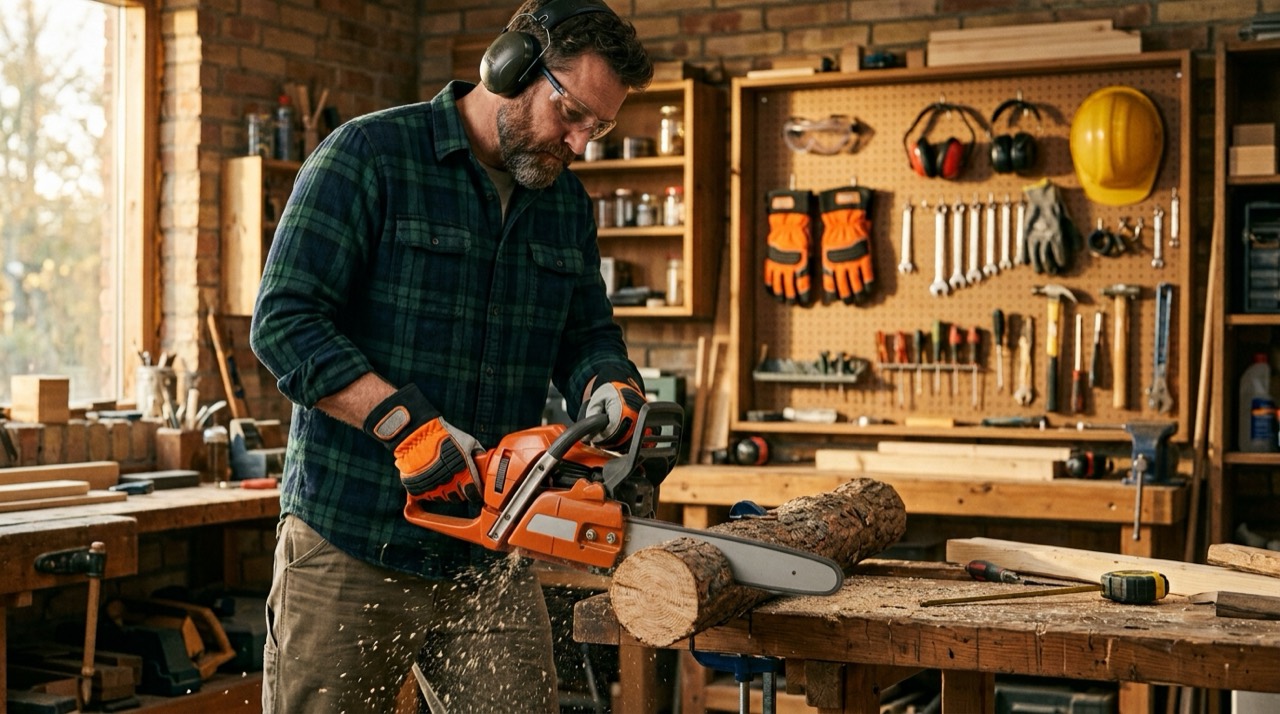
Chainsaw gloves protect the back of the left hand with a pad of loose, high-strength fibres that a running chain drags out and jams around the sprocket, forcing the saw to stall. The palm is ordinary leather or synthetic. This is the same clogging principle used in chainsaw chaps and leg protection — the fabric sacrifices itself to stop the chain, and it works only once.Which standard certifies chainsaw gloves?
Chainsaw gloves are certified to EN ISO 11393-4, the current international standard that replaced the older European EN 381-7. Both test the saw-clogging layer against a chain running at a set speed, and both grade the result into protection classes. During the changeover you will still see gloves marked with either reference, so read the class rather than fixating on the standard number.Certification also defines where the protection sits. A Design A glove protects the back of the left hand only; a Design B glove protects both hands. Design A covers the realistic risk for nearly all users, because the left hand rides the front handle nearest the bar, so that is where a kickback or a one-handed slip is most likely to make contact. Two-hand protection is reserved for specialist roles. A certified glove is also marked with the standard, the class number and the maker's size, so a quick look at the cuff tells you what you are actually wearing — if none of that is printed, treat the glove as a general work glove, not saw protection.
What is the saw-clogging layer made of?
The saw-clogging layer is a pad of long, loose, high-strength synthetic fibres, similar in principle to the blocking material inside chainsaw chaps. When the chain's drive links catch the pad, they drag the fibres out in a mass that wraps around the sprocket and clutch, stalling the chain in a fraction of a second. The fibres are engineered to release and tangle rather than resist like a solid plate, which is why the protection is single-use and why a struck glove must be retired even if the outer fabric still looks intact. It is also why the palm, which carries no such layer, offers no protection against a chain grabbed in the hand.The physics is worth understanding because it explains the glove's limits. The system needs the chain to be moving and driving, so that the links can bite the fibre and pull it into the mechanism; it also relies on the saw's clutch and brake to react once the fibre jams the works. Against a slow graze it may do little, and against a hand deliberately closed around a running chain it does nothing, because there is no mechanism to clog. That is the honest boundary of the technology: it is a fast-acting emergency layer for a back-of-hand strike, not a licence to handle a live chain.
What do the chainsaw glove protection classes mean?
Protection classes describe the maximum chain speed the glove is tested against, not how "strong" the leather is. The three levels are Class 0 at 16 metres per second, Class 1 at 20 metres per second, and Class 2 at 24 metres per second. The list below matches each class to the user it suits.- Class 0 (16 m/s) fits occasional homeowners running small and mid-size saws.
- Class 1 (20 m/s) fits regular homeowners and semi-professionals on mid-size saws.
- Class 2 (24 m/s) fits professionals running high-speed saws all day.
Higher classes add bulk and cost, so the right choice is the class that matches your saw and hours, not the highest number on the shelf. Chain speed depends on the saw and how it is set up, which is one more reason to follow a proper chainsaw maintenance routine. A worn sprocket, a stretched chain or a stalled clutch all change how the system behaves, so the rated class assumes a saw kept in good order. If you run several saws, match the glove to the fastest one you use, since the pad cannot know which machine struck it.
Why is only the left hand protected on most chainsaw gloves?
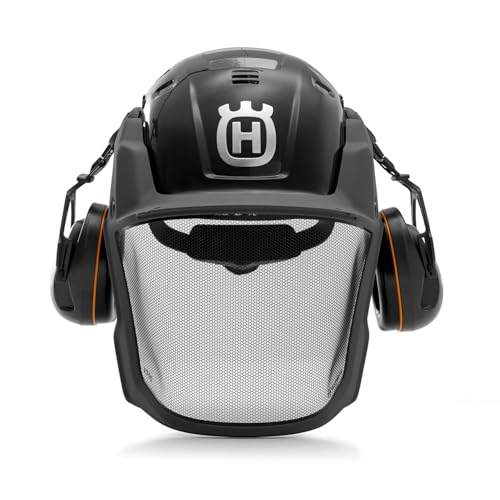
The left hand is protected because it grips the front handle closest to the bar, where kickback throws the saw up and back toward the operator. In a slip or a one-handed mistake, the back of that leading hand is the most likely contact point, so certification concentrates protection there and keeps the glove light enough to use.The palms stay unprotected on purpose. You need feel and grip to control the saw, and a fully armoured palm would make the glove clumsy and tiring. That trade-off is why chainsaw gloves are one layer in a system, worn with chainsaw chaps, a helmet and face shield, and hearing and eye protection. No glove lets you grab a running chain, and none replaces the chain brake, a firm two-handed grip, and leaving top-handle and arborist saw work at height to trained climbers. Left-handed users still wear the protection on the left glove, because the design follows the saw's fixed handle layout, not the operator's dominant hand.
How do you inspect and retire chainsaw gloves?
Inspect chainsaw gloves before every session and retire them at the first sign the protection is compromised. Run through a short check each time, because the single-use fibre gives no second warning once it is spent. The steps below take under a minute and catch the failures that matter.- Look across the protective back panel for cuts, pulls, or any sign of chain contact, and retire the glove immediately if you find any.
- Flex the palm and fingers to expose cracks in the coating or thinning leather that will soon wear through.
- Check the seams and the cuff closure, since a split seam or a failed hook-and-loop strap lets the glove shift out of position.
- Confirm the size still fits snugly, because gloves stretch and soften with use.
A struck glove is spent even if it looks usable, so replace it rather than gamble on a second strike.