

How should work gloves fit?
Work gloves should fit closely, like a firm handshake — snug across the palm, with fingertips that reach the end of the glove but are not cramped. A good fit keeps your dexterity, reduces fatigue, and stops loose fabric snagging on tools or bunching where you grip. Fit is a safety feature, not just a comfort one, because a glove that moves cannot protect the area it is meant to cover.How to measure
Measure around the widest part of your palm, at the knuckles and excluding the thumb, and match that to the maker's size chart. Brands run differently, so trust the chart over the label you are used to. If you fall between sizes, favour the snugger option for detail work and the roomier one only if you need a thin liner underneath. Try the glove with the grip you actually use, and flex your hand into a fist to confirm the palm does not bunch and the cuff does not gape.Signs of a bad fit
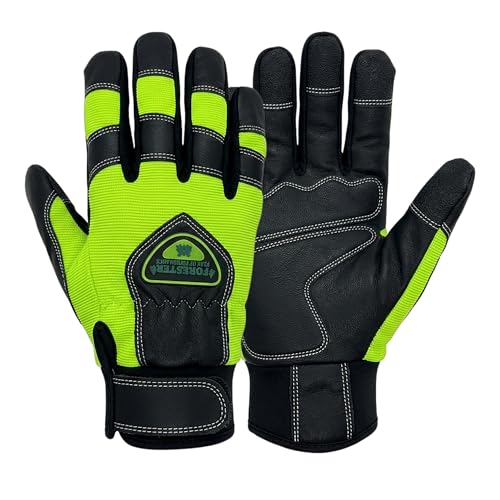
A glove that is too big bunches in the palm, twists on the hand and can catch in moving parts; one that is too small tires your hand, restricts movement and tempts you to work bare-handed. Either way, poor fit undermines the protection you paid for. This matters most for cut-rated and chainsaw gloves: a shifting glove exposes the wrong area, and on a certified chainsaw glove a sliding left hand moves the saw-clogging pad out of position. A quick check is to hold your hand out flat — if the fingertip fabric flops past your fingers, the glove is too big.Fit changes with the season and the material
Size for the conditions and the material. In winter, allow room for a thin liner without losing feel; in summer, choose a breathable glove that will not swell with sweat. Leather softens and stretches with use, so a snug new leather glove often eases into a perfect fit, while a knit or coated glove stays close to its original size. Buy leather a touch snug and synthetics true to size, and keep the fit tight enough that the glove never shifts mid-task.Why fit matters more for protective gloves
Fit matters most on cut-rated and chainsaw gloves, because these protect a specific area that only works if it stays in place. A cut-resistant knit that twists on the hand can leave a knuckle or the side of a finger exposed to the very edge it was meant to resist. On a certified chainsaw glove the stakes are higher still: the saw-clogging pad sits on the back of the left hand, and a loose glove lets that pad slide off the contact zone at the exact moment it is needed. For those gloves a snug fit is part of the protection, not a comfort preference — which is why you fit the left hand first on a chainsaw glove and accept a firmer fit than you might choose for a general work glove.How fit changes as gloves wear
Gloves do not keep the same fit for life, so re-check it as they age. Leather stretches and softens with use, so a glove that felt snug when new can loosen into a better fit, or eventually into a sloppy one that shifts and should be retired. Coated knits go the other way, staying close to their original size but losing grip and structure as the coating cracks. Washing and drying affect fit too: gentle cool washing and flat air-drying preserve shape, while heat shrinks and hardens. If a once-snug glove starts twisting on the hand or bunching in the palm, that is a sign the fit has failed and, for a protective glove, a reason to replace it.A quick fit routine before you buy
Run through a short check to avoid a glove that looks right on the rack but fails in the hand. The steps below take a moment and save a wasted purchase.- Measure your palm and read the maker's chart rather than guessing a size.
- Put both gloves on and make a firm fist — the palm should not bunch.
- Pick up a small object, such as a screw or a file, to confirm you keep enough feel for the job.
- Check the cuff closes firmly so the glove cannot slide during use.
- If you cut in winter, repeat the checks with your liner in place.
Get the fit right and the rest of the choice is easier. For picking the right pair once the fit is sorted, see the best gloves for work picks and the chainsaw glove roundup.

