



What does each chainsaw file do?
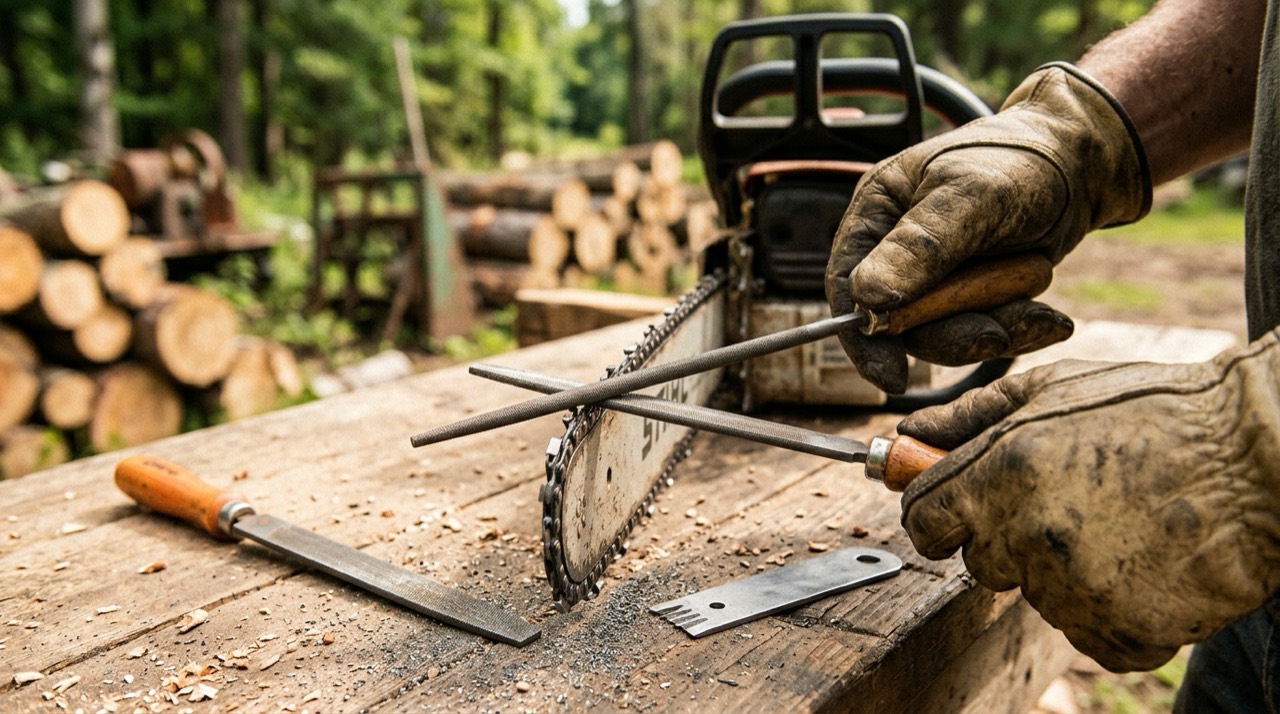
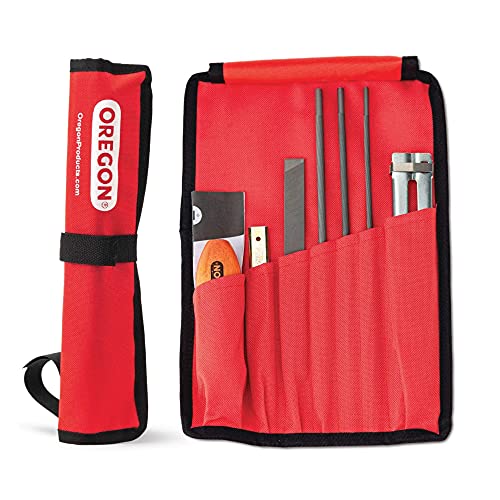
Each chainsaw file has one job: the round file shapes the cutting teeth, the flat file lowers the depth gauges, and the depth-gauge tool measures how far to lower them. Using the right file for each part is what turns a dull chain back into one that cuts square, self-feeding chips.Confusing the three is the usual reason a freshly filed chain still cuts poorly. Filing only the cutters and never the depth gauges leaves a chain that will not bite; lowering the depth gauges too far makes it grab and kick. This guide separates the tools so each does its job; for the order you use them in, see our chainsaw sharpening guide.
How does a round chainsaw file work?
A round chainsaw file works by seating in the curved gullet of each cutter and shaving the top plate and side plate to a fresh edge as you push it across the tooth. Its diameter must match the chain pitch so the file sits at the right height, cutting the correct hook into the tooth.Round files are single-cut, meaning one row of angled teeth that shears the hardened chrome edge cleanly rather than tearing it. The things that make a round file cut well are listed below.
- Correct diameter: matched to the chain pitch so the file sits about one-fifth above the tooth's top.
- Single-cut, chrome-cutting teeth: shaped for the hardened steel of chainsaw cutters.
- One-direction stroke: the file only cuts on the push, so lift it on the return.
- Even rotation: turning the file slightly each stroke spreads the wear and keeps it round.
A round file that skates over the tooth without shaving metal has dulled and should be swapped for a fresh one.
What is the flat file and depth-gauge tool for?
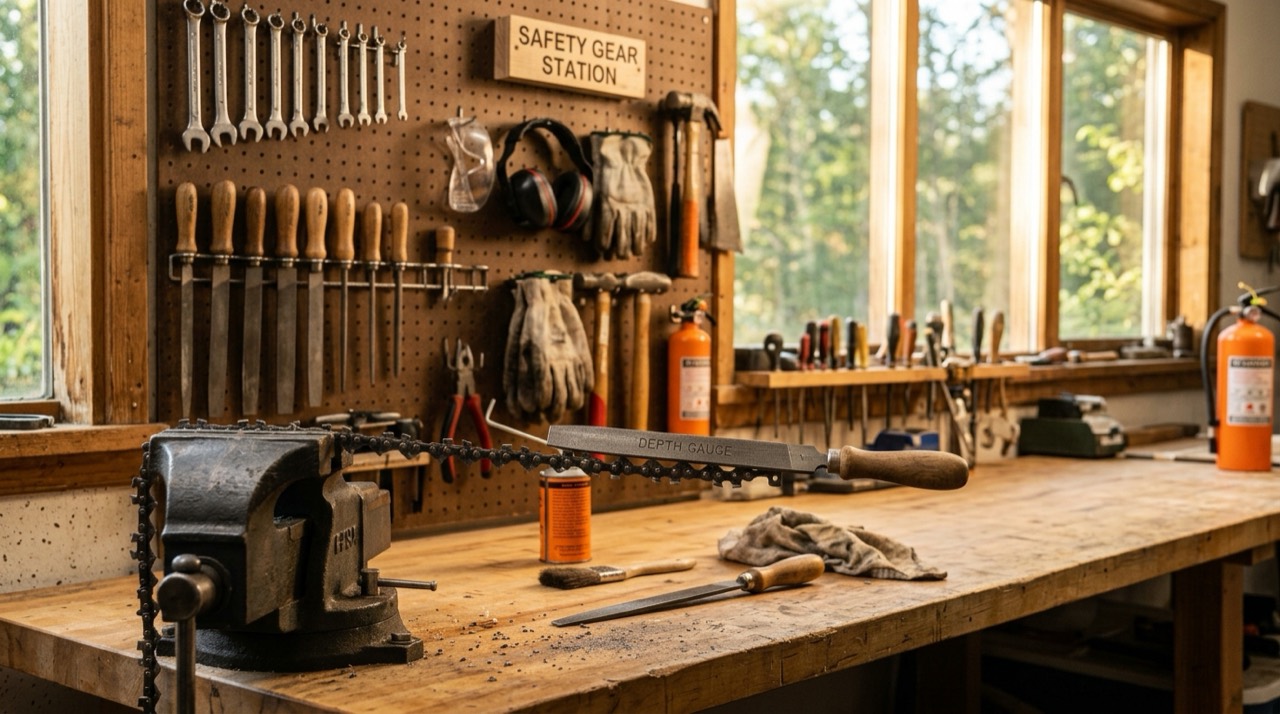
The flat file and depth-gauge tool set the rakers, the small fins in front of each cutter that control how deep the tooth bites. The depth-gauge tool is a slotted guide that lays over the raker and shows how much stands proud; the flat file removes exactly that much.Depth gauges matter because they decide the bite. If they sit too high, the cutter cannot reach the wood and the chain feels dull however sharp the edge; too low and the chain grabs and kicks. The usual setting is around 0.025 inch (0.65 mm) below the top plate, though hard or frozen wood often calls for a shallower cut. You set the rakers far less often than you sharpen the cutters, usually every few filings, checking with the depth-gauge tool each time. Round the front edge of each lowered raker slightly with the flat file so it feeds smoothly.
How do you pick the right file diameter and cut?
Pick the round file diameter from your chain's pitch and always choose a single-cut chainsaw file, not a general-purpose double-cut one. A double-cut file is coarser and made for soft metals, so it tears a chain's hardened edge instead of shearing it cleanly.Quality of steel decides how long a file lasts. A hardened, chrome-cutting file from a specialist maker such as Pferd, Stihl, Husqvarna, or Oregon holds its bite across far more teeth than a bargain file, which is the difference between one chain and several. Buy files by the diameter listed for your pitch, and keep a spare, because a dull file cannot be sharpened and simply stops cutting. The pairing of pitch to file size is set out in our best chainsaw file picks.
What round file size matches each chain pitch?
Round file diameter is set by chain pitch, running from 5/32 inch on the smallest chains to 7/32 inch on large 3/8-inch standard and .404-inch chains. Read the pitch stamped on the drive links, then choose the file from the pairing below; a file a size out will hook or ride over the tooth.| Chain pitch | Round file diameter |
|---|---|
| 1/4 inch | 5/32 in (4.0 mm) |
| 3/8 inch low-profile (Picco) | 5/32 in (4.0 mm) |
| .325 inch | 3/16 in (4.8 mm) |
| 3/8 inch standard | 7/32 in (5.5 mm), or 13/64 in (5.2 mm) on some chains |
| .404 inch | 7/32 in (5.5 mm) |
A few 3/8-inch standard chains call for the in-between 13/64-inch file, so the maker's chart always wins over a general rule. Where to find the pitch and gauge markings is explained in our chainsaw chains guide.
What angles does a chainsaw cutter need?
A chainsaw cutter is filed to three angles at once: a top-plate angle of about 30 degrees for general crosscutting, a side-plate angle set by the file's height in the gullet, and a slight down or hook angle formed as the file cuts. Holding the top-plate angle steady is what keeps every tooth matching.The top-plate angle is the one you steer by eye or with a guide, and most chains carry a witness mark scribed at roughly 30 degrees to line the file up; harder or frozen wood is sometimes filed nearer 25 degrees for a smoother, longer-lasting edge, and ripping chains for milling run as shallow as 10 degrees. The side-plate angle and the hook are set automatically when a correctly sized file sits at the right height, which is why file diameter and file height matter as much as the angle you hold. If cutters come out grabby, the hook is too aggressive, often from a file sitting too low; if they cut slowly, the angle has drifted flatter than the mark. The full angle chart and the order of strokes are in our chainsaw sharpening guide.
How do depth-gauge tools differ, and which should you use?
Depth-gauge tools come as a simple flat plate with a slot and as progressive guides that vary the amount removed along the bar; both show how far to lower the rakers, but the progressive type keeps the bite even as cutters shorten. Either works, so long as you match its setting to your chain and wood.A flat plate lays across the chain and exposes any raker standing above its slot, which you file flush; it uses one fixed setting, usually giving a raker about 0.025 inch (0.65 mm) below the top plate. A progressive tool removes slightly more from the depth gauge as the cutter wears back, keeping the cutting depth consistent over the chain's whole life, which suits owners who file the same chains for years. Most plates offer a standard slot for general cutting and a shallower one marked for hard or frozen wood. Whichever you use, round the front of each lowered raker with the flat file so it feeds smoothly, and check the rakers only every few sharpenings rather than every time.
What goes wrong when you file with the wrong tool?
Filing with the wrong tool shows up fast: a double-cut or wrong-size file tears the hardened edge instead of shearing it, and skipping the depth-gauge tool leaves a chain that will not bite however sharp the cutters look. Matching each file to its job is what a clean, self-feeding chain depends on.The usual faults and their causes are listed below.
- A file too small: rides low, cuts an over-hooked, grabby tooth that dulls quickly.
- A file too large: rides high, cuts a blunt, back-slanted edge that will not slice.
- A general double-cut file: too coarse for hard chrome, it tears rather than shaves the tooth.
- No depth-gauge tool: rakers stay high, so a freshly sharpened chain still feels dull.
- A dull file kept in use: skates over the tooth, polishing it instead of cutting.
Each of these is cured by matching the file to the chain's pitch and using a single-cut chainsaw file, as set out in our best chainsaw file picks.
How do you care for chainsaw files so they last?
Care for chainsaw files by keeping them dry, clean, and apart from other tools, because a file is a consumable that dulls fastest when its teeth clog or rust. Store each file in a sheath or wrap so it does not rattle against metal, and never coat the cutting faces in oil, which loads the file and kills its bite.A few habits stretch a file's life. Tap out packed filings with a file card or a stiff brush, rotate the file slightly each stroke so no single face wears flat, and hang files where damp air will not reach them. Once a file slides across the tooth without shaving steel, retire it; there is no sharpening a file. Keeping the whole saw in shape, from files to bar oil, is covered in our chainsaw maintenance guide, and these files sit with the rest of our safety gear and accessories.