


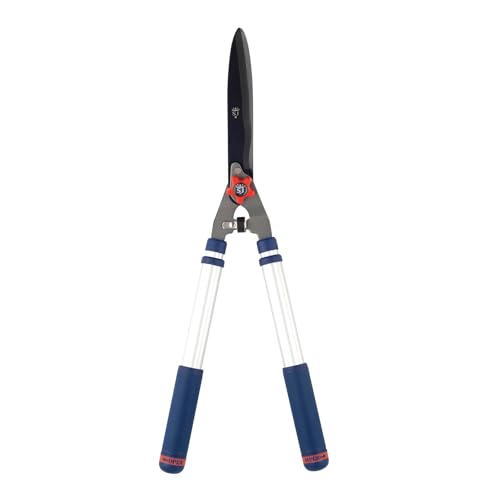
What does bypass action mean on garden shears?
Bypass action means two curved blades slide past each other like scissors, slicing a stem cleanly between them. Nearly all quality hedge and garden shears cut this way, which is why sharp, well-aligned shears leave a clean wound rather than a bruised, torn one. The alternative, anvil action, closes a single blade onto a flat surface.The distinction matters most on living, green growth. A bypass cut severs the stem cleanly and the plant heals fast; a crushing cut can bruise soft tissue and brown off at the tip. Understanding the two actions helps you buy the right tool for each job and keep it cutting well.
The table sums up how the two actions differ and where each belongs.
| Action | How it cuts | Best on | Watch-out |
|---|---|---|---|
| Bypass | Two blades pass like scissors | Live, green growth | Blades must stay sharp and aligned |
| Anvil | One blade onto a flat edge | Dead, dry, woody stems | Can crush green stems |
How can you tell bypass from anvil shears?
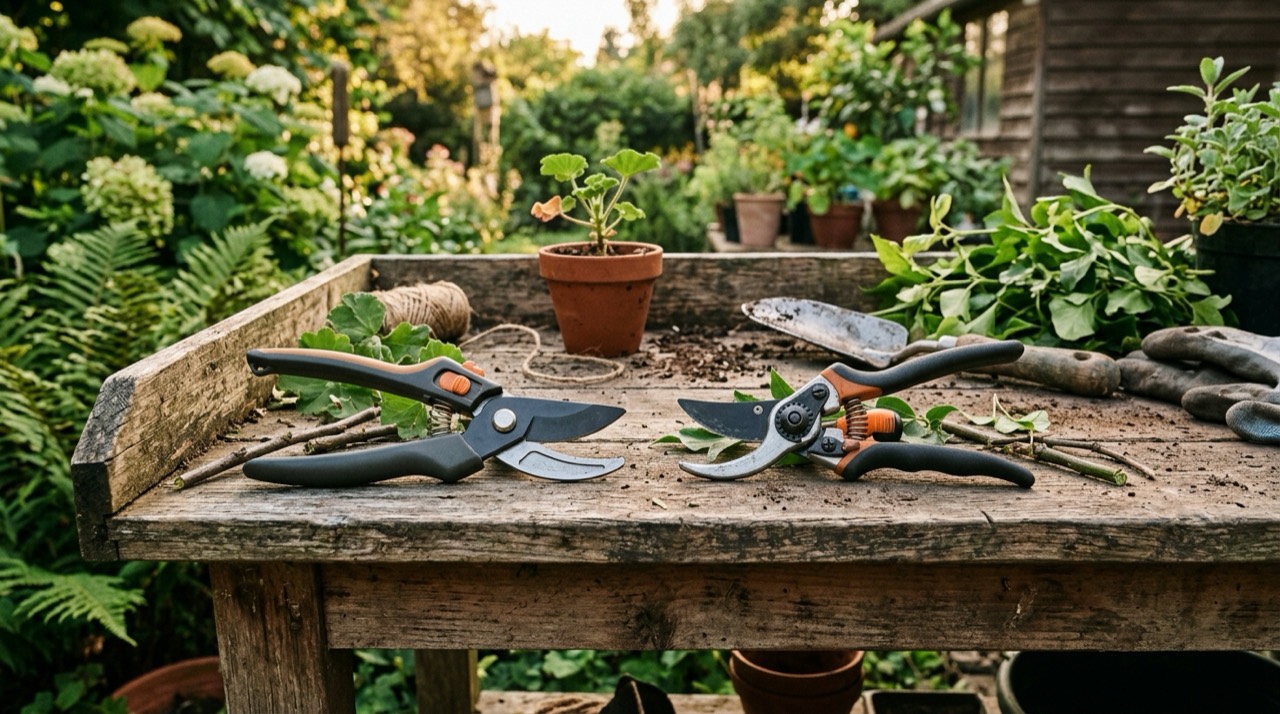
You can tell bypass from anvil shears by watching how the blades meet. Bypass shears have two curved blades that slide past each other like scissors, while anvil shears have one sharpened blade that closes onto a flat plate, or anvil. Looking at a closed pair makes the difference obvious.On a bypass tool the cutting blade passes to one side of the lower blade, so the edges cross; on an anvil tool the blade stops dead against the flat surface. Hedge shears are almost always bypass, with two long blades passing each other. If you are unsure which you own, close the shears slowly and watch whether the blades cross or meet flat — that single check tells you how to sharpen them and what they cut best.
Why do bypass shears suit living hedges?
Bypass shears suit living hedges because their scissor cut severs green stems cleanly without crushing them. The clean wound closes and heals quickly, so the hedge stays healthy and the cut ends do not brown off and spoil a formal line. That clean finish is exactly what shaping work needs.An anvil tool, by contrast, presses a green stem against a flat plate, which can pinch and bruise soft growth even when it cuts through. On a hedge you trim for looks as much as health, that bruising shows. This is why hedge and garden shears almost always use a bypass design, and why keeping the edge keen matters so much.
When is an anvil tool the better choice?
An anvil tool is better on dead, dry, and woody material. Pressing a blade onto a flat anvil splits tough dead wood with less effort than a bypass cut, and there is no living tissue to bruise. For clearing dead stems, old growth, and dry prunings, an anvil pruner or lopper can be the easier tool.The rule of thumb is simple: bypass for living growth you want to keep healthy, anvil for dead material you are removing. Anvil tools also let a slightly duller edge keep working, since they split against a plate rather than relying on two edges meeting perfectly — handy for tough deadwood at the end of a long session. Most hedge shears are bypass because hedges are living, but a set of anvil or bypass loppers covers the thicker stems, and bypass hand pruners handle individual live shoots more precisely than shears.
What is a ratchet or geared cutting action?
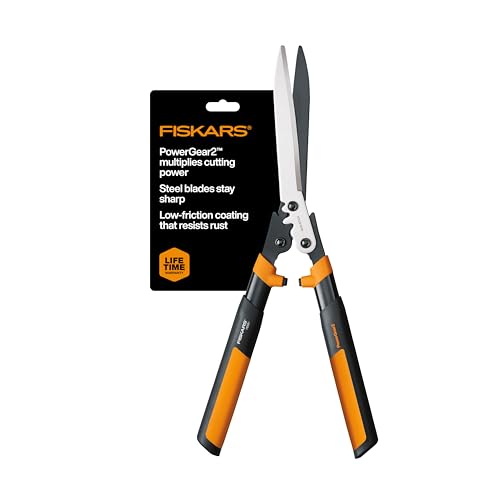
A ratchet or geared action multiplies the force you apply, letting a hand tool cut thicker growth with less effort. Ratchet tools close in stages, gripping between squeezes, while geared tools like Fiskars PowerGear hedge shears add a gear at the pivot that boosts force where a stem resists most.Neither changes whether a tool is bypass or anvil — it is an added mechanism, not a different cut. Geared hedge shears are still bypass; they simply make closing on dense growth easier. Ratchet loppers apply the same idea to thicker branches, cutting in stages so you can sever wood a plain lopper would stall on. For light, soft hedges a simple pivot is lighter and quicker, and gearing earns its keep on thick or woody growth.
Are hedge shears sharpened on one blade or both?
Most hedge shears are sharpened on both blades, because both carry a bevelled outer edge that passes the other in a scissor action. This differs from an anvil tool, where only the single upper blade is honed. Knowing which edges to file keeps the bypass action true.Sharpen only the bevelled outer face of each blade and leave the flat inner faces alone, so the two continue to pass tightly. Filing the flat face opens a gap and stops the blades cutting. Some budget shears bevel only the top blade against a flatter lower one, so check yours before you start. Either way, the flat inner faces stay flat — that tight pass is what makes a clean bypass cut.
How do you keep bypass shears cutting cleanly?
Keep bypass shears cutting cleanly by honing the bevelled outer edge and setting the pivot correctly. The two blades must meet with a slight scissor drag along their whole length; too loose and they fold growth instead of slicing it. A few passes with a mill file on the bevel restores the edge when cuts start to tear.Clean and dry the blades after every use, because sap and moisture dull and corrode a bypass edge fast, then add a drop of oil to the pivot. Only the outer bevel is sharpened — leave the flat inner face alone so the blades keep passing tightly. The step-by-step lives in the sharpening files and tools guide.
How do you fix bypass shears that fold instead of cut?
Bypass shears that fold or chew growth instead of slicing it have one of three faults: a dull edge, a loose pivot, or blades knocked out of alignment. Working through them in order usually brings the cut back in a few minutes without any new parts.Diagnose and fix in this order.
- Hone the bevelled outer edge with a mill file; a dull edge is the commonest cause of tearing.
- Tighten the pivot bolt a little at a time until the blades meet with a slight drag along their length.
- Check the blades are not sprung apart from forcing a thick stem, since a gap in the middle means they no longer pass tightly.
- Clean off sap that may be holding the blades apart, then re-oil the pivot.
If the blades stay sprung or bent, the shears have been forced through wood that belonged to loppers or a pruning saw.
What safety points apply to bypass shears?
Bypass shears are sharp and often spring-loaded, so treat them like any blade: keep fingers clear of the closing edges, store them closed or sheathed, and wear eye protection against flicking twigs. The clean cut that makes them good at their job also makes a careless slip easy.Pull on a pair of work gloves for grip and to save your hands from blisters and sap, and wear eye protection when trimming at or above head height. Keep both hands clear of the blade path, and never leave open shears lying in the grass. This is general guidance rather than training, and tall or leaning hedge work near structures or power lines belongs to a professional.
Do more expensive bypass shears cut better?
Better bypass shears do cut noticeably cleaner, but the reason is edge and alignment, not price alone. Premium Japanese shears hold a keener edge and pass their blades more precisely, so they slice green growth with less effort and leave tidier wounds. That precision shows most on formal hedges and topiary.For general hedge work, a mid-range bypass shear kept sharp and properly adjusted cuts perfectly well — a keen budget pair beats a dull expensive one every time. Spend up if you shape formal hedges often or cut a lot; otherwise, buy a solid mid-range pair and put the difference into keeping it sharp. Compare options in the best hedge shears round-up.
How long do bypass shears last?
A good pair of bypass shears lasts decades with basic care, and many are built so the parts that wear can be replaced. Blades hold their edge for years of honing, and a serviceable pivot bolt lets you adjust or dismantle the shears to clean and sharpen them.The running cost is low: a file, a rag, and a little oil are most of what a pair ever needs. Premium shears such as the Okatsune and ARS models offer replaceable blades and bolts, so a chipped edge or worn pivot need not end the tool. Keep them clean, dry, honed, and oiled — as covered in the sharpening files and tools guide — and hand shears become the cheapest tool in the shed to own over their life.