


How should you store your outdoor power tools?
Store outdoor power tools by hanging what you can on wall racks, cabineting smaller tools you can't hang, and sheltering mowers and splitters in a shed. Keep the floor clear, fuel and batteries managed, and sharp or powered tools latched away from children.
A garage or yard full of trimmers, blowers, saws, and a mower quickly becomes a hazard if everything leans in a corner. Organised storage protects the tools from damp and knocks and protects your family from the sharp, fuelled, and powered ends. Here is how to store the wider kit around your chainsaw and its case.
Which wall rack system holds trimmers and blowers best?
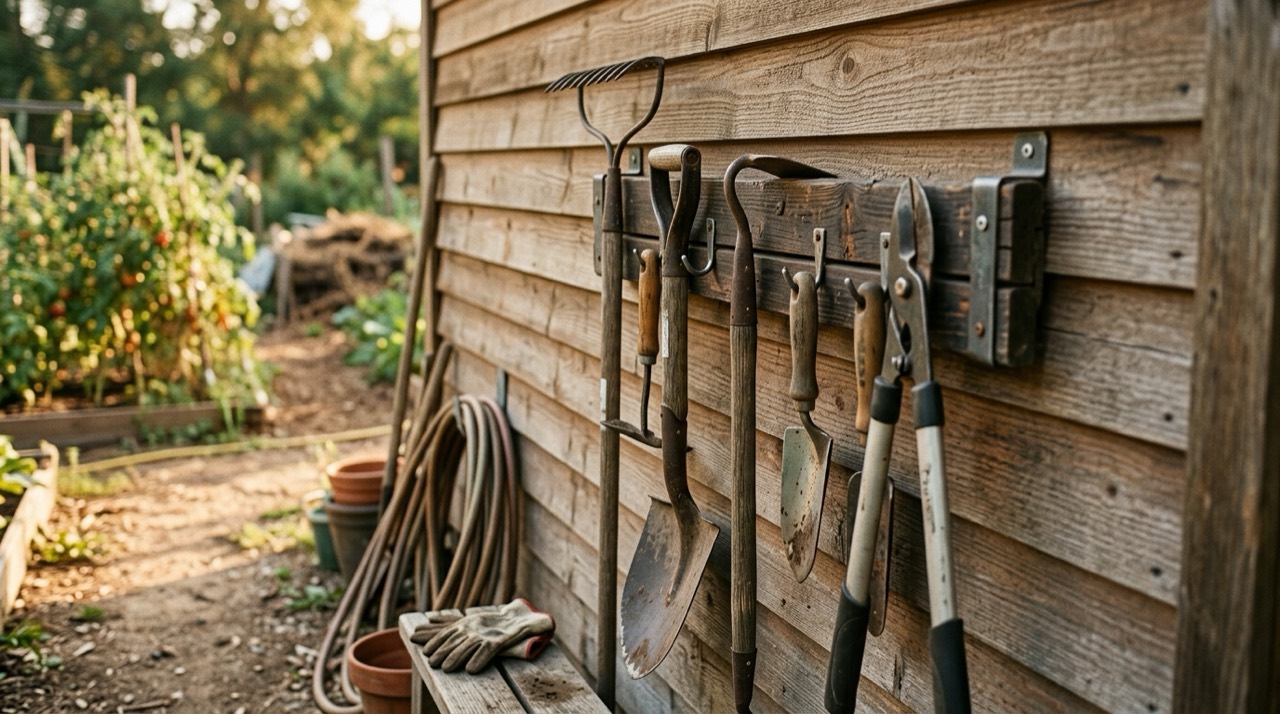
A rail-and-hook wall system holds long-handled tools best because it lifts them off the floor and lets you rearrange hooks as your kit changes. Rubbermaid FastTrack, Gladiator GearWall and GearTrack, and Milwaukee PACKOUT wall plates all mount to studs and carry graduated hooks rated for tool weight.
Match the hook to the tool. Hang a string trimmer and leaf blower by their shafts or handles on wide, rated hooks, and give a backpack blower a broad shelf-hook so the harness doesn't distort. Mounting the sharpest and heaviest tools above shoulder height keeps them clear of children and clear of the mower below.
Do you need a shed or will a cabinet do?
A vertical cabinet is enough for hand tools, trimmers, and blowers; a shed earns its space once you own a mower, a splitter, or bulky seasonal kit. Resin cabinets from Suncast, Keter, and Rubbermaid lock, resist weather, and fit against a garage wall or on a patio.
Step up to a shed when floor tools arrive. Walk-in and lean-to sheds from Keter, Suncast, Rubbermaid, and Lifetime hold a mower, firewood tools, and a splitter, and a lockable door keeps the whole lot away from children. Whichever you choose, add ventilation and a raised shelf or floor so trapped damp can't rust your metal.
How do you store long-handled and pole tools?
Store long-handled and pole tools vertically, secured near the top so they can't topple, with cutting heads covered and pointed away from walkways. Pole pruners, hedge trimmers, and edgers are awkward and top-heavy, so a spring grip, a bracket, or a rack hook holds them far better than standing them in a corner.
Cover the business end. A blade cover on a hedge trimmer or pole saw, and a sheath on manual pole pruners, keep edges safe and rust off the steel. Group like tools together so you can grab a matched set without moving three others, and keep pole tools clear of overhead wiring when you extend them.
How do you organize a garage for outdoor tools?
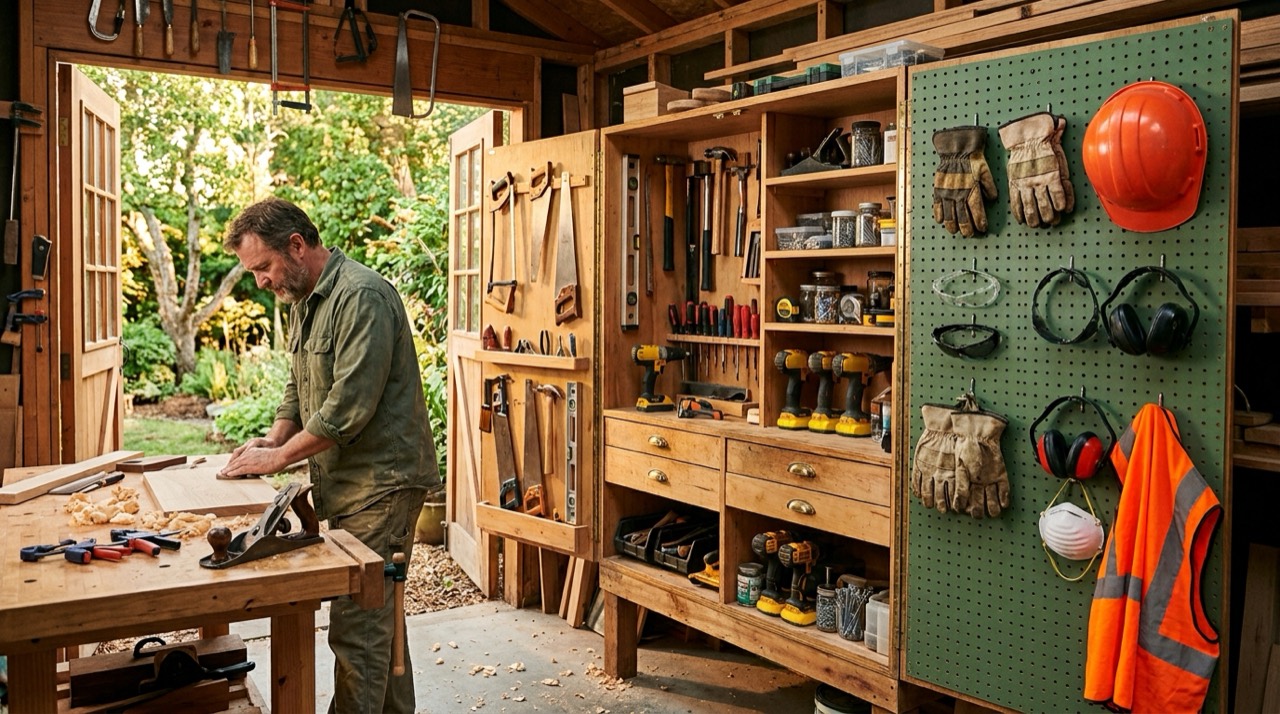
Organize a garage in zones: a wall for hanging power tools, a locking cabinet for fuel and sharp hand tools, a shelf for batteries and chargers, and clear floor for the mower. Keeping fuel, batteries, and blades in defined, latchable spots is what turns a cluttered garage into safe storage.
Give hazards their own home. A metal cabinet holds fuel and bar and chain oil away from ignition sources, an indoor shelf keeps lithium packs at room temperature, and high or latched storage keeps every cutting edge out of reach. Label the zones so anyone in the household returns a tool to the safe spot, not the nearest corner.
How do you keep a storage shed dry and free of rust?
Keep a shed dry by combining ventilation, a raised floor, and off-the-ground shelving so trapped moisture can't sit against metal. A sealed resin or metal shed warms in the day and cools at night, and that swing pulls in damp air that condenses on cold tool steel — the reason a watertight shed can still rust a mower deck.
Fix the airflow first. Add or open vents so the shed breathes, stand tools on a pallet or shelf rather than the slab, and keep the door clear so you are not forced to lean tools against damp walls. A tub of desiccant or a low-wattage shed heater helps in a wet climate, and a light wipe of oil on bars, blades, and the splitting and firewood tools you store for the season keeps rust off through the wettest months. Sweep chips and grass out regularly, because packed debris holds water against steel long after the air has dried.
How do you mount a wall rack system safely?
Mount a wall rack into the studs, not the drywall alone, level the rail, and load the heaviest tools on the widest hooks nearest a stud. A rail screwed into framing carries far more than plastic drywall anchors, which pull out under a loaded backpack blower.
Fitting a rail system correctly takes a few ordered steps:
- Find and mark the studs — usually 16 inches apart — with a stud finder.
- Hold the rail level and mark screw points that land on studs, not just drywall.
- Drive the rail's screws into the framing, checking level as you go.
- Clip in graduated hooks, putting wide, high-rated hooks where the heaviest tools will hang.
- Load the rail from heaviest to lightest, keeping the sharpest tools above shoulder height.
Respect the published per-hook and per-rail limits — systems like Rubbermaid FastTrack and Gladiator GearTrack state them — and hang a leaf blower or trimmer by a rated hook rather than an improvised nail. Overloading a hook, or fixing only into drywall, is the usual reason a rack tears loose.
What size shed or cabinet do you need for outdoor tools?
Size the store to the biggest machine plus room to move around it: a cabinet suits hand tools and a couple of power tools, a small shed holds a push mower and trimmers, and a walk-in shed is needed once a ride-on or splitter arrives. Always allow clearance to wheel machines in and out.
The rough guide below matches a storage type to a typical kit so you do not over- or under-buy:
| Storage | Typical capacity | Best for |
|---|---|---|
| Resin cabinet (~2×4 ft) | Hand tools, saw case, fuel, oil | Apartments, small garages |
| Small shed (~4×6 ft) | Push mower, trimmer, blower, saw | Suburban yards |
| Mid shed (~6×8 ft) | Mower, log splitter, firewood tools | Larger yards, some firewood |
| Walk-in shed (~8×10 ft+) | Riding mower, splitter, full kit | Acreage, seasonal machines |
Leave a clear path to the door so you are not lifting a mower over other tools, and add a shelf or two so hand tools and batteries live off the floor. It is cheaper to buy one size up now than to replace a shed you outgrow in a season.
How do you store seasonal tools you only use part of the year?
Store off-season tools cleaned, drained, and out of the prime-access zone so the tools you use weekly stay reachable. A snow blower, a log splitter, or a leaf blower spends months idle, so lay it up properly and move it to the back of the shed or a high shelf.
Seasonal kit rewards a proper lay-up because it sits untouched for so long. Before a machine goes to the back of the shed, run gas engines dry or add stabilizer, wipe bare metal against rust, and cover it against dust. Rotate storage with the calendar: bring firewood and splitting tools forward for autumn, push the mower and trimmer back once the grass stops growing, and keep the firewood tools you will want first within easy reach. Labelling shelves by season means the whole household returns a tool to the right spot instead of blocking the walkway.
What are the common garage tool-storage mistakes to avoid?
The usual garage mistakes are storing fuel next to an ignition source, blocking the walkway with the mower, and leaving sharp tools loose on a bench within reach. Zoning the space and giving each hazard a home fixes all three.
The errors that make a garage cluttered or unsafe are easy to design out:
- Keeping fuel and bar oil near a water heater or workbench spark source — move them to a sealed metal cabinet by an outside wall.
- Parking the mower in the walkway so tools get leaned against it — give wheeled machines a defined bay.
- Leaving loppers, blades, and a saw loose on a bench where children can reach — latch or hang every cutting edge.
- Charging lithium packs on a cold slab overnight — use an indoor shelf at room temperature.
- Storing tools damp after use, so rust sets in — wipe them down before they go on the rack.
A garage split into clear zones — a hanging wall, a locked cabinet, a battery shelf, and a machine bay — stays both tidy and safe, and anyone in the household can return a tool to the right place.