

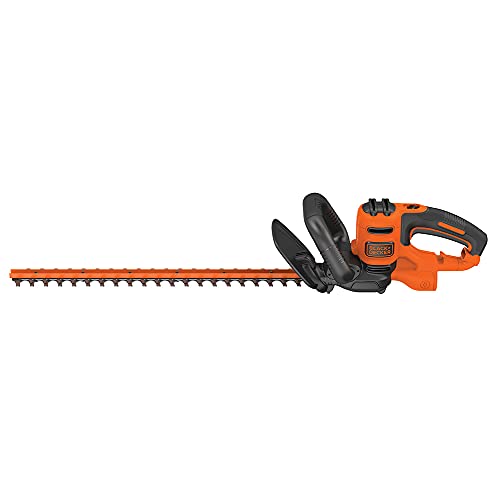


Gas, battery, or corded: which hedge trimmer should you buy?
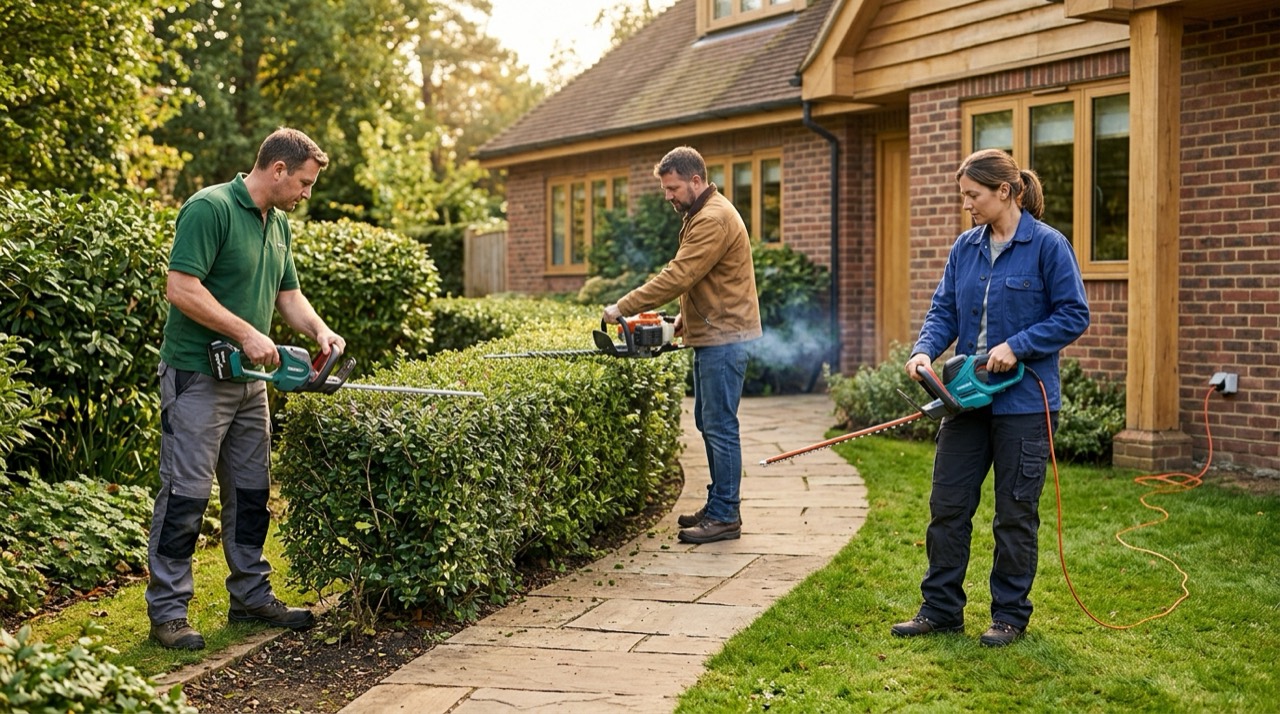
Gas, battery, and corded electric hedge trimmers each solve a different problem: corded is the cheapest and lightest for small hedges near a socket, battery frees you from the cord for most homeowner hedges, and gas gives unlimited runtime and the most power for long, woody, or professional work. The right choice comes down to hedge size, distance from a power point, and how much noise and upkeep you will accept.For the majority of suburban gardens, a battery trimmer is now the default, but the extremes still favour the other two. This comparison weighs all three on the factors owners actually notice, so you can decide before reading our best hedge trimmer picks or returning to the main hedge trimmer guide for blade length and cutting capacity.
How do the three power types compare on power and runtime?
Gas trimmers deliver the most sustained power and unlimited runtime as long as you keep fuel in the tank, battery trimmers match gas for cutting power on normal growth but are capped by pack size, and corded models run indefinitely but tie you to an extension lead. Runtime and reach are the sharpest differences between the three.The table below summarises how the power types stack up on what matters most when trimming a hedge.
| Attribute | Corded electric | Battery | Gas |
|---|---|---|---|
| Runtime | Unlimited while plugged in | Capped by battery | Unlimited while fuelled |
| Reach | Limited by cord | Go anywhere | Go anywhere |
| Power in woody growth | Modest | Strong, then fades | Highest |
| Noise | Low | Low | Loud |
| Maintenance | Almost none | Blade and battery only | Fuel, filter, plug |
For most homeowner hedges the battery's cordless convenience and quiet running win; the cord and the fuel can each become the deciding factor at the two extremes. Weight is worth adding to the picture too: corded trimmers are usually the lightest because the motor is small and no battery or engine rides on board, cordless models sit in the middle depending on pack size, and gas trimmers are the heaviest thanks to the engine and a tank of fuel. Over a long trimming session, that weight difference tells on your arms as much as raw cutting power does.
Which hedge trimmer is quietest and lowest-maintenance?
Corded and battery hedge trimmers win decisively on noise and maintenance, running at conversation-level volume with no exhaust and none of the seasonal servicing a petrol engine needs. You skip fuel mixing, air-filter cleaning, spark plugs, and the spring ritual of coaxing a gas engine back to life.This is where electric trimmers have genuinely changed hedge day: no fumes, no ear-ringing roar, and instant start at the trigger. A cordless trimmer adds cord-free reach on top, so you can walk a boundary hedge without dragging a lead behind you. Blade care still applies to all three, and keeping the blades clean of sap and lightly oiled is the single best habit for a clean cut. Owners who trim early or live close to neighbours find the quiet running of electric trimmers the deciding advantage.
How long does a battery hedge trimmer run on one charge?
A battery hedge trimmer typically runs for roughly 30 minutes to over an hour of real trimming on one charge, depending on the pack’s amp-hour rating, the density of the growth, and how hard the blade is working. Light shaping of soft growth stretches runtime, while dense or woody hedges drain a pack faster, so published run-times are best treated as a ceiling rather than a promise.Runtime is the one place a battery trimmer can fall short of gas, and there are practical ways to manage it. A higher amp-hour pack runs longer but weighs more, so the sweet spot balances endurance against the weight you hold up all session. The simplest fix is a second battery: one cuts while the other charges, which turns a runtime cap into a brief pause rather than a hard stop. Trimming little and often, keeping the blade sharp so it slices instead of straining, and matching pack size to the length of your hedge all stretch a single charge further. For a hedge that genuinely needs continuous hours of cutting, though, no battery keeps pace with a fuelled engine, and that is the case where gas still wins.
What does each power type cost to buy and run?
Corded electric trimmers are the cheapest to buy and to run, cordless trimmers cost more up front and need replacement batteries over time, and gas trimmers carry the highest running cost through fuel and servicing even when the tool itself is mid-priced. The purchase price tells only part of the story, so it helps to weigh the ongoing cost too.The table below sets out how the three power types compare on what you pay over the life of the tool.
| Cost | Corded electric | Battery | Gas |
|---|---|---|---|
| Up-front price | Lowest | Middle to high | Middle to high |
| Ongoing running cost | Minimal electricity | Battery replacement over years | Fuel plus regular servicing |
| Hidden cost | Extension cord and RCD | Extra packs and charger | Two-stroke oil, plugs, filters |
A corded trimmer is the value choice if a small hedge sits within cord reach of a socket. A cordless trimmer often works out cheapest over five years for a homeowner who already owns compatible batteries, since the pack cost is shared across a whole platform of yard tools. A gas trimmer only justifies its running cost when its unlimited runtime and power are genuinely needed, which for most gardens they are not.
Which hedge trimmer is kindest to your neighbours and the air?
Corded and battery hedge trimmers are far kinder to both your neighbours and the local air than gas, running at conversation-level noise with no exhaust emissions at the point of use, while a two-stroke gas engine is loud and produces fumes. For anyone trimming early, living close to neighbours, or working in a noise-restricted area, that difference alone often settles the choice.Beyond courtesy, the practical impact is real. Electric trimmers let you work at hours a roaring gas engine would rule out, and some communities restrict two-stroke equipment or its hours of use, so a battery tool sidesteps a rule a gas one may run into. There are no fumes to breathe in an enclosed garden or against a tall hedge, and nothing to spill or store as mixed fuel. Gas still has its place for the heaviest work, but for the average suburban hedge the quiet, clean running of an electric trimmer is a genuine day-to-day advantage rather than a mere nicety.
Which power type suits your particular garden?
The right power type follows the garden more than the brand: a small hedge near a socket suits corded, a typical suburban plot suits cordless, and a long rural boundary or professional round suits gas. Matching the tool to the scale of the job avoids both overspending and running short of power.The scenarios below map common gardens to the power type that usually fits best.
- A single small hedge within extension-cord reach of a socket: a light corded trimmer does the whole job cheaply.
- A typical suburban garden with several hedges away from a power point: a cordless trimmer on a shared battery platform is the natural default.
- Acreage or a long boundary hedge cut in one session: a gas trimmer’s unlimited runtime avoids constant battery swaps.
- A professional or all-day round: gas power and instant refuelling still lead, with lighter modern models easing the old downsides.
- Tall hedges above shoulder height whatever the plot size: reach, not power type, is the issue, so a pole trimmer is the answer rather than a longer handheld blade.
When is a gas hedge trimmer still worth it?
A gas hedge trimmer is still worth it for long boundary hedges, thick and woody growth, and professional or all-day use, where unlimited runtime and sustained power matter more than quiet running. If you cut hundreds of feet of hedge in a session, no battery keeps up without swaps, and gas simply runs on.Rough, overgrown, or professional-scale hedges also favour a gas engine's brute pulling power through denser stems, and a gas trimmer never pauses to swap or recharge a pack mid-job. Our best hedge trimmer picks include lighter, easy-start gas trimmers such as the Husqvarna 122HD60 that soften the traditional downsides of noise and weight, so a modern petrol trimmer is less punishing than the machines of a decade ago.
For the average suburban hedge trimmed a few times a year, though, a battery trimmer covers the job with less noise, no fumes, and far less fuss, and its packs often share a platform with your mower and blower. A set of garden and hedge shears still handles quick touch-ups with no power at all, so many gardeners keep both a powered trimmer and hand shears for the fiddly finishing work.