Best Gas Chainsaw
Best Gas Chainsaw, ranked from aggregated owner ratings and reviews, not first-hand testing. Real pros, cons, and who each pick is best for.

Our Top 3 Picks
Quick Comparison
| Product | Best for | Buy | |
|---|---|---|---|
| Husqvarna 455 Rancher | Best Overall | See Amazon | View (paid link) |
| Echo CS-590 Timber Wolf | Best Value | See Amazon | View (paid link) |
| Stihl MS 170 | Best for Beginners | See Amazon | View (paid link) |
| Husqvarna 460 Rancher | Best Heavy-Duty | See Amazon | View (paid link) |
| Echo CS-310 | Best Compact | See Amazon | View (paid link) |
| Stihl MS 271 Farm Boss | Editor's Pick | See Amazon | View (paid link) |
How to choose the best gas chainsaw
The best gas chainsaw for you is the smallest saw that still powers through your typical logs without straining, matched to a bar a few inches longer than that wood. For most owners that means a 50-55cc saw with an 18-20 inch bar, stepping up only for large-diameter hardwood.Brand support, parts availability, and how the saw feels in your hands matter as much as headline power. The picks above span light homeowner saws to heavy-duty workhorses, and the sections below explain how to read the specs so the ranking makes sense for your situation.
Which engine size fits your workload?
Engine size should track how often and how hard you cut. Occasional limbing and small firewood need only 30-40cc, steady seasonal firewood is happiest at 45-55cc, and felling large trees or milling slabs wants 60cc or more.The comparison table below lines up our picks by engine size, bar length, and the buyer each one suits, so you can see where your workload lands.
| Saw | Engine (cc) | Typical bar | Best for |
|---|---|---|---|
| Stihl MS 170 | ~30cc | 16 in | First-time and light homeowner use |
| Echo CS-310 | ~30cc | 14-16 in | Compact limbing and pruning |
| Husqvarna 455 Rancher | ~55cc | 20 in | All-round firewood and property work |
| Stihl MS 271 Farm Boss | ~50cc | 20 in | Farm, ranch, and storm cleanup |
| Echo CS-590 Timber Wolf | ~60cc | 20 in | High-value heavy cutting |
| Husqvarna 460 Rancher | ~60cc | 24 in | Felling large hardwood |
What bar length should a gas chainsaw have?
Bar length should exceed the diameter of your usual logs by two to four inches so the saw cuts in one clean pass. A 20 inch bar covers most firewood, 16 inches gives a lighter and more controllable saw, and 24 inches is worth it only when you regularly fell wide trunks.Remember that a longer bar demands a bigger engine and adds nose weight, so oversizing the bar on a small powerhead makes a saw slower and more tiring, not faster.
What features separate good gas saws from cheap ones?
The features that separate a quality gas saw from a throwaway are effective anti-vibration mounts, an easy-start or decompression system, tool-less or side-access chain tensioning, and a quality bar and chain. These reduce fatigue and make day-to-day upkeep painless.Cheap no-name saws often skip these and, more importantly, leave you without parts, dealer service, or a real warranty. Sticking to established brands such as Stihl (paid link), Husqvarna (paid link), and Echo (paid link) protects your investment when something eventually wears out.
What ongoing costs come with a gas chainsaw?
A gas chainsaw carries running costs a battery saw does not: two-stroke oil to mix with petrol, bar and chain oil, replacement chains, files or a sharpener, and occasional filters and plugs. Budget for these from day one.Keeping the chain sharp, covered in our chainsaw sharpening guide, is the cheapest performance upgrade there is, and fresh fuel prevents most starting problems. If low maintenance is your priority, weigh a battery chainsaw instead.
How do the top gas chainsaw picks compare?
The top gas chainsaw picks differ mainly by engine size and intended duty, so the right one depends on whether you prioritise light handling, all-round firewood power, or big-bore felling. The ranking above moves from the balanced mid-size saws most people should buy toward the heavier saws only serious cutters need.Our top pick, the Husqvarna 455 Rancher, sits in the middle on purpose: at around 55cc with a 20-inch bar it has enough power for hardwood firewood while staying controllable, and its parts are stocked almost everywhere. The Echo CS-590 Timber Wolf trades a little extra weight for near-60cc power at a mid-range price, which is why it appeals to value-focused firewood cutters. The Stihl MS 271 Farm Boss (paid link) is the efficient all-rounder for farm and ranch work, and the Husqvarna 460 Rancher steps up to a 24-inch bar for felling large hardwood. At the light end, the Stihl MS 170 and Echo CS-310 (paid link) are 30cc saws for pruning and small logs, cheaper and far easier to handle but out of their depth on big timber. Reading the picks this way, by duty rather than by brand loyalty, points most buyers to the mid-size class.
Homeowner, farm, or professional: which tier do you need?
Most buyers fall into one of three tiers: homeowner saws for occasional light work, farm-and-ranch saws for regular firewood, and professional saws for all-day commercial cutting. Matching your real workload to a tier stops you overspending on durability you will never use or underbuying a saw you will outgrow.Homeowner saws use polymer housings and simpler engines to keep weight and price down, which suits a few tanks of fuel a year but wears faster under daily use. Farm-and-ranch saws, the 50-55cc middle tier, are built to cut cords of firewood season after season and are where most property owners should shop. Professional saws pack high power into a light magnesium body and survive continuous use, but they cost far more and are wasted on occasional cutting. A useful test is honest hours: if you cut a handful of times a year, stay in the homeowner or farm tier, and only genuine all-day users need pro saws. For a fuller brand-by-brand map of these tiers, see our chainsaw brands guide.
How do you set up and break in a new gas chainsaw?
Setting up a new gas chainsaw means fitting the bar and chain, filling both the fuel and oil tanks, tensioning the chain, and running the first tank gently to let the engine bed in. Skipping the break-in or the tension check is a common way to damage a saw on day one.Work through these steps before your first real cut:
- Fit the bar and chain per the manual, making sure the chain cutters point forward along the top of the bar.
- Set chain tension so the drive links stay in the bar groove but the chain still pulls freely by hand, then check it again once the saw warms up.
- Fill the fuel tank with fresh 50:1 mix, or the ratio your saw specifies, and fill the separate oil tank with bar and chain oil.
- Start the saw, let it idle to warm, and confirm the oiler is throwing a light line of oil onto a clean surface.
- Run the first one or two tanks at varied throttle rather than flat out, letting the engine bed in before heavy cutting.
New chains stretch quickly, so re-check the tension every few cuts through that first tank.
What common mistakes do first-time gas chainsaw buyers make?
The most common first-time mistakes are buying too much saw, running stale or wrongly mixed fuel, and neglecting the chain, and each one costs money or cutting performance that the right habits would have saved. Avoiding them matters more than which brand you choose.The pitfalls that trip up new gas chainsaw owners are listed below.
- Oversizing the saw: a heavy 60cc saw is tiring and wasteful for a suburban yard, so buy for your real workload, not the worst-case job.
- Undersizing the bar or engine: forcing a small saw through big logs bogs the engine and wears it faster than cutting within its class.
- Running old fuel: petrol left in the tank for months gums the carburettor, the leading cause of a saw that will not start.
- Letting the chain go dull: a dull chain makes fine dust, cuts slowly, and strains the engine, yet sharpening is the cheapest fix there is.
- Skipping protective gear: buying the saw but not the chainsaw chaps and PPE leaves you exposed on the very first cut.
Sidestepping these gets more owners good results than any single feature on the spec sheet.
How much should you expect to spend on a gas chainsaw?
Expect to pay the least for a 30-40cc homeowner saw, more for a 50-55cc farm saw, and a clear premium for 60cc-plus and professional saws, with consumables and gear adding to the first-year total. Budgeting for the whole kit, not just the saw, avoids surprises.Prices vary by region and retailer, so treat tiers rather than exact figures as your guide: light homeowner saws are the cheapest entry, mid-size farm saws cost meaningfully more, and professional saws command the highest prices for their power-to-weight and durability. Beyond the saw, plan for two-stroke oil, bar and chain oil, at least one spare chain, a sharpening file or tool, and full protective gear, which together can add a noticeable slice to the first-year cost. Spending a little more on an established brand usually pays back in parts availability, dealer service, and resale value, whereas the cheapest no-name saws often cost more over their short lives. If low running cost is the priority, weigh these figures against a battery chainsaw, which trades a higher upfront price for far lower upkeep.
What safety gear should you budget for?
Safety gear is not optional with a gas saw, so plan for cut-retardant chaps, a forestry helmet with face and hearing protection, gloves, and boots before your first cut. A gas saw's power and noise make full PPE essential.Match the saw to jobs you are trained for, and leave felling large or leaning trees and any work near power lines to professionals. Start with the right chainsaw chaps and PPE, and read our full gas chainsaw guide if you are still narrowing your shortlist.
Full Ranking, Reviewed

Best for Property owners cutting regular firewood
- Around 55cc two-stroke engine paired with a 20-inch bar
- Air Injection centrifugal air cleaning for longer filter life
- Side-mounted chain tensioner for quick adjustments
- LowVib anti-vibration dampeners for comfort
- Strong all-round power for firewood and felling
- Widely available parts and dealer support
- Proven, long-running design owners trust
- Heavier than homeowner saws
- Needs regular two-stroke maintenance
Verdict: A dependable mid-size workhorse that handles most property and firewood tasks, which is why it is a perennial recommendation.

Best for Owners who want near-pro power without a pro price
- Around 60cc engine with a 20-inch bar
- G-Force air pre-cleaner reduces filter clogging
- Automatic, adjustable-output oiler
- Backed by Echo's long consumer warranty
- Big-saw power at a mid-range price
- Cuts above its price class in hardwood
- Long warranty for a consumer saw
- Heavier and louder than smaller saws
- More saw than light users need
Verdict: A lot of cutting power for the money, making it a favourite among value-focused firewood cutters.

Best for First-time users and light homeowner tasks
- Around 30cc engine with a 16-inch bar
- Light powerhead that is easy to control
- Anti-vibration system for comfort
- Simple, low-cost consumable parts
- Very light and approachable for new users
- Affordable entry into the Stihl range
- Easy to handle for pruning and small logs
- Underpowered for large or hardwood logs
- Short bar limits cutting capacity
Verdict: An easy, light saw for small jobs and first-time buyers, best kept to branches and small firewood.

Best for Felling large hardwood and heavy firewood
- Around 60cc engine, often paired with a 24-inch bar
- Air Injection for extended filter life
- Strong torque for large-diameter cuts
- LowVib mounts and side-access tensioning
- Handles big trunks and long bars
- Sustained power for demanding cutting
- Robust build for heavy use
- Heavy for overhead or extended limbing
- Overkill for small-property tasks
Verdict: A big-bore saw for felling and large firewood, more than most homeowners need but ideal for those who cut serious wood.

Best for Light limbing and easy carrying
- Around 30cc engine with a 14-16 inch bar
- Compact, lightweight body
- Tool-less air filter access
- Automatic bar oiler
- Light and maneuverable for limbing
- Simple to start and maintain
- Good value compact gas saw
- Limited to small-diameter wood
- Not for felling or large logs
Verdict: A tidy, light gas saw for pruning and small firewood where a bigger saw would be tiring.
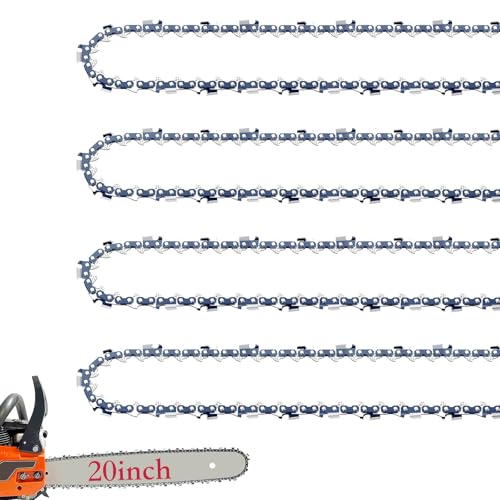
Best for Farm, ranch, and storm cleanup
- Around 50cc engine with a 20-inch bar
- Fuel-efficient engine for longer run time per tank
- Anti-vibration handles for all-day comfort
- Toolless fuel and oil caps
- Fuel-efficient for its power class
- Comfortable for longer sessions
- Strong dealer and parts network
- Dealer-only servicing in many areas
- Heavier than homeowner models
Verdict: A well-balanced farm-and-firewood saw with efficient running and strong support, a smart all-rounder just behind our top pick.
Frequently Asked Questions
What size gas chainsaw is best for cutting firewood?
For regular firewood, a 50-55cc gas chainsaw with an 18-20 inch bar is the sweet spot, giving enough power for hardwood without excess weight. Occasional light firewood can be handled by a 40cc saw, while large-diameter hardwood is better suited to a 60cc-plus model.
Are Stihl or Husqvarna gas chainsaws better?
Both Stihl and Husqvarna make excellent gas chainsaws, and neither is clearly better across the board. The practical difference is often local dealer support and how each saw feels in your hands, so buy the brand with strong service near you and pick the model that matches your workload.
Are cheap gas chainsaws worth buying?
Cheap, no-name gas chainsaws often cost more in the long run because parts, service, and warranty support are hard to find when they fail. Established brands such as Stihl, Husqvarna, and Echo hold their value, cut better, and stay repairable, which is why they dominate recommendations.
What is the easiest gas chainsaw to start?
Gas saws with a decompression valve or a spring-assisted easy-start system, such as Stihl's Easy2Start models, pull over with much less effort. Fresh, correctly mixed fuel matters just as much, because stale or wrongly mixed fuel is the most common reason any gas saw is hard to start.