
Best Bar And Chain Oil
Best Bar And Chain Oil, ranked from aggregated owner ratings and reviews, not first-hand testing. Real pros, cons, and who each pick is best for.

Our Top 3 Picks
Quick Comparison
| Product | Best for | Buy | |
|---|---|---|---|
| Husqvarna XP Bar & Chain Oil | Best Overall | See Amazon | View (paid link) |
| Oregon Bar & Chain Oil | Best Value | See Amazon | View (paid link) |
| Stihl SynthPlus Bar & Chain Oil | Best Premium | See Amazon | View (paid link) |
| Stihl BioPlus Bar & Chain Oil | Editor's Pick | See Amazon | View (paid link) |
| TruFuel 50:1 Pre-Mixed Fuel | Best for Beginners | See Amazon | View (paid link) |
| VP Small Engine Fuels 50:1 Ethanol-Free Fuel | Best Heavy-Duty | See Amazon | View (paid link) |
How to Choose Bar and Chain Oil (and Fuel)
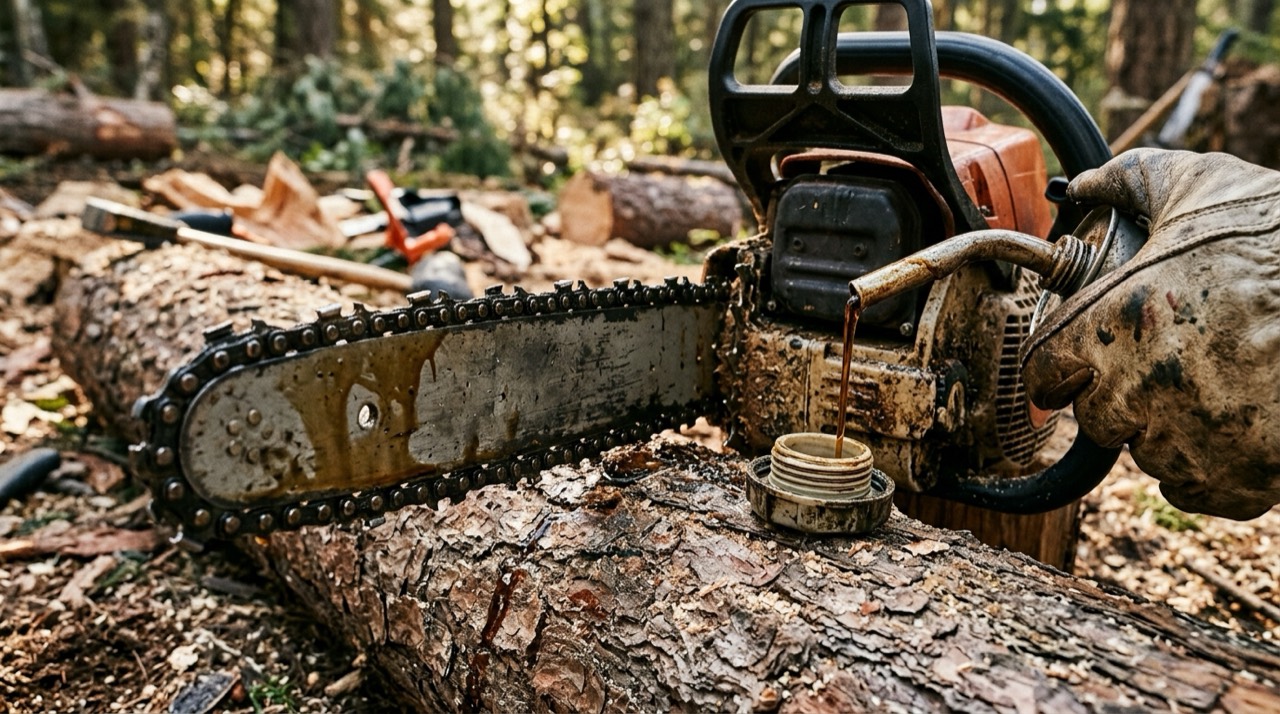
The best bar and chain oil clings to a fast-moving chain, matches the temperature you cut in, and suits where you work. Fuel is the other half of the equation: gas saws need clean, correctly mixed two-stroke petrol, and pre-mixed cans remove the guesswork. This guide covers both so you can stock the saw once.
Does bar oil need a tackifier?
Yes — a tackifier is the single most important ingredient. Purpose-made bar and chain oil contains a stringy tack additive that resists the centrifugal force trying to sling it off the chain, keeping a lubricating film on the bar rails and around the sprocket. Cheap oils without enough tack throw off, run through faster, and leave the bar dry, so always choose oil sold specifically for chainsaws over generic lubricant.
Which bar-oil viscosity suits your climate?
Bar oil is graded by viscosity, roughly matching engine-oil weights. Summer grades sit near SAE 30 and stay tacky in heat; winter grades thin to about SAE 10 so the pump can still move them below freezing. All-season and synthetic oils span a wider range. The table compares the recommended oils and fuels by type, cold-weather ability, and the buyer each suits:
| Product | Type | Cold-weather | Best for |
|---|---|---|---|
| Husqvarna XP Bar & Chain Oil | All-season petroleum | Good | Everyday all-round use |
| Oregon Bar & Chain Oil | Multi-viscosity petroleum | Good | Value and availability |
| Stihl SynthPlus | Synthetic blend | Excellent | Cold-climate cutting |
| Stihl BioPlus | Biodegradable vegetable | Moderate | Orchards and near water |
| TruFuel 50:1 | Pre-mixed ethanol-free fuel | n/a | Occasional users |
| VP Small Engine Fuels 50:1 | Pre-mixed ethanol-free fuel | n/a | Reliable stored fuel |
Petroleum or biodegradable bar oil?
Choose petroleum bar oil for the lowest price and the best cold-weather flow, and biodegradable vegetable-based oil where the sawdust and oil mist land on soil, gardens, or water. Bio oils such as Stihl BioPlus break down far faster than mineral oil, which matters for orchard, park, and streamside work; the trade-offs are a higher price and a shorter shelf life once opened. For general firewood cutting, a standard petroleum oil is fine.
Loose mix or pre-mixed canned fuel?
Decide between mixing your own fuel and buying it ready-made. Mixing your own from fresh ethanol-free petrol and a good two-stroke oil is cheapest per litre and best if you cut often. Canned pre-mixed fuel like TruFuel and VP Small Engine Fuels costs more but is ethanol-free, mixed to a precise 50:1, and stays stable for years — ideal for a saw that sits between occasional jobs, where stale pump fuel would otherwise gum the carburettor. Many owners mix their own in season and keep a can of pre-mix for winter and standby.
How much bar oil will you actually use?
A chainsaw uses bar oil at roughly the same rate it burns fuel, so a saw with matched tanks empties both together — plan on refilling oil every time you refuel. That rule of thumb is the key to buying the right quantity: an occasional user gets through very little and a single quart lasts a season, while a firewood cutter running the saw for hours goes through oil by the gallon and should buy the larger jug for a lower cost per litre.
Because bar oil is inexpensive, the cost of using plenty is trivial next to the cost of running short. A single dry cut can blue the bar rails and ruin a chain, so there is no economy in stretching oil to save a few cents. Buy enough that you are never tempted to cut with a near-empty tank, and set the oiler generously for long bars and dry hardwood. Keeping a spare, sealed jug on the shelf next to the saw means a refill is always to hand, which is the whole point of matching your oil supply to your workload rather than your budget.
Does a more expensive bar oil cut faster?
No — a premium bar oil does not make a saw cut faster; it protects better in specific conditions. The chain speed and sharpness do the cutting, and any proper tacky bar oil at the right viscosity keeps the bar and chain lubricated for general work. What you pay more for is cold-weather flow, lower misting, or a biodegradable base, not raw cutting performance.
That means the honest way to choose is by condition, not price. A standard petroleum oil like Husqvarna XP or Oregon (paid link) is plenty for warm-weather firewood cutting. A synthetic blend such as Stihl SynthPlus earns its price only when you cut in the cold and need the oiler to keep flowing, or when you want less oil mist in the air. A biodegradable oil is worth the premium purely for environmentally sensitive sites. Spending up in the wrong condition buys nothing a keen, well-oiled chain does not already deliver.
Which oil and fuel match your saw and workload?
Match the pair to the way you cut, and you will rarely buy the wrong thing. The right combination depends far more on frequency and climate than on the badge on your saw, since bar oil and fuel are not brand-locked. The common matchups are set out below:
- Weekend homeowner, a few cuts a year: all-season petroleum bar oil plus a can of pre-mixed 50:1 fuel, so nothing goes stale between jobs.
- Regular firewood cutter: a gallon of all-season or petroleum bar oil and self-mixed fuel from fresh ethanol-free petrol for the best cost per litre.
- Cold-climate or winter cutter: a synthetic or winter-grade bar oil that flows below freezing, kept somewhere warm before use.
- Orchard, park, or streamside work: a biodegradable bar oil so the mist that settles on soil and produce breaks down.
- Standby or seldom-used saw: pre-mixed canned fuel every time, because it will not gum the carburettor the way month-old pump petrol does.
How should you store bar oil and fuel to protect your purchase?
Store bar oil sealed and upright in a cool, shaded place, and keep petrol and mixed fuel in approved, labelled containers well away from ignition sources. Cold thickens oil, so bring winter oil somewhere warmer before pouring; heat and sunlight degrade both oil and fuel over time. Good storage is what makes the money you spend on quality oil and clean fuel actually reach the saw in usable condition.
Do you need more oil for a long bar or milling?
Yes — a longer guide bar and any milling work demand a higher oil flow, because there is more bar surface and chain to keep lubricated and more heat to carry away. If your saw has an adjustable oiler, turn it up when you fit a long bar or cut dense hardwood, and check that the thrown oil line reaches right to the bar nose. A bar that runs dry at the tip wears fastest there, since the nose sprocket and the wrap of chain around it work hardest.
Milling in particular runs the saw flat out through long, continuous cuts, so it drinks both fuel and oil quickly and generates serious heat; some millers add an auxiliary oiler or simply refill more often and set the flow to maximum. Whatever the setup, keep the tank topped up and the oiler proven, since a long bar starved of oil ruins an expensive bar and chain fast. The chainsaw milling guide covers the wider demands of that job.
What to avoid
Skip a few false economies. Used motor oil is not a bar-oil substitute — it lacks tack, sheds heavy metals into your yard, and is illegal to dispose of that way in many areas. Fresh motor oil is little better, since without a tackifier it slings off a fast chain within seconds and runs through the tank quickly. Avoid petrol older than about 30 days unless it is stabilised, and never store fuel in unmarked drink bottles. Buying the correct oil and clean fuel costs little next to a new bar, chain, or carburettor rebuild.
Bar oil is general lubrication guidance; always follow your saw manual's oil and fuel specification, and handle petrol with the care a flammable liquid demands.
Full Ranking, Reviewed

Best for Homeowners and pros who want one reliable oil for year-round cutting
- All-season petroleum bar oil with a high-tack additive to resist sling-off
- Formulated to flow through automatic oilers across a wide temperature range
- Reduces friction and heat on the bar rails, chain, and drive sprocket
- Sold in quart and gallon sizes to suit homeowners and heavy users
- Strong tack keeps the chain lubricated at full chain speed
- Works year-round in most climates
- Widely available and fairly priced
- Petroleum base is not biodegradable
- Thick summer flow can be sluggish in a hard frost
Verdict: Based on published specs and owner feedback, the best-balanced everyday bar oil — tacky, all-season, and easy to find.
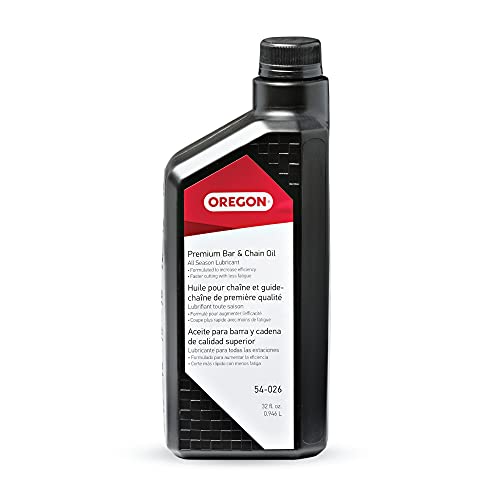
Best for Budget-minded owners cutting firewood in mild to moderate conditions
- Multi-viscosity petroleum oil with Oregon's tack additive to cut sling-off
- Designed to lubricate bar, chain, and sprocket on any brand of saw
- Flows in a usable range of warm and cool temperatures
- Commonly stocked in gallon jugs for a low cost per litre
- Low price per litre for regular firewood cutting
- Universal fit for any chainsaw brand
- Readily available at most tool retailers
- Not suited to hard-freeze winter use without a winter grade
- Petroleum base, not biodegradable
Verdict: A dependable, low-cost bar oil that covers most homeowners' needs without fuss.

Best for Users cutting in winter or cold regions who want dependable low-temp flow
- Synthetic-blend bar oil built for low-temperature flow and adhesion
- Maintains tack and lubrication in cold-weather cutting
- Low-misting formula reduces oil thrown into the air
- Matched to Stihl saws but compatible with other brands
- Excellent cold-weather flow through the oiler
- Strong adhesion with reduced misting
- Backed by Stihl's fuel-and-lubricant range
- Priced above standard petroleum oils
- Sold mainly through Stihl dealers
Verdict: The pick for cold-climate cutters who need reliable oiling when temperatures drop.
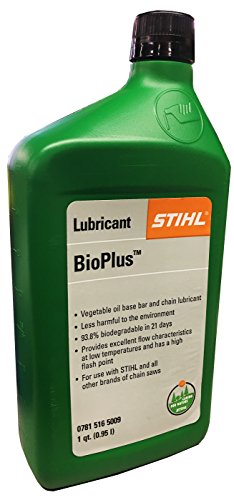
Best for Arborists and gardeners cutting near plants, produce, or waterways
- Vegetable-oil-based bar lubricant that biodegrades quickly if spilled
- Rapidly broken down by soil micro-organisms, unlike mineral oil
- Good adhesion and lubrication for general cutting
- Suited to work over gardens, orchards, parks, and water
- Biodegradable base for environmentally sensitive sites
- Low odour and clean-running
- Good tack for a vegetable-based oil
- Shorter shelf life once opened than mineral oil
- Costs more than standard petroleum oil
Verdict: The responsible choice where oil mist lands on soil or water, with real lubrication to match.

Best for Occasional users and standby saws that sit for months between jobs
- Ready-to-use ethanol-free fuel pre-mixed with synthetic two-stroke oil at 50:1
- No measuring or mixing — pour straight into a 50:1 saw
- Stable for years unopened, resisting the gumming stale petrol causes
- Includes stabiliser to protect the fuel system during storage
- Removes all mixing guesswork for occasional users
- Ethanol-free for cleaner carburettors and easy starts
- Long shelf life for seldom-used saws
- Far more expensive per litre than mixing your own
- Only suits saws specified for a 50:1 ratio
Verdict: The simplest way to fuel a saw you use a few times a year without stale-fuel headaches.

Best for Owners of multiple two-stroke tools who value guaranteed clean, stored fuel
- Pre-mixed 50:1 ethanol-free fuel with full-synthetic two-stroke oil
- High-octane, consistent blend for reliable two-stroke performance
- Long storage stability for equipment used seasonally
- Available in cans sized for a season of standby fuel
- Ethanol-free with a precise, repeatable mix
- Strong stored-fuel stability
- Trusted by many two-stroke equipment owners
- Premium price versus self-mixed fuel
- Match the ratio to your saw before use
Verdict: A high-quality canned fuel for owners who want dependable, ready-mixed two-stroke petrol on the shelf.
Frequently Asked Questions
Can I use bar and chain oil that isn't the same brand as my saw?
Yes. Bar and chain oil is not brand-specific — any reputable chainsaw bar oil of the right viscosity will lubricate a Stihl, Husqvarna, Echo, or other saw. Match the oil to the season (summer or winter grade) rather than to the saw's badge.
What can I use if I run out of bar oil?
In a genuine emergency you can briefly run a vegetable-based oil such as canola to finish a cut, but it lacks tack, throws off fast, and can gum the oiler. It is a stopgap only — never a substitute for purpose-made bar oil, and never used motor oil, which pollutes and sheds contaminants.
How do I know my chainsaw's oiler is working?
Rev the saw with the bar pointed at a light surface like a stump or cardboard, a few inches away. A working automatic oiler flicks a thin line of oil onto the surface. No oil line means a blocked oiler, empty tank, or clogged bar groove — stop and clear it before cutting to avoid overheating the chain and bar.
Do battery and electric chainsaws need bar oil?
Yes. Every chainsaw with a moving chain — battery, corded electric, or gas — needs bar and chain oil to lubricate the bar and chain. Only the fuel differs: cordless and electric saws skip the petrol mix entirely, but their oil tank still must be kept topped up.