
Best Oil For 2 Stroke Engine
Best Oil For 2 Stroke Engine, ranked from aggregated owner ratings and reviews, not first-hand testing. Real pros, cons, and who each pick is best for.

Our Top 3 Picks
Quick Comparison
| Product | Best for | Buy | |
|---|---|---|---|
| Husqvarna XP Bar & Chain Oil | Best Overall | See Amazon | View (paid link) |
| Oregon Bar & Chain Oil | Best Value | See Amazon | View (paid link) |
| Stihl SynthPlus Bar & Chain Oil | Best Premium | See Amazon | View (paid link) |
| Stihl BioPlus Bar & Chain Oil | Editor's Pick | See Amazon | View (paid link) |
| TruFuel 50:1 Pre-Mixed Fuel | Best for Beginners | See Amazon | View (paid link) |
| VP Small Engine Fuels 50:1 Ethanol-Free Fuel | Best Heavy-Duty | See Amazon | View (paid link) |
How to Choose 2-Stroke Oil for a Chainsaw
The best two-stroke oil burns cleanly, carries the right industry rating for air-cooled engines, and mixes reliably at your saw's ratio. In a two-stroke chainsaw the oil is blended into the petrol and burned with it, so it has to lubricate the crank and piston and then combust with minimal smoke and deposits. This guide explains the ratings, oil types, and mixing choices behind the picks.
Which two-stroke oil rating should you look for?
Buy oil carrying JASO FD or ISO-L-EGD certification. These are the highest cleanliness grades for air-cooled two-stroke engines, testing detergency, low smoke, and deposit control — exactly what a hard-working chainsaw needs. Lower JASO FB or FC grades exist, but modern handheld saws run cleaner and last longer on FD-rated oil. The table compares the recommended oils by base type, rating, and buyer:
| Oil | Base type | Rating class | Best for |
|---|---|---|---|
| Husqvarna XP+ | Semi-synthetic | JASO FD | All-round chainsaw use |
| Echo Power Blend X | Synthetic blend | ISO-L-EGD | Value with a warranty tie-in |
| Stihl HP Ultra | Full synthetic | JASO FD | Lowest smoke and deposits |
| Amsoil Saber Professional | Full synthetic | ISO-L-EGD | Flexible mix ratios |
| Stihl HP | Mineral | JASO FB/FD | Simple pre-measured dosing |
| Lucas Semi-Synthetic 2-Cycle | Semi-synthetic | ISO-L-EGD | Widely available value |
What do the JASO and ISO ratings actually mean?
JASO and ISO ratings are independent cleanliness standards that tell you an oil was tested for the qualities an air-cooled two-stroke engine needs, so you are not relying on the marketing on the bottle. JASO is the Japanese Automotive Standards Organization scale, and ISO-L-EGD is the equivalent international grade; both measure how cleanly an oil burns and how well it protects.
Reading the label is simpler once you know what each grade covers, as summarised below:
- JASO FB and FC are older, lower grades that permit more smoke and deposits; fine for very light use but bettered by modern oils.
- JASO FD is the current high grade, adding a tougher detergency test so the oil keeps the piston, ring, and exhaust port cleaner.
- ISO-L-EGD is broadly comparable to JASO FD and is the grade many premium synthetics quote.
- "TC" or "TCW" markings signal an oil made for water-cooled outboard engines — the wrong type for an air-cooled saw.
The practical takeaway is to look for JASO FD or ISO-L-EGD and ignore vague claims like "for all two-stroke engines" that carry no test grade. An FD-rated oil in a saw that runs hot and hard, as covered in the gas chainsaw guide, is what keeps the spark plug and exhaust from carboning up.
Synthetic, semi-synthetic, or mineral?
Match the oil base to how hard and how often you cut. Full-synthetic oils burn cleanest, leave the fewest deposits, and smoke least, which suits pros and anyone running a saw hard for hours. Semi-synthetic (part-synthetic) oils balance clean running against cost and are the sweet spot for most owners. Mineral oils are the cheapest and fine for light use, but they smoke more and leave more carbon over time. Whichever you pick, stay with a single quality oil rather than switching brands each fill.
Does the mix ratio depend on the oil?
Yes — always follow the ratio your saw manufacturer specifies, then confirm the oil supports it. Most modern Stihl and Husqvarna saws are specified at 50:1 when using the maker's own two-stroke oil, as covered in the gas chainsaw guide; some older or off-brand saws call for 40:1 or 32:1. A few premium oils, such as Amsoil Saber, are formulated to lubricate across a wide range of ratios, but the safe rule is the saw manual first, the oil label second. When the two disagree, follow the saw maker's ratio.
Does more oil in the mix protect the engine better?
No — adding more oil than the saw specifies does not add protection; it causes problems. A two-stroke engine is designed around a specific fuel-to-oil ratio, and the carburettor is jetted for it. Pour in extra oil and you actually lean out the fuel portion of the mix, which can raise combustion temperature, while the surplus oil fouls the plug, smokes heavily, and cakes carbon on the exhaust port.
The honest picture of mix errors runs in both directions. Too little oil — or straight petrol — starves the crank and piston and can seize the engine within minutes, the more dangerous mistake. Too much oil rarely destroys an engine quickly, but persistent over-oiling gums the plug, drops power, and clogs the muffler and spark arrestor over time. Neither "erring rich for safety" nor stretching the oil to save money helps; the ratio the manufacturer set is the one that both lubricates and burns clean. Mixing precisely, with the right oil, is the cheap habit that keeps a saw and every other two-stroke tool starting easily.
Pre-measured bottles or bulk oil?
Choose pre-measured single-dose bottles for convenience and bulk bottles for value. Small bottles sized to make one or two-and-a-half gallons (or one to five litres) of mix remove measuring errors and travel well in a kit — Husqvarna, Stihl, and Echo (paid link) all sell them. Bulk bottles cost far less per litre and suit anyone running several two-stroke tools, but you will need an accurate measuring cup. Many owners keep both: bulk oil at home, a pre-measured bottle in the truck.
Which two-stroke oil matches your saw and use?
Match the oil to your workload and equipment rather than defaulting to the priciest bottle. All of these oils lubricate a saw properly; the differences show up in smoke, deposits, convenience, and any warranty tie-in. The common matchups are set out below:
- Everyday homeowner saw: a semi-synthetic FD-rated oil such as Husqvarna XP+ balances clean running against cost for most owners.
- Pro or heavy daily cutting: a full synthetic like Stihl HP Ultra smokes least and keeps the engine cleanest under sustained load.
- A shed full of two-stroke tools: a flexible full synthetic such as Amsoil Saber, or a widely stocked blend like Lucas, lets one oil serve the saw, string trimmer, and backpack blower.
- Echo equipment under warranty: Echo Power Blend X, since using the maker's oil can support the extended warranty terms.
- First-time or occasional mixer: pre-measured Stihl HP bottles that dose a tank without a measuring cup.
How long do two-stroke oil and mixed fuel last?
Two-stroke oil in the bottle lasts for years, but once mixed into petrol the fuel is only good for about 30 days — the oil is not what goes off, the ethanol petrol is. Sealed, stored cool, an unopened bottle of two-stroke oil keeps its properties for several seasons, so buying a larger bottle for a busy year is no gamble.
Mixed fuel is the perishable part. Ethanol pump petrol absorbs moisture and starts to degrade within a month, which is why you should mix only what you will burn soon and add a stabiliser to anything held longer. Canned pre-mixed fuel sidesteps the problem because it is ethanol-free and stays stable for years unopened. For a saw that sits between jobs, that stability is worth the higher price, and it pairs with the storage discipline covered in the chainsaw maintenance guide.
Does two-stroke oil affect starting and smoke?
A clean-burning, correctly mixed oil keeps the spark plug and exhaust port free of carbon, which is what keeps a saw starting easily season after season. Too much oil — a richer ratio like 32:1 in a 50:1 saw — causes smoke, plug fouling, and power loss; too little risks a seized piston. Mixing to spec with an FD-rated oil, using fresh ethanol-free fuel, and stabilising anything stored are the habits that keep a two-stroke saw, string trimmer, or backpack blower reliable.
Two-stroke oil guidance is general; follow your saw's manual for the exact ratio and handle petrol as the flammable liquid it is.
Full Ranking, Reviewed

Best for Homeowners and pros who want one reliable oil for year-round cutting
- All-season petroleum bar oil with a high-tack additive to resist sling-off
- Formulated to flow through automatic oilers across a wide temperature range
- Reduces friction and heat on the bar rails, chain, and drive sprocket
- Sold in quart and gallon sizes to suit homeowners and heavy users
- Strong tack keeps the chain lubricated at full chain speed
- Works year-round in most climates
- Widely available and fairly priced
- Petroleum base is not biodegradable
- Thick summer flow can be sluggish in a hard frost
Verdict: Based on published specs and owner feedback, the best-balanced everyday bar oil — tacky, all-season, and easy to find.
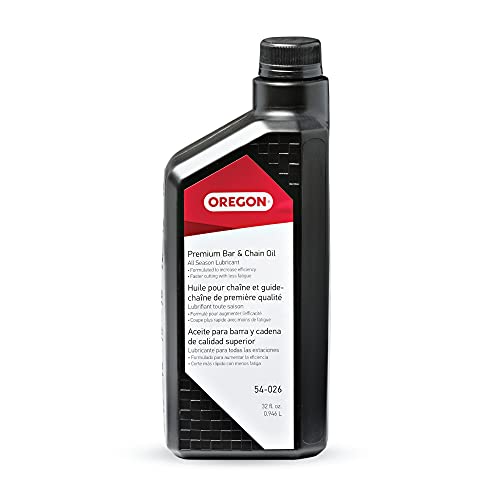
Best for Budget-minded owners cutting firewood in mild to moderate conditions
- Multi-viscosity petroleum oil with Oregon's tack additive to cut sling-off
- Designed to lubricate bar, chain, and sprocket on any brand of saw
- Flows in a usable range of warm and cool temperatures
- Commonly stocked in gallon jugs for a low cost per litre
- Low price per litre for regular firewood cutting
- Universal fit for any chainsaw brand
- Readily available at most tool retailers
- Not suited to hard-freeze winter use without a winter grade
- Petroleum base, not biodegradable
Verdict: A dependable, low-cost bar oil that covers most homeowners' needs without fuss.

Best for Users cutting in winter or cold regions who want dependable low-temp flow
- Synthetic-blend bar oil built for low-temperature flow and adhesion
- Maintains tack and lubrication in cold-weather cutting
- Low-misting formula reduces oil thrown into the air
- Matched to Stihl saws but compatible with other brands
- Excellent cold-weather flow through the oiler
- Strong adhesion with reduced misting
- Backed by Stihl's fuel-and-lubricant range
- Priced above standard petroleum oils
- Sold mainly through Stihl dealers
Verdict: The pick for cold-climate cutters who need reliable oiling when temperatures drop.
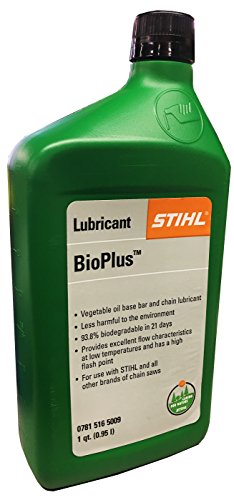
Best for Arborists and gardeners cutting near plants, produce, or waterways
- Vegetable-oil-based bar lubricant that biodegrades quickly if spilled
- Rapidly broken down by soil micro-organisms, unlike mineral oil
- Good adhesion and lubrication for general cutting
- Suited to work over gardens, orchards, parks, and water
- Biodegradable base for environmentally sensitive sites
- Low odour and clean-running
- Good tack for a vegetable-based oil
- Shorter shelf life once opened than mineral oil
- Costs more than standard petroleum oil
Verdict: The responsible choice where oil mist lands on soil or water, with real lubrication to match.

Best for Occasional users and standby saws that sit for months between jobs
- Ready-to-use ethanol-free fuel pre-mixed with synthetic two-stroke oil at 50:1
- No measuring or mixing — pour straight into a 50:1 saw
- Stable for years unopened, resisting the gumming stale petrol causes
- Includes stabiliser to protect the fuel system during storage
- Removes all mixing guesswork for occasional users
- Ethanol-free for cleaner carburettors and easy starts
- Long shelf life for seldom-used saws
- Far more expensive per litre than mixing your own
- Only suits saws specified for a 50:1 ratio
Verdict: The simplest way to fuel a saw you use a few times a year without stale-fuel headaches.

Best for Owners of multiple two-stroke tools who value guaranteed clean, stored fuel
- Pre-mixed 50:1 ethanol-free fuel with full-synthetic two-stroke oil
- High-octane, consistent blend for reliable two-stroke performance
- Long storage stability for equipment used seasonally
- Available in cans sized for a season of standby fuel
- Ethanol-free with a precise, repeatable mix
- Strong stored-fuel stability
- Trusted by many two-stroke equipment owners
- Premium price versus self-mixed fuel
- Match the ratio to your saw before use
Verdict: A high-quality canned fuel for owners who want dependable, ready-mixed two-stroke petrol on the shelf.
Frequently Asked Questions
What is the best 2-stroke oil ratio for a chainsaw?
Follow the ratio in your saw's manual — most modern Stihl and Husqvarna chainsaws specify 50:1 (2.6 oz of oil per US gallon, or 20 ml per litre) when using the maker's own two-stroke oil. Some older or off-brand saws call for 40:1 or 32:1, so check before you mix.
Can I use car or outboard 2-stroke oil in a chainsaw?
Use an oil rated for air-cooled engines (JASO FD or ISO-L-EGD), which covers virtually all handheld two-stroke oils. Avoid oils labelled TCW or TCW-3 — those are made for water-cooled outboard motors and are not formulated for the higher temperatures of an air-cooled chainsaw.
Is synthetic or mineral 2-stroke oil better?
Synthetic two-stroke oil burns cleaner, smokes less, and leaves fewer deposits, which benefits hard-worked saws; mineral oil is cheaper and fine for light, occasional use. Semi-synthetic sits in between and suits most owners. Whichever you choose, keep to a single quality oil rather than switching brands.
How long can I store mixed 2-stroke fuel?
Use self-mixed two-stroke fuel within about 30 days, since ethanol pump petrol degrades and absorbs moisture quickly. Adding a fuel stabiliser extends that to a few months. Canned pre-mixed fuel like TruFuel or VP stays stable for years unopened because it is ethanol-free.