


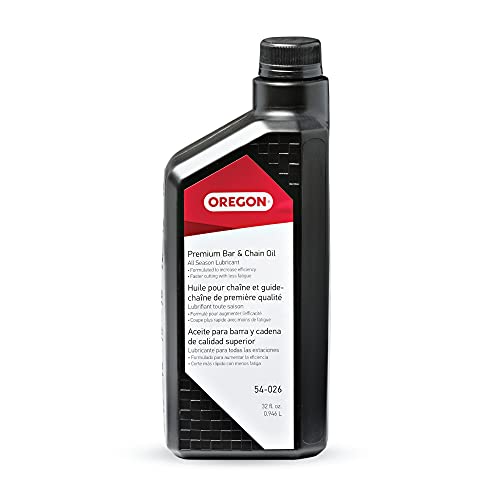

What weight is bar and chain oil?
Bar and chain oil does not come in one fixed "weight"; it is sold in viscosity grades chosen to match the temperature you cut in. Those grades roughly line up with engine-oil numbers, which is why bar oil is often described in SAE terms even though it is a different product from motor oil.
What viscosity is bar and chain oil?
Summer-grade bar oil is roughly an SAE 30 viscosity so it stays thick and tacky in the heat, while winter-grade oil thins to about SAE 10 so it still flows and lubricates below freezing. Many products are sold as all-season or multi-grade blends that cover a wide temperature band, and synthetic bar oils extend that range further at the cold end.
What does the SAE number actually mean here?
The SAE number is a viscosity rating — a measure of how thick the oil is and how readily it flows at a given temperature. A higher number like SAE 30 is thicker and clings better in heat; a lower number like SAE 10 is thinner and keeps flowing in the cold. Bar oil borrows these numbers as a familiar shorthand, but a true bar oil differs from a same-numbered motor oil because it also carries the tackifier that keeps it on a fast chain. So the SAE figure tells you about flow, while the word "bar" on the label tells you it has the tack a chainsaw needs.
How do you choose the right weight?
Match the oil to your climate and season. Thick summer oil in a hard frost leaves the pump struggling and the bar dry; thin winter oil in high summer slings off and runs through fast. If you only cut in mild conditions, an all-season oil is all you need; if you cut through cold winters, keep a dedicated winter-grade or synthetic bar oil on hand and switch with the seasons.
Should you thin bar oil in cold weather?
No — do not thin bar oil with petrol, solvent, or kerosene to make it flow in the cold. Cutting the oil destroys the tack that keeps it on the chain and creates a thin, flammable lubricant that slings straight off and lubricates poorly. The right answer to cold-weather flow is a proper winter-grade or synthetic bar oil formulated to stay thin enough to pump at low temperature while keeping its tack. Storing the oil somewhere warm before use also helps a cold-thickened oil pour and prime.
Does synthetic bar oil flow better in the cold?
Yes — synthetic bar oil generally flows better than mineral oil at low temperatures, which is its main advantage for winter cutting. A synthetic or synthetic-blend oil is formulated to stay thin enough for the oiler to pump when it is cold while keeping the tack that holds it on the chain, so the bar still gets a proper film on a frosty morning. Mineral summer-grade oil, by contrast, thickens in the cold and can leave the pump struggling and the bar starved. That is why cold-climate cutters often keep a synthetic or dedicated winter grade on hand and switch to it once temperatures drop. Storing any oil somewhere warm before use also helps a cold-thickened oil pour and prime, and it means the first cut of the day is properly lubricated rather than run partly dry. For occasional cutting in mild weather, a standard all-season oil still handles the odd cold snap most homeowners meet, so a separate winter grade earns its place only where hard frosts are routine.
Does the weight have to match your saw?
No — bar-oil viscosity is chosen for the weather, not the saw brand. Any reputable bar and chain oil of the right grade works in a Stihl, Husqvarna, Echo, or other saw. What matters is that the oil is a proper tacky bar oil at a viscosity your oiler can pump in the conditions you work in. A worked example: a homeowner cutting firewood on cold winter mornings should reach for a synthetic or winter-grade oil so the oiler still delivers at start-up, then switch to an all-season or summer grade once the weather warms.
For the leading options across the seasons, see our best bar and chain oil picks, and keep the chain sharp so the oil is not fighting a dull cutter.

