


How heavy should a splitting maul be?
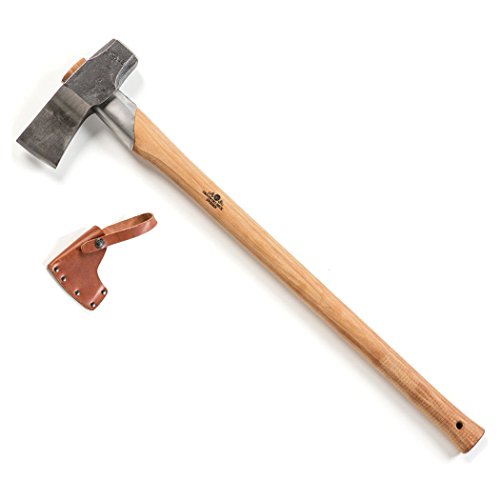
A splitting maul should weigh around 6 pounds for typical home firewood, giving enough force to split seasoned hardwood in one or two strokes while staying accurate over a long session. Reserve 8-pound mauls for big, green, or knotty rounds, and only if you can place that weight on target every swing.
Heavier is not automatically better. A well-aimed 6-pound blow near an existing crack splits more wood than a wild 8-pound swing that lands off-centre, and the lighter head lets you keep going long after a heavy maul would wear you out. The best weight is the heaviest head you can still swing accurately when tired.
Why isn't a heavier maul always better?
A heavier maul is not automatically better because accuracy fades faster than force: a well-aimed 6-pound blow near an existing crack splits more wood than a wild 8-pound swing that lands off-centre, and the lighter head lets you keep going long after a heavy maul has worn you out.
Splitting is about placing force precisely, not maximising it. The extra two pounds of an 8-pound head do help on genuinely large, green, or knotty rounds, but on everyday firewood they mostly cost you speed, stamina, and aim. Most people land more splits per hour with a 6-pound maul or a splitting axe than with the heaviest tool they can lift, simply because they hit the target more often and tire less. The best weight, in the end, is the heaviest head you can still place accurately when you are tired near the end of a session, not the heaviest you can swing once while fresh.
How does head weight match the wood?
Head weight should match your dominant wood type and your own strength. The rough guide is set out below.
| Head weight | Best for |
|---|---|
| 4–6 lb splitting axe | Small, seasoned, straight-grained rounds |
| 6 lb maul | Everyday mixed hardwood firewood |
| 8 lb maul | Large, green, twisted, or knotty rounds |
If your wood is mostly small and seasoned, a lighter splitting axe will out-split a heavy maul through sheer swing speed.
How do your strength, fitness, and joints factor in?
Your own strength, fitness, and joint health matter as much as the wood when choosing head weight. Swinging a maul is a whole-body effort, so a bad back, shoulder, or elbow is a strong reason to drop to a lighter axe or move to a powered splitter rather than muscle an 8-pound head.
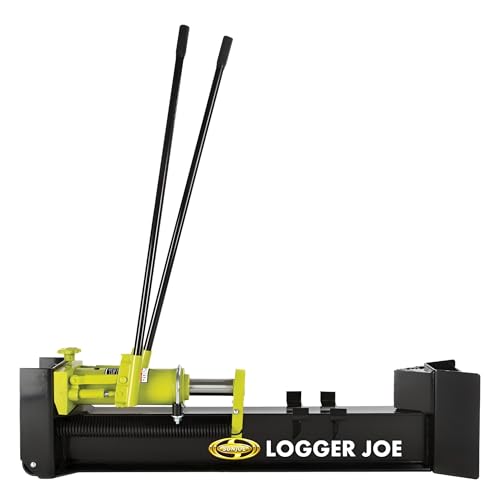
A fit, experienced splitter can place a heavy maul accurately for a full session; many people cannot, and there is no penalty in choosing a 6-pound maul or a 4- to 6-pound splitting axe that they can control. If any joint already gives you trouble, favour the lighter, faster tool, warm up first, and work in short sets. When the wood is consistently heavy and your body is the limit, a manual or kinetic log splitter removes the swing entirely and is the sensible answer rather than a heavier maul.
Does handle length matter as much as weight?
Handle length matters alongside weight, because a longer handle multiplies the same head's force and adds clearance for a missed swing. Most adults suit a 31- to 36-inch handle; taller splitters and heavier mauls favour the longer end. Pair the right weight and length with good technique from the splitting axes and mauls guide, and compare current models in the best splitting axes and mauls roundup.
What weight suits kindling versus heavy hardwood?
Match the extremes to the job: kindling and small softwood need only a light 1.25- to 2.25-pound hatchet, while large, green, twisted hardwood justifies a full 8-pound maul with a wedge-driving poll. Between those ends, a 6-pound maul or 4- to 6-pound splitting axe covers most firewood.
A compact tool like the Estwing Fireside Friend, around 4 pounds and short-handled, is ideal for reducing splits to kindling by the stove but far too small for full rounds. At the other extreme, an 8-pound Council Tool or Fiskars IsoCore maul earns its weight only on the biggest and worst wood, and pays for it in fatigue. For a worked comparison of models across this range, see the best splitting axes and mauls roundup.
How do you decide the right weight for your pile?
Decide by picturing a typical afternoon on your own woodpile. If most of your rounds are seasoned oak or ash under about 12 inches across, a 6-pound maul or a 4- to 6-pound splitting axe will split them in one or two accurate strokes and leave you fresh enough to finish the stack.
If instead your pile is dominated by large, green, or knotty hardwood, picture the same afternoon with a 6-pound tool bouncing off; there, an 8-pound maul and a pair of steel wedges do the work the lighter tool cannot. Someone with a bad shoulder facing that same wood should picture the powered splitter instead. The point of the exercise is to size the tool to the wood you actually burn and the body you actually have, not to the single worst round you might one day meet.