


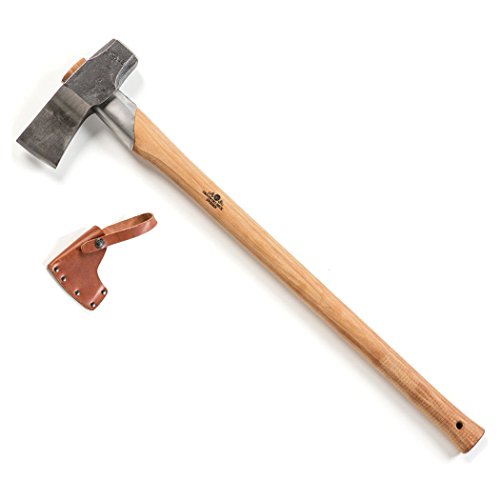


Why do splitting axe and maul handles break?
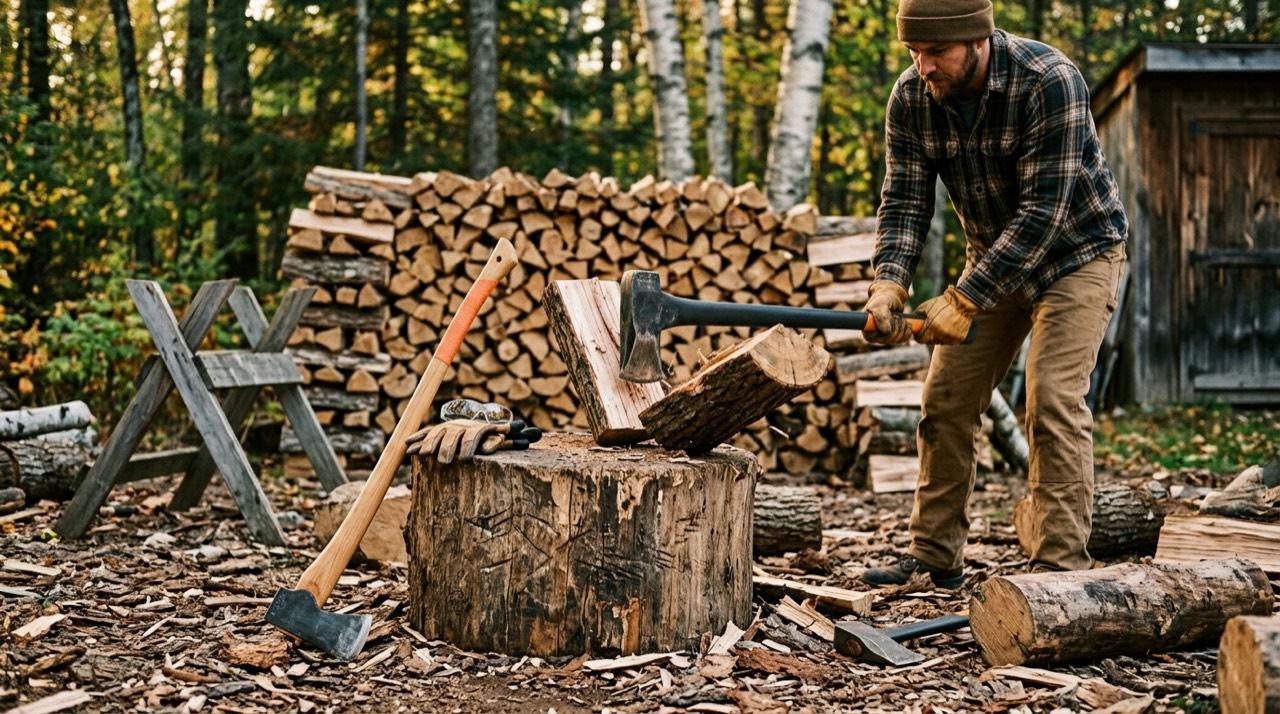
Splitting handles almost always break from overstrike, not from splitting force: the shaft slams into the round on a short or missed swing and fractures at the neck just below the head. Understanding that one failure mode tells you exactly what to prevent.
When you swing slightly short, the round catches the handle instead of the head, and the thin wood just below the eye takes the full impact. Repeated over a session, this crushes and cracks the fibres until the handle fails, often mid-swing. Splitting force itself, transmitted straight down the grain, rarely breaks a sound handle. That is why the fixes are all about accuracy and protection: consistent round height, a low block, honest aim, and stopping before fatigue, plus a guard for the misses that still happen. Composite handles like Fiskars FiberComp tolerate overstrike far better than hickory, which is the main reason they dominate the mass market, though a badly cracked composite handle usually means replacing the whole tool rather than re-hanging it.
How do you protect a splitting tool's handle from overstrike damage?
Protect the handle by aiming so the head, not the shaft, meets the round, and by fitting an overstrike guard on wooden handles. Overstrike, where the handle slams into the round on a missed or short swing, is the single most common way splitting axes and mauls are destroyed.
Most broken wooden handles fail just below the head from repeated overstrikes, not from splitting force. Cutting rounds to a consistent length so the head always lands where you expect, keeping the block low, and stopping before fatigue ruins your aim all reduce overstrikes. A leather or rubber overstrike collar, or a wrap of old fire hose, cushions the impact when you do miss. Composite handles like Fiskars FiberComp are far more overstrike-tolerant, which is why they dominate the mass market; the trade-offs are covered in the splitting axe vs maul comparison.
How do you fit and use an overstrike guard?
Fit an overstrike guard by wrapping or sliding a protective collar of leather, rubber, or old fire hose over the handle just below the head, covering the exact spot that hits the round on a short swing. A guard cushions the misses that even good technique cannot fully eliminate.
The simplest guards are a length of thick leather laced around the neck, a rubber or plastic overstrike sleeve sold for the purpose, or a wrap of old canvas fire hose secured with tape or wire. Fit it snugly so it cannot slide down into the swing, and leave the head fully seated and unobstructed. A guard is worth fitting on any wooden-handled maul or axe you use hard, and especially while you are still building accuracy. It does not license careless swinging, though: it buys back the occasional miss, not a session of them. Fit a guard only to a sound handle, since it cannot rescue one that has already cracked.
Wood or composite handles: how do you care for each?
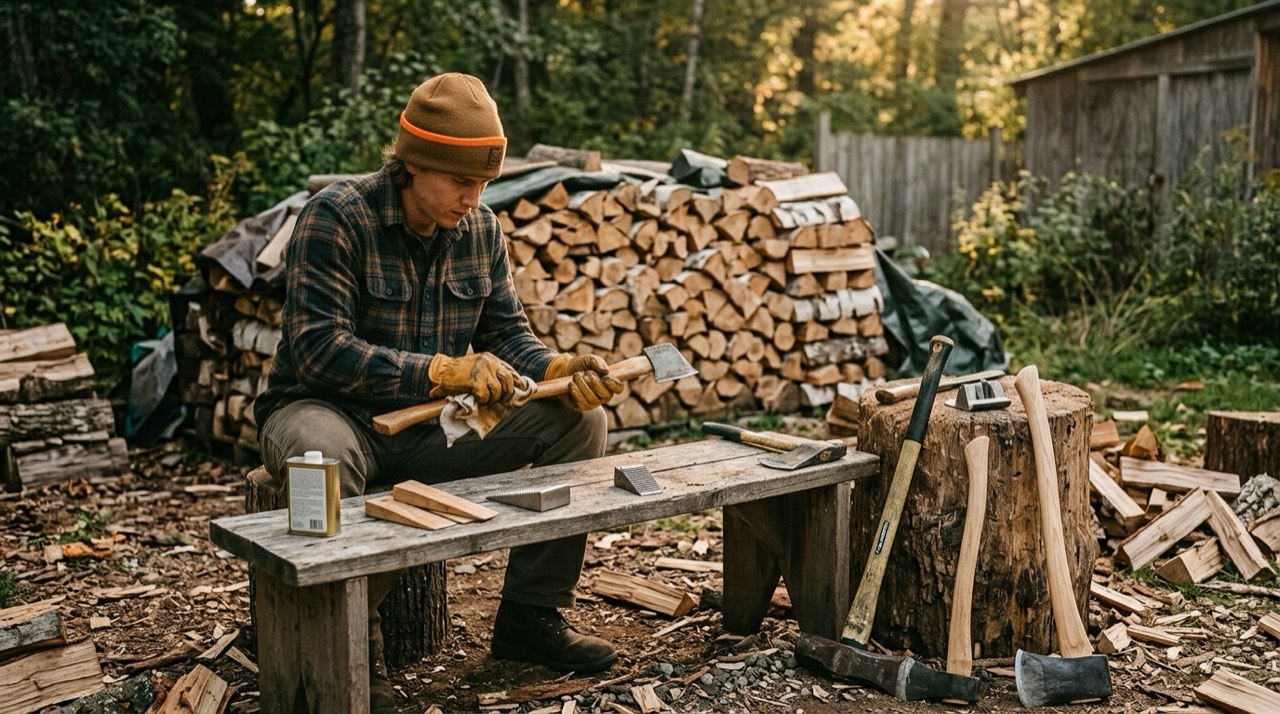
Care for a hickory handle by keeping it clean, lightly oiled, and stored dry; care for a composite handle mainly by inspecting it for cracks, since it needs no feeding. The two materials age very differently and reward different habits.
The maintenance each handle type needs is listed below.
- Hickory: wipe off sap, sand any raised grain smooth, and rub in boiled linseed oil a few times a year to stop it drying and cracking.
- Hickory storage: keep it out of damp and direct sun, both of which loosen the head as the wood swells and shrinks.
- Composite: check the shaft for stress cracks near the head after heavy use, because a cracked composite handle usually means replacing the whole tool.
- Both: store the tool with an edge sheath on, hung or laid flat, never left head-down in soil.
A quick oiling session at the end of the splitting season keeps a hickory handle supple and tight for years. Store the whole tool alongside your other firewood tools somewhere dry.
How do you care for the head and edge, not just the handle?
Care for the steel as well as the wood: keep the edge clean and moderately blunt, wipe the head dry and lightly oiled to prevent rust, and grind back any mushrooming on the poll before chips fly. The head outlasts several handles only if it is maintained.
File the edge back to its factory bevel a few times a season to remove dings, using a coarse file from our sharpening files and tools guide; a maul wants a clean, burr-free, blunt edge, not a keen one. After splitting in the wet, wipe the head dry and rub in a light film of oil so it does not rust in storage. If you drive steel wedges with the poll, inspect it for mushrooming, the spreading lip of metal that eventually throws sharp fragments, and grind it flush the moment it starts. A rusted, dinged, or mushroomed head is both slower and more dangerous than a maintained one.
How do you tighten or replace a loose maul head?
Tighten a slightly loose head first with wooden and steel wedges in the handle's kerf; replace the handle entirely if the eye is worn, the wood is cracked, or wedging no longer holds. A loose head is dangerous because it can fly off mid-swing, so never keep using one.
To re-hang a hickory head, follow these steps.
- Drive out the old handle stub with a punch after removing any metal wedges.
- Fit a new hickory handle to the eye, shaping the tongue with a rasp until it seats fully.
- Saw a kerf in the handle top and drive a wooden wedge into it to spread the wood against the eye.
- Add cross steel wedges to lock the wood in every direction.
- Let the assembly sit, then re-seat the wedges after the first splitting session.
Composite and one-piece forged tools such as the Estwing Fireside Friend cannot be re-hung, which is the trade-off for their durability. If re-hanging is beyond you, a hardware store or the tool's maker can often supply a replacement handle.
When should you retire a handle?
Retire a handle the moment you see cracks running from the eye, deep overstrike gouges, or a head that loosens again soon after wedging. A compromised handle is a safety risk, not a cost saving, because a failure sends a heavy head flying.
Inspect the neck below the head before each session and flex the shaft to listen for the dry creak of a hidden crack. Surface dings and honest wear are fine, but splits, spongy spots, and repeated loosening mean it is time for a new handle or a new tool. Keep the edge itself in good order too, using the files covered in our sharpening files and tools guide, and store everything dry between seasons.
Should you epoxy or tape over a cracked handle?
Do not patch a cracked splitting handle with epoxy, tape, or glue and keep using it, because a filled crack still fails under repeated impact and hides how far the damage has spread. A handle that carries a heavy head at speed is not the place to save a few dollars with a temporary repair.
Reinforcing wrap has one legitimate use: fitting a protective overstrike guard on a sound handle to prevent damage in the first place. Once a crack has started, though, the wood has lost its integrity, and the only safe fixes are a full re-hang with a new hickory handle or replacing the tool. The same logic applies to a mushroomed steel poll on a maul: grind off the spreading mushroom before chips fly, rather than working around it. Treat handle and head care as routine maintenance, not emergency repair, and your splitting tools stay both safe and effective for years.
How do you store splitting tools between seasons?
Store splitting tools clean, dry, and sheathed, hung or laid flat out of damp and direct sun. Poor storage loosens wooden heads and rusts steel, so the end-of-season pack-away is as important as any in-season care.
Do these before the tools go away for the off-season.
- Wipe the head dry and give it a light coat of oil against rust.
- Oil a hickory handle with boiled linseed oil and check the neck for overstrike cracks.
- Fit an edge guard so the bevel cannot be chipped and nobody is cut reaching past it.
- Hang the tool or lay it flat in dry tool storage, never left head-down in soil or leaning in damp.
Damp swells and shrinks a wooden handle until the head works loose, and direct sun dries hickory until it cracks, so a dry, shaded spot matters. Keep the whole kit together with your other firewood tools so nothing is lost or left out to weather.