
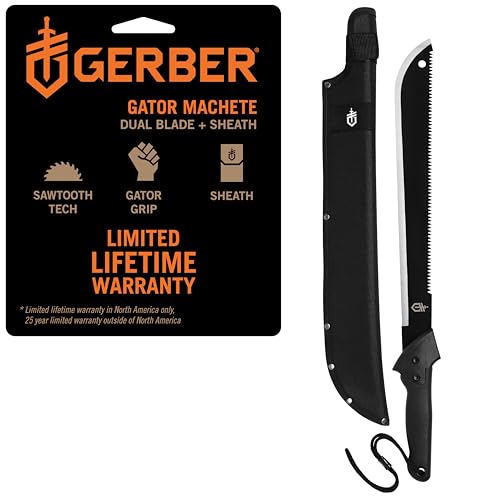

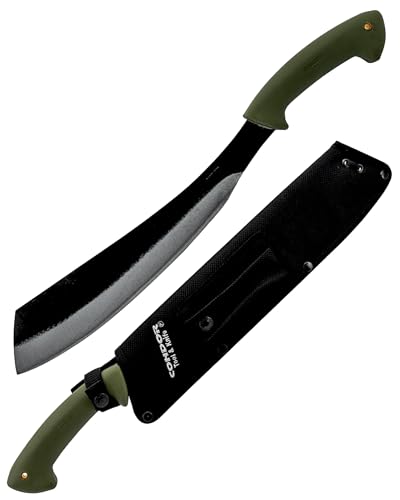
What length machete is best for clearing brush?
An 18-inch blade is the best all-round length for clearing brush, giving enough reach to sweep through grass, vines, and light growth while staying controllable in one hand. It is the length most working and general-purpose machetes are built around for good reason.
Blade length is a trade-off between reach and control. The guidance below matches length to the job.
- 10 to 14 inches — compact and packable, best for tight brush, camping, and clearing inside crowded beds where control matters more than reach.
- 16 to 18 inches — the all-round standard, long enough to sweep vegetation yet short enough to steer safely around plants and your own legs.
- 22 to 28 inches — maximum reach for tall grass, reeds, and light brush in open ground, but demanding room and a disciplined swing arc.
Why does an 18-inch blade suit most people?
An 18-inch blade suits most people because it balances the two things that fight each other in a machete: reach and control. It sweeps enough vegetation per stroke to clear ground quickly, yet stays short enough to steer around obstacles and keep the edge clear of your legs.
Longer blades cover more ground but demand open space and a practiced, disciplined swing to stay safe, which makes them tiring and risky for occasional users. Shorter blades are easy to control but slow over open growth and lack the reach to keep the blade — and its follow-through — away from your body. The 18-inch middle ground is why it is the default length for all-round clearing machetes and the safest starting point for a first blade.
How do weight, balance, and your own reach change the choice?
Weight, balance, and your own size shift the ideal length as much as the vegetation does. A tip-heavy blade chops but tires the wrist; a lighter, evenly balanced blade slices and lasts longer in the hand; and a taller user can safely swing a longer blade than a shorter user can.
A blade that feels lively and controllable to one person feels heavy and unwieldy to another, so handle a machete before you commit where you can. Match the mass to your dominant growth — heavier and tip-forward for woody stems, lighter and even for grass and vines — and match the length to your height and swing room. Over a long session, a blade that is slightly too heavy or too long causes more fatigue and more near-misses than one that is slightly too short.
What if you need to clear very different jobs?
If your jobs range from open acreage to tight garden beds, a single length compromises on both, so consider a two-machete kit. A long blade covers open, low growth fast, while a compact blade handles crowded, close work where control matters most.
Many owners settle on an 18-inch blade as the one machete they reach for, then add either a longer blade for open ground or a compact one for pack carry and tight spaces. A hatchet or camp axe also fills the compact, close-quarters role well.
How do you measure a machete's length?
Machete length usually refers to the blade alone, measured from the handle to the tip, not the overall length including the handle. A machete described as 18 inches has an 18-inch blade and an overall length several inches greater once the grip is counted.
That distinction matters when you compare models, because an overall length can make a blade sound longer than it works in the cut. Check whether a listed figure is blade length or overall length before you judge reach. As a rough guide, add four to six inches of handle to a blade figure to picture the tool's full size, and remember that it is the blade — not the handle — that determines how much vegetation each stroke sweeps. As a worked example, a machete listed at "24 inches" may carry an 18-inch blade on a 6-inch handle, so it clears no more per stroke than any other 18-inch blade despite the larger headline number. When two machetes quote different figures, compare blade length to blade length and ignore the overall measurement. If you cut mixed growth and want just one blade, start at 18 inches of blade and adjust from there once you know your ground. For a full breakdown of styles and steels, see the machete buying guide.

