Wood Shredder Vs Wood Chipper
Wood Shredder Vs Wood Chipper, ranked from aggregated owner ratings and reviews, not first-hand testing. Real pros, cons, and who each pick is best for.

Our Top 3 Picks
Quick Comparison
| Product | Best for | Buy | |
|---|---|---|---|
| Sun Joe CJ603E | Best Overall | See Amazon | View (paid link) |
| WEN 41121 | Best Value | See Amazon | View (paid link) |
| Landworks Mini Electric Wood Chipper | Best Compact | See Amazon | View (paid link) |
| Patriot CSV-3100B Electric Chipper/Shredder | Best Premium | See Amazon | View (paid link) |
| Champion 100137 3-Inch Gas Chipper/Shredder | Best Heavy-Duty | See Amazon | View (paid link) |
| YARDMAX YW7565 Chipper/Shredder | Editor's Pick | See Amazon | View (paid link) |
What is the difference between a wood chipper and a wood shredder?
A wood chipper cuts solid branches into coarse chips using sharp knives on a spinning disc or drum, while a wood shredder grinds soft, leafy material into fine mulch with blunt flails or cutting line. A chipper/shredder combines both jobs in one machine through two separate inlets.Chippers are built around sharp, angled knives that slice through-wood grain, producing the coarse chips used on paths and beds. Shredders use flails, hammers, or monofilament line to beat and tear softer material, giving a fluffier mulch that breaks down fast in compost. The output tells you which happened: firm chips versus shredded fluff. That difference in cutting method is why one machine excels at branches and the other at leaves.
When do you need a chipper, a shredder, or both?
Choose a chipper for branches, a shredder for leaves and soft prunings, and a chipper/shredder if you generate both. Most homeowners produce a mix through the year, which is why combo machines are the common answer.If your yard waste is mostly autumn leaves and hedge clippings, a dedicated shredder — or even a lawn sweeper or vacuum that mulches as it collects — does the job cheaply and quietly. If you clear fallen limbs and prunings, you need real chipper knives. A combo covers both but compromises slightly on each, so buy focused tools if one task dominates your year.
How do a chipper, shredder, and combo compare?
The three machine types trade off branch capacity, output texture, and price. The table lines them up on the attributes that decide which one belongs in your shed, using published capacities rather than tested figures.| Type | Handles | Output | Typical branch limit |
|---|---|---|---|
| Dedicated chipper | Branches and limbs | Coarse chips | up to 3-4 in |
| Dedicated shredder | Leaves and soft prunings | Fine mulch | Twigs only |
| Chipper/shredder | Both, via two inlets | Chips and mulch | up to ~3 in |
Which type handles leaves best?
Dedicated leaf shredders handle high leaf volume best, because their cutting line or flails pack and reduce leaves at ratios a knife chipper cannot match. A chipper/shredder still shreds leaves, but its shredder chamber is smaller than a purpose-built mulcher's.For heavy fall cleanup, line-based mulchers reduce a full bin of dry leaves to a few handfuls, ideal for compost or bagging. Gather the leaves first with a leaf blower so you feed a steady flow rather than stop-start clumps. A combo machine copes with moderate leaf loads but will clog sooner if you push wet, matted piles through it.
What should you watch for in a combo machine?
Check that a chipper/shredder has two genuinely separate inlets, resharpenable blades, and an easy way to switch between jobs. A combo that shreds poorly or clogs at the changeover is worse than two focused tools.Wet leaves clog every shredder, so feed material dry and in a steady stream. Keep branches within the rated limit, and never force a fork or knot that stalls the rotor. Look, too, for a machine that stores compactly and rolls on pneumatic tyres, because a combo you dread wheeling out gets used less than either dedicated tool. For anything beyond the machine's capacity, cut it to firewood with a chainsaw and finish it with a splitting maul rather than risking a jam or a thrown piece. When one job clearly dominates your year, two focused tools usually beat one compromised machine.
How do chipper knives and shredder flails cut differently?
A chipper cuts with sharp, angled knives that slice across the wood grain, while a shredder uses blunt flails, hammers, or cutting line that beat and tear soft material apart. The cutting method, not just the motor, is what separates the two tools.Knives on a chipper are set at an angle against a fixed anvil, so each pass shaves a firm chip from a branch, the way a plane takes a shaving from a board. That geometry needs a sharp, hard edge and a heavy rotor to carry momentum through knots. Flails and cutting line work the opposite way: they strike leaves, twigs, and soft prunings repeatedly until the material tears into a fluffy mulch, then push it through a screen that sets the size. Because tearing does not need a keen edge, shredders tolerate softer, dirtier material than a chipper's precision knives, which dull quickly on grit. Knowing which mechanism you are buying explains why one machine excels at branches and the other at leaves.
Which is cheaper to buy and run — a chipper, a shredder, or a combo?
A dedicated leaf shredder is usually the cheapest to buy and run, a gas chipper the most expensive, and a chipper/shredder combo sits in the middle. Running cost tracks the cutting parts you replace and whether an engine is involved.Purchase price roughly follows capability, and the rough bands are compared below.
| Type | Buy cost | Running cost | Main consumable |
|---|---|---|---|
| Dedicated leaf shredder | Lowest | Very low | Cutting line |
| Electric chipper/shredder | Middle | Low | Blades, screen |
| Gas chipper/shredder | Highest | Higher | Blades, fuel, oil, filter |
A line-based shredder costs little, and its only real consumable is the monofilament line. An electric combo adds resharpenable blades and a screen but no fuel. A gas combo carries the full small-engine burden — fuel, oil, air filter — on top of blade care. Weigh the running cost against how one-sided your yard waste is: paying for gas capacity you rarely use is money spent on idle capability.
Can one machine replace both, or should you own two?
One chipper/shredder can replace both tools for the mixed waste most yards produce, but two focused tools beat a combo when a single task clearly dominates your year. The combo compromises slightly on each job in order to do both.A worked example makes the trade concrete. A suburban block that drops a few bins of prunings and a heavy fall of leaves is a textbook combo case — one machine, chips and mulch, stored in one corner. By contrast, an owner whose year is almost entirely autumn leaves is better served by a dedicated line mulcher that reduces a bin of leaves to a few handfuls, a job a combo's smaller shredder chamber does more slowly and clogs at sooner. At the other extreme, an acreage owner clearing fallen limbs wants real chipper knives and 3-inch capacity, and can add a cheap shredder later if leaves pile up. Buy the combo for genuine balance; buy focused tools when one job owns your calendar.
How do you match the machine to your yard's waste stream?
Match the machine by auditing what your yard actually produces over a year — the ratio of branches to leaves — then buying for the dominant material. The waste stream, not the brand or the horsepower, points to the right tool.Walk the property across the seasons and weigh the mix, then read it against the options below.
- Mostly leaves and soft clippings: a dedicated shredder or line mulcher, gathered first with a leaf blower.
- Mostly branches and prunings: a chipper with genuine knives sized to your thickest routine limb.
- A real balance of both: a chipper/shredder combo with two separate inlets.
- Occasional heavy limbs beyond the machine: cut and split them instead with a splitting maul for firewood.
Sizing to the dominant material stops you overpaying for capability you seldom use, and a lawn sweeper that mulches as it collects can even remove the need for a shredder on a leaf-light yard.
What maintenance does each type need?
Each type asks for different upkeep: a chipper's knives are resharpened or reversed, a shredder's flails or cutting line are replaced, and any gas engine adds oil, filter, and fuel care. Blade or line condition drives cut quality on all of them.Keep the maintenance realistic before you choose. Chipper knives hold a keen edge only if kept away from grit and resharpened before they tear — the same discipline a chainsaw sharpening routine teaches. Shredder flails are cheap to replace, and cutting line on a leaf mulcher is a consumable you swap like trimmer line. Gas machines layer engine upkeep on top: fresh stabilised fuel, periodic oil, a clean air filter, and off-season storage prep. A worn edge or frayed line shows up immediately as ragged output and frequent clogs, so inspect the cutting parts first whenever performance drops rather than blaming the motor.
Full Ranking, Reviewed

Best for Suburban homeowners clearing branches up to about 1.7 inches
- 15-amp electric motor that starts on a switch with no fuel or pull cord
- Rated for green branches up to roughly 1.7 inches thick
- Reduction ratio published around 16:1 for a compact chip pile
- Wide safety hopper with an included tamper for controlled feeding
- Quiet enough for close-together suburban lots
- No fuel, oil, or off-season winterising to manage
- Light enough for one person to reposition
- Limited to smaller branches than any gas machine
- Needs an outlet or heavy-gauge extension cord within reach
Verdict: For the branch sizes most suburban yards actually produce, the CJ603E covers the job without gas-engine upkeep.

Best for Budget-minded owners with light, occasional pruning waste
- 15-amp motor sized for casual, intermittent chipping
- Rated for branches up to about 1.5 inches
- Onboard collection bag to catch the mulch
- Wheeled base for moving around a small yard
- Among the lower-cost entries from an established tool brand
- Collection bag keeps cleanup simple
- Corded operation with minimal maintenance
- Smaller branch limit than premium electrics
- Motor can bog on dense, dry hardwood
Verdict: A sensible first chipper for occasional light pruning, provided you respect its modest branch limit.

Best for Small yards and tight storage where footprint matters
- Compact electric motor built for small-space storage
- Rated for branches up to about 1.6 inches
- Lightweight frame that rolls easily on wheels
- Instant corded start with no engine to maintain
- Stores in a corner of a small shed or garage
- Simple to move and set up single-handed
- No fuel handling or seasonal prep
- Suited to light, intermittent use rather than volume
- Small hopper slows feeding of leafy debris
Verdict: The right call when storage space, not chipping capacity, is your binding constraint.
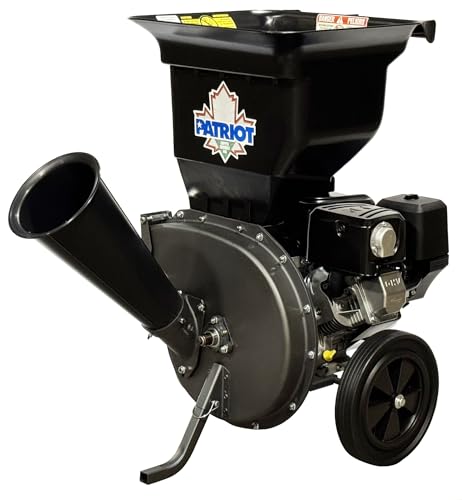
Best for Owners wanting a durable electric that both chips and shreds heavily
- Electric motor driving a separate chipper chute and shredder hopper
- Rated for branches up to about 2.5 inches, high for an electric
- Design aimed at reducing clogs in the shredder chamber
- Replaceable, resharpenable blades on a US-assembled build
- Larger branch capacity than most plug-in chippers
- Handles both chipping and heavy leaf shredding
- Serviceable blades extend the machine's life
- Heavier and pricier than basic electric chippers
- Still tethered to an outlet within cord reach
Verdict: A step up for owners who want electric convenience without giving up branch capacity or build quality.

Best for Large lots and storm cleanup with branches up to 3 inches
- 224cc gas engine for continuous, off-grid runtime
- Chips branches up to about 3 inches in diameter
- Separate shredder hopper for leaves and soft debris
- Reduction ratio published around 20:1
- Handles far bigger limbs than any plug-in model
- Runs anywhere without a cord
- Dual chipper and shredder chambers in one machine
- Requires fuel, oil changes, and off-season storage prep
- Loud enough that hearing protection is mandatory
Verdict: The pick when branch size and cordless range matter more than noise and engine upkeep.

Best for Owners who want gas power in a heavier-built chassis
- 208cc engine driving a dual chipper and shredder system
- Chips branches up to about 3 inches
- Steel construction and larger wheels for rough ground
- Reduction ratio published around 15:1
- Solid frame that stands up to repeated heavy sessions
- Big wheels roll over lawn and uneven ground
- Chips and shreds without swapping tools
- Heavy to move without the wheels on level ground
- Carries the usual gas fuel and maintenance burden
Verdict: A well-built gas alternative for buyers who plan to lean on the machine season after season.
Frequently Asked Questions
Is a wood shredder the same as a wood chipper?
No. A wood chipper cuts solid branches into coarse chips with sharp knives, while a wood shredder grinds soft, leafy material into fine mulch using flails or cutting line. A chipper/shredder combines both jobs through two separate inlets.
Do I need both a chipper and a shredder?
Most homeowners do not. If you clear branches and leaves both, a single chipper/shredder covers the mix. Buy separate tools only when one task dominates your year and you want the best possible result on it.
Which is better for making compost, a chipper or a shredder?
A shredder is better for compost, because its fine, torn mulch breaks down faster than firm chips. Leaf-focused line mulchers reduce a bin of leaves to a few handfuls of compost-ready material a chipper cannot match.
Can a chipper/shredder handle wet leaves?
Not well. Wet, matted leaves clog every shredder mechanism, so let them dry and feed a steady stream. A dedicated leaf mulcher copes better than a combo, but dry material is the rule for any machine.