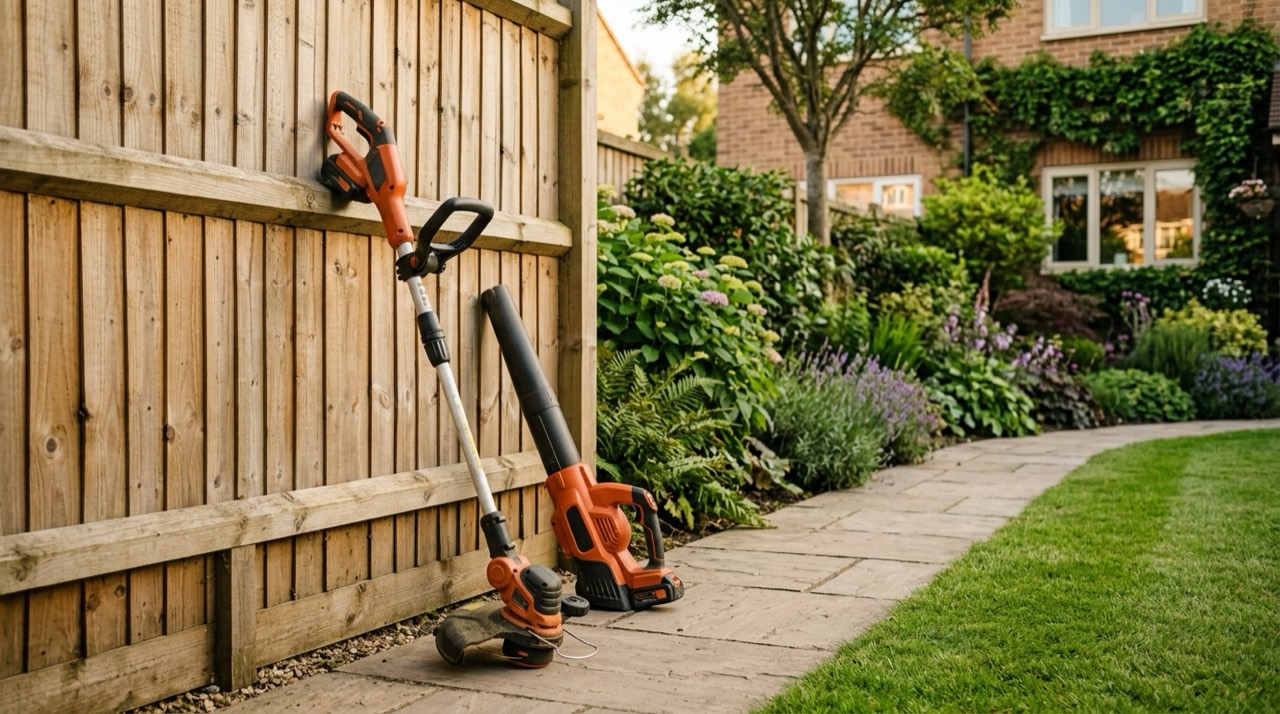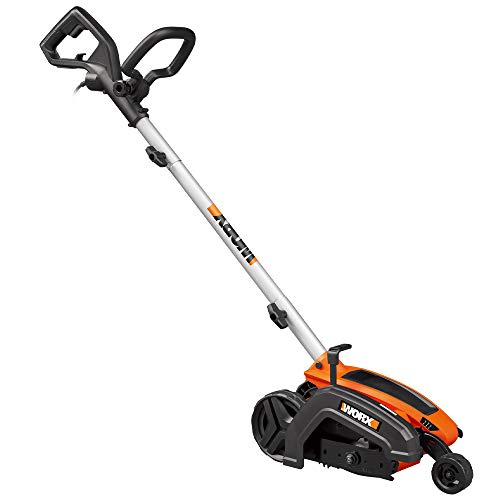

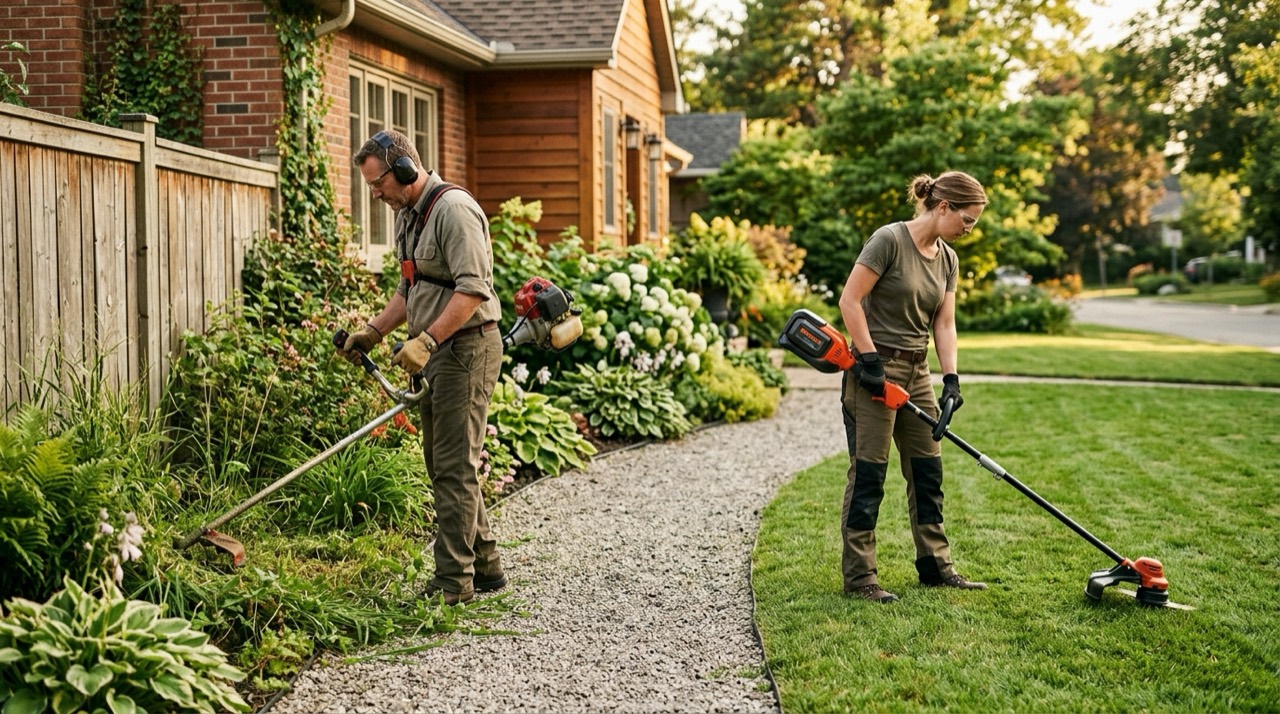




Should you buy a gas or battery brush cutter?
Buy a gas brush cutter for dense brush, saplings, and long clearing sessions away from power, and a battery model for quiet, low-maintenance work on smaller overgrowth near home. Gas leads on sustained torque and unlimited runtime, while battery wins on convenience, noise, and simplicity.The decision comes down to how tough your material is, how much ground you clear at a stretch, and how far you are from a charger. Professionals reclaiming acreage still choose gas clearing saws for their power and refuelling speed, while homeowners with seasonal weeds increasingly pick battery multi-head systems for their ease. This comparison expands the overview in our main brush cutter guide, which covers blades, handles, and safety.
How do gas and battery brush cutters compare on power?
Gas brush cutters still hold the edge on sustained cutting power, because a 30 to 45cc engine keeps torque high through thick woody brush no matter how long you cut. The best battery machines match gas on grass blades and light brush in short bursts, but heavy saplings drain a pack quickly and can slow the motor.Displacement is not a perfect proxy for a battery, where voltage, motor design, and pack size all shape output, but the practical pattern holds: gas out-torques battery on the toughest material. The comparison below lines up the two power sources on the attributes that matter for clearing.
| Attribute | Gas brush cutter | Battery brush cutter |
|---|---|---|
| Cutting power | Highest, sustained on woody brush | Strong in bursts, fades in heavy saplings |
| Runtime | Unlimited with fuel | Limited by battery charge |
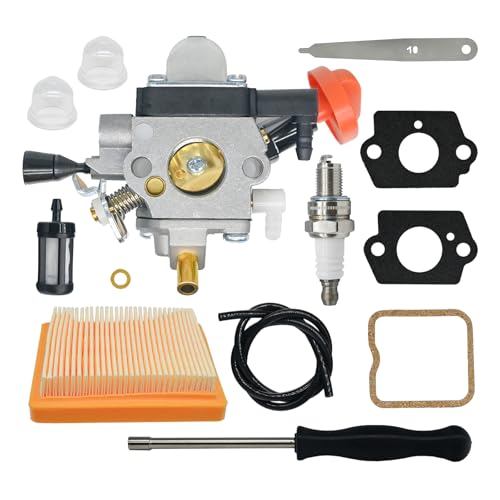
| Maintenance | Fuel mix, filters, spark plug | Minimal beyond the blade |
| Noise and fumes | Loud, emits fumes | Quiet, no fumes |
| Best use | Dense brush, acreage, all-day work | Smaller overgrowth near home |
How long does a battery brush cutter run?
A battery brush cutter typically runs from twenty minutes to over an hour on a charge, depending on the pack's amp-hours, the blade, and how hard the material is. Light grass-blade work stretches runtime, while cutting woody saplings drains a pack far faster as the motor draws more current.Runtime is the battery's real limit, so serious users keep a spare charged pack or two and swap them to work continuously. Higher-capacity packs and efficient brushless motors help, and platforms like EGO and Greenworks share batteries across trimmers, blowers, and mowers so spares do double duty. For a morning of steady clearing, plan on the equivalent of two to four packs, which starts to erode the convenience advantage against a tank of fuel you refill in seconds.
Which needs less maintenance and makes less noise?
Battery brush cutters win clearly on both maintenance and noise: there is no fuel to mix, no air filter or spark plug to service, and no exhaust, and they run far quieter than any gas engine. That makes them friendlier for early starts, suburban gardens, and anyone who dislikes engine upkeep.Gas brush cutters need fresh two-stroke or 4-MIX fuel, clean filters, a healthy spark plug, and correct storage to avoid stale-fuel starting trouble. Battery models mainly need a sharp, sound blade and a charged pack. The quiet also matters for comfort and hearing, though a battery machine still throws debris, so hearing and eye protection stays essential either way. Whichever you run, a comfortable harness does more for all-day comfort than the power source itself.
What does each brush cutter power source cost to own?
Over its life, a gas brush cutter costs more to run than a battery one, because you keep buying mixed fuel, filters, and plugs, while a battery machine’s main ongoing cost is eventually replacing packs. Up front, entry gas units and battery multi-heads are similarly priced, but spare batteries add up fast.The running-cost picture breaks down like this:
- Gas: mixed two-stroke fuel every time you run it, plus air filters, spark plugs, and gearhead grease, all cheap individually but constant.
- Battery: electricity to charge is negligible, but lithium packs are the expensive consumable and lose capacity after a few years of cycles.
- Shared savings: platforms that also power your trimmer, blower, and mower spread the pack cost across several tools, improving the value.
- Both: blades, a harness, and PPE are running costs whichever power source you pick.
For an owner who clears a few times a season, a battery machine’s low fuss and running cost often win; for someone clearing for hours most weeks, gas fuel is cheaper per hour of hard cutting than buying and cycling several large packs. Factor pack replacement into a battery machine’s lifetime cost the same way you would fuel for a gas one.
Which is easier on your health and the environment?
Battery brush cutters are easier on both your health and the local environment: they emit no exhaust, run far quieter, and typically vibrate less than a two-stroke engine. Gas machines produce fumes and more noise and vibration, which matter over long sessions and for anyone cutting near homes.Two health factors stand out with long brush-cutter use. Noise from a gas two-stroke can damage hearing without protection, so hearing and eye protection is essential, though a battery machine still throws debris and needs eye protection too. Vibration is the second factor: prolonged exposure to engine and blade vibration is linked to hand-arm vibration syndrome, so anti-vibration mounts, a good harness, and regular breaks matter on any machine and generally affect battery models less. On emissions, a battery machine produces none at the point of use, which is why many councils and early-start jobs favour them; a well-tuned modern gas engine with X-Torq or 4-MIX technology reduces but does not remove fumes.
How do you store a brush cutter between jobs and over winter?
Store a brush cutter clean, dry, and off the ground, with gas machines emptied of old fuel and battery packs held at a partial charge in a cool place. Correct storage is what prevents hard starting, corrosion, and battery degradation over a long off-season.Follow these storage steps at the end of the season:
- Clean grass, sap, and debris off the blade, guard, and gearhead, and wipe the shaft down.
- For gas machines, either run the tank dry or add a fuel stabiliser, because stale ethanol fuel gums the carburettor and is the top cause of spring starting trouble.
- Remove and inspect the blade, touch up or replace it, and store it protected so the teeth are neither damaged nor a hazard.
- For battery machines, store packs at a partial charge, not full or empty, in a cool dry place away from heat and never in a freezing shed.
- Hang or shelve the machine off the floor in a dry space, following our tool storage guide.
A few minutes of end-of-season care saves a frustrating first start and extends the machine’s life, whichever power source you run.
Which power source suits your property and workload?
Match the power source to how much you clear and how far from power you work: battery suits small blocks, short sessions, and suburban noise limits, while gas suits acreage, dense scrub, and hours of continuous cutting far from a charger. Your workload, not brand loyalty, should decide.The clearest way to choose is by scenario. A homeowner clearing seasonal weeds and light brush around a suburban block is well served by a quiet battery multi-head that starts at a button and needs no fuel. An owner with a half-acre of mixed brush can go either way, leaning battery for convenience or gas for a little more sustained torque. Anyone reclaiming acreage, cutting standing saplings, or working paddocks and trails with no power nearby should choose a gas clearing saw for its unlimited runtime and quick refuelling. If your real work turns out to be grass and edges rather than brush, a string trimmer or a lighter battery tool may be all you need.
When is a gas clearing saw still the right call?
A gas clearing saw is still the right call for dense scrub, standing saplings, remote ground with no power, and any job that runs for hours. A 40cc-plus engine holds torque where a battery fades, and a tank of fuel refills in seconds versus swapping and recharging packs.Land managers, farmers, and pro landscapers keep buying gas for exactly these reasons, pairing a powerful clearing saw with a saw blade and a full double harness. If that describes your ground, start with our best brush cutter picks, which include both gas clearing saws and a battery multi-head. For lighter grass and edge work, though, a string trimmer or a battery machine may be all you need, and both spare you the fuel and noise of a big two-stroke.