



What does self-propelled mean on a walk-behind mower?
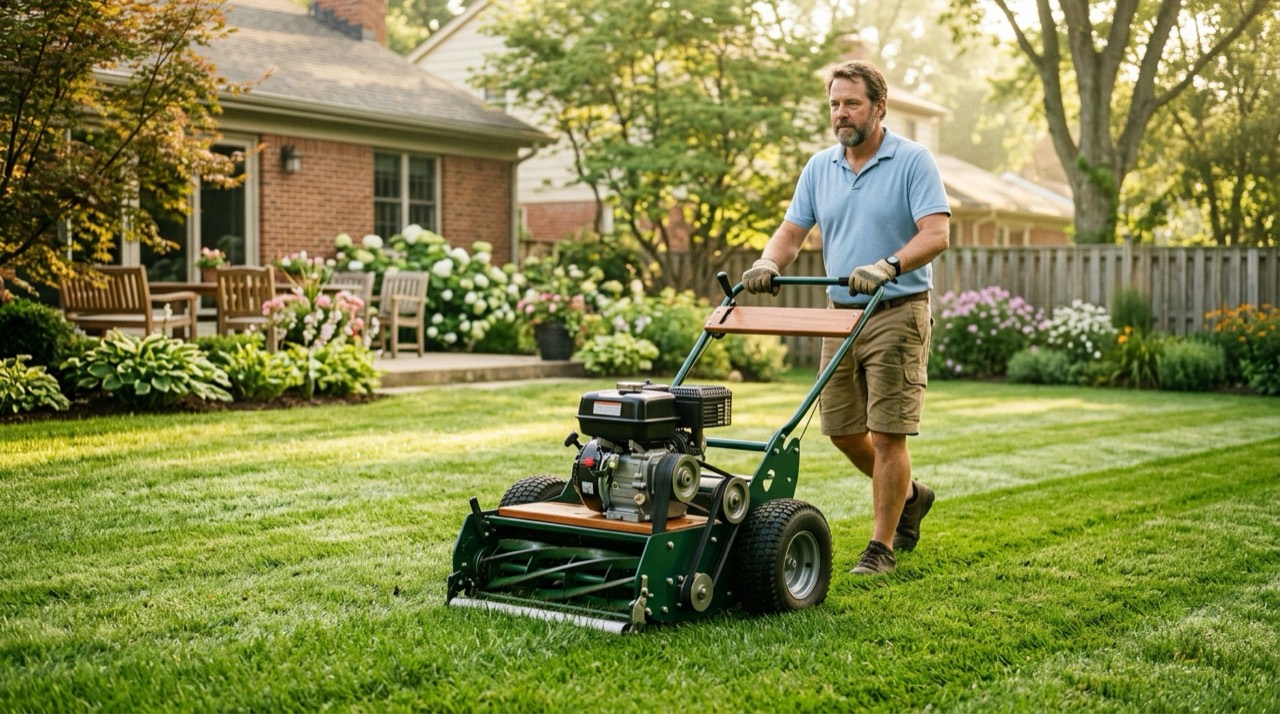
A self-propelled mower drives its own wheels through a transmission linked to the engine or motor, so it pulls itself forward and you only steer. A standard push mower has no drive — you provide all the forward force — which is fine on a small, flat lawn but tiring on anything bigger or hilly.The difference is felt within minutes. On a push mower you shove the full weight of the deck, engine, and any wet clippings across the yard; on a self-propelled model you squeeze a bail or lever and the mower walks itself, letting you guide it with fingertips. Most self-propelled mowers add a speed control so you can match the drive to your walking pace, and releasing the bail stops the drive instantly. This cluster sits alongside our push and reel mower guide and looks only at the powered walk-behind end of the range.
Front-wheel, rear-wheel, or all-wheel drive — which do you need?
Front-wheel drive suits flat lawns with lots of turns, rear-wheel drive suits slopes and bagging, and all-wheel drive suits rough or steep ground. Each layout puts the pulling power in a different place, and that changes how the mower behaves on your particular yard.The reasons are practical:
- Front-wheel drive pulls from the front wheels, so you can tip the mower up onto its rear wheels to pivot and turn without fighting the drive. It shines on flat, obstacle-rich lawns but can lose grip on hills or when the front lifts.
- Rear-wheel drive keeps traction when the mower points uphill or carries a full grass bag that lightens the front, which is why it is the common choice for sloped yards and heavy bagging.
- All-wheel drive powers every wheel for maximum grip on uneven, bumpy, or steep ground, at the cost of more weight and a higher price.
For a typical flat suburban lawn, front-wheel drive is the easiest to maneuver; for hills, choose rear-wheel or all-wheel. Battery models across all three layouts are compared on our battery lawn mowers guide, and gas versions on the gas lawn mowers guide.
Is a self-propelled mower worth it for your yard?
A self-propelled mower is worth it once the lawn is large, sloped, or the mower is heavy — roughly a quarter-acre and up, or any real gradient. On a small, flat lawn, the extra cost, weight, and drive-system maintenance of self-propel add little, and a plain push mower is lighter and simpler.Weigh it honestly against your yard. Self-propelled mowers cost more, weigh more, and add a transmission or drive belt that can eventually need service. In return they turn a tiring chore into a walk, save your back on slopes, and let a heavier, more powerful deck be practical. If your lawn is small and level, put the money toward cut quality or battery capacity instead; if you dread pushing a mower uphill, self-propel is the upgrade that most changes the job. Buyers weighing manual against powered entirely should also read our reel mower versus rotary comparison.
How do you maintain a self-propelled drive?
Keep the drive wheels and gears clean, check the drive cable or belt tension, and clear packed grass from the wheel gears after mowing. The self-propel system is the main thing a push mower does not have, so it is the part that most often needs attention over the years.A few habits keep it healthy:
- Clear the drive wheels of packed grass and debris after each mow, especially around the gear teeth.
- Check cable tension so the drive engages fully when you squeeze the bail and releases cleanly when you let go.
- Inspect the drive belt (on gas models) for glazing or cracking and replace it before it snaps.
- Keep tire tread clean so the wheels grip rather than slip on slopes.
Always stop the engine or motor and remove the battery or disconnect the spark plug before you tip the mower or reach near the wheels and blade. Fuller service routines, including blade and engine care, live on our lawn mower maintenance guide. Treat the deck and blade with the same respect as any powered mower — the cutting blade stays dangerous even when the drive is disengaged.
How fast should a self-propelled mower go?
A self-propelled mower should move no faster than you can walk comfortably while still cutting cleanly, which for most people is around two to three miles per hour. The best models add a variable-speed control so you can match the drive to the terrain and your pace rather than being pulled along.Speed control matters more on real lawns than the top figure suggests. A single-speed drive forces you to keep up whatever the ground, so you jog on the flat and fight the mower on turns; a variable-speed drive lets you slow right down for edges, tight corners, and thick patches, then open up on the open stretch. Squeeze the bail or lever gradually the first few times to learn how the drive engages, and release it fully before you turn or stop. On thick or damp grass, easing the speed also lets the blade keep up, giving a cleaner cut than charging through at full pace and leaving ragged rows behind.
Gas, battery, or corded — which self-propelled drive suits you?
The power source behind the drive should follow your lawn size and tolerance for upkeep: battery for most suburban lawns, gas for large or tough properties, and corded electric only for small yards near an outlet. The self-propel mechanism itself works much the same way across all three.Each has a clear home:
- Battery self-propelled mowers start instantly, run quietly, and share packs with other cordless tools, and they now have enough power for most lawns; they are compared in depth on our battery lawn mowers guide.
- Gas self-propelled mowers give the longest unbroken run time and the most torque for tall, coarse, or overgrown grass, at the cost of noise, fumes, and fuel and oil upkeep, as covered on the gas lawn mowers guide.
- Corded electric self-propelled mowers are rarer and best kept to small lawns within a cord's reach of a socket, where they avoid both fuel and battery cost; see the electric lawn mowers guide.
Whichever you choose, the drive adds weight and a little running cost, so it earns its keep most clearly on bigger or hillier ground.
What goes wrong with self-propelled drives, and how do you fix it?
Most self-propel problems come from packed grass in the drive wheels, a stretched or maladjusted drive cable, or a worn drive belt, and all three are cheap to put right. The usual symptom is a drive that slips, jerks, or stops pulling while the blade still spins.Work through the likely causes in order, with the engine off and the battery or spark-plug lead removed:
- Clear packed grass and debris from the drive wheels and their gear teeth, where build-up is the single most common cause of lost drive.
- Check the drive-cable tension and adjust it so the drive engages fully when you squeeze the bail and releases cleanly when you let go.
- Inspect the drive belt on gas models for glazing, cracking, or slack, and replace it before it snaps.
- Look at the drive wheels themselves for worn gear teeth or a stripped pinion, which can stop the drive even when everything else is sound.
- Confirm the tyres have clean tread, since bald wheels slip on slopes and mimic a drive fault.
If the drive still fails after those checks, the transmission may need a shop, but the everyday cure is simply keeping the wheels clean and the cable correctly tensioned.
Is a self-propelled mower heavier to handle and store?
Yes, a self-propelled mower is heavier than an equivalent push mower, because it carries a transmission, drive wheels, and heavier-duty parts. That extra weight is barely noticeable while the drive is doing the work, but you feel it when lifting the mower, turning at the end of a row, or manoeuvring it into storage.The weight has practical knock-ons. A heavier mower is harder to hang on a wall or lift into a car boot, and pushing it with the drive disengaged, after a battery dies or a cable fails, is real work. Folding handles help it fit a tight shed, and standing it on end where the design allows saves floor space. For a small, flat lawn the weight simply is not worth it, and a lighter push mower or a manual reel is easier to live with. The heft only pays off once a slope or a larger yard makes the self-propel drive genuinely useful day to day.
Self-propelled mower or manual reel — which for your yard?
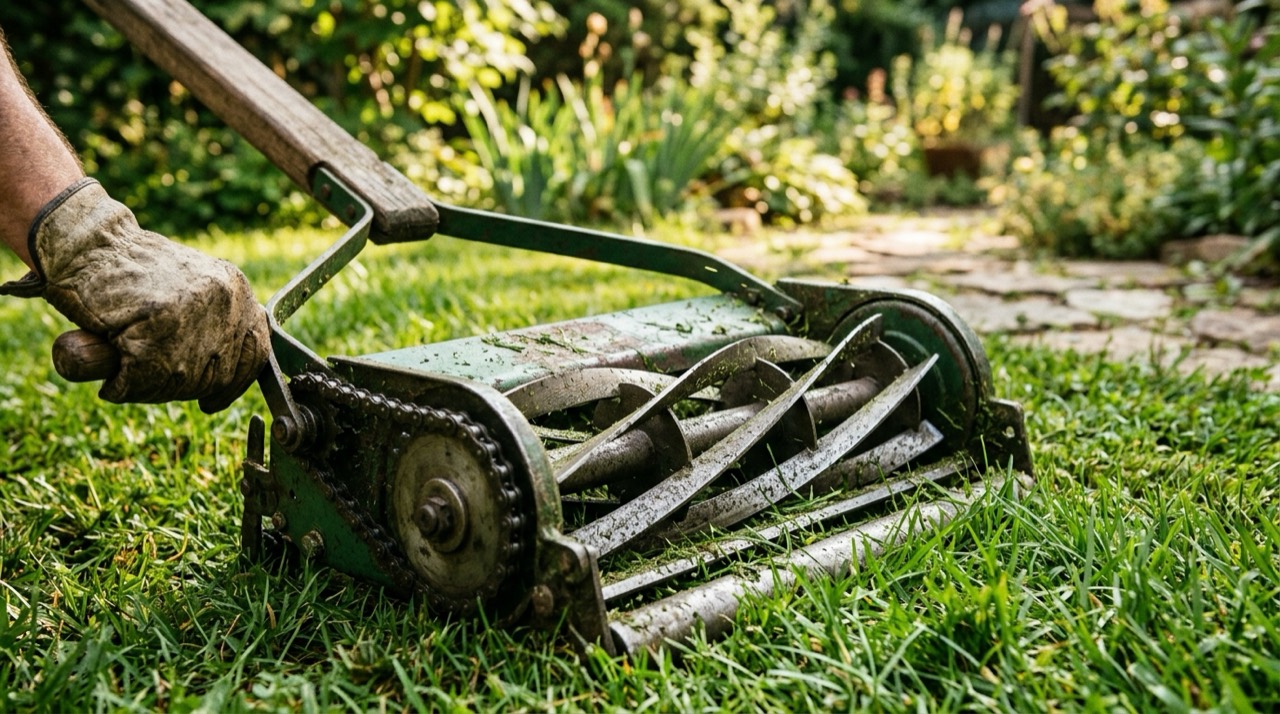
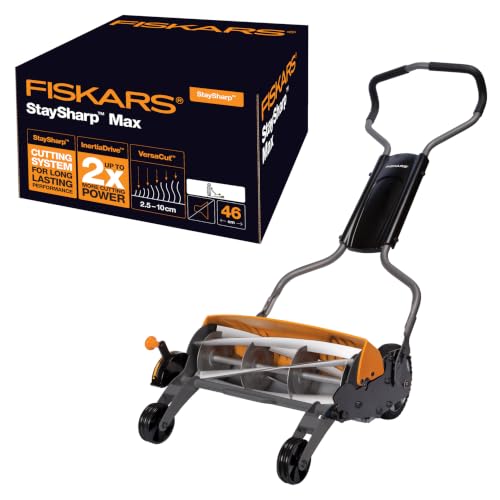
Choose a self-propelled mower for a larger, sloped, or tough lawn where the drive saves your back, and a manual reel for a small, level, fine lawn where cut quality and quiet matter more than power. The two sit at opposite ends of the walk-behind range and rarely suit the same yard.The deciding factors are size, slope, and grass type. A self-propelled rotary shrugs off tall growth, weeds, and gradients that would defeat a reel, but it is heavier, costlier, and needs drive-system upkeep. A manual reel gives the cleanest, quietest, cheapest cut on the right lawn and almost nothing to maintain, but it stalls on tall or coarse grass and asks you to supply every step of power. If your yard is small and neat, start with our best reel mowers ranking; if it is large or hilly, a self-propelled model is the tool that most changes the chore. Many owners with a mixed yard simply keep one of each.