


How many volts do you need for a cordless lawn mower?
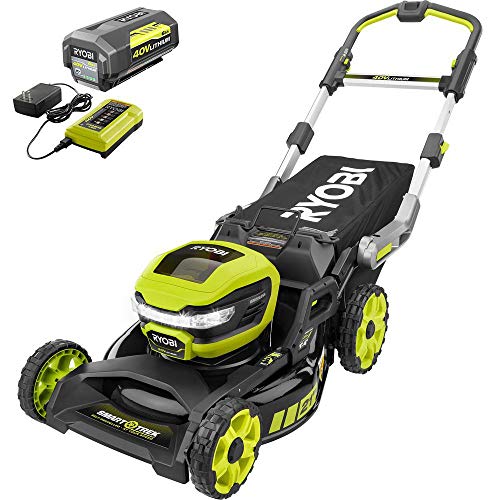
Most cordless lawn mowers run on 40V to 60V, and for the great majority of suburban lawns anything in that range has plenty of power. Voltage mainly determines how much power the motor can deliver, while runtime is set by the battery's amp-hours, so the volt number alone is a poor guide to which mower will finish your lawn.The figure that actually predicts runtime is watt-hours, which multiplies voltage by amp-hours. A 40V 6Ah pack (240Wh) holds the same energy as a 60V 4Ah pack (240Wh) and mows for a similar time, which is why chasing the highest voltage can mislead you when that mower ships with a small battery.
As a practical guide, 40V is ample for small and medium lawns, 56V and 60V give a bit more headroom for larger yards or heavier grass, and 80V exists mainly for big lawns and heavier decks. Some mowers reach their voltage by pairing two smaller packs, such as 36V (2x18V) or 48V (2x24V), which lets them share batteries with a brand's wider tool range.
Rather than fixate on volts, check the capacity of the battery that actually comes in the box and match it to your lawn size. Our battery lawn mower guide explains voltage, amp-hours, and watt-hours in detail, and the best battery lawn mower picks show how the platforms compare. ### How does voltage match up to lawn size and grass type?
Voltage should rise with lawn size and grass toughness, but only within reason, since 40V handles most suburban lawns and 56V to 60V mainly adds headroom for larger yards or heavier growth. The table below lines up common voltages with the lawns they suit.
| Platform | Typical use | Notes |
|---|---|---|
| 36-40V | Small to medium lawns | Ample for weekly mowing of normal grass |
| 48-56V | Medium to larger lawns | More headroom in thicker or longer grass |
| 60V | Larger suburban lawns | Suits wider decks and fewer passes |
| 80V | Big lawns, heavy decks | Extra power for the most demanding jobs |
The key is that these are guides, not hard limits: a 40V mower with a large pack copes with a bigger lawn than its voltage suggests, while an 80V mower with a small battery may run short on a modest one. Grass shifts the picture too, so if yours is often long, thick, or damp, leaning to the higher end of the range buys useful headroom.
Why do some mowers combine two smaller batteries?
Some mowers reach their working voltage by wiring two smaller packs in series, which is why you see mowers described as 36V (2x18V) or 48V (2x24V). The main reason is battery sharing: those smaller packs also fit the brand's drills, trimmers, and blowers, so one battery collection powers a whole tool range.Pairing packs this way lets a maker offer a capable mower without asking you to buy into a mower-only battery, and it spreads the cost of the cells across everything you own. The trade-off is that you need two charged packs to run the mower at all, and long runtime may take four packs across two sessions. For owners already invested in an 18V or 24V system, though, the saving is real, which is exactly why a mower like the Makita 18V X2 appeals to people who already own the batteries. Weigh that shared-platform saving against a dedicated higher-voltage mower before you choose.
Does higher voltage help in tall or wet grass?
Higher voltage does help in tall or wet grass, but through power rather than runtime, since more voltage lets the motor sustain torque as the blade meets resistance. It will not make the pack last longer, so a high-voltage mower with a small battery still runs short even if it powers through heavy growth more easily.In practice, a 56V or 60V mower has a little more in reserve when you push into thick grass than a 40V one, which is why the higher platforms suit larger or rougher lawns. But the moment you care about how long you can mow, the figure to check is watt-hours, not volts. The sensible approach is to pick a voltage that comfortably powers your grass, then make sure the pack that comes with it holds enough watt-hours to finish the lawn. In short, treat voltage as a coarse power grade rather than a runtime figure: match it loosely to your lawn size and grass type, then let watt-hours settle how long you actually mow. The best battery lawn mower picks note the platform behind each model so you can weigh both power and runtime at once.
This is general guidance based on manufacturer specs and common owner practice.

